Sustainable Packing Materials Comparison for Eco Moves
Moving your household across town or across the country typically generates an enormous pile of plastic bubble wrap, Styrofoam peanuts, and corrugated cardboard boxes that end up in a landfill. The process can feel wasteful, but a growing number of families are searching for ways to reduce their environmental footprint without sacrificing the safety of their belongings. A thorough sustainable packing materials comparison reveals that eco-friendly moving practices are not only possible but often more cost-effective and less stressful than traditional methods. By understanding the strengths and weaknesses of each green option, you can make informed decisions that protect both your possessions and the planet.
Many people assume that sustainable packing means accepting higher risk of breakage or spending significantly more money. In reality, innovations in reusable containers, biodegradable wraps, and natural cushioning materials have made green moving a practical choice for most households. The key is matching the right material to the item you are protecting. Fragile dishware, for instance, demands a different solution than books or clothing. Below we examine the major categories of sustainable packing materials, compare their performance, and show you how to integrate them into a seamless moving plan.
Why a Sustainable Packing Materials Comparison Matters
Conventional packing supplies are designed for single use. Cardboard boxes lose their structural integrity after one move. Plastic bubble wrap and foam peanuts are petroleum-based and take centuries to decompose. When millions of Americans relocate each year, the cumulative waste is staggering. A sustainable packing materials comparison helps you identify alternatives that can be reused, recycled, or composted after your move is complete.
Beyond environmental benefits, green packing materials often provide superior protection. For example, thick moving blankets made from recycled fibers cushion furniture better than thin sheets of bubble wrap. Reusable plastic bins stack more securely than cardboard boxes, reducing the risk of collapse during transport. And natural materials like shredded newspaper or wool blankets do not off-gas volatile organic compounds (VOCs) that can damage sensitive electronics or antique finishes. Choosing the right sustainable option therefore improves both safety and sustainability.
Comparing Top Eco-Friendly Packing Materials
To make your move as green as possible, consider these five categories of sustainable packing materials. Each has distinct advantages and ideal use cases.
1. Reusable Plastic Bins vs. Cardboard Boxes
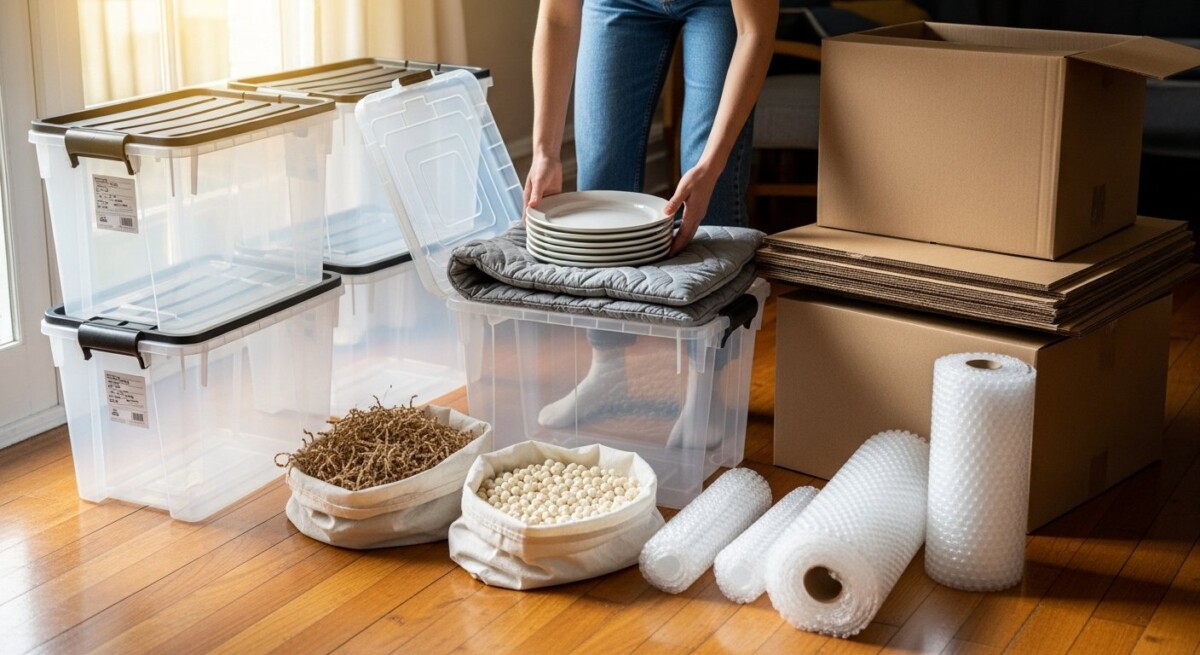
Renting reusable plastic bins has become a popular alternative to buying new cardboard boxes. These bins are made from durable, recyclable plastic and can be used hundreds of times before being recycled into new products. Companies deliver the bins to your home, you pack them, and they pick them up after you unpack. The cost is often comparable to buying new boxes, and you avoid the hassle of breaking down and recycling dozens of cardboard containers.
Cardboard boxes, while recyclable, are not truly sustainable if used only once. The energy and water required to produce a single box are significant, and recycling still consumes resources. However, cardboard is a good option if you source used boxes from local stores or online marketplaces. The most eco-friendly approach is to use reusable bins for heavy or fragile items and supplement with used cardboard boxes for lightweight items like linens and clothing.
2. Biodegradable Bubble Wrap Alternatives
Traditional bubble wrap is made from low-density polyethylene (LDPE), a plastic that does not biodegrade. Fortunately, several sustainable alternatives now exist:
- Kraft paper wraps: Unbleached kraft paper is recyclable and compostable. It provides excellent cushioning when crumpled and is ideal for wrapping dishes, glasses, and small electronics.
- Corrugated bubble roll: This material uses a corrugated cardboard structure that mimics the cushioning effect of bubble wrap but is fully recyclable and compostable.
- GreenWrap or similar honeycomb paper: A kraft paper pad with a honeycomb interior that expands to protect fragile items. It is strong, lightweight, and biodegradable.
These alternatives perform nearly as well as plastic bubble wrap for most household items. For extremely delicate antiques or large mirrors, you may still want a thin layer of plastic wrap for moisture protection, but you can minimize its use by choosing paper-based cushioning as the primary material.
3. Natural Cushioning Materials
Instead of Styrofoam peanuts, consider these biodegradable fillers:
- Biodegradable starch peanuts: Made from corn or wheat starch, these dissolve in water and are compostable. They provide similar cushioning to Styrofoam without the environmental downside.
- Shredded newspaper or office paper: Free and readily available, shredded paper works well for filling gaps in boxes. Avoid glossy inserts as they may contain inks that can transfer onto items.
- Popcorn or air-popped corn: An unconventional but effective option. Plain, unbuttered popcorn is biodegradable and can be composted after use. It is best suited for lightweight items.
- Wool or cotton moving blankets: Renting moving blankets made from natural fibers provides excellent protection for furniture and large items. They can be returned after the move and reused hundreds of times.
Each material has trade-offs. Starch peanuts are affordable but can attract pests if not sealed properly. Shredded newspaper is free but may leave ink residue on porous surfaces. The best strategy is to use a combination based on the fragility and value of the items being packed.
4. Reusable Fabric Wraps and Totes
For clothing, bedding, and soft goods, consider replacing plastic garbage bags with reusable fabric wraps or canvas totes. These can be packed directly into wardrobes or stacked in boxes. They eliminate plastic waste entirely and double as storage containers after the move. For hanging clothes, use reusable garment bags made from recycled polyester or organic cotton rather than the single-use plastic versions.
Implementing Eco-Friendly Moving Practices
Choosing sustainable packing materials is only part of the equation. To truly embrace eco-friendly moving practices, you need to plan your entire packing process with waste reduction in mind. Our guide on packing fragile items for moving without breakage explains how to layer cushioning materials effectively, which reduces the total amount of packing material needed.

Start by decluttering before you pack. Every item you donate or sell is one less item that needs to be packed and transported, reducing both waste and moving costs. Next, create a packing plan that prioritizes reusable materials for heavy loads and biodegradable materials for lighter items. Label boxes clearly to minimize the need for extra wrapping during unpacking. Finally, arrange for pickup or drop-off of reusable bins and moving blankets well in advance to avoid last-minute resorting to single-use plastics.
Many moving companies now offer eco-friendly packing services. When requesting quotes, ask if they provide reusable bins, biodegradable wraps, and natural cushioning materials. Some companies even offer carbon offset programs for the fuel used during transport. For personalized assistance and a free quote on your move, visit Moving.Homes to connect with professional movers who can help you implement these sustainable practices.
Cost Comparison: Green vs. Conventional Packing
A common misconception is that sustainable packing costs more. In many cases, the opposite is true. Renting reusable bins typically costs $1 to $3 per bin per week, while buying new cardboard boxes of similar size costs $2 to $5 each. If you move frequently, renting becomes even more economical. Biodegradable starch peanuts are priced comparably to Styrofoam peanuts, and shredded newspaper is free. Moving blankets rented from a moving company are often included in the service fee, whereas buying plastic wrap and foam pads adds up quickly.
Here is a rough cost comparison for a typical three-bedroom home move:
- Cardboard boxes (new): $150-$300 (one-time use)
- Reusable plastic bins (rental): $100-$250 (includes delivery and pickup)
- Bubble wrap (plastic): $40-$80 (non-recyclable)
- Kraft paper and honeycomb wrap: $30-$60 (recyclable)
- Styrofoam peanuts: $20-$40 (non-biodegradable)
- Starch peanuts or shredded paper: $15-$30 (biodegradable)
The overall cost of a green move is often 10-20% lower than a conventional move, especially when factoring in the time saved from not having to dispose of mountains of cardboard and plastic.
Frequently Asked Questions
Are reusable plastic bins really eco-friendly if they are made from plastic?
Yes, because they replace hundreds of single-use cardboard boxes over their lifespan. A single reusable bin can be used 100 times or more before being recycled. The environmental impact per use is much lower than a cardboard box that is used once and then recycled.
Can I compost biodegradable packing materials in my backyard?
Most biodegradable materials like starch peanuts, kraft paper, and shredded newspaper can be composted in a home compost system, provided they are not contaminated with food or non-compostable tape. However, cornstarch-based materials may take longer to break down in cold compost piles. Check the manufacturer’s instructions before adding them to your compost.
What is the best way to pack fragile items without plastic?
Use a combination of kraft paper wraps, honeycomb paper cushioning, and biodegradable peanuts. Wrap each item individually in kraft paper, then place it in a box lined with crumpled paper. Fill gaps with shredded paper or starch peanuts. For extra protection, use a reusable fabric wrap around the entire bundle before placing it in the box.
Do eco-friendly packing materials protect as well as plastic?
In most cases, yes. Honeycomb paper and corrugated bubble roll provide comparable cushioning to plastic bubble wrap for items up to moderate fragility. For extremely delicate or valuable items, you can use a thin layer of plastic wrap as a moisture barrier combined with paper-based cushioning. The key is proper packing technique rather than the material itself.
Making Your Move Greener
Transitioning to sustainable packing materials does not require a complete overhaul of your moving plan. Start by replacing the most wasteful elements: swap plastic bubble wrap for kraft paper, use reusable bins instead of new cardboard boxes, and choose biodegradable peanuts over Styrofoam. As you become more comfortable with these alternatives, you can expand your use of fabric wraps, wool blankets, and other natural materials. The cumulative effect of these small changes is significant. By conducting your own sustainable packing materials comparison and choosing the greenest options that fit your budget and timeline, you contribute to a cleaner planet while ensuring your belongings arrive safely.
For additional guidance on planning a low-impact relocation, reach out to the professionals at Moving.Homes. They can help you source eco-friendly supplies, recommend packing strategies, and connect you with movers who prioritize sustainability. A greener move is not just an aspiration. It is a practical, affordable, and achievable goal for every household.