Professional Office Movers for Business Relocation
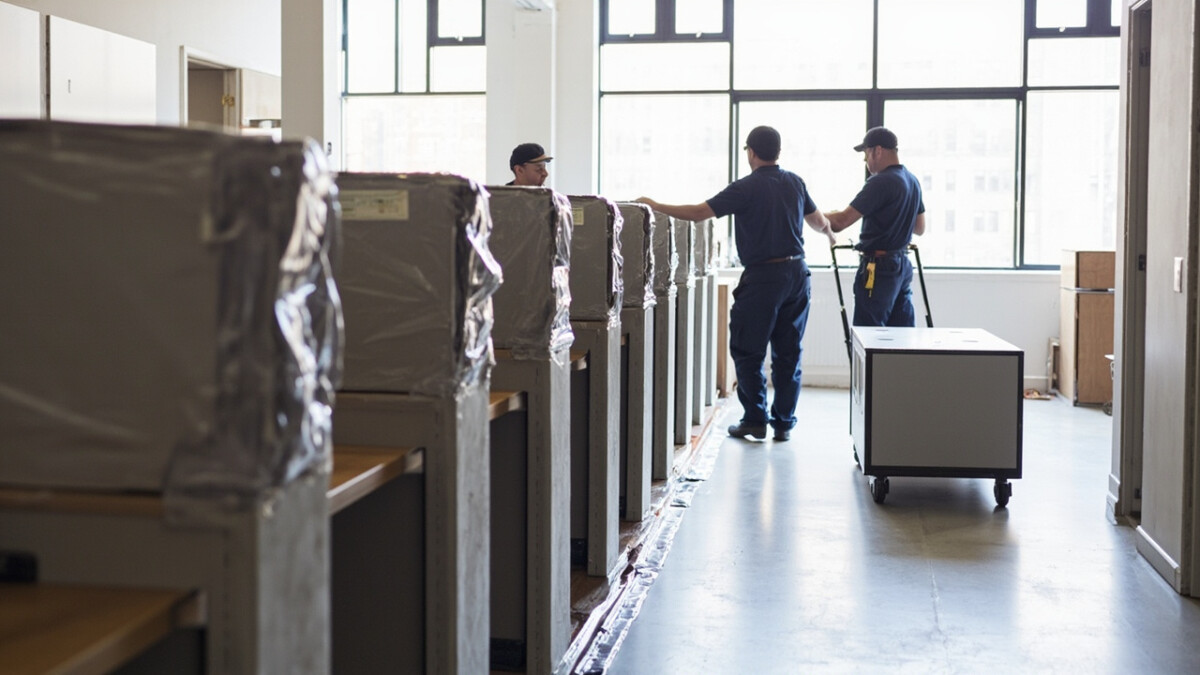
Relocating a business is a complex undertaking that involves far more than transporting boxes from one building to another. It requires careful coordination, specialized equipment, and a deep understanding of commercial logistics. When your company’s productivity, employee morale, and client commitments are on the line, relying on professional office movers for business relocation is not just a convenience; it is a strategic necessity. These experts handle the heavy lifting, the dismantling of workstations, and the reinstallation of sensitive equipment, allowing your team to focus on what matters most: continuing to serve your customers and maintain operations. Without their expertise, a move that should take a weekend can stretch into weeks of chaos and lost revenue.
Choosing the right team for this critical job means understanding what sets commercial office movers apart from residential movers. The stakes are higher, the timelines are tighter, and the assets involved are often worth tens of thousands of dollars. This article provides a comprehensive guide to planning a seamless corporate relocation, highlighting the specific services you should expect, the steps to follow, and the questions you must ask before signing a contract. Whether you are moving across town or across the country, the principles of a successful business move remain the same: preparation, communication, and partnership with a qualified moving company.
Why Business Relocation Requires Specialized Commercial Movers
Moving a home is a personal project; moving a business is an operational project. The difference lies in scale, complexity, and the cost of downtime. Every hour your employees cannot work, every day your phone system is disconnected, and every meeting you must reschedule translates directly into lost revenue and damaged client relationships. Professional office movers for business relocation are trained to minimize this disruption. They arrive with crews that understand how to disassemble modular furniture, pack server racks with anti-static materials, and label every cable so reconnection is instantaneous.
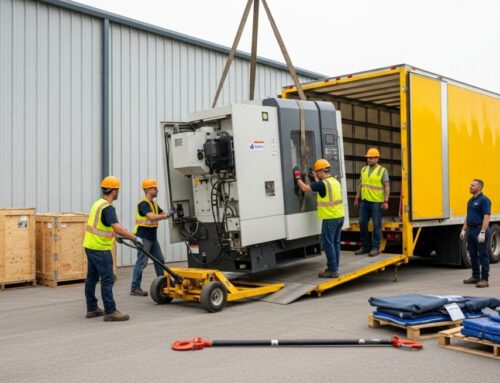
Furthermore, commercial moves often involve specialized items that require unique handling. Office equipment movers are skilled in moving items like heavy copiers, medical devices, laboratory equipment, and delicate audiovisual systems. They bring the correct dollies, straps, and crating materials to protect these assets. A residential mover might handle a piano, but a commercial mover knows how to transport a 500-pound industrial printer without voiding its warranty. This specialization protects your capital investment and ensures that your equipment arrives in working order, ready for immediate use.
The Financial Cost of Downtime
One of the most compelling reasons to hire experts is the financial impact of a slow or poorly executed move. Consider this: if your business generates $10,000 in revenue per day, and a disorganized move causes three days of lost productivity, that is $30,000 in direct losses before you even account for the moving costs. Professional office movers use project management software and experienced coordinators to create a timeline that overlaps with your business hours strategically. They often work after hours, on weekends, or in phases to ensure that your move does not interrupt a single sale or service call. In our guide on corporate movers and business relocation services, we explain how phased moving plans can keep your operations running at nearly full capacity throughout the transition.
Key Services Provided by Office Equipment Movers
Not all moving companies offer the same services. When vetting potential partners, you should look for a provider that offers a comprehensive suite of services tailored to commercial environments. The best commercial office movers will provide an end-to-end solution that covers everything from initial planning to final installation. Here are the core services you should expect:
- Pre-Move Consultation and Project Management: A dedicated move coordinator visits your current and new locations, creates a detailed floor plan, and develops a timeline. This step includes assessing elevator availability, loading dock access, and parking restrictions.
- Furniture Dismantling and Reassembly: Teams are trained to take apart cubicles, workstations, and modular furniture systems. They label every part, transport it carefully, and reassemble it exactly as specified in your new layout.
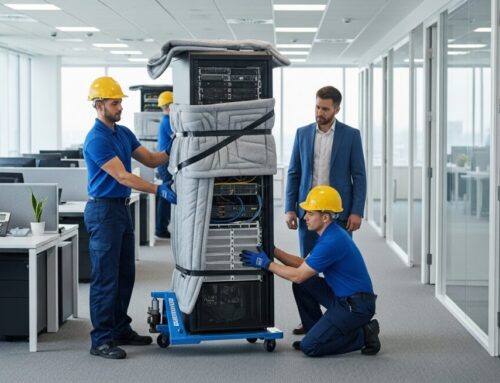
- IT and Electronics Relocation: This includes secure packing of servers, computers, and networking equipment. Some movers offer white-glove services that include disconnection, packing, transport, and reconnection of your entire IT infrastructure.
- Packing and Unpacking of Office Supplies: From file cabinets filled with documents to break room supplies, professional packers use color-coded labels and inventory lists to ensure nothing is lost and everything is placed in the correct department.
- Storage Solutions: If there is a gap between your move-out and move-in dates, or if you need to downsize temporarily, many commercial movers offer secure, climate-controlled storage for your office furniture and equipment.
These services form the backbone of a successful corporate relocation. However, the value is not just in the list of tasks performed. It is in the seamless coordination of these tasks. A good mover will manage the entire workflow, communicating with your building managers, elevator technicians, and IT department so that you do not have to. This single point of contact reduces confusion and ensures accountability.
How to Plan a Successful Corporate Move
Planning a business move is a multi-phase process that should begin at least eight to twelve weeks before your desired relocation date. The more time you invest in the planning phase, the smoother the execution will be. Below is a practical framework to guide your efforts, broken down into actionable steps.
Phase One: Assessment and Vendor Selection (Weeks 8-10)
Start by conducting a thorough inventory of everything you own. Walk through every office, storage closet, and common area. Note items that require special handling, such as large plants, artwork, or hazardous materials. Next, request proposals from at least three commercial moving companies. During this phase, ask for references from businesses of a similar size and industry. A mover who specializes in law firms may not be the best fit for a manufacturing warehouse. Once you have narrowed your choices, schedule on-site estimates. Avoid companies that provide quotes over the phone without seeing your space; they are likely underestimating the complexity of the job.
Phase Two: Communication and Labeling (Weeks 4-6)
Clear communication with your employees is critical to reducing stress and preventing lost items. Create a move committee with representatives from each department. This committee will oversee the labeling system and ensure that everyone knows what is expected of them. Implement a color-coded labeling system that corresponds to the floor plan of your new office. For example, blue labels for the accounting department, green for sales, and red for executive offices. Professional office movers for business relocation will provide the labels and train your staff on how to use them. This system allows the moving crew to place every box and piece of furniture in the correct location without asking questions.

Phase Three: The Move Weekend (Days 1-3)
During the actual move, your role is to supervise and make decisions, not to carry boxes. Ensure that a key decision-maker from your company is on-site at both the old and new locations. The mover’s project manager will direct the crew, but you need to be available to answer questions about last-minute changes or misplaced items. Schedule the IT move for the very end of the first day or the beginning of the second day, so that other items are out of the way and the technicians can focus on connecting your network. After all items are delivered, do a walk-through with the move coordinator to check for damage and confirm that everything is in its designated spot.
Choosing Between Local and Long-Distance Commercial Movers
The distance of your relocation significantly impacts the strategy and cost of the move. Local moves, typically defined as moves within a 50-mile radius, are usually billed by the hour. Long-distance moves are billed by weight and distance, and they require more complex logistics. When selecting professional office movers for business relocation, confirm that they are licensed for interstate moves if you are crossing state lines. The Federal Motor Carrier Safety Administration (FMCSA) requires interstate movers to have a USDOT number, which you can verify online. Local moves may be regulated by state authorities, so check your state’s requirements as well. A reputable mover will provide this information willingly.
For long-distance relocations, consider the possibility of a split move. This involves moving non-essential items first, often into storage, while keeping essential operations running at the current location until the new space is ready. This approach is more expensive but can significantly reduce downtime. Office equipment movers experienced in long-distance logistics can also advise on the best route, considering factors like weigh stations, bridge heights, and traffic patterns. They will also manage the loading and unloading of the truck to distribute weight evenly, preventing damage during transit.
Frequently Asked Questions
How much does a commercial move cost?
Costs vary widely based on distance, volume of items, number of floors, and required services. A local move for a small office (10-15 employees) might cost between $2,000 and $5,000, while a large corporate relocation can exceed $50,000. Always get a binding not-to-exceed quote to avoid surprise bills. The cost also includes insurance, which is essential for protecting your assets.
How far in advance should I book professional office movers?
For a small local move, book at least four weeks in advance. For a large or long-distance move, book eight to twelve weeks ahead. Peak moving season (May-September) requires even earlier booking, sometimes up to three months in advance. Early booking ensures you get your preferred dates and can secure a project manager who is familiar with your industry.
What should I do with sensitive documents and data?
Sensitive documents should be inventoried and moved separately, often by a certified records management company. For digital data, back up everything before the move and consider moving your servers yourself or using a specialized IT logistics provider. Discuss data security protocols with your mover; some offer secure, locked containers for confidential files.
Do commercial movers provide packing materials?
Yes, most commercial movers provide all necessary packing materials, including boxes, tape, bubble wrap, and furniture pads. These costs are usually included in the quote or billed as a separate line item. Using the mover’s materials is recommended because they are standardized and designed for the rigors of commercial transport. For more cost-saving strategies, you can also explore resources for managing your moving budget effectively.
What happens if items are damaged during the move?
Reputable movers offer valuation coverage, which is a form of insurance. Basic coverage is often included at a minimal rate (e.g., $0.60 per pound per item), but this is not enough for expensive electronics or furniture. You should purchase full replacement value protection, which covers the cost of repairing or replacing damaged items. Document the condition of all high-value items before the move with photos and serial numbers.
Final Preparation Steps for a Smooth Transition
As moving day approaches, finalize your floor plan and share it with the moving crew. Label every room in the new building clearly, and ensure that parking and elevator access are reserved. Notify your utility providers, internet service provider, and postal service of your move date. On a practical note, prepare a “first-day kit” for your new office: this should include toilet paper, paper towels, hand soap, a first-aid kit, and a few basic tools. While professional office movers for business relocation handle the heavy work, having these essentials ready will make the first day in your new space far more comfortable for your team. The goal of any business relocation is to make the transition invisible to your customers and as smooth as possible for your employees. By partnering with the right commercial moving company and following a structured plan, you can achieve that goal and turn a potentially stressful event into a positive milestone for your company’s growth. For additional financial flexibility during your move, some businesses explore options like vehicle financing solutions to free up capital for relocation expenses.