
How to Move a Piano Safely Long Distance: Step by Step
Moving a piano long distance takes planning, equipment, and the right pros. Protect your instrument with these steps and avoid costly damage.

By Eric Thompson
A piano is one of the heaviest, most fragile, and most emotionally valuable items in any home. An upright can weigh 300 to 600 pounds, and a grand can exceed 1,000 pounds once you account for the cast iron plate, soundboard, and lid. Add a long distance move of hundreds or thousands of miles, and the stakes climb fast: one bad strap, one jolt over a pothole, and you are facing a cracked soundboard, a warped pinblock, or a repair bill that rivals the piano's value. Learning how to move a piano safely long distance is not about strength. It is about planning, proper equipment, climate control, and knowing when to hand the job to trained professionals.
This guide walks you through the full process, from measuring doorways and securing the right insurance to loading techniques that protect the instrument's delicate internal mechanics. Whether you are shipping a family heirloom across the country or relocating a practice piano to a new apartment, the same core principles apply. Follow them carefully, and your piano will arrive in tune, intact, and ready to play.
Why Long Distance Piano Moves Are Different
A local piano move might take two hours and involve a short drive across town. A long distance move stretches over days, sometimes weeks, and the piano may pass through multiple hands: loaders at origin, a long-haul driver, and unloaders at destination. Each transition introduces risk. Temperature swings inside a trailer can loosen glue joints and cause tuning instability. Vibration from thousands of highway miles can shift internal components. And unlike a sofa, a piano cannot simply be "re-tightened" at the other end.
There is also the matter of physical access. Grand pianos cannot be tilted beyond about 45 degrees without risking damage to the frame, and they must travel on their side (never on their lid or legs). Uprights, meanwhile, are top-heavy and prone to tipping on stairs. These constraints mean you need a mover who understands piano-specific rigging, not just general furniture handling. If you are planning a major relocation and want to understand the broader cost structure, our guide to long distance relocation services and cost factors explains how specialized items affect your overall quote.
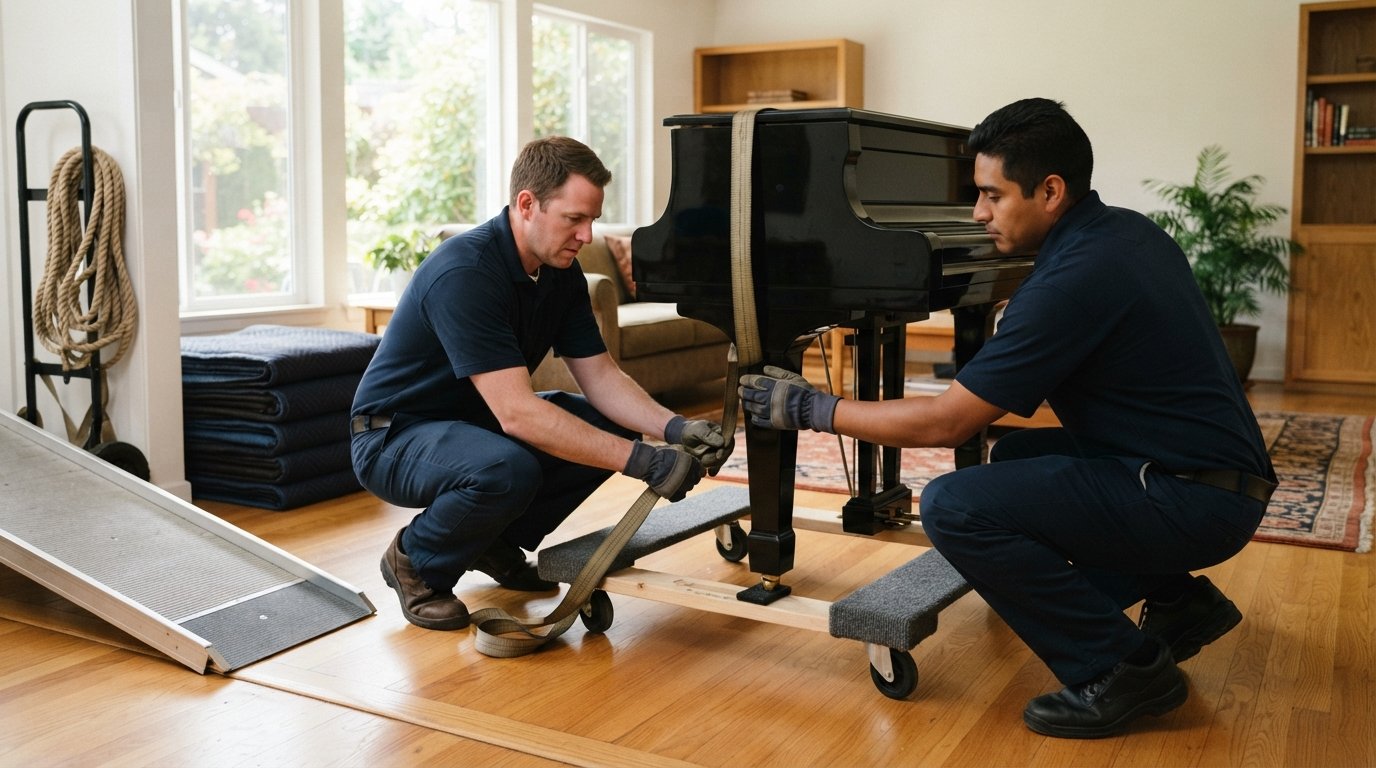
Professional piano movers use four-wheel dollies, piano boards, straps, and quilted pads designed for the instrument's shape. They also carry the right insurance. Before you decide between DIY and hiring help, weigh the value of the piano against the cost of a mistake. A single cracked soundboard can cost more to repair than the entire move.
Step 1: Assess the Piano and the Route
Start by identifying exactly what you are moving. Piano type determines everything: equipment, crew size, transport method, and price. Measure the piano's height, width, and depth, then measure every doorway, hallway, stairwell, and elevator it must pass through. Pay attention to turns, low ceilings, and narrow landings. A grand piano's widest point is the keyboard end, but the tail can still catch on corners if the path is tight.
Next, map the route. Note any stairs at origin or destination, the distance from the door to the truck, and whether a ramp or hoist is needed. If the piano must be hoisted over a balcony, that is a specialized job requiring a crane or rigging crew. Also check the destination climate: a piano moved from humid Florida to dry Arizona will need time to acclimate before tuning.
Document everything with photos and notes. This record helps you get accurate quotes and serves as evidence if damage occurs. A few key measurements to capture include:
- Piano dimensions (height, width, depth) and weight if known
- Narrowest doorway width along the entire path
- Number of stairs and whether there are landings or turns
- Elevator dimensions and weight limits, if applicable
- Distance from the door to where the truck can park
With this information in hand, you can describe the job accurately to movers and avoid surprise fees. Vague descriptions are the number one cause of underestimated piano moving quotes.
Step 2: Choose the Right Mover for a Piano
Not every long distance moving company handles pianos. Some will transport them as generic furniture, which is a recipe for damage. Look for movers who explicitly advertise piano moving, carry specialized equipment, and can show proof of experience. Ask whether they use a piano board, how they secure the instrument inside the truck, and whether the piano travels alone or with other household goods.
Verify licensing and insurance. For interstate moves, the mover must have a USDOT number and, in most cases, an MC number. Ask for a certificate of insurance and confirm the coverage limit for high-value items. Standard released-value coverage often pays only cents per pound, which is nowhere near enough for a piano. You may need full-value protection or a separate rider.
Get at least three quotes in writing. A legitimate piano moving quote should include the crew size, equipment, packing materials, stair or hoist charges, and the expected delivery window. Be wary of quotes that seem too low; they often hide fees or rely on inexperienced labor. If you want a faster way to compare vetted professionals, you can request free quotes from local contractors and moving specialists who handle specialized items.
Finally, check reviews specifically mentioning pianos. A mover with hundreds of five-star reviews for sofas may still lack piano expertise. Look for comments about care, communication, and whether the piano arrived in tune.
Step 3: Prepare the Piano for Transport
Preparation begins well before moving day. If possible, have the piano tuned and inspected by a technician a few weeks before the move. This establishes a baseline and catches loose pins, cracked bridges, or other issues that could worsen in transit. The technician can also advise whether the piano should be moved at all; some older instruments are too fragile for long distance transport.
On moving day, secure the lid and fallboard with soft straps or tape designed for pianos. Never use duct tape directly on finished wood. Wrap the piano in moving blankets or quilted pads, then stretch plastic wrap around the pads to hold them in place. For grands, remove the legs, pedals, and lyre, and pack them separately in labeled boxes. The lid should be closed and secured, and the music desk removed.
If you are doing a partial DIY move, you will need the right equipment. A piano dolly, heavy-duty straps, and a piano board are essential. But even with equipment, moving a piano down stairs or around tight corners is dangerous without training. Many injuries and damages happen during these final few feet. If you are unsure, hire professionals for the loading and unloading even if you transport the piano yourself.
Step 4: Loading and Securing the Piano
Loading is the most critical phase. For an upright, the piano should be tilted back onto a piano board or dolly and rolled, never dragged. For a grand, the piano is typically placed on its side on a piano board, with the keyboard side down and the tail up. It must never be transported on its lid or legs. The board is then strapped to the dolly and rolled to the truck.
Inside the truck, the piano should be placed against a wall or bulkhead, away from the doors. It must be secured with heavy-duty straps to the truck's tie-down points, not just wedged between boxes. Use moving blankets between the piano and any hard surfaces. Do not stack anything on top of the piano, and do not let other items shift against it during transit.
Climate control matters. If the move crosses several climate zones, a climate-controlled truck is ideal, but even a standard trailer protects the piano from rain and direct sun. Avoid shipping a piano in an open trailer or on a flatbed. Moisture and temperature extremes are the enemies of wood and felt.
If the piano is traveling with your household goods, make sure the mover loads it last and unloads it first. This reduces the number of times it is handled. Some movers prefer to ship pianos separately in a dedicated piano van, which is often the safest option for high-value instruments.
Step 5: Delivery, Unloading, and Acclimation
When the piano arrives, inspect it before the movers leave. Check for new scratches, cracks, or loose parts. Test the keys and pedals if possible. If you see damage, note it on the delivery receipt and take photos. This documentation is essential for filing a claim.
After unloading, let the piano acclimate to room temperature for at least 24 to 48 hours before playing it. Wood expands and contracts with humidity, and a piano that has just traveled through different climates needs time to stabilize. Wait at least a week or two before scheduling a tuning. Moving almost always knocks a piano out of tune, even with the best care.
Place the piano away from direct sunlight, heating vents, and exterior doors. An interior wall is best. Use a hygrometer to monitor humidity; most pianos prefer 40 to 50 percent relative humidity. If your new home is much drier or more humid than the old one, consider a humidifier or dehumidifier to protect the instrument long term.
DIY vs Professional Piano Movers: What to Know
For a long distance move, DIY piano moving is rarely worth the risk. The equipment alone (piano board, dolly, straps, pads) can cost hundreds of dollars, and the physical danger is real. A piano can crush a foot or cause a back injury in an instant. Plus, without proper insurance, you bear the full cost of any damage.
Professional piano movers bring expertise, equipment, and liability coverage. They know how to navigate stairs, tight turns, and elevators without damaging the piano or the property. They also understand the specific needs of grands versus uprights and can advise on the best transport method. The cost is usually a fraction of the piano's value, and it buys peace of mind.
If you are moving other household items as well, a full-service long distance mover can handle everything, often at a bundled rate. Just confirm that the crew assigned to your piano has specific experience. Some companies subcontract piano moves to specialists, which is fine as long as the specialist is insured and reputable.
Cost Factors and Insurance for Piano Moves
Piano moving costs vary widely based on distance, piano type, access, and season. A local upright move might cost $150 to $400, while a long distance grand piano move can run $1,000 to $3,000 or more. Stairs, hoists, and tight access add fees. Summer is peak season, so book early.
Insurance is non-negotiable. Standard moving insurance often provides only minimal coverage for pianos. Ask about full-value protection, which covers repair or replacement up to the declared value. You may need to pay a premium based on the piano's worth. Keep receipts, appraisals, and photos to support a claim if needed.
Before you book, get a written estimate that itemizes every charge. Avoid movers who demand a large cash deposit upfront or refuse to put terms in writing. A reputable mover will provide a clear contract and explain your rights. If you are moving a piano as part of a larger relocation, the piano may be listed as a separate line item on your estimate.
Moving a piano safely long distance is a project, not a errand. Start planning early, choose a mover with proven piano experience, prepare the instrument carefully, and document everything. With the right approach, your piano will arrive ready to make music in your new home. For a stress-free move, connect with professionals who handle specialized items every day, and let them carry the weight while you focus on settling in.