
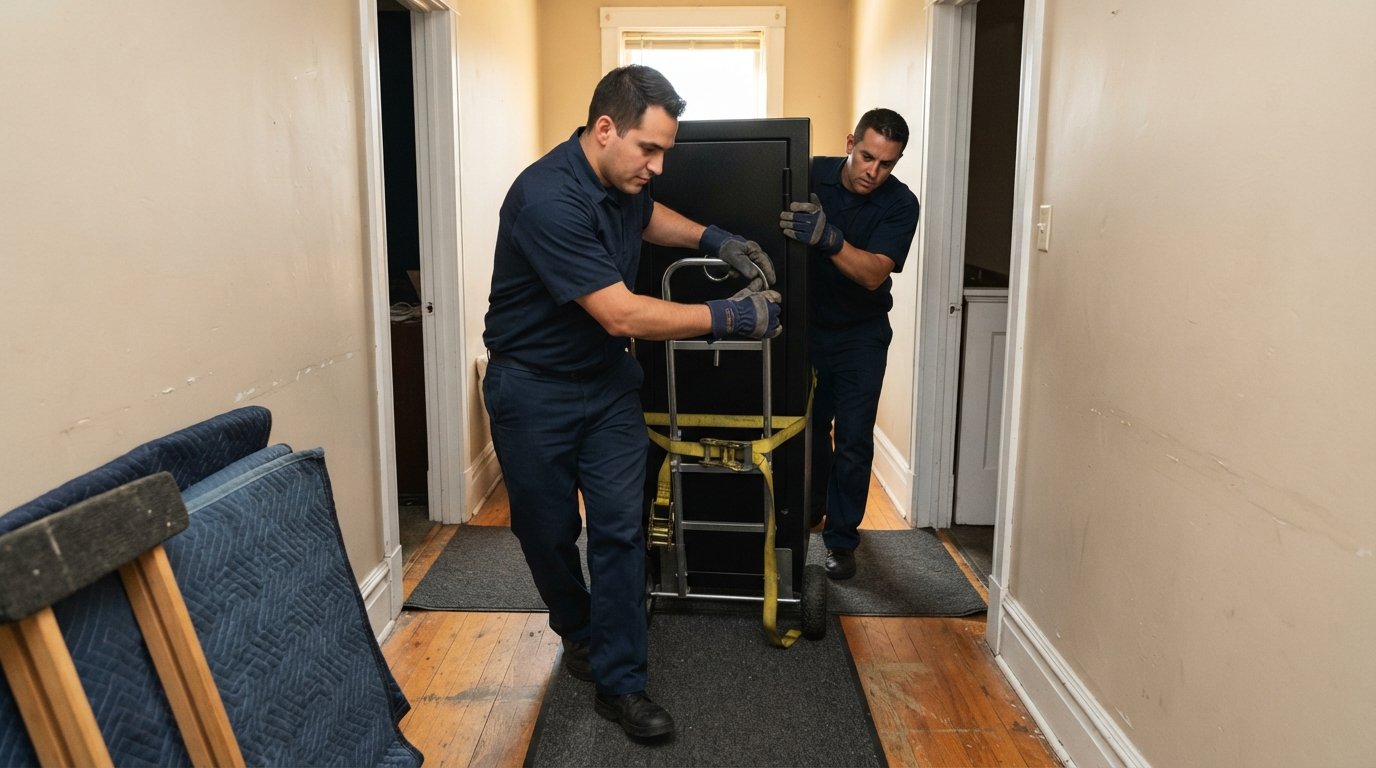
How to Move a Gun Safe and Other Heavy Items Safely
Move gun safes safely with our step-by-step guide. For professional help, call (833)-484-8675 to get free quotes from vetted movers.

By Andrew Lewis
Moving a gun safe is not like moving a couch. A typical 12-gun safe can weigh 300 to 600 pounds, and larger models easily exceed 1,000 pounds. Add narrow doorways, stairs, and the risk of scratching floors or damaging walls, and it becomes clear why so many people get hurt or cause property damage during this task. The same challenges apply to other heavy items like pianos, industrial tool chests, and large appliances. The good news is that with the right preparation, tools, and technique, you can move these items without injury or expensive repairs. This guide walks you through every step, from assessing the weight and your home's layout to deciding when professional help is the smartest investment.
Assess the Safe and Your Space Before You Lift a Finger
Before you even think about tipping a safe onto a dolly, you need to know exactly what you are dealing with. The weight of a gun safe varies dramatically based on size, steel gauge, fire rating, and interior configuration. A small handgun safe might weigh 100 pounds, while a 60-gun fire-rated safe can tip the scales at 1,500 pounds or more. Check the manufacturer's label or manual for the exact weight. If you cannot find it, weigh yourself on a bathroom scale, then weigh yourself holding one corner of the safe (or use a lever method) to estimate. Knowing the weight determines how many people you need and what equipment is safe to use.
Next, measure every doorway, hallway, stairwell, and elevator you will pass through. The safe must fit through the narrowest point with at least two inches of clearance on each side for your hands, straps, and padding. Measure the diagonal depth of the safe as well, because a wide safe might not clear a standard 30-inch door even if its width is smaller. Also check for tight turns, low ceilings, and uneven flooring. If the safe cannot fit through a door, you may need to remove the door from its hinges or, in some cases, hire a professional to hoist it through a window. For more detailed guidance on moving high-value heavy items, see our guide on the best way to move a gun safe and other heavy valuables.
Finally, plan your path. Clear furniture, rugs, and clutter from the route. Remove doors if necessary, and protect floors and walls with moving blankets or cardboard. If you are moving from a basement or upstairs room, inspect the stairs for loose boards or weak railings. The goal is to create a wide, unobstructed, and protected corridor that reduces the risk of tripping or dropping the safe.
Tools and Equipment You Will Need for Safe Relocation
Moving a gun safe without the right tools is a recipe for back injuries and damaged property. You do not need a forklift, but you do need equipment designed to handle heavy, awkward loads. The most important tool is a heavy-duty appliance dolly with a stair-climbing feature (often called a stair dolly or hand truck with tracks). These dollies have ratcheting straps and rubber treads that let you slide the safe up or down stairs with controlled friction. A standard furniture dolly is not sufficient for a safe that weighs more than 300 pounds.
Beyond the dolly, gather these items:
- Heavy-duty straps and ratchets: At least two 2-inch-wide nylon straps rated for 1,000 pounds or more to secure the safe to the dolly.
- Moving blankets and furniture pads: To wrap the safe and protect floors, walls, and doorways.
- Plywood or hardboard panels: To bridge gaps and create a smooth ramp over thresholds and uneven floors.
- Work gloves with grip: To protect your hands and improve your hold.
- Safety glasses and steel-toed boots: For foot and eye protection.
You may also want a lift gate or ramp if you are loading the safe into a truck. For very heavy safes (over 800 pounds), consider renting a hydraulic lift table or a portable safe mover, which uses small wheels and a lever system to tilt and roll the safe. These can be rented from equipment rental stores for a fraction of the cost of hiring movers. However, if you are not experienced with these tools, the learning curve can be dangerous. Practice with a lighter load first, and never use a tool beyond its weight rating.
When to Hire Professional Movers with Specialized Equipment
There is a fine line between a challenging DIY move and a dangerous one. As a rule of thumb, if the safe weighs more than 500 pounds, if you have to navigate stairs with tight turns, or if you have any doubt about your physical ability, hire professionals. Professional movers who specialize in heavy items have the training, insurance, and equipment to move safes without damage. They use stair-climbing dollies, hydraulic lifts, and sometimes even crane services for exceptionally heavy or awkward safes. The cost of hiring movers is almost always less than the cost of a back injury, a damaged floor, or a crushed wall.
When hiring movers, ask specifically about their experience with gun safes. Not all moving companies handle heavy safes, and some may charge extra or refuse the job. Get a written estimate that includes the weight of the safe and any stairs or elevator fees. Confirm that they carry liability insurance and that your homeowner's or renter's policy covers the move. If you are moving long-distance, the moving company should provide a binding estimate or guaranteed pricing. You can also use a matching service like Moving.Homes to get free quotes from vetted movers who handle heavy items. Their platform connects you with professionals who offer guaranteed pricing and 24/7 support, which can give you peace of mind during a stressful move.
For other heavy items like pianos, pool tables, and large appliances, the same logic applies. If the item is valued at more than a few thousand dollars or weighs more than two adults can safely lift, professional help is worth it. Movers can also advise on whether an item can be moved at all without disassembly or special handling.
Preparing the Safe for Transport: Locking, Padding, and Securing
Once you have your tools and helpers ready, the next step is to prepare the safe itself. Start by emptying it completely. Remove all firearms, ammunition, documents, and valuables. Not only does this reduce weight, but it also eliminates the risk of items shifting and damaging the safe's interior or creating a hazardous load. If you cannot remove the safe's internal shelves or drawers, secure them with tape or straps so they do not slide out during the move.
Lock the safe and remove the key or combination from the area. This prevents the door from swinging open unexpectedly, which could cause serious injury or damage. If the safe has a removable door, consider taking it off to reduce weight and make the safe easier to handle. However, only do this if you can safely lift and reattach the door later. Most gun safe doors weigh 100 to 200 pounds on their own, so you may need a helper.
Wrap the safe in moving blankets or furniture pads and secure the padding with stretch wrap or tape. Pay special attention to the corners and edges, which can gouge walls and floors. If the safe has a glossy finish, use a soft blanket first to prevent scratches. Then, tip the safe onto the dolly and secure it with at least two straps. The safe should be centered on the dolly and leaning slightly back against the frame. Test the balance by gently rocking the dolly; if the safe feels top-heavy or unstable, adjust the straps or reposition the safe.
Insurance and Liability for High-Value Heavy Items
Gun safes are expensive, and so are the items inside them. Before you move, review your homeowner's or renter's insurance policy to see what coverage applies during a move. Many policies provide limited coverage for items in transit, and high-value items like firearms may have specific limits or exclusions. If you are hiring professional movers, ask for a copy of their insurance certificate and understand the difference between basic liability coverage (which typically pays a small amount per pound) and full-value protection (which covers the actual replacement cost). For high-value safes, you may need to purchase additional moving insurance or a rider to your existing policy.
Document the condition of the safe before the move with photos and a video. Note any existing scratches or dents. If you are moving the safe yourself, your own homeowner's insurance may cover damage to your home or the safe, but it likely will not cover injuries to helpers. If you hire movers, read the contract carefully to understand what is covered and what is not. Some moving companies exclude liability for items packed by the owner, so if you pack the safe yourself, you may be assuming more risk. Always ask questions and get everything in writing.
For additional protection, consider using a moving company that offers guaranteed pricing and professional training, as these companies are more likely to have robust insurance and claims processes. Moving.Homes can connect you with such providers, and their platform emphasizes 24/7 customer support, which is invaluable if something goes wrong during the move.
Step-by-Step Moving Technique for Safes and Heavy Items
With your preparation complete, it is time to execute the move. Follow these steps to move the safe safely:
- Position the dolly: Tilt the safe slightly and slide the dolly underneath, with the safe's weight centered over the axle. Secure the safe with two straps, one near the top and one near the bottom.
- Lift and balance: With a helper, tilt the dolly back until the safe is balanced on the wheels. Never lift with your back; use your legs and keep the load close to your body.
- Move slowly: Roll the dolly slowly, watching for obstacles and keeping the path clear. Use a spotter to guide you through doorways and around corners.
- Navigate stairs: For stairs, use a stair-climbing dolly and have one person at the top and one at the bottom. Descend or ascend one step at a time, using the dolly's tracks to control the descent. Never try to carry a safe up or down stairs by hand.
- Load and secure: When loading into a truck, use a ramp and push the dolly up slowly. Secure the safe to the truck's wall with straps so it cannot shift during transit.
For other heavy items like appliances, use the same principles: empty the item, secure moving parts, wrap it, and use a dolly. For pianos, you may need a piano board and straps, and it is often best to hire specialists. If you are remodeling your new home before the move, services like 180 Remodel can help with renovations, but ensure the work is complete before moving heavy items inside.
Remember that teamwork and communication are critical. Count down before lifting, and never twist your body while holding a heavy load. If at any point the safe feels unmanageable, stop and reassess. It is better to delay the move than to risk an injury.
Final Safety Reminders and When to Call a Professional
Moving a gun safe and other heavy items safely requires planning, the right equipment, and a healthy respect for the weight involved. Always err on the side of caution. If you are unsure about your ability to move the safe, or if the safe weighs more than 500 pounds, hire a professional. The cost of professional movers is a small price to pay compared to medical bills or structural repairs. For more tips on moving heavy valuables, revisit our guide on the best way to move a gun safe and other heavy valuables.
By following the steps in this guide, you can protect yourself, your home, and your valuable possessions during the move. Take your time, use the right tools, and do not be afraid to ask for help. Your back and your safe will thank you.