
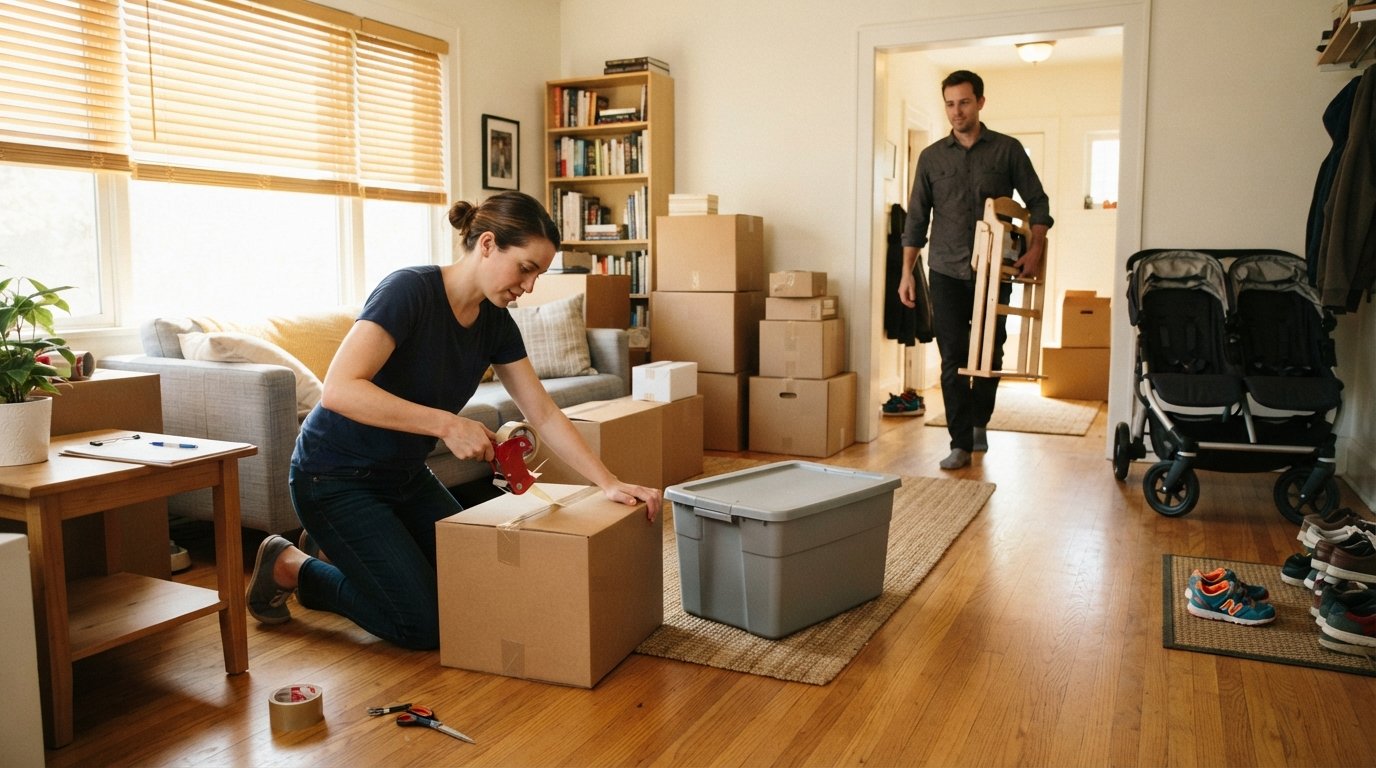
How to Move with Twins or Multiple Young Children
Plan a calm family move with our guide on how to move with twins or multiple young children. Call (833)-484-8675 for expert moving support.

Moving is stressful enough when you are managing boxes, a budget, and a moving truck. Add twins or several children under five, and the logistics can feel overwhelming. The good news is that a calm, well-sequenced move with young kids is absolutely achievable. It requires planning that centers on routines, safety, and small, age-appropriate explanations. Whether you are relocating across town or across the country, the strategies below will help you keep little ones secure, engaged, and as relaxed as possible while you manage the heavy lifting.
Build a Child-First Moving Timeline
Most moving checklists are built around packing and logistics. When you have twins or multiple young children, you need a parallel timeline that protects their daily rhythms. Start by identifying the non-negotiable parts of their day: naps, meals, bath time, and bedtime. Then work backward to schedule packing, donation pickups, and cleaning around those windows. For example, if your twins nap from 1 to 3 p.m., reserve that time for packing rooms they do not use, or for making phone calls to set up utilities.
A child-first timeline also means front-loading the tasks that require concentration. Decluttering a playroom with toddlers underfoot is nearly impossible. Instead, tackle that job after bedtime or arrange for a sitter for two hours. For more detailed guidance on scheduling family relocations, see our guide on moving with young children stress-free, which covers age-specific preparation and day-of strategies.
Once your timeline is set, share a simplified version with your children. Even two-year-olds benefit from hearing, "On Friday, the big truck comes. On Saturday, we sleep at Grandma's. On Sunday, we see our new room." Keep the language concrete and repeat it often. Children cope better when they know what comes next, even if they cannot fully grasp the concept of a new home yet.
Pack in a Sequence That Protects Routines and Essentials
The single most effective way to reduce meltdowns during a move is to pack children's belongings last and unpack them first. This means resisting the urge to clear out their rooms early. Instead, focus on rooms they rarely use, such as a guest room, storage closet, or formal dining area. As moving day approaches, pack a dedicated "first night" bag for each child. This bag should contain a change of clothes, pajamas, a favorite blanket or lovey, diapers or pull-ups, wipes, a sippy cup, and a small comfort toy.
For twins, label each bag clearly with the child's name. It is tempting to assume you will remember which bag belongs to whom, but exhaustion and chaos have a way of erasing details. Use color-coded duffel bags or bright name tags. Keep these bags in the car with you, not on the moving truck. The same rule applies to any medication, prescription creams, or specialized feeding equipment.
Beyond the first-night bags, create a "survival box" for the first 48 hours in the new home. This box should include paper plates, plastic utensils, a roll of paper towels, trash bags, a few basic cleaning supplies, phone chargers, and a small kit of children's fever reducer and bandages. Tape it shut and label it boldly. When you arrive at the new house, you will not have to dig through twenty boxes to find a snack or a diaper.
Here is a simple packing sequence that keeps routines intact:
- Weeks 1 to 3: Pack decorative items, off-season clothing, books, and rarely used kitchen gadgets.
- Week 4: Pack the garage, basement, and storage areas. Label every box by room and priority level.
- Final week: Pack children's rooms last, keeping bedding, comfort items, and two days of clothing accessible.
- Day before the move: Pack the first-night bags and survival box. Load them into your car.
- Moving day: Leave out one small bin of toys and snacks to occupy children while movers work.
This sequence minimizes disruption to naps and bedtime because the children's beds and cribs stay assembled as long as possible. If you are hiring professional packers, tell them explicitly which items must remain untouched until the final hours. A reputable moving company will accommodate this request, especially when you explain that you have twins or toddlers.
Arrange Childcare and Supervision for Loading and Unloading Day
Loading and unloading day is the most dangerous part of any move for young children. Doors are propped open, heavy furniture is in motion, and strangers are carrying boxes through narrow hallways. Trying to supervise twins while also directing movers is a recipe for stress and injury. The best solution is to arrange for off-site childcare during the busiest hours. Ask a grandparent, a trusted neighbor, or a babysitter to take the children to a park, a library, or their own home for the morning or afternoon.
If off-site care is not possible, designate one adult whose only job is child supervision. This person should not pack, clean, or direct movers. Their sole responsibility is to keep the children safe and occupied in a designated safe zone, such as a bedroom with a closed door or a fenced backyard. Rotate this role every few hours if needed, because supervising multiple young children is exhausting work.
For families who need extra hands, consider hiring a professional moving company that offers full-service packing and loading. When you get connected with movers who can help with packing and loading, you free yourself to focus on your children rather than the logistics. Many companies can also provide additional crew members to speed up the process, reducing the total time your children need to be supervised in a chaotic environment.
On moving day, keep a small bag of quiet activities near the safe zone. Stickers, board books, a tablet with downloaded shows, and a few favorite snacks can buy you twenty minutes of calm. Avoid toys with small pieces or anything that requires adult assembly. The goal is not to entertain your children perfectly; it is to keep them safe and reasonably content until the truck pulls away.
Explain the Move in Age-Appropriate Terms
Children process change differently depending on their age. Infants and young toddlers do not understand the concept of moving, but they sense tension and disruption. Keep their environment as consistent as possible: same crib, same blanket, same bedtime routine. For toddlers around eighteen months to three years, use simple, repetitive language. Say, "We are moving to a new house. Your toys are coming too. You will sleep in your crib in the new room." Avoid abstract phrases like "a fresh start" or "a better neighborhood." Concrete details build security.
Preschoolers and early elementary children can handle more explanation. Read books about moving, draw pictures of the new house, and let them pack a small box of their own treasures. Give them choices where possible: "Do you want to put your stuffed animals in the blue box or the red box?" This sense of control reduces anxiety. For twins, be careful not to compare their reactions. One child may be excited, while the other may cling and cry. Both responses are normal. Acknowledge feelings without trying to fix them: "It is okay to feel sad about leaving our old house. I feel a little sad too. We can be sad and also excited about the new house."
If your move involves a long-distance relocation, consider creating a simple countdown calendar. Mark the days with stickers, and include small milestones like "today we pack the playroom" or "today we say goodbye to our neighbors." This visual tool helps young children grasp time and gives them a sense of progress. It also creates natural opportunities to talk about the move without forcing a big, emotional conversation.
Childproof the Move Itself: Tools, Boxes, and Open Doorways
Moving introduces hazards that are not present in a normal day. Box cutters, tape dispensers, furniture dolly wheels, and open stairwells are all part of the process. The safest approach is to establish a physical boundary between the work zone and the child zone. Use baby gates to block off hallways or doorways. If gates are not practical, use a playpen or a secure room with a closed door. Never assume that a toddler will stay away from an open box of tools, even if you have told them not to touch it.
Keep all sharp tools in a locked box or a high cabinet that children cannot reach. Do not leave box cutters on the floor between cuts. Similarly, do not leave boxes stacked in unstable towers. Twins are notorious for climbing, and a falling box can cause serious injury. If you must stack boxes, keep the heaviest ones on the bottom and push them against a wall. Better yet, move boxes out of the house as soon as they are taped shut.
Open doorways are another major risk. During loading and unloading, exterior doors are propped open for extended periods. If you have toddlers, use a screen door or a baby gate at the main entrance. Assign one adult to watch the door whenever it is open. This is not paranoia; it is basic safety. A two-year-old can slip outside in seconds, especially when distracted by a moving truck or a new environment.
Finally, be mindful of cleaning supplies. If you are scrubbing bathrooms or wiping down kitchen counters, keep the bottles in a caddy that travels with you, not on the floor. Children are naturally curious about colorful bottles and spray nozzles. Treat moving day like a temporary construction site: assume that anything dangerous is within reach unless you have actively secured it.
Prioritize the First Week in Your New Home
The first week in a new home sets the tone for how your children adjust. Resist the urge to unpack everything at once. Instead, focus on three priorities: sleep, safety, and routine. Set up beds and cribs first. Put sheets on mattresses, hang blackout curtains if you have them, and place a nightlight in the hallway. Children need rest, and so do you. A well-rested family handles transition far better than an exhausted one.
Next, childproof the new space before you unpack boxes. Install cabinet locks, outlet covers, and baby gates on stairs. Check for loose railings, sharp corners, and windows that open easily. If you moved from a one-story home to a two-story home, pay special attention to the stairs. Twins often race each other, and a fall can happen in a split second.
Finally, reestablish routines as quickly as possible. If your children always eat breakfast at 7:30, keep that schedule even if the kitchen is half-unpacked. If they always read two books before bed, find those books in the first-night bag and read them. Predictability is calming. It tells children that even though the walls are different, the important parts of life remain the same.
As you settle in, consider using resources that support your broader home transition. For example, if you are also planning energy updates or exploring solar options for your new property, SolarEnergy.ai offers helpful guides and calculators that can inform your decisions. This kind of planning can wait until the boxes are cleared, but knowing where to find reliable information reduces future stress.
For families who need ongoing support, professional moving services can also help with unpacking. When you get connected with movers who can help with unpacking, you can focus on your children while trained professionals set up beds, kitchens, and living areas. This is especially valuable when you have twins or multiple young children, because every hour of help translates into more calm and less chaos.
Final Thoughts on Moving with Twins or Multiple Young Children
A successful move with twins or several small children is not about perfection. It is about preparation, safety, and grace. Expect some tears, some regressions, and at least one moment when you cannot find the diaper bag. That is normal. What matters is that you have a plan for the big things: childcare on moving day, a packing sequence that protects routines, and a first-week setup that prioritizes sleep and safety. With those pieces in place, you can navigate the transition with confidence and help your children feel secure in their new home.