
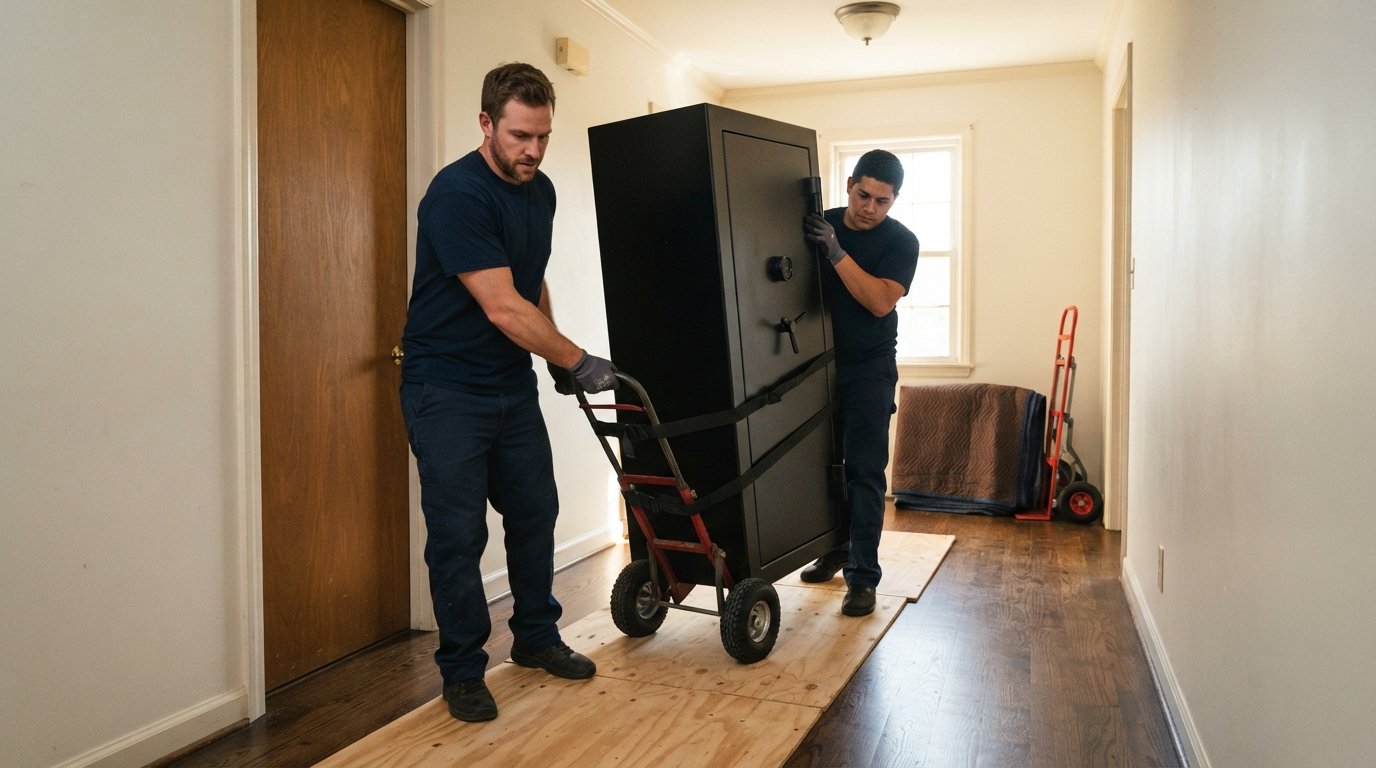
Best Way to Move a Gun Safe and Other Heavy Valuables
The best way to move a gun safe and other heavy valuables starts with smart planning and the right pros. Call 8334848675 for expert moving help.

By Amanda Lewis
Moving a 500-pound gun safe is not the same as carrying boxes of books. These items demand respect, planning, and in many cases professional help. The best way to move a gun safe and other heavy valuables is to combine proper equipment, careful technique, and realistic decisions about your own physical limits. Whether you are relocating across town or across the country, the difference between a smooth move and a damaged floor (or injured back) comes down to preparation and knowing when to call in experts.
Why Heavy Valuables Need a Different Moving Approach
Gun safes, pianos, large mirrors, and antique furniture share a common trait: they are dense, awkward, and unforgiving of mistakes. A typical 24-gun safe weighs between 400 and 900 pounds empty. Add firearms, ammunition, and documents, and you are moving something closer to half a ton. That weight concentrates on a small surface area, which means it can crack tile, gouge hardwood, and crush toes in seconds.
Beyond the raw weight, these items often carry emotional and financial value that standard moving insurance may not fully cover. A scratched dresser is an annoyance. A safe that tips over and dents its door may never seal properly again. A piano that falls off a dolly can lose its soundboard integrity. Treating these items as a special category from the start protects both your property and the people doing the lifting.
It also pays to understand how professional movers handle special items. Many companies that relocate manufactured homes use the same principles: plan the path, reinforce the load, and use mechanical advantage instead of brute force. You can read more about those techniques in our guide on how modular home movers relocate manufactured homes safely, which shares overlapping strategies for heavy, awkward loads.
Pre-Move Preparation: The Step Most People Skip
Before you touch the safe or the piano, spend an hour on preparation. This is where successful moves are won. Start by emptying the gun safe completely. Firearms, ammunition, and valuables should be packed separately and transported in a locked container or your vehicle. Removing the contents can cut 100 to 200 pounds from the load and eliminates the risk of items shifting inside during the move.
Next, measure every doorway, hallway, stairwell, and elevator you plan to use. A safe that fits through the front door may not fit around the corner of your stairwell. If the safe is too wide for a tight turn, you may need to remove doors, railings, or even a window. Knowing this in advance prevents the nightmare scenario of a safe stuck halfway up a staircase.
Gather the right equipment before moving day. You do not want to improvise with a skateboard and a towel. The following items are essential for moving heavy valuables safely:
- Heavy-duty furniture dolly or appliance hand truck rated for at least 800 pounds
- Moving straps and lifting harnesses to distribute weight across your body
- Plywood sheets or thick moving blankets to protect floors and create a smooth path
- Safety gloves, steel-toed boots, and back support belts
- Shrink wrap, moving tape, and furniture pads to secure doors and finishes
If you are moving a piano, you will also need a piano dolly with a built-in skid board. Standard dollies can damage the underside of a piano and are not designed for its weight distribution. For gun safes, a stair-climbing dolly with ratcheting straps is worth the rental cost. These tools turn a two-person nightmare into a manageable job.
Finally, document the condition of each valuable item with photos before the move. This protects you if you file a claim later. If you are working with professional movers, walk them through the items and confirm what is covered under their valuation policy.
Step-by-Step: How to Move a Gun Safe Safely
Moving a gun safe requires a clear sequence. Skipping steps or rushing leads to injuries and damaged property. Here is the safest approach for a ground-level move with no stairs.
- Empty the safe completely and remove the door if possible. Many safe doors can be lifted off their hinges, reducing the weight by 30 to 40 percent.
- Wrap the safe in moving blankets and secure them with shrink wrap. This protects the finish and prevents straps from scratching the paint.
- Tip the safe carefully onto the dolly. Use two people for this step, even if the safe is on wheels. Never let it fall backward.
- Secure the safe to the dolly with ratcheting straps. The safe should not shift or wobble when you push the dolly.
- Lay plywood over any soft flooring (hardwood, tile, carpet) to create a smooth runway.
- Push the dolly slowly, with one person guiding the front and another stabilizing the back. Never pull the dolly behind you.
- Load the safe onto the truck last, placing it against the front wall of the cargo area. Secure it with heavy-duty straps in at least two directions.
If you have stairs, the process changes. You will need a stair-climbing dolly and at least three people: one at the top, one at the bottom, and one spotting. Never attempt to carry a gun safe up or down stairs with just two people. The risk of dropping it (or someone getting crushed) is too high.
For pianos, the process is even more delicate. Grand pianos should be moved on their side with the lid secured and the legs removed. Upright pianos can be moved on a piano dolly, but the keyboard cover and pedals must be protected. If you are unsure, hire a specialist. The cost of a professional piano move is far less than repairing a cracked soundboard.
Moving Other Heavy Valuables: Art, Antiques, and Mirrors
Gun safes are not the only challenging items in a home. Large mirrors, framed art, marble tables, and antique furniture all require special handling. The principles are similar: reduce weight where possible, protect surfaces, and control the path.
For mirrors and framed art, use mirror boxes or custom crates. Glass should never touch glass. Place a layer of bubble wrap or foam between panes and secure the corners with cardboard. For large paintings, consider having a professional crate built. A custom crate costs a few hundred dollars but can save a five-figure artwork.
Antique furniture should be moved with the legs removed when possible. Wrap each piece in furniture pads and secure with tape. Do not use plastic wrap directly on wood finishes, as it can trap moisture and cause discoloration. If the piece has glass doors or marble tops, remove them and pack separately.
For very heavy items like marble tables or concrete sculptures, you may need a forklift or a team of professional riggers. This is where a full-service moving company earns its fee. They have the equipment, insurance, and experience to handle items that weigh more than a small car.
When to Hire Professional Movers for Heavy Valuables
The decision to hire professionals should be based on three factors: weight, stairs, and value. If any of these is high, call a pro. A 600-pound safe on a ground floor is manageable for two strong people with the right dolly. The same safe on a third-floor walk-up is a job for professionals.
Professional movers bring more than muscle. They bring insurance, training, and the right tools. If something goes wrong, you are not left holding the bill for a broken piano or a cracked tile floor. They also know how to navigate tight corners and protect your home during the move.
When you request quotes, be specific about what you are moving. Tell the company the exact weight and dimensions of your safe, piano, or other heavy item. Ask whether they have experience with that specific type of item and whether they carry specialized equipment like piano boards or stair-climbing dollies. A company that hesitates or gives vague answers is not the right choice.
You can also use a platform like FreeQuotes.Contractors to compare local contractors for related home projects, such as reinforcing a floor or installing a safe bolting system in your new home. This is especially useful if your move requires modifications to the destination property.
DIY vs. Professional: A Practical Comparison
Many people want to save money by moving heavy items themselves. That is understandable, but the math often favors hiring help. Consider the costs of a DIY move: dolly rental, straps, blankets, plywood, pizza and beer for friends, and the risk of injury or damage. Now add the potential cost of a medical copay or a replaced tile floor. Professional movers often cost less than the total risk.
That said, some items are safe to move yourself. Boxes, light furniture, and small safes under 200 pounds can be handled with a good dolly and a friend. The key is to be honest about your limits. If you have any doubt about your ability to control the weight, hire a pro.
Here is a simple rule: if the item weighs more than 300 pounds, or if you have to navigate stairs, hire professional help. If the item is irreplaceable or high-value, hire professional help. If you have any pre-existing back or knee issues, hire professional help. The money you save by doing it yourself is not worth a lifetime of back pain.
Protecting Your Home During the Move
Heavy items damage more than themselves. They can scratch hardwood floors, crack tile, dent drywall, and tear carpet. Protecting your home is part of moving heavy valuables safely.
Use plywood or hardboard runners over soft flooring. Tape down moving blankets along walls and doorframes. Remove doors if they are in the path. If you are moving a safe down a stairwell, wrap the railings in foam and secure them with tape. This prevents the safe from scratching the walls and keeps the railings from being bent.
For the truck, load heavy items first and place them against the front wall. Use heavy-duty straps to secure them in at least two directions. Never rely on friction alone. A 500-pound safe that shifts during a sharp turn can crush other items or break through the side of the truck.
If you are moving in bad weather, take extra precautions. Rain makes ramps slippery. Snow and ice make outdoor paths treacherous. Use a tarp to cover the path and consider delaying the move if conditions are unsafe. No piece of furniture is worth a broken leg.
Special Considerations for Gun Safes: Security and Legal Issues
Gun safes are not just heavy; they are security devices. When you move, you need to think about how to transport the firearms inside legally and safely. In most states, firearms must be unloaded and stored in a locked container during transport. The gun safe itself can serve as that container if it is locked and secured in the truck, but you should check your state and local laws before you move.
If you are moving across state lines, the rules change. Some states have waiting periods or registration requirements. Some require that firearms be transported in a separate compartment from ammunition. Before you move, research the laws in your destination state and plan accordingly. When in doubt, consult a lawyer who specializes in firearms law.
For the safe itself, consider having it bolted to the floor in your new home. This is a security best practice and also prevents the safe from tipping during an earthquake or accidental bump. If you are renting, check your lease before drilling into the floor. You may need your landlord's permission.
Packing and Transporting Ammunition and Accessories
Ammunition is heavy and potentially hazardous. Most moving companies will not transport ammunition, and for good reason. It is classified as a hazardous material by the Department of Transportation. You should plan to transport ammunition yourself in a locked container, separate from firearms.
For accessories like scopes, magazines, and cleaning kits, pack them in labeled boxes. Use foam or bubble wrap to prevent scratches. Keep a detailed inventory so you can verify everything arrived at your new home.
If you have a large collection, consider using a dedicated gun safe moving company. These specialists have the equipment and insurance to handle high-value collections. They can also provide advice on how to transport firearms legally across state lines.
Final Tips for a Smooth Move
The best way to move a gun safe and other heavy valuables is to plan ahead, use the right equipment, and know when to call a professional. Start by emptying and measuring. Gather your tools. Protect your floors and walls. And if the job feels too big, hire help. The cost of professional movers is almost always less than the cost of damage or injury.
Remember that moving is a marathon, not a sprint. Take breaks. Stay hydrated. Do not try to move a 600-pound safe at the end of a long day when you are tired and rushed. That is when mistakes happen.
If you are planning a move and want to connect with professional movers who can handle heavy valuables, start by requesting quotes. Be specific about what you are moving and ask about their experience with gun safes, pianos, and other heavy items. A little preparation today saves a lot of stress tomorrow.