
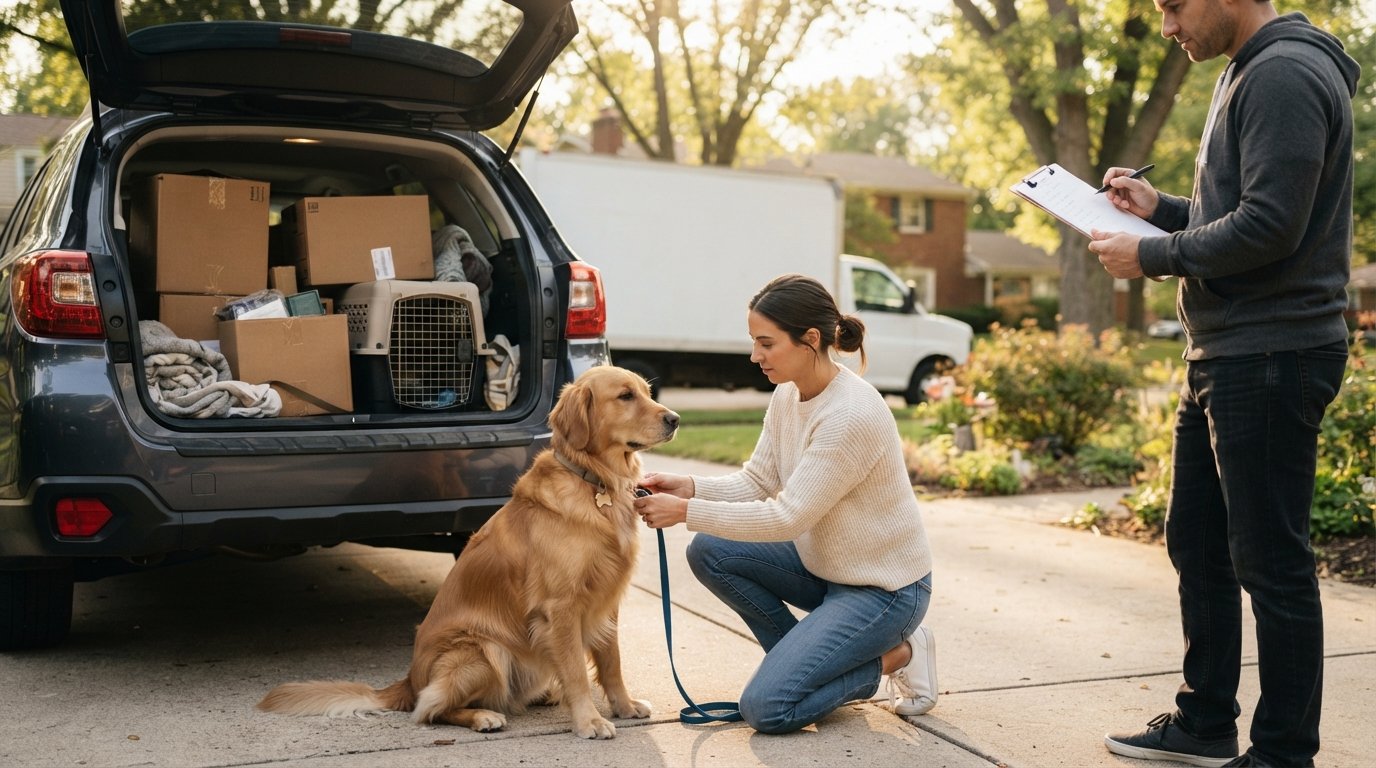
Moving With a Dog Long Distance: Tips for a Smooth Trip
Moving with a dog long distance tips for a smooth trip: prepare your pet with vet checks, crate training, and pet-friendly stops. Call (833)-484-8675 for moving help.

Your dog has been with you through every late-night packing session, every empty-box maze, and every anxious glance at the loaded truck. Now comes the real challenge: a long-distance move with your four-legged co-pilot. Whether you are driving across three states or flying to a new coast, the logistics of moving with a dog long distance can feel overwhelming. But with the right preparation, you can turn a stressful journey into a manageable, even enjoyable, road trip for both of you. This guide walks you through the essential tips for a smooth trip, from pre-move vet visits to helping your dog settle into a new home.
Start With a Vet Visit and a Health Checklist
Before you pack a single box, schedule a visit with your veterinarian. A checkup ensures your dog is healthy enough for travel, especially if the journey involves flights or extreme weather. More importantly, your vet can update vaccinations, provide a health certificate (often required for air travel or interstate moves), and refill any prescriptions for the duration of the trip. If your dog takes medication for anxiety, allergies, or chronic conditions, ask for enough supply to last until you find a new vet in your destination city.
Gather all medical records in one place, including vaccination history, microchip information, and recent lab results. These documents are not just for peace of mind; they may be required by airlines, border crossings, or new boarding facilities. If you are moving internationally, research the destination country's pet import rules well in advance, as some require months of preparation, including rabies titers or quarantine arrangements.
Ask your vet about motion sickness and anxiety. Some dogs travel well with no intervention, while others benefit from over-the-counter calming supplements or prescription medication. Never administer any medication without veterinary approval, and test it at home before the trip to observe how your dog reacts. A trial run can prevent surprises on the road.
Prepare Your Dog for the Journey: Car and Air Travel
Dogs thrive on routine, and a long-distance move disrupts everything they know. Start preparing weeks in advance by acclimating your dog to the carrier or crate you will use during travel. Leave the crate open in a common area with treats and a favorite blanket inside so your dog associates it with positive experiences. For car travel, take short practice drives that gradually increase in length, rewarding calm behavior. This desensitization reduces stress and makes the actual trip far easier.
If you are flying, book a direct flight whenever possible to minimize time in transit and reduce the risk of mishandling. Confirm your airline's pet policy early, as some carriers have breed restrictions, weight limits, or temperature embargoes during summer and winter. For in-cabin travel, your dog must fit comfortably in an airline-approved carrier under the seat. For cargo travel (which is sometimes unavoidable for larger dogs), use a hard-sided crate that meets International Air Transport Association (IATA) standards, and label it clearly with your contact information.
Whether driving or flying, pack a pet travel kit that covers all the essentials. Here is a checklist to get you started:
- Food and water for the entire trip, plus a few extra days' supply in case of delays
- Collapsible bowls and a water bottle for hydration on the go
- Medications, first-aid supplies, and a copy of health records
- Leash, harness, and a spare collar with ID tags
- Waste bags, paper towels, and cleaning wipes for accidents
- A familiar blanket or toy to provide comfort and scent recognition
Keep this kit accessible, not buried in the trunk. A small backpack or tote dedicated to your dog's needs makes stops faster and less chaotic. Rotate toys to keep your dog engaged, and bring a few high-value chews to occupy them during long stretches of travel.
Safety Restraints and Crate Training for Car Travel
An unrestrained dog in a moving vehicle is a danger to itself, the driver, and other passengers. A sudden stop can turn a 60-pound dog into a projectile. Invest in a crash-tested harness or a secured crate. Crash-tested harnesses attach to the seat belt and distribute force across the dog's chest, while crates should be anchored to the vehicle using seat belts or tie-downs. Never let your dog ride with its head out the window or loose in the back of a pickup truck.
Crate training is especially valuable for long trips. A dog that is comfortable in a crate will settle more easily in hotel rooms, rest stops, and unfamiliar environments. Start crate training at home by feeding meals inside the crate and rewarding your dog for entering voluntarily. Gradually increase the time spent in the crate with the door closed, and practice during calm moments rather than only before stressful events. By the time you hit the road, your dog should see the crate as a safe den rather than a cage.
During the drive, plan frequent stops every two to three hours for bathroom breaks, water, and a short walk. Avoid exercising your dog vigorously right before a long stretch in the car; a tired dog may sleep better, but an overexcited one may pant and drool. Keep the car well-ventilated and never leave your dog unattended in a parked vehicle, especially in warm weather. For more tips on reducing travel stress for pets, our guide on moving with a cat long distance offers additional insights that apply to dogs as well.
Choose Pet-Friendly Accommodations Along the Route
Not all hotels welcome dogs, and those that do may have size limits, breed restrictions, or additional fees. Research pet-friendly accommodations before you leave, and confirm policies directly with the hotel rather than relying on third-party listings. Look for properties with easy access to grassy areas for walks and relief, and request a ground-floor room to minimize elevator rides and hallway distractions. Bring a sheet or blanket to cover furniture and protect the room from shedding, and never leave your dog alone in a hotel room unless you are certain it will remain calm.
For longer drives, consider staying at campgrounds, RV parks, or vacation rentals that offer more space and privacy. These options often provide fenced areas or nearby trails where your dog can burn off energy. If you are traveling during peak season, book pet-friendly rooms well in advance, as they fill up quickly. Keep a list of emergency veterinary clinics along your route in case of illness or injury.
When planning your route, factor in rest stops and parks where you can take breaks. Many highway rest areas have designated pet walk areas, but they may not be fenced. Keep your dog on a leash at all times, especially in unfamiliar environments where wildlife or traffic poses a risk. A long leash or tie-out can be useful for breaks, but never leave your dog unattended.
Helping Your Dog Adjust to the New Home
The journey does not end when you reach your new driveway. Dogs are territorial and rely on familiar scents and routines, so the first few days in a new home can be confusing. Set up a quiet space with your dog's bed, crate, food and water bowls, and a few familiar toys before you unpack the rest of the house. This gives your dog a safe retreat amid the chaos of moving boxes and furniture arrangement.
Maintain your dog's routine as closely as possible. Feed at the same times, go for walks on a regular schedule, and continue any training or playtime rituals. If your dog seems anxious, provide extra reassurance and avoid leaving them alone for long periods during the first week. Gradually introduce your dog to the neighborhood with short, calm walks, and be cautious about off-leash parks until you know the area and your dog's comfort level.
Update your dog's microchip information and ID tags with your new address as soon as possible. If you have moved to a new city, ask neighbors or your real estate agent for recommendations on local veterinarians, pet stores, and dog parks. Establishing a new veterinary relationship early ensures continuity of care and gives you a resource if any health issues arise. For more help with the broader logistics of your move, including packing and hiring professional movers, explore the resources at Moving.Homes.
If you are considering energy-efficient upgrades for your new home, NewSolarQuotes offers independent educational resources and cost calculators for homeowners exploring solar and renewable energy options.
Final Tips for a Smooth Long-Distance Move With Your Dog
Long-distance moves are demanding, but a well-prepared dog can make the trip far less stressful. Keep a calm demeanor, as dogs pick up on your anxiety. Stay flexible and build extra time into your schedule for unexpected delays. If you are hiring professional movers, consider using a full-service option so you can focus on your dog's needs rather than heavy lifting. Moving.Homes can connect you with vetted long-distance movers who understand the importance of a smooth transition for the whole family, including the furry members.
Finally, remember that patience is key. Your dog may take days or even weeks to fully settle into the new environment. With consistency, affection, and a little planning, your dog will soon feel at home in your new place. Safe travels to you and your loyal companion.