
Customs Clearance Process for International Household Goods
Navigate the customs clearance process for international household goods with confidence. Call 8334848675 for expert moving support and free quotes.

By Rachel Clark
Imagine watching a massive container ship slip away from port, knowing that every piece of furniture, every box of photo albums, and every kitchen item you own is on board, bound for a new life in another country. Then imagine getting a call three weeks later: your shipment is stuck in a customs warehouse, accruing daily storage fees, because one form was filled out incorrectly. This scenario plays out far more often than most international movers expect, and the difference between a smooth arrival and a costly delay almost always comes down to how well the customs clearance process for international household goods was managed before the move even began.
Understanding this process is not optional when you are relocating overseas. Customs authorities in every country operate under strict regulations that govern what can enter, what must be taxed, and what is outright prohibited. Whether you are moving to the United States, the European Union, Australia, or anywhere else, your household goods will pass through a formal entry procedure that requires documentation, valuation, and often the payment of duties or taxes. The more you know ahead of time, the fewer surprises you will face when your shipment arrives at the port.
This guide walks through the entire customs clearance process for international household goods, from the documents you need to gather before departure to the final steps of releasing your shipment for delivery. It also covers common pitfalls, how to handle restricted items, and why working with experienced international movers can save you both time and money.
What Customs Clearance Means for Your Household Shipment
Customs clearance is the formal process by which a country's customs authority examines, evaluates, and authorizes the entry of imported goods. For household goods, this process serves two main purposes: ensuring compliance with import regulations and collecting any applicable duties or taxes. Unlike commercial cargo, personal household shipments often qualify for duty-free entry under specific conditions, but those conditions vary widely by country and require careful documentation.
When your shipment arrives at the destination port, it is held in a bonded area until clearance is completed. During this time, you or your designated customs broker must submit an entry declaration, provide supporting documents, and respond to any questions or inspections the customs authority requests. If everything is in order, the shipment is released and can be delivered to your new home. If not, it can be held for days or even weeks, with storage fees accumulating daily.
The key takeaway is that customs clearance is not a single event but a sequence of steps that begins well before your goods leave the origin country. The earlier you start preparing, the smoother the arrival will be. Understanding customs regulations for international household goods moves is an essential first step, since every destination country has its own rules about documentation, duties, and restricted items.
One of the most important distinctions in the clearance process is between accompanied and unaccompanied shipments. If you are traveling with your goods, some countries allow you to declare them at the airport or border crossing. But in most international relocations, household goods travel separately as unaccompanied baggage or freight, which means they must go through a formal customs entry process at the port of arrival. This is where a customs broker or your international moving company becomes invaluable.
Key Documents Required for Customs Clearance
The documentation package for customs clearance is the backbone of the entire process. Missing or incomplete documents are the single most common cause of delays. While requirements vary by country, most customs authorities ask for a core set of documents that establish your identity, your residency status, and the nature and value of the goods you are importing.
Before your shipment departs, your moving company or customs broker should provide you with a checklist tailored to your destination. Gathering these documents early, ideally weeks before the move, prevents last-minute scrambling. Here are the most commonly required items:
- Valid passport and visa or residency permit: Proves your identity and legal status in the destination country.
- Detailed inventory list: Itemizes every box and piece of furniture, ideally with values and quantities.
- Bill of lading or air waybill: The transport document that serves as your receipt and contract with the carrier.
- Customs declaration form: The official entry document, often completed by your broker on your behalf.
- Proof of residency change: Documents such as a lease, utility bill, or employment letter showing you are establishing residence.
In addition to these core documents, some countries require a certificate of origin, an insurance certificate, or a letter of authorization granting your broker the right to act on your behalf. For duty-free entry, you may also need to prove that you have owned and used the goods for a minimum period, typically six to twelve months, and that you are importing them within a certain window after your arrival.
Accuracy matters enormously here. A mismatch between your inventory list and the actual contents of your shipment can trigger a physical inspection, which adds time and cost. If you are unsure about any document, ask your moving company or broker to review it before submission. It is far easier to correct a form on land than to untangle a problem while your container sits in a customs yard.
Step-by-Step: How the Clearance Process Unfolds
The customs clearance process for international household goods follows a predictable sequence, though the specific steps and timelines vary by country. Understanding this sequence helps you anticipate what comes next and stay ahead of potential issues. Here is a general framework that applies to most international relocations.
- Pre-departure preparation: Gather documents, complete a detailed inventory, and confirm whether your destination country requires advance notification of your shipment.
- Arrival notification: Once your goods arrive at the destination port, the carrier or freight forwarder notifies you or your broker that the shipment is ready for entry.
- Entry filing: Your customs broker submits the entry declaration and supporting documents to the customs authority.
- Duty and tax assessment: Customs reviews the declaration and calculates any duties, taxes, or fees owed. If you qualify for duty-free status, this step confirms it.
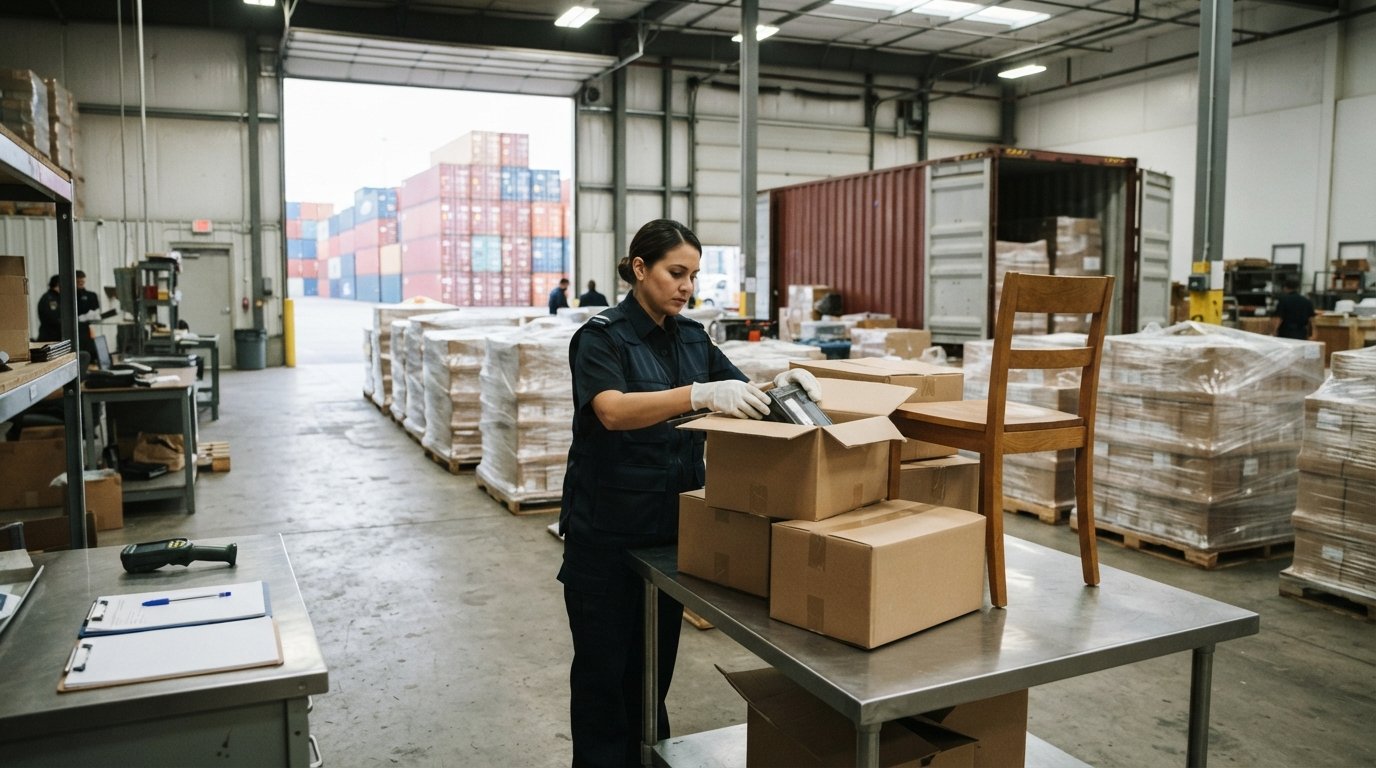
- Inspection (if required): Customs may physically examine the shipment to verify the declaration. This can be random or triggered by discrepancies.
- Release and delivery: Once duties are paid and the shipment is cleared, it is released for final delivery to your new home.
Each of these steps can take anywhere from a few hours to several days, depending on the country and the complexity of your shipment. In some destinations, clearance can be completed before the ship even docks if all documents are submitted electronically in advance. In others, the process may take a week or more, especially if an inspection is required.
One of the most critical steps is the duty and tax assessment. Many countries offer duty-free entry for household goods belonging to individuals who are relocating permanently, but this exemption usually comes with conditions. You may need to prove that you have lived abroad for a certain period, that the goods are for personal use, and that you will not sell them within a specified timeframe. Failing to meet these conditions can result in substantial charges.
Duties, Taxes, and Duty-Free Exemptions
One of the biggest concerns for anyone shipping household goods internationally is the cost of duties and taxes. The good news is that many countries offer duty-free entry for personal household effects, provided you meet specific criteria. The bad news is that these criteria are not uniform, and misunderstanding them can lead to unexpected bills.
In the United States, for example, returning residents and certain visa holders may import household goods duty-free if the goods have been owned and used abroad for at least one year and are not intended for resale. New immigrants may also qualify for duty-free entry on their first shipment. In the European Union, similar exemptions exist for individuals transferring their normal place of residence, but the goods must have been used for at least six months and be imported within twelve months of establishing residency.
Australia and New Zealand have their own rules, often requiring proof of ownership and a commitment not to sell the goods for a certain period. Some countries, such as Canada, allow duty-free entry for settlers but impose taxes on goods that arrive after you have established residency. The specifics matter, and a single missed condition can turn a duty-free shipment into a taxable one.
If your shipment does not qualify for an exemption, duties and taxes are typically calculated based on the value of the goods. This is why an accurate inventory with realistic values is essential. Undervaluing your goods to reduce taxes is a risky strategy: customs authorities can assess penalties, and your insurance coverage may be compromised if you need to file a claim. Work with your broker to determine the correct valuation method for your destination.
Restricted and Prohibited Items
Every country maintains a list of items that are restricted or prohibited from import. These lists exist for reasons of safety, security, environmental protection, and cultural preservation. For household goods shipments, the most common problem areas include food, plants, animal products, medications, and certain electronics.
Food items are frequently restricted because they can carry pests or diseases. Even packaged or canned goods may be confiscated if they contain meat, dairy, or fresh produce. Plants, seeds, and soil are almost universally prohibited or require special permits. Medications, especially those containing controlled substances, may require a prescription or advance approval. Firearms, ammunition, and certain knives are heavily regulated or banned in many countries.
Electronics can also be problematic, particularly if they contain lithium batteries or encryption technology. Some countries require permits for items like satellite phones, drones, or high-powered radio equipment. Cultural artifacts and antiques may require export or import licenses, and ivory or other protected materials are banned in most destinations.
The safest approach is to review your destination country's prohibited and restricted items list well before you pack. If you are unsure about a specific item, ask your moving company or customs broker. It is far better to leave a questionable item behind than to have your entire shipment delayed because of one prohibited piece.
Working with a Customs Broker and Moving Company
While it is technically possible to handle customs clearance yourself, most international movers rely on a customs broker to manage the process. A broker is a licensed professional who understands the regulations of the destination country, knows how to complete the necessary forms, and can communicate directly with customs authorities on your behalf. Their expertise can mean the difference between a shipment that clears in days and one that languishes for weeks.
Your international moving company often has established relationships with brokers in the destination country, which streamlines the process. When you request quotes for your move, ask whether customs clearance is included or available as an add-on service. Some movers offer door-to-door service that covers everything from packing at origin to delivery at destination, including customs formalities. Others may only handle transport, leaving you to arrange clearance separately.
If you are planning a major home improvement project before or after your move, you may also need to coordinate with local contractors. Platforms like FreeQuotes.Contractors connect homeowners with pre-vetted professionals for projects such as roofing, HVAC, remodeling, and more, which can be helpful if your new home needs work before your shipment arrives.
When selecting a moving company for an international relocation, look for one that offers guaranteed pricing, professionally trained movers, and 24/7 customer support. These features reduce the risk of unexpected costs and ensure you have someone to turn to if problems arise. A reputable mover will also provide guidance on customs documentation and help you understand what to expect at the destination port.
Common Mistakes and How to Avoid Them
Even with careful planning, mistakes happen. The most common errors in the customs clearance process for international household goods tend to fall into a few categories: incomplete documentation, inaccurate inventories, and misunderstanding of duty-free eligibility. Each of these can be avoided with preparation and the right professional support.
Incomplete documentation is the leading cause of delays. A missing signature, an expired passport, or a form filled out in the wrong language can all hold up your shipment. To avoid this, create a checklist of every document required by your destination country and verify each one before submission. Your broker or moving company can review the package for completeness.
Inaccurate inventories are another frequent problem. If your inventory list says you have ten boxes of books but customs finds twelve, they may question the accuracy of the entire declaration. Take the time to list every item, including quantities and approximate values. Photographs of high-value items can also help resolve questions quickly.
Misunderstanding duty-free eligibility is perhaps the most costly mistake. Many people assume that all household goods are duty-free, only to discover that they missed a deadline or failed to provide proof of ownership. Read the rules for your destination carefully, and if anything is unclear, ask your broker for clarification in writing.
Finally, do not underestimate the importance of timing. Some countries require that your goods arrive within a certain window after you establish residency. If your shipment is delayed, you could lose your duty-free exemption. Work with your mover to schedule shipping so that your goods arrive when you need them, not months later.
Planning Ahead for a Smooth Clearance
The customs clearance process for international household goods is complex, but it is manageable with the right approach. Start by researching your destination country's regulations, gathering your documents early, and working with experienced professionals who understand the rules. A well-prepared shipment is far more likely to clear quickly and without unexpected costs.
Remember that customs authorities are not your adversary. They are enforcing laws designed to protect public health, safety, and economic interests. When you provide accurate information and follow the rules, you make their job easier and your move smoother. The effort you invest in preparation pays off in reduced stress and faster delivery of your belongings.
If you are planning an international move, consider getting quotes from professional movers who specialize in overseas relocations. They can guide you through the customs process, connect you with trusted brokers, and ensure your household goods arrive safely and on time. With the right team and a clear understanding of what lies ahead, your international move can be a successful beginning to your new life abroad.