
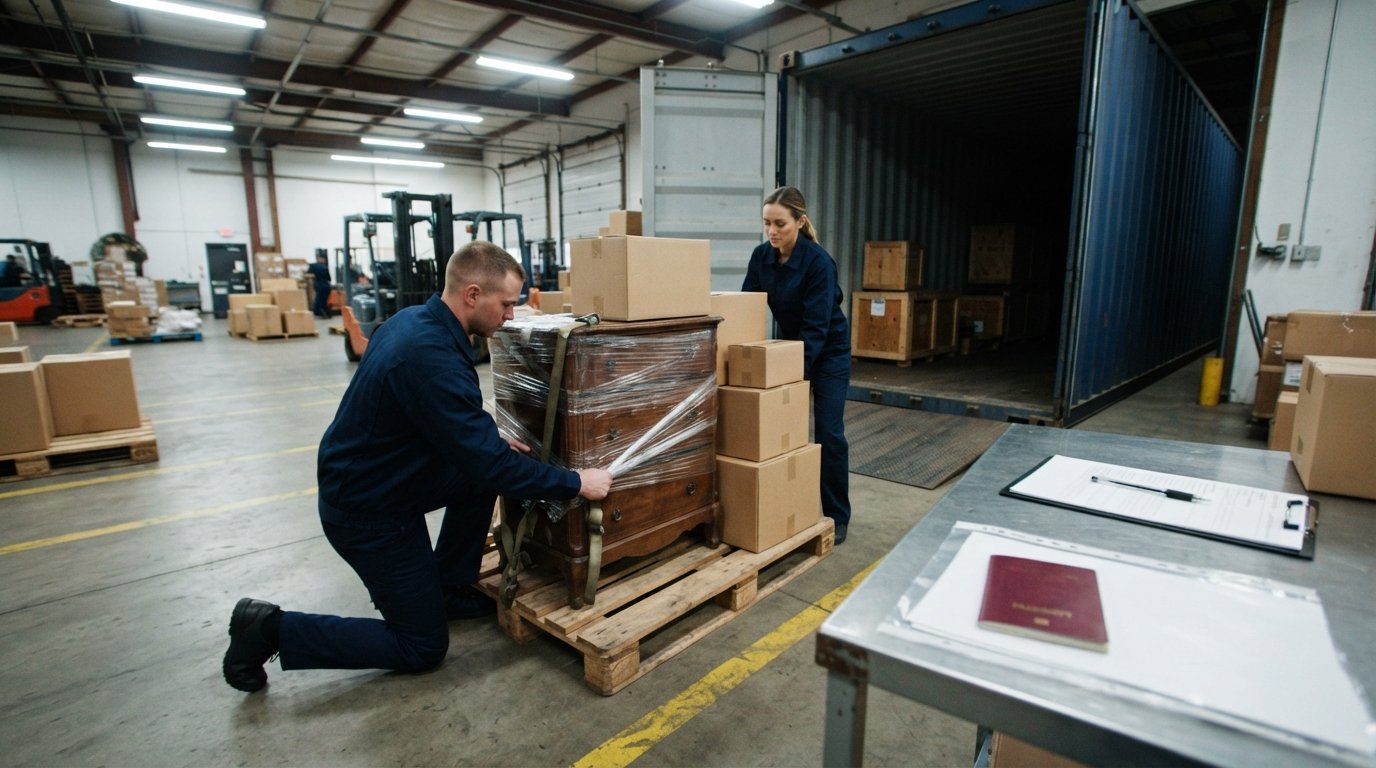
Customs Regulations for International Household Goods Moves
Learn the essential customs regulations for international household goods, including key documents, prohibited items, and how to avoid costly delays.

By Mark Johnson
When you move across an international border, the contents of your home are more than just furniture and boxes, they are a collection of personal belongings that must clear customs in your new country. The process is governed by a complex set of rules that vary by destination, and getting them wrong can mean costly delays, unexpected storage fees, or even confiscation of your items. A surprising number of relocations are delayed because the person moving assumed that a shipping container is simply loaded, transported, and delivered. In reality, every country has its own requirements for what can enter duty-free, what must be declared, and what is prohibited entirely.
Understanding these regulations before you pack your first box is essential for a smooth transition. This guide breaks down the core principles of customs regulations for international household goods, helping you prepare the right paperwork, avoid common mistakes, and know when to call in a professional. While the information here is educational and not a substitute for official customs advice from your destination country, it gives you a practical framework to start planning your international relocation with confidence.
What Are Household Goods in Customs Terms?
Customs authorities define household goods as personal effects and items that you have owned and used for a certain period, typically at least six months to a year before your move. This definition is critical because it separates your belongings from new merchandise, which would be subject to import duties and taxes. Used personal items, such as clothing, furniture, books, and kitchenware, usually qualify for duty-free entry under what is called a transfer of residence, provided you meet the residency and ownership requirements.
However, the definition is not uniform. Some countries allow a broader range of items, while others have strict limits on specific categories like electronics, alcohol, or tobacco. For example, a used laptop is generally accepted as a personal effect, but a brand-new, unopened television might be treated as a new import. To avoid paying duty on items that should be exempt, you need to document the age and ownership of your goods. Keep receipts, photos, and any maintenance records that prove you have lived with these items for the required period.
Another key factor is your visa or residency status. Most nations offer duty-free import of household goods only to individuals who are changing their primary residence. Temporary workers, students, or those on long-term assignments may face different rules, sometimes requiring a bond or a deposit that is refunded when you leave the country. Check the specific requirements for your visa category, as this will directly impact the customs regulations for international household goods that apply to you.
Key Documents for a Smooth Customs Clearance
Your shipment will not clear customs without the correct paperwork. While the exact documents vary by country, a standard set is almost always required. Start by compiling these before you ship, because obtaining them after your goods are in transit can be difficult and time-consuming. In our household relocation services guide, we emphasize that documentation is the backbone of any successful move, and this is especially true overseas.
Here are the essential documents you will likely need:
- Valid passport and visa: Proof of identity and your legal right to enter and reside in the destination country.
- Detailed inventory list: A comprehensive, itemized list of every box and item in your shipment, with descriptions and estimated values. This must be accurate and match the packing list used by your moving company.
- Proof of ownership and residency: Lease agreements, utility bills, or tax returns from your previous country that show you have lived there and used the items.
- Bill of lading or air waybill: The shipping contract between you and the carrier, which acts as your receipt and tracking document.
- Customs declaration form: The official form required by the destination country, often available online, where you declare the value and nature of your goods.
Beyond these basics, some countries require additional forms like a power of attorney for your customs broker, a certificate of residence, or a separate list for high-value items like jewelry or art. It is wise to create two copies of everything, one for the shipping company and one for yourself. You should also keep digital backups in a cloud folder that you can access from anywhere.
One of the most common mistakes is undervaluing items to reduce duties. Customs officials are experienced and know the approximate value of used goods. If they suspect undervaluation, they can delay your shipment for inspection, and you may face fines. Be honest and consistent with your values across all documents, because discrepancies between your inventory, insurance forms, and customs declaration are a red flag.
Prohibited and Restricted Items You Cannot Ship
Every country has a list of items that are completely banned from import, and another list of items that are restricted and require special permits. These rules exist to protect public health, safety, agriculture, and national security. Before you pack, review the prohibited list for your destination, and be ruthless in removing any items that are not allowed. Shipping a prohibited item can lead to confiscation, fines, and even legal action, and it can hold up your entire container for weeks.
Common prohibited items include:
- Plants, seeds, and untreated wood products, which can carry pests and diseases.
- Fresh fruits, vegetables, and meats.
- Firearms and ammunition (unless you have a specific import license).
- Illegal drugs and drug paraphernalia.
- Certain types of aerosols, paints, and chemicals that are considered hazardous for transport.
Restricted items are not banned but require you to obtain permits or follow special procedures. These often include alcohol and tobacco (with quantity limits), medications (especially narcotics or psychotropics, which need a doctor's prescription), pets (with vaccination and quarantine requirements), and vehicles (which must meet local emission and safety standards). Antiques and cultural artifacts may also be restricted if the country wants to prevent the export of its heritage.
If you are unsure about an item, do not guess. Contact the embassy or consulate of your destination country, or consult with a licensed customs broker. They can give you a definitive answer and help you apply for any necessary permits. It is far better to leave a questionable item behind than to risk the integrity of your entire shipment.
Duties, Taxes, and Valuation of Your Goods
Even with duty-free allowances for used household goods, you may still face taxes and fees. Many countries charge a value-added tax (VAT) or goods and services tax (GST) on the import of all goods, even if the goods themselves are exempt from customs duty. The valuation is typically based on the replacement cost of the items, not their original purchase price, and you may be required to provide evidence of this value.
The duty and tax calculation is usually a percentage of the total declared value, and it can range from zero for a genuine transfer of residence to a significant amount if your items are new or if you fail to meet the residency requirements. Some countries have de minimis thresholds, below which no duty or tax is charged, but these are rarely applicable to a full household shipment. To minimize surprises, prepare a realistic valuation of your goods before you move and factor potential taxes into your relocation budget.
Here is a quick look at how different regions typically handle household goods import:
- European Union: If you have lived outside the EU for at least 12 months, your personal goods are usually exempt from duty and VAT upon a transfer of residence.
- United States: A U.S. citizen or resident returning from abroad can bring household goods duty-free if they were owned and used for at least one year.
- Australia: Offers duty-free entry for personal effects if you have owned them for 12 months or more and you are a returning resident or a new permanent resident.
- Canada: Similar to the U.S., requires a minimum ownership period of six months for duty-free import of household goods.
These are general patterns, and each country has its own specific conditions. Always verify with the official customs authority of your destination country, because regulations change frequently. A customs broker can also help you navigate the valuation process and ensure that you are not overpaying.
Working with a Customs Broker and Moving Company
International moves are complex, and the risk of costly mistakes is high. This is why most professional international moving companies include customs brokerage services in their offerings. A licensed customs broker acts as your representative with the customs authorities, preparing and submitting the necessary documents, paying any duties on your behalf, and communicating with officials to resolve issues. They are experts in the local regulations and can save you significant time and stress.
When you choose a moving company, ask specifically about their customs expertise. Do they have in-house brokers or do they outsource? What is their track record with moves to your destination country? A good mover will provide you with a detailed list of the documents you need, help you complete the inventory correctly, and guide you through the process. They should also be transparent about potential duties and taxes, giving you an estimate before you ship.
Be wary of moving companies that quote a flat, all-inclusive price without discussing customs details. You should also avoid companies that advise you to undervalue your goods or to misdeclare items to avoid duties. Such actions are illegal and can lead to severe penalties. Instead, look for a partner who is upfront about the realities of customs regulations for international household goods and helps you prepare properly.
Step-by-Step Guide to Clearing Your Household Goods
To help you visualize the entire process, here is a step-by-step breakdown of what happens from the moment your goods arrive in the destination country until they are released to you. This timeline can vary from a few days to several weeks, depending on the country and the completeness of your paperwork.
- Arrival notification: The shipping line or airline notifies your customs broker or moving company that your container or shipment has arrived.
- Document submission: Your broker submits the customs declaration, inventory, bill of lading, and supporting documents to the customs office.
- Customs inspection (optional): Customs officials may select your shipment for a physical inspection or a document review. This is more likely if you have new items, a high-value shipment, or if the paperwork has discrepancies.
- Duty and tax assessment: If duties or taxes are due, customs issues a notice, and your broker pays the amount on your behalf (you will need to reimburse them).
- Release and delivery: Once cleared, your goods are released, and the moving company arranges for delivery to your new home.
Throughout this process, communication is key. Your broker should keep you informed of any issues or delays, and you should respond promptly to any requests for additional information. A delay in response can extend the clearance time, so keep your phone and email accessible. After delivery, inspect your goods carefully and note any damage on the delivery receipt before you sign it.
Common Mistakes to Avoid with Customs
Many international moves hit snags because of avoidable errors. Here are some of the most frequent mistakes that homeowners make, and how you can steer clear of them:
- Failing to declare all items: If customs finds items that are not on your inventory, they can confiscate them and penalize you. Be exhaustive in your list, including every book, toy, and kitchen utensil.
- Shipping prohibited items: Review the prohibited list carefully and remove anything that is banned, no matter how small or insignificant it seems.
- Not keeping proof of ownership: For high-value items, keep receipts or appraisals. This is especially important for electronics, jewelry, and art.
- Ignoring local electrical standards: Many countries use different voltages or plug types. Check whether your appliances are compatible, and be prepared to leave them behind or buy converters.
- Forgetting to arrange pet import: If you are shipping a pet, this is a separate process with its own paperwork, microchipping, and quarantine requirements. Do not assume it is covered by your household goods move.
By being diligent and proactive, you can avoid these pitfalls. Remember that customs officials are not your enemy, but they have a job to do. A complete, accurate, and honest declaration is your best tool for a smooth process.
Final Thoughts on Your International Move
Navigating customs regulations for international household goods is a significant task, but it is one that can be managed with careful planning and the right professional support. The key is to start early, gather all required documents, and be transparent in your declarations. Do not underestimate the value of a good customs broker, as they can save you from costly delays and legal headaches.
As you plan your move, consider using a platform like FreeQuotes.Contractors to connect with vetted moving and logistics professionals who can handle the heavy lifting. Their network includes experts in international relocation who understand the complexities of customs clearance. With the right preparation and partners, your international move can be a smooth and rewarding experience, allowing you to settle into your new home with peace of mind.