
Small Office Movers for Business Relocation: A 2026 Guide
Ensure a smooth, efficient office relocation with expert small office movers. Minimize downtime and protect your business assets.

By Steven Clark
Relocating a small office is a significant undertaking. Unlike a residential move, it involves sensitive equipment, critical data, and the need to minimize downtime. You cannot afford to lose a day of productivity or damage expensive technology. This is where professional small office movers for business relocation become essential. With the right partner, you can turn a potentially chaotic process into a streamlined operation that gets your team back to work quickly.
Why Small Office Moves Are Different
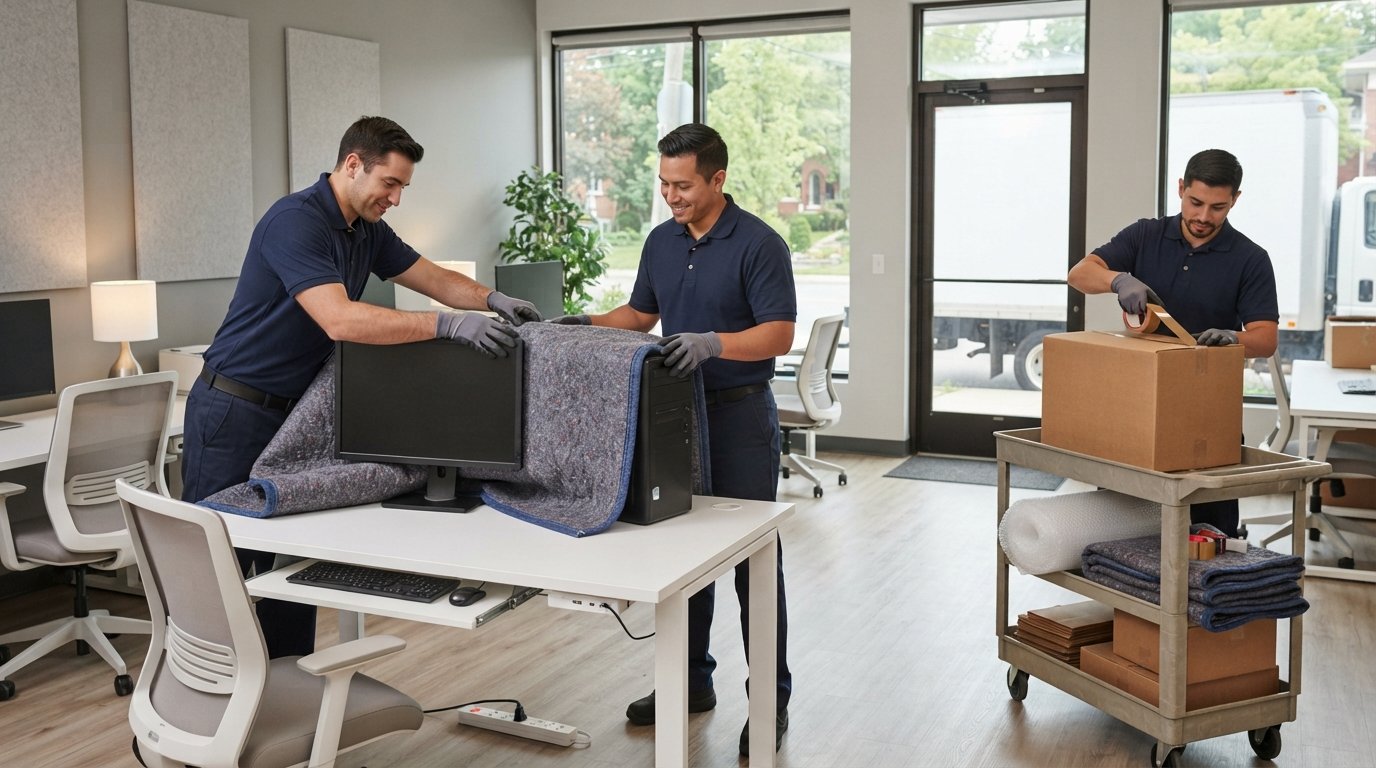
Small office moves are not just scaled-down versions of larger corporate relocations. They come with unique challenges that general movers may not be equipped to handle. You are often dealing with a dense arrangement of furniture, complex IT setups, and specialized equipment like printers, servers, and conference room technology. A professional office moving service understands these nuances and brings the right tools and expertise to manage them safely.
Moreover, every hour your business is not operational is an hour of lost revenue. The goal is to plan a move that minimizes disruption, often scheduling work outside of business hours or over a weekend. Professional small office movers are accustomed to these constraints and will work around your schedule to ensure a smooth transition. They also carry the necessary insurance to protect your business assets, providing peace of mind that goes beyond what a general moving crew can offer.
What Small Office Movers for Business Relocation Should Provide
When you hire a specialized team for your office relocation, you are paying for more than just transportation. You are investing in a comprehensive service designed to handle the specific demands of a commercial space. Before you book, ensure the company you choose offers the following core services.
- IT and Electronics Handling: Professional disconnection, packing, transportation, and reconnection of computer systems, servers, and other sensitive electronics.
- Furniture Disassembly and Reassembly: Careful breakdown and setup of workstations, desks, cubicles, and other office furniture to ensure everything fits through doorways and is properly reinstalled.
- Specialized Packing Materials: Use of anti-static bubble wrap, custom crates, and heavy-duty boxes to protect fragile and high-value equipment during transit.
- Floor Protection and Labeling: Protection of floors, walls, and elevators in both your old and new locations, along with a systematic labeling system to ensure every item ends up in the right place.
These services are the backbone of a successful office move. Without them, you risk significant damage, data loss, and extended downtime. A reputable moving company will provide a detailed plan that outlines each of these steps, ensuring no detail is overlooked.
Creating a Pre-Move Plan for Your Business
Preparation is the most critical phase of any office relocation. A well-structured plan will save you time, money, and stress. Start by designating a move coordinator within your team. This person will be the single point of contact for the moving company and will oversee all internal communication. This individual is responsible for creating a timeline and ensuring all departments are aligned.
Next, conduct a thorough inventory of all your assets. This includes furniture, electronics, files, and even kitchen supplies. Knowing exactly what you have will help you get an accurate quote from your movers and will also help you decide what to keep, donate, or dispose of before the move. This is an opportune time to declutter and get rid of items that are no longer needed, reducing your moving costs and simplifying the transition.
Finally, communicate with your employees well in advance. Keep them informed about the moving date, their responsibilities, and what they should do to prepare their personal workspaces. This can be done through company meetings, emails, or a dedicated intranet page. A clear plan and open communication can significantly reduce the anxiety and confusion that often accompanies a move.
How to Choose the Right Moving Partner
Selecting the right small office movers for business relocation is a decision that should not be taken lightly. You need a partner who is reliable, experienced, and transparent about their pricing. Start by getting quotes from multiple companies. Be wary of estimates that are significantly lower than others; this often indicates hidden fees or a lack of experience. Look for a company that offers guaranteed pricing, so you are not hit with surprise bills on moving day.
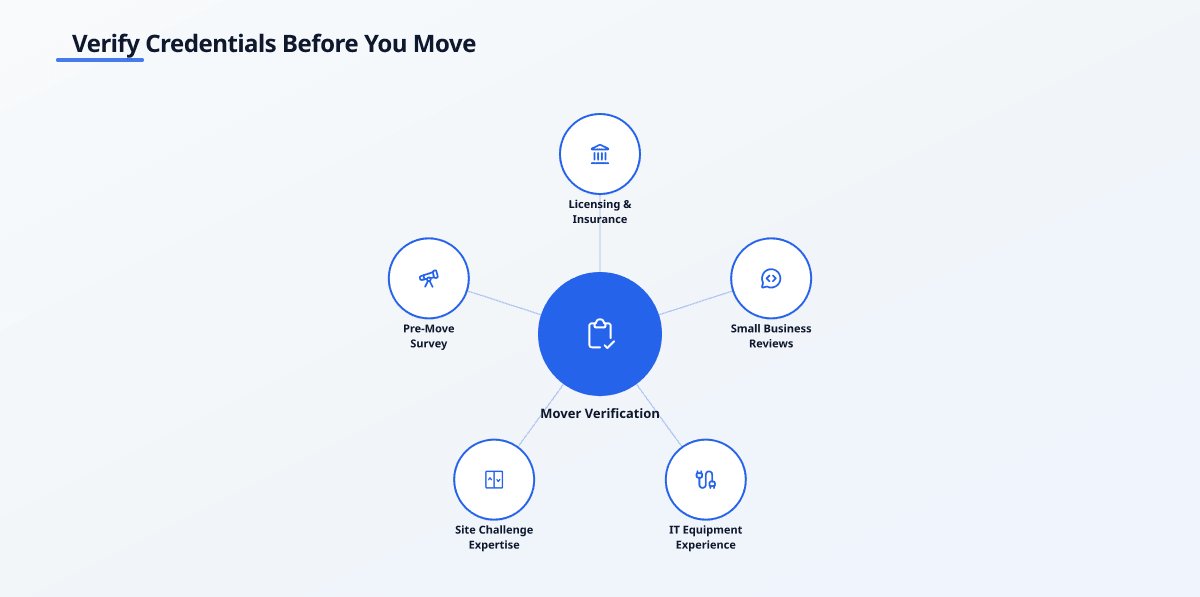
You should also verify the company's credentials. Check for proper licensing and insurance, and read reviews from other small businesses. A mover that specializes in commercial relocations will have a portfolio of successful projects and will be able to provide references. Ask about their experience with IT equipment and any specific challenges your office might present, such as narrow hallways, limited elevator access, or the need for a shuttle service. A professional team will conduct a pre-move survey of your office to understand these details and provide a more accurate plan.
For a deeper understanding of what to expect from a professional service, you might find our corporate movers and business relocation guide helpful. It offers insights into the broader process and how to ensure a successful transition for your entire team.
Cost Factors and Budgeting for Your Office Move
Understanding the cost structure of office moving services is essential for budgeting. The price is typically influenced by several key factors. The distance between your old and new locations is a primary driver, as is the total volume of items to be moved. The number of movers required and the time it will take to complete the job also play a significant role. Specialized services, such as handling heavy safes or complex IT systems, will add to the overall cost.
Here is a closer look at what influences your final quote:
- Distance: Local moves are usually charged by the hour, while long-distance moves are priced based on weight and distance.
- Volume and Weight: The more items you have, the larger the truck and the more labor required, which increases the cost.
- Labor and Time: The number of movers needed and the estimated hours to complete the move are significant cost factors.
- Additional Services: Packing, unpacking, furniture disassembly and reassembly, and storage will all add to the final bill.
To avoid budget overruns, get detailed quotes that itemize all services. A reputable mover will provide a transparent breakdown so you know exactly what you are paying for. Remember to factor in a contingency buffer of about 10% to 15% for any unforeseen circumstances. With a clear budget, you can make informed decisions and focus on getting your team back to work.
The Day of the Move: A Step-by-Step Process
On moving day, the professional team you hired will execute the plan you have set. The process begins early, often before your employees arrive, to maximize efficiency. The movers will first protect the floors and walls in both locations. They will then systematically load the truck, starting with the heaviest and most fragile items. A well-organized crew will have a loading plan to ensure weight distribution and prevent damage during transit.
Meanwhile, your move coordinator should be on site to oversee the process and answer any questions. It is crucial to have the new office space prepared and ready before the movers arrive. This includes ensuring that the elevator is booked, the loading dock is accessible, and that there is a designated area for each department. Once at the new location, the movers will unload and place each item according to your floor plan and labeling system. They will then assemble furniture and connect basic utilities, leaving you to focus on the final IT setup.
Post-Move: Getting Your Team Operational
After the physical move is complete, the work is not over. The final stage is getting your business fully operational. This involves setting up the IT infrastructure, testing all connections, and ensuring that your employees have everything they need. A professional moving service can assist with unpacking and waste removal, allowing your team to focus on their core responsibilities.
A well-executed move will have a dedicated plan for the first few days in the new office. This includes verifying that all phone lines and internet connections are working, confirming that all files and documents are in their designated places, and addressing any minor issues that may arise. The goal is to resume normal business operations as quickly as possible. By partnering with skilled small office movers, you can minimize downtime and ensure a smooth transition for your employees and your business. The right team will not just move your belongings, they will help you successfully start a new chapter in a new location. Learn more