
Moving to a High Rise with a Freight Elevator: What to Know
Plan your high-rise move with freight elevator rules, insurance, and timing. Call (833)-484-8675 for expert moving assistance.

By Rachel Clark
You have signed the lease for a high-rise apartment with skyline views, but before you enjoy that view, you have to get your belongings up there. Moving into a high-rise with a freight elevator is not the same as moving into a ground-floor unit or a suburban house. There are building rules, elevator reservations, insurance requirements, and logistical puzzles that can turn a straightforward move into a complex operation. Understanding these details before moving day can save you time, money, and a lot of stress.
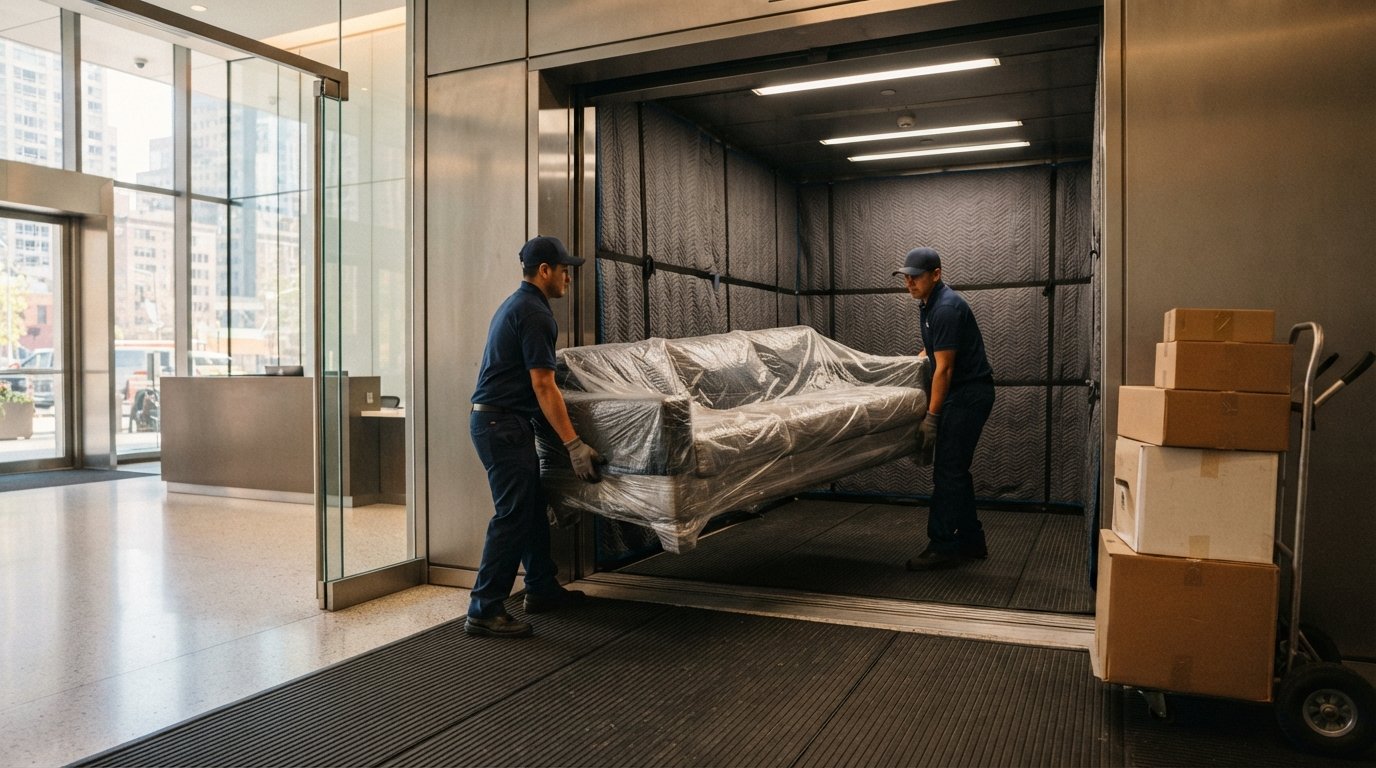
The freight elevator is your lifeline in a high-rise move. It is the only practical way to transport furniture, appliances, and dozens of boxes to your floor without wearing out your back or the building's passenger elevators. But that elevator is also a shared resource with strict scheduling and strict rules. Buildings manage freight elevator use carefully to protect the equipment, reduce wear and tear, and minimize disruption to residents. If you ignore those rules, you could face fines, delays, or even a canceled move.
This guide covers what to know about moving to a high rise apartment with a freight elevator, from booking your time slot to protecting common areas. Whether you are hiring professional movers or coordinating a DIY move, these insights will help you navigate the building's requirements and keep your move on track.
Book the Freight Elevator Early and Get Building Approval
The first and most important step is to contact your building's management office as soon as you have a move date. Most high-rise buildings require you to reserve the freight elevator in advance, sometimes weeks ahead. Popular move-in dates, like the end of the month or the first of the month, fill up quickly. If you wait until the last minute, you might be stuck with an inconvenient time slot or no slot at all.
When you call, ask for the building's move-in policy in writing. This document will outline the rules for elevator use, permitted moving hours, insurance requirements, and any associated fees. You will likely need to submit a move-in request form with your name, unit number, move date, and the name of your moving company. Some buildings also require a certificate of insurance from your movers before they will approve the move.
Here is a checklist of what to confirm with building management:
- Elevator reservation procedure: How far in advance can you book, and what is the maximum time allowed?
- Permitted moving hours: Many buildings restrict moves to weekdays between certain hours, such as 9 a.m. to 5 p.m., to avoid disturbing residents.
- Insurance requirements: What type of certificate of insurance is needed, and who must be listed as additional insured?
- Move-in fee and deposit: Some buildings charge a non-refundable move-in fee and a refundable deposit to cover potential damage to common areas.
- Protection requirements: Does the building require floor runners, corner guards, or padding for the elevator and hallways?
Once you have this information, share it with your moving company. Reputable movers are familiar with high-rise protocols and can help you meet the building's requirements. If you are planning a DIY move, you will need to handle these arrangements yourself, including securing insurance coverage if the building requires it.
Understand Insurance and Building Requirements for Movers
High-rise buildings often require moving companies to provide a certificate of insurance (COI) before the move. This document proves that the moving company carries liability insurance and, in some cases, workers' compensation coverage. The building may ask to be named as an additional insured on the policy, which protects the building if the movers damage common areas or cause injury on the property.
If you hire a professional moving company, ask them for a COI as soon as you book. Most established movers can provide this quickly. If they hesitate or refuse, that is a red flag. A legitimate moving company should have no problem supplying the necessary paperwork. For a smoother process, you can get connected with movers who can help with the required documentation and are experienced with high-rise moves. When requesting quotes, mention that your building requires a COI and ask if there are any additional fees for providing it.
For DIY movers, the building may require you to provide proof of renter's insurance or a separate liability policy. Some buildings also require a deposit to cover potential damage to the elevator or common areas. Be prepared to pay this deposit in advance and understand the conditions for getting it back. The building may inspect the elevator and hallways after your move before refunding the deposit.
Plan for Long Carries from the Loading Dock to Your Unit
In a high-rise, the loading dock is often far from your apartment. You might have to navigate service corridors, multiple sets of doors, and a long hallway before you even reach the freight elevator. This distance adds time and effort to every trip. Professional movers account for this in their estimates, but DIY movers often underestimate how exhausting these long carries can be.
Measure the distance from the loading dock to the elevator and from the elevator to your unit. Consider the number of corners, doorways, and stairs along the route. If the path is narrow or has tight turns, large furniture might need to be disassembled or hoisted. Walk the route with your movers beforehand so they can plan the most efficient way to move items.
To reduce the number of trips, pack efficiently and use sturdy boxes and equipment like hand trucks and dollies. If you are hiring movers, ask if they will provide these tools or if you need to supply them. Also, check if the building has a staging area near the loading dock where you can temporarily place items. Some buildings allow you to reserve a loading zone, but you may need to coordinate with management to avoid conflicts with other move-ins or deliveries.
Timing is another factor. Long carries take more time, so book a longer elevator reservation if possible. If the freight elevator is only available for a two-hour window, you may need to move smaller loads or hire more movers to speed up the process. For a detailed overview of moving services and how to coordinate them, see our complete guide to moving and delivery services.
Protect Common Areas and Avoid Damage Fees
High-rise buildings have valuable common areas: marble lobbies, carpeted hallways, stainless steel elevator interiors, and freshly painted walls. Moving can easily damage these surfaces if you are not careful. To avoid costly damage fees, take steps to protect the path from the loading dock to your unit.
Most buildings require you to use protective materials such as floor runners, corner guards, and elevator pads. Some buildings provide these items, while others expect you to supply them. Ask management about the specific requirements. If you hire professional movers, they often bring their own protection equipment, but confirm this in advance. DIY movers can purchase or rent moving blankets, plastic wrap, and floor coverings from moving supply stores.
In addition to physical protection, consider the timing of your move to minimize disruption. Avoid moving during peak resident hours, such as early morning or evening commute times, when the lobby and elevators are busy. Many buildings restrict moves to weekdays between 9 a.m. and 5 p.m. for this reason. If you must move on a weekend, check if the building allows it and whether there are additional fees.
Also, be mindful of noise. Dragging furniture or dropping boxes can echo through hallways and annoy neighbors. Use dollies and moving straps to carry items quietly. If you are moving in a building with strict noise ordinances, schedule your move during permitted hours and keep noise to a minimum.
Time Your Move to Avoid Resident Traffic and Elevator Conflicts
Even with a reserved freight elevator, you may encounter conflicts with residents or other movers. High-rise buildings often have multiple move-ins and move-outs scheduled on the same day. To avoid delays, confirm your reservation a day or two before the move and arrive early to secure the elevator. If another mover is using the elevator when you arrive, contact building management to resolve the conflict.
Consider the building's daily rhythms. Morning and evening rush hours are busy times for passenger elevators, but freight elevators may also be in demand for deliveries and maintenance. Mid-morning to early afternoon is often the quietest time for moves. If you have flexibility, choose a mid-week, mid-month date to avoid the end-of-month rush when leases typically turn over.
Communicate with your movers about the schedule. Give them the building's rules and the elevator reservation time. If the move takes longer than expected, you may need to extend the reservation or reschedule. Some buildings charge overtime fees for using the freight elevator beyond the reserved time, so build a buffer into your schedule.
Finally, keep the building informed. Provide management with the moving company's name, the number of movers, and the expected arrival time. This helps the building prepare and reduces the chance of misunderstandings. If you are moving during a busy period, ask if you can post notices in the lobby or elevators to inform residents about temporary elevator closures.
Coordinate with Building Staff and Follow All Rules
Building staff, such as concierges, security guards, and maintenance workers, are your allies during a high-rise move. They can help you navigate the building, provide access to service elevators, and ensure you follow the rules. Introduce yourself and your movers to the staff when you arrive. A friendly attitude can go a long way toward smooth cooperation.
Follow all building rules to the letter. This includes wearing protective shoe covers in carpeted areas, not blocking fire exits, and keeping the loading dock clear. If the building requires you to use a specific entrance for moves, use it. Ignoring these rules can result in fines or a stop-work order, which can derail your entire move.
If you encounter problems, such as a broken freight elevator or an uncooperative staff member, contact building management immediately. Document the issue and ask for a solution. Most buildings want your move to go smoothly, but they also need to protect their property and residents. Clear communication and a cooperative attitude will help you resolve issues quickly.
For homeowners and businesses exploring renewable energy, resources like NewSolarQuotes offer independent guidance on solar and other clean energy options, which can be a useful consideration when settling into a new home or planning long-term energy savings.
Prepare Your Unit and Elevator for a Smooth Move
Before moving day, prepare your new apartment to receive your belongings. Clear hallways and doorways, and protect floors with cardboard or moving blankets. If the building requires elevator padding, ensure it is installed before the move begins. Label boxes with the room they belong in so movers can place them efficiently.
On moving day, do a final walkthrough of the route from the loading dock to your unit. Check for any obstacles, such as wet floors or construction, and report them to building management. Keep a copy of your elevator reservation and building rules handy. If you are hiring movers, provide them with a floor plan or a simple diagram of where items should go. This reduces confusion and speeds up the unloading process.
After the move, inspect the elevator and common areas with building staff to confirm no damage occurred. If you followed the rules and used protective materials, you should get your deposit back without issue. Leave the elevator clean and ready for the next resident.
Moving to a high-rise with a freight elevator requires planning and coordination, but it is manageable with the right approach. Book early, understand the insurance and building requirements, protect common areas, and time your move strategically. By respecting the building's rules and working with professional movers, you can turn a complex high-rise move into a smooth transition to your new home.