

Senior Moving Services: Specialized Help for a Smooth Relocation
Discover how moving companies for seniors specialized moving services reduce stress, prevent injury, and ensure a smooth, dignified relocation.

By Tyler Scott
Moving later in life brings unique challenges that go far beyond packing boxes. Decades of accumulated belongings, physical limitations, and the emotional weight of leaving a longtime home can make the process feel overwhelming. That is why moving companies for seniors specialized moving services have become essential. These providers do more than transport items; they offer a complete support system designed to protect older adults from injury, fraud, and exhaustion. Whether you are downsizing after retirement, relocating to be closer to family, or transitioning to a senior living community, understanding how these services work can mean the difference between a stressful ordeal and a well-orchestrated transition.
What Makes Senior Moving Services Different
Traditional movers load trucks and haul boxes, but senior-focused companies address the entire experience. Their crews receive training in patient communication, safe lifting techniques for clients with mobility issues, and the logistics of sorting through decades of possessions. They also understand that many seniors feel a deep sense of loss during this transition, so they approach each task with empathy and patience.
One key distinction is the range of services offered. Beyond basic transportation, these companies provide packing and unpacking, furniture rearrangement in the new home, and even help with setting up beds and connecting essential appliances. Some go further by offering donation pickups, estate sale coordination, and assistance with transferring prescriptions or medical records. This holistic approach reduces the physical and mental strain on older adults and their families, which is why many consider senior-specific movers a worthwhile investment.
Another differentiator is the pace. Senior moves often require more time because of the need to sort, decide, and manage sentimental items. A specialized company builds this flexibility into its scheduling, avoiding the rushed timelines that are common with standard local moves. This ensures that no one feels pressured to make hasty decisions about cherished possessions.
Key Services Included in a Senior Move
When you hire a specialized provider, you are not just paying for a truck and driver. The following services are typically part of a comprehensive senior moving package:
- In-home consultation and personalized plan: A move manager visits the home to assess the scope, discuss timelines, and create a custom strategy that fits the senior's needs and budget.
- Decluttering and downsizing assistance: Crews help sort items into keep, donate, sell, or discard categories, often coordinating with charities or auction houses.
- Packing, labeling, and inventory: Professional packers protect fragile items, label boxes by room and priority, and maintain a detailed inventory for peace of mind.
- Unpacking and room setup: After transport, the team unpacks boxes, places furniture, hangs pictures, and makes beds so the new space feels like home immediately.
- Specialized item handling: Trained movers manage heavy furniture, antiques, medical equipment, and other delicate or bulky objects with care.
These services are not just conveniences; they are safeguards. For example, a senior who tries to move a heavy dresser alone risks serious injury, and a family member attempting to coordinate a long-distance move while working full-time may become overwhelmed. By outsourcing these tasks, seniors and their loved ones can focus on emotional well-being and the excitement of a new chapter.
Additionally, many senior moving companies offer short-term storage solutions if there is a gap between moving out and moving in. This is especially helpful for those transitioning to assisted living or waiting for a new home to be ready. Storage options range from a single closet to a full household, and the best providers offer climate-controlled units to protect sensitive items like photographs, documents, and electronics.
How to Choose the Right Senior Moving Company
Selecting a mover is a decision that deserves careful research. Start by asking for recommendations from friends, family, or your senior's healthcare provider. Social workers and geriatric care managers often have vetted lists of reliable companies. Once you have a few candidates, conduct interviews and request in-home estimates. A reputable company will always provide a written quote after seeing the belongings in person, never over the phone or via a generic online form.
Check credentials carefully. Confirm that the company is licensed and insured, and verify their status with the Federal Motor Carrier Safety Administration if the move crosses state lines. Look for membership in professional organizations like the National Association of Senior Movers, which sets ethical standards and provides ongoing training. Read online reviews, but also ask for references from recent senior clients. A company that has served hundreds of older adults will have a track record you can verify.
It is also wise to compare pricing structures. Some companies charge by the hour, while others provide a flat-rate quote based on inventory. For seniors on a fixed income, a guaranteed flat rate may be easier to budget for, as it eliminates surprises. Be wary of unusually low bids, as they often indicate hidden fees or underqualified crews. A detailed contract should list every service, from packing materials to fuel surcharges, so there are no last-minute surprises.
Understanding Costs and Payment Options
Costs for senior moving services vary widely based on distance, volume of belongings, and add-on services. A local downsizing move might cost $1,500 to $5,000, while a cross-country relocation for a full household could exceed $10,000. These figures are steep, but they are often justified by the physical safety and emotional relief they provide. Many families find that the cost is comparable to what they would spend on renting a truck, buying packing supplies, and taking time off work, when all expenses are totaled.
Payment flexibility is another consideration. Most companies require a deposit upfront, with the balance due on delivery. Some accept credit cards, which may offer purchase protection, while others prefer cash or bank transfers. If the senior has long-term care insurance, check whether it covers relocation assistance. Also, some nonprofit organizations and veterans' groups offer grants or sliding-scale fees for qualifying individuals. Exploring these options can significantly reduce the financial burden.
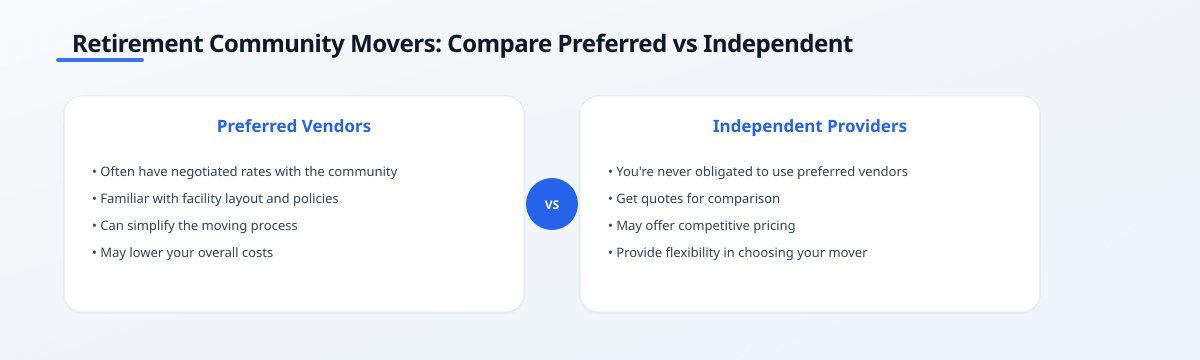
For those moving into a retirement community, it is worth asking whether the facility has preferred vendors with negotiated rates. Many senior living communities work with a short list of movers who are familiar with their layout and policies, which can simplify the process and sometimes lower costs. However, you are never obligated to use these vendors; you can always compare their quotes with independent providers.
Planning the Move: A Step-by-Step Timeline
Starting early is the most effective way to minimize stress. A well-structured timeline helps seniors and their families stay organized and avoid last-minute panic. Here is a practical schedule that most senior moves follow:
- 8 to 12 weeks before the move: Schedule an in-home estimate, research companies, and begin sorting belongings. Make a list of items to donate, sell, or give to family members.
- 4 to 6 weeks before: Book the moving company, arrange for utility disconnection in the old home and connection in the new one, and notify the post office of your change of address.
- 2 to 4 weeks before: Finish packing non-essential items, arrange medical record transfers, and schedule any necessary appointments with doctors or therapists in the new area.
- 1 week before: Pack a personal essentials box with medications, important documents, jewelry, and a change of clothes. Confirm all details with the moving company.
- Moving day: Be present to supervise, or assign a trusted family member to do so. Keep the essentials box with you, not in the moving truck.
This timeline assumes a typical downsizing move. If the senior is moving across the country or internationally, add several weeks for logistics like vehicle transport and customs paperwork. In such cases, a specialized moving company can coordinate every detail, from packing to delivery, so the senior only has to focus on saying goodbye and adjusting to their new home.
The Emotional Side of Senior Relocation
Moving is never just a physical task; it is an emotional journey. For many seniors, leaving a home filled with decades of memories can trigger grief, anxiety, and even depression. Specialized moving services are designed to address this reality. Professional move managers are trained to listen, validate feelings, and help seniors feel in control of the process. They do not rush decisions about sentimental items; instead, they offer gentle guidance and practical solutions, such as taking photos of items being donated or creating a memory book.
Family members play a crucial role as well. Open communication is essential. Discuss the move openly, acknowledge the losses, and celebrate the positives, such as less maintenance, closer proximity to loved ones, or access to new amenities. If possible, visit the new location together before the move so the senior can visualize their new life. These steps can transform a move from a loss into an opportunity.
Technology and Tools That Make Senior Moves Easier
Modern moving companies for seniors leverage technology to improve safety and efficiency. For example, some use tablet-based inventory systems that photograph and catalog every item, reducing the risk of loss or damage claims. Others offer online tracking, so family members anywhere in the world can monitor the truck's progress. Virtual consultations are now common, allowing a move manager to assess the home via video call, which is especially helpful for out-of-town family members coordinating the move remotely.
Additionally, many companies provide downloadable checklists and mobile apps that guide seniors through each phase of the move. These tools can remind them to cancel subscriptions, transfer prescriptions, or update their emergency contacts. For families, these resources offer peace of mind that nothing is overlooked. The best providers combine this digital convenience with a human touch, ensuring that no senior feels like they are just a transaction.
Real Stories: How Senior Moves Have Changed Lives
Consider the example of Margaret, an 82-year-old widow who moved from a four-bedroom house in Ohio to a one-bedroom apartment in a Florida retirement community. Her daughter hired a senior moving company that specialized in downsizing. The crew spent two days sorting through a lifetime of possessions, helping Margaret choose which items to keep, donate, and sell. They packed everything, arranged for a charity to pick up the donations, and even shipped her beloved piano to the new apartment. On moving day, Margaret arrived to find her bed made, her photos hung, and her kitchen fully stocked. She later told her daughter that the move felt like a gentle transition, not an upheaval.
Stories like Margaret's are common in the senior moving industry. Providers take pride in making the process feel dignified and stress-free. They understand that for many clients, this is the last move they will ever make, and they treat it with the gravity it deserves. Whether it is a veteran moving to a VA facility or a couple relocating to be near their grandchildren, the goal is the same: to honor the past while embracing the future.
Integrating Senior Moving with Other Relocation Needs
Senior moves often overlap with other types of relocation. For example, a senior might be moving across the country to live with adult children, or they might be relocating internationally to retire abroad. In these cases, it is wise to choose a company that can coordinate multiple services, such as vehicle shipping, storage, and international freight. A full-service provider can handle the entire logistics chain, reducing the number of vendors the senior has to manage.
For those who need additional assistance, our guide on best rated national moving companies offers a detailed comparison of providers that handle complex relocations. This resource helps families evaluate options based on pricing, services, and customer satisfaction, ensuring they make an informed choice. Pairing this research with a specialized senior mover can create a seamless experience.
Final Thoughts on Senior Moving Services
Moving companies for seniors specialized moving services represent a vital resource for older adults and their families. They offer more than muscle; they provide expertise, empathy, and a systematic approach that reduces risk and anxiety. By focusing on safety, clear communication, and comprehensive support, these professionals allow seniors to transition to their next chapter with confidence and dignity.
If you or a loved one are planning a move, start by requesting free quotes from vetted providers through Moving.Homes. This platform connects you with certified movers who offer guaranteed pricing, trained staff, and 24/7 support. With the right partner, your move can be a positive experience that opens the door to new opportunities, new friendships, and a comfortable, secure home.