

Removal Quotes: How to Compare Moving Estimates
Learn how to compare removal quotes effectively, spot hidden fees, and choose the right moving company without overpaying.

By Mark Johnson
When you're planning a move, the first step is often gathering removal quotes from several moving companies. The problem is that these quotes can look very different from one company to the next: some arrive as a single price, others as a range, and a few as a low-ball number that seems too good to be true. Understanding how to compare moving estimates is not just about picking the cheapest option; it's about avoiding surprise fees, protecting your belongings, and ensuring your move stays on schedule. This guide will walk you through the key differences between quote types, what to look for in the fine print, and how to turn a stack of estimates into a confident decision.
Why Removal Quotes Vary So Much
Removal quotes vary because moving companies calculate costs differently. Some base their price on the weight of your shipment, especially for long-distance moves, while others use the volume of your goods in cubic feet. Local moves are often quoted by the hour per crew member, plus travel time and mileage. These different methods mean that two quotes for the same home can differ by hundreds of dollars without any dishonesty on either side.
The key is to understand which method each quote uses. A weight-based quote is common for moving company quotes long distance, because the transport cost scales with how much the truck carries. A volume-based quote may be easier for the mover to estimate quickly, but it introduces uncertainty about how much space your items will actually occupy. Hourly rates are typical for local moves, and they depend heavily on how efficient the crew is and how long the drive between homes takes.
To compare estimates fairly, you need to ensure that every quote you receive is based on the same set of services. That means each company should perform a visual survey of your home, either in person or via a video call, and provide a written breakdown of what's included. Ask each mover to list the same scope of work: packing materials, furniture disassembly, stairs, elevator access, and any shuttle requirements. When you compare apples to apples, the differences in price become meaningful instead of misleading.
Binding vs. Non-Binding Estimates
One of the most critical distinctions in removal quotes is the difference between a binding and a non-binding estimate. A binding estimate is a guaranteed price: the company promises that the final cost will not exceed the quoted amount, as long as you don't add services or change the scope of the move. A non-binding estimate is a good-faith guess, and the final bill can be higher if the actual weight or volume exceeds the estimate.
For long-distance moves, you'll also see a third type: a binding-not-to-exceed estimate. This is a hybrid where the mover charges the lower of the estimated price or the actual weight-based price. It protects you from paying more than the estimate, but you might pay less if the actual weight is lower. These options are explained in detail in our guide on binding vs non-binding moving estimates, which breaks down the pros and cons of each for your specific situation.
When you compare moving estimates, always check the type of estimate listed on each document. If a company offers only a non-binding estimate, ask for a written guarantee that the final price will stay within a certain percentage of the quote, say 10%. This gives you some protection while still giving the mover flexibility. A binding estimate is usually the safest choice for budgeting, but it may come with a higher initial price to cover the mover's risk.
What a Detailed Removal Quote Should Include
A professional removal quote is more than just a final number. It should itemize the services you're paying for so you can see exactly where your money goes. Look for these components in every estimate you receive:
- Scope of services: packing materials, labor, truck size, and any special handling for items like pianos or artwork.
- Transportation fees: mileage, fuel surcharges, tolls, and any shuttle or ferry costs.
- Accessibility surcharges: stairs, narrow hallways, elevators, or long carries from the truck to the door.
- Insurance and valuation: the level of liability the mover assumes and whether you need additional coverage.
- Payment terms: deposit required, accepted payment methods, and due date for the balance.
If a quote is missing any of these items, ask the mover to clarify. A vague estimate often hides extra fees that appear later. For example, if the quote doesn't mention a fuel surcharge, you could be charged an additional 10% to 15% on moving day. The same goes for long carries, which are charges for walking more than 50 feet from the truck to your doorstep. These fees are common, and they should be disclosed upfront.
Another key item is the inventory list. The mover should provide a detailed list of every item they plan to move, along with its estimated weight or volume. Review this list carefully to ensure nothing is missing. If you have a heavy item like a piano, make sure it's included. If you're moving a large collection of books, verify that the estimate accounts for the weight. A thorough inventory list is the foundation of an accurate quote.
Red Flags in Removal Quotes
Not all removal quotes are created equal, and some are designed to lure you in with a low price, only to hit you with unexpected charges later. Here are the most common red flags to watch for:
- An estimate over the phone or online without a visual survey: movers must see your belongings to provide an accurate quote, especially for long-distance moves.
- Extremely low deposit requirements: a small deposit (under $100) may indicate a broker or a company that doesn't invest in quality.
- No physical address or local office: a reputable mover has a verifiable place of business.
- Demands for full payment in cash before the move: legitimate movers typically accept credit cards and collect payment upon delivery.
- Vague language like "subject to change" without conditions: this gives the mover unlimited ability to raise the price.
If you see these signs, it's wise to move on to another company. The lowest quote is often the most expensive in the long run when you factor in hostage loads, where a mover refuses to unload your goods until you pay an inflated bill. The Federal Motor Carrier Safety Administration (FMCSA) has a consumer complaint database, and you can check a mover's registration and complaint history there.
On the other hand, a slightly higher quote from a company with a strong reputation can save you money by avoiding disputes and delays. Remember that your time and stress have value, too. A professional mover who communicates clearly and stands behind their estimate is worth a few extra dollars per hour.
How to Compare Removal Quotes Like a Pro
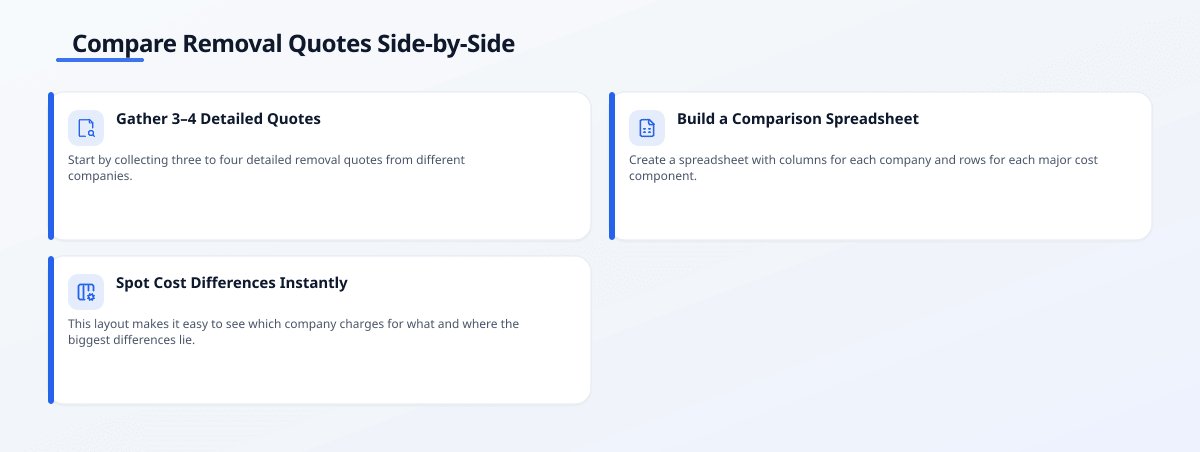
Once you have three to four detailed removal quotes, you need a systematic way to compare them. Start by creating a spreadsheet with columns for each company and rows for each major cost component. This makes it easy to see which company charges for what, and where the biggest differences lie.
Next, look at the total price, but don't stop there. Break down the quote into the following categories:
- Base transportation fee: the cost of moving your goods from point A to point B.
- Packing and unpacking: if you opted for full-service packing, this will be a significant portion of the quote.
- Additional services: storage, shuttle, or special handling for fragile or valuable items.
- Insurance and valuation: the cost of protecting your belongings during transit.
After you've itemized each quote, compare the services that are included. A quote that includes packing materials and stairs surcharges may be higher upfront but lower overall than a quote that adds these on later. Also, check the estimated weight or volume: if one company estimates 4,000 pounds and another estimates 6,000 pounds, the lower estimate may be optimistic, not cheaper.
Finally, consider the mover's reputation and customer service. Read online reviews, ask for references, and verify their USDOT number if they operate across state lines. A company that's easy to reach and answers your questions clearly is more likely to handle your move professionally. The cheapest quote is never a bargain if the mover shows up late, damages your furniture, or charges hidden fees.
Questions to Ask Before You Book
Before you sign a contract, ask each mover these questions to fill in any gaps in the estimate:
- Is this a binding or non-binding estimate?
- What is your policy on extra charges like stairs, long carries, or shuttle services?
- Do you charge a fuel surcharge, and how is it calculated?
- What is your liability for damaged or lost items, and do you offer full-value protection?
- Can you provide a written copy of the estimate and the contract before I commit?
These questions help you understand the exact terms of the quote and avoid surprises on moving day. A reputable company will answer them clearly and in writing. If a mover hesitates or gives vague answers, that's a sign they may not be reliable.
Also, ask about their cancellation and rescheduling policies. Life happens, and you may need to adjust your moving date. Knowing the policy upfront can save you a penalty fee later. Finally, confirm that the quote includes any taxes or surcharges that apply in your area. Some states have a moving tax, and a few cities charge a congestion fee for trucks.
When to Choose a Full-Service Mover
If you're comparing removal quotes and find that full-service moving is only 20% to 30% more than a DIY truck rental, it's often worth the peace of mind. Full-service movers handle packing, loading, driving, and unloading, which saves you days of physical labor and reduces the risk of injury. They also bring professional packing supplies and techniques that protect your fragile items.
For long-distance moves, a full-service mover can be especially valuable because they manage the logistics of the transport, including any required storage or consolidation. They also offer insurance options that cover your belongings during transit, which is crucial when your items are on a truck for several days. If you're moving from a large family home or have heavy furniture, the cost of full-service moving is justified by the convenience.
That said, if you have a small, simple move and you're comfortable driving a rental truck, a self-service option can save you money. Just be sure to factor in the cost of packing supplies, fuel, and your own time. The key is to compare the full cost of each option, not just the sticker price. When you do the math, you may find that a professional mover is more competitive than you expected.
Your Next Step: Requesting Quotes
Now that you know how to compare moving estimates, the next step is to start gathering quotes. Begin with a detailed inventory of your home, including the number of rooms, large furniture pieces, and any specialty items like a piano or artwork. This will help you give each mover consistent information so the quotes are comparable.
When you call or email, ask for a visual survey before any price is discussed. Most reputable movers offer this for free, either in person or via video call. Use this time to ask questions about their process and to note any concerns you have. After you receive the written estimates, take a few days to review them carefully. Don't feel pressured to book on the spot.
Remember that the goal is not to find the absolute lowest price, but to find a mover who offers fair, transparent pricing and reliable service. By using the strategies in this guide, you can confidently choose the removal quote that fits your budget and your needs. A little extra time spent comparing estimates now can save you from a stressful and costly moving day.
When you're ready, request quotes from several companies and compare them side by side. With a clear understanding of binding estimates, itemized services, and red flags, you're well-equipped to make a smart decision for your upcoming move.