
Portable Storage Container Sizes: Which One to Choose
Find the right portable storage container size for your move. Call 8334848675 for expert help and free quotes.

By Jennifer Davis
Choosing the right portable storage container size feels like a small decision until you are staring at a driveway full of furniture, boxes, and a piano that will not fit through the door. The container you pick determines how much you can pack, how long you can keep your belongings stored, and how much you pay for the convenience. Get the size right, and your move or renovation goes smoothly. Get it wrong, and you are either paying for empty space or scrambling for a second unit at the last minute.
Portable storage containers come in a handful of standard sizes, and each one serves a different purpose. Whether you are decluttering a one-bedroom apartment, packing up a four-bedroom house, or storing inventory for a small business, the goal is the same: match the container to your actual volume, not to a guess. This guide walks you through the most common portable storage container sizes and which to choose based on your specific situation.
Why Portable Storage Container Sizes Matter More Than You Think
Portable storage containers are not one-size-fits-all. They are built to standardized dimensions, and those dimensions determine everything from how many rooms of furniture you can fit to whether the container can be delivered to your driveway without blocking the street. Understanding the sizes available is the first step toward avoiding costly mistakes.
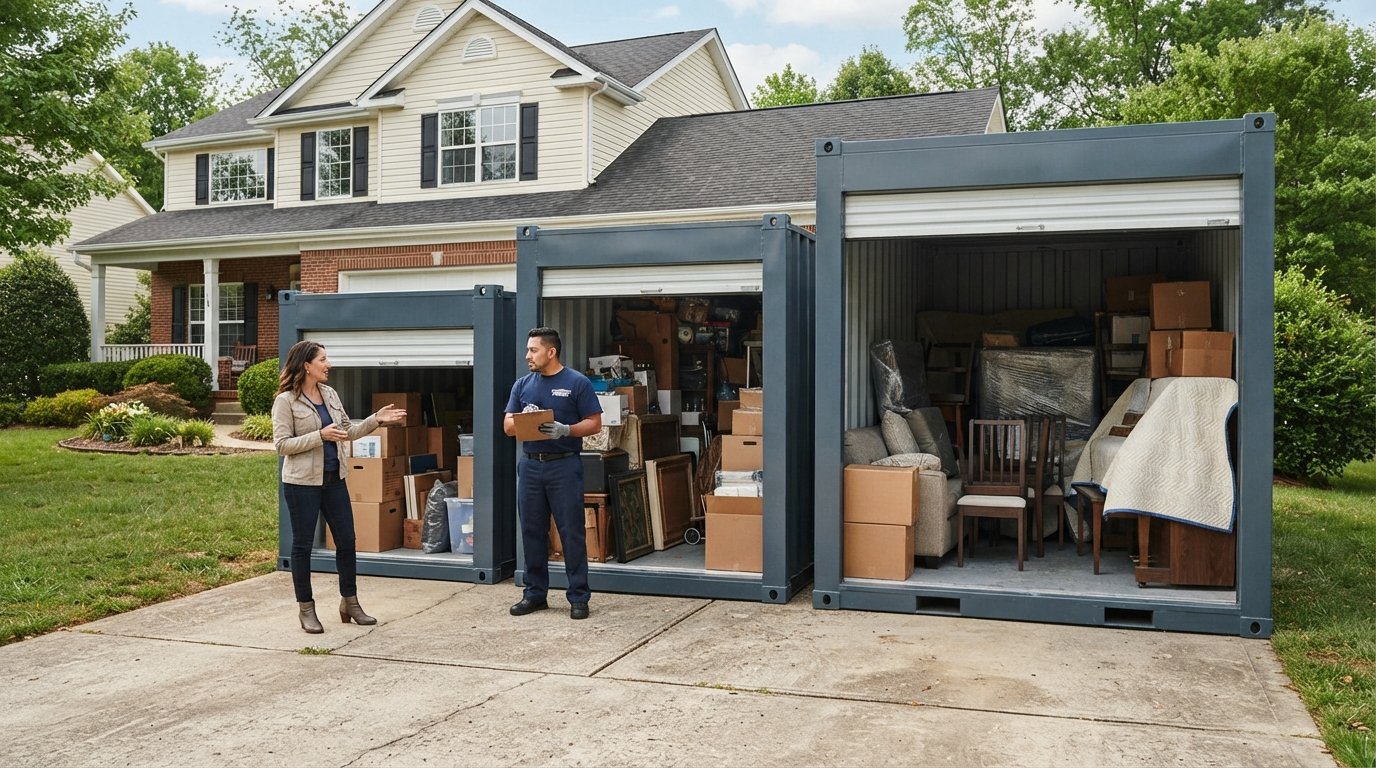
Most portable storage companies offer containers in three main size categories: small (typically 8 to 10 feet), medium (12 to 16 feet), and large (20 feet or more). Some companies also offer 7-foot units for small loads, while others skip straight to 16-foot and 20-foot options. The exact dimensions vary by provider, but the general capacity ranges are consistent enough that you can plan around them.
Here is a quick breakdown of what each size typically holds:
- Small (7 to 10 feet): A studio apartment, a single bedroom, or the contents of a small office. Fits a few pieces of furniture, boxes, and personal items.
- Medium (12 to 16 feet): A one- to two-bedroom apartment or a small house. Fits a sofa, bed, dining table, appliances, and multiple boxes.
- Large (20 feet and up): A three- to four-bedroom house or a commercial space. Fits larger furniture sets, appliances, and bulk items.
These categories are a starting point, not a rule. The actual capacity depends on how you pack. A 16-foot container packed floor-to-ceiling with disassembled furniture holds far more than one packed with random items tossed in at the last minute. Efficient packing can add the equivalent of two to three feet of usable space.
If you are also considering a full-service move or a hybrid approach, our POD moving services and portable storage solutions guide explains how portable containers fit into a broader relocation plan. The key takeaway is that size selection should always come after you have a realistic inventory of what you are moving or storing.
The Standard Portable Storage Container Sizes Explained
Portable storage containers are measured by their exterior length, but the interior dimensions are what actually matter for packing. A 16-foot container might have an interior length of 15 feet 10 inches, a width of 7 feet 8 inches, and a height of 7 feet 6 inches. Those few inches of difference can affect whether a king-size mattress fits upright or has to lie flat.
Here is a closer look at the three most common size tiers and what they realistically hold.
Small Containers (7 to 10 Feet)
Small containers are ideal for studio apartments, dorm rooms, or a single room's worth of furniture. A 7-foot container typically holds a twin or full-size bed, a dresser, a small desk, and 15 to 20 medium boxes. An 8-foot container adds a bit more room, often enough for a small sofa or an extra bookshelf.
These units are also popular for short-term storage during a renovation. If you are remodeling a kitchen or bathroom, a small container can hold the contents of those rooms without taking up your entire driveway. They are easy to deliver, easy to position, and cost less than larger units.
The downside is limited space. If you are even slightly unsure about your inventory, a small container can fill up faster than expected. Measure your largest items first, then estimate the number of boxes. If the total volume exceeds 300 cubic feet, consider moving up to a medium unit.
Medium Containers (12 to 16 Feet)
Medium containers are the most popular choice for residential moves and storage. A 12-foot container typically holds the contents of a one-bedroom apartment, including a sofa, bed, dining table, and several dozen boxes. A 16-foot container can handle a two-bedroom apartment or a small house, with room for larger appliances like a refrigerator or washer and dryer.
These containers are also a good fit for small business storage. Retailers and office managers often use 16-foot units to store seasonal inventory, extra furniture, or equipment during a relocation. The extra length allows for better organization, which means you can access items without unloading everything in front of them.
One advantage of medium containers is that they fit in most residential driveways. A 16-foot container is roughly the length of a large SUV, so it does not require special permits or street closures in most areas. That makes them a practical choice for suburban and urban moves alike.
Large Containers (20 Feet and Up)
Large containers are designed for three- to four-bedroom homes, commercial moves, or long-term storage of bulky items. A 20-foot container typically holds the contents of a three-bedroom house, including large furniture, appliances, and hundreds of boxes. Some providers offer 40-foot containers, which are essentially the size of a semi-trailer and can handle a five-bedroom home or a full office relocation.
These containers are not always practical for residential driveways. A 20-foot unit requires significant clearance and may need to be placed on a street or in a commercial lot. Delivery fees and permit requirements can add to the cost, so it is worth confirming logistics before booking.
For businesses, large containers offer a secure, weather-resistant storage option that can be kept on-site or at a storage facility. If you need to store inventory for months at a time, a 20-foot container is often more cost-effective than renting multiple smaller units.
How to Calculate the Right Container Size for Your Move
Guessing your container size is the fastest way to waste money. A systematic approach takes about 30 minutes and can save you hundreds of dollars. Start by walking through your home room by room and listing every item you plan to move or store. Group items by category: furniture, appliances, boxes, and miscellaneous.
Once you have your inventory, estimate the cubic footage. A standard medium box is about 1.5 cubic feet. A sofa is roughly 30 to 40 cubic feet. A refrigerator is about 25 cubic feet. Add up the totals and compare them to the container capacity. Most portable storage companies list the cubic footage of each unit size on their websites.
Here is a simple framework to follow:
- List large items first: Furniture and appliances take up the most space and are the hardest to rearrange. Measure them and note their dimensions.
- Count and estimate boxes: Multiply the number of boxes by 1.5 cubic feet for medium boxes or 3 cubic feet for large boxes.
- Add a buffer: Add 10 to 15 percent to your total to account for packing inefficiencies, walkways, and items you forgot.
- Compare to container sizes: Match your total to the nearest container size, rounding up rather than down.
If your total falls between two sizes, choose the larger one. The cost difference is usually small compared to the hassle of renting a second container or leaving items behind. For a more detailed look at how portable storage fits into a full move, including packing and logistics, our POD moving services and portable storage solutions guide covers the entire process from booking to delivery.
Factors Beyond Size: What Else to Consider
Size is the most visible factor, but it is not the only one. The material, ventilation, and delivery method of a portable container affect how well it protects your belongings. Steel containers are durable and weather-resistant but can trap heat. Plastic or composite containers are lighter and easier to position but may not offer the same level of security.
Climate control is another consideration. If you are storing electronics, musical instruments, or wooden furniture, a container that regulates temperature and humidity will prevent warping, rust, and mold. Not all portable storage companies offer climate-controlled units, so ask before you book.
Delivery logistics also matter. A 16-foot container can usually be dropped in a standard driveway, but a 20-foot unit may require a permit or a larger space. Some companies use hydraulic lifts to place containers precisely, while others simply slide them off a truck. If you have a steep driveway or limited access, confirm that the delivery method will work for your property.
Finally, consider the rental period. Most portable storage companies charge a monthly rate after an initial rental window. If you need storage for more than a few weeks, compare the cost of keeping the container on-site versus having it stored at a facility. On-site storage is convenient for loading and unloading, but facility storage may be cheaper for long-term needs.
Matching Container Sizes to Common Moving Scenarios
Different moves call for different container sizes. A college student moving out of a dorm has very different needs than a family relocating across the country. Here are some common scenarios and the container sizes that typically work best.
For a studio or one-bedroom apartment, a 12-foot container is usually sufficient. It holds a bed, sofa, dresser, small dining table, and 30 to 40 boxes. If you have a lot of boxes or a large sofa, consider a 16-foot unit for extra breathing room.
For a two- to three-bedroom house, a 16-foot container is the minimum. It fits bedroom sets, living room furniture, kitchen items, and appliances. If you have a garage full of tools or a home office with bulky equipment, a 20-foot container may be necessary.
For a four-bedroom house or a commercial move, a 20-foot container or larger is the standard. These units can hold multiple bedroom sets, large appliances, outdoor furniture, and hundreds of boxes. If you are moving a business, consider whether you need additional space for inventory or specialized equipment.
If you are unsure which size fits your situation, request a quote from a professional moving company. Many providers offer virtual or in-home estimates that include a container size recommendation. This takes the guesswork out of the process and ensures you are not paying for space you do not need.
For homeowners planning renovations or repairs alongside a move, connecting with trusted local contractors can also help. Platforms like FreeQuotes.Contractors connect homeowners with pre-vetted professionals for projects like flooring, painting, and remodeling, which can be useful if you are preparing a home for sale or updating a new property before you unpack.
Tips for Maximizing Container Space
Even the largest container can feel small if you pack inefficiently. A few simple strategies can help you fit more into your unit without damaging your belongings. Start by disassembling furniture whenever possible. Remove legs from tables, detach headboards from bed frames, and stack components vertically.
Use the height of the container. Most portable storage units are 7 to 8 feet tall, but many people only stack boxes 4 to 5 feet high. Stacking to the ceiling (with heavier items on the bottom) can add significant capacity. Just make sure you leave a narrow walkway if you need to access items during storage.
Fill gaps with small items. Towels, blankets, and clothing can be used to cushion fragile items and fill empty spaces between furniture. This protects your belongings and reduces the number of boxes you need.
Label everything clearly. A container packed with unlabeled boxes becomes a nightmare to unpack. Label each box with its contents and the room it belongs to. Keep a master inventory list so you know exactly what is in the container and where to find it.
Finally, consider the weight distribution. Heavy items like books, tools, and appliances should go on the bottom, with lighter items on top. This prevents crushing and makes the container safer to unload. If you are hiring professional movers, they will often handle this for you, but it helps to know the basics so you can plan ahead.
Making the Final Decision
Choosing the right portable storage container size comes down to three things: your inventory, your timeline, and your budget. Start with a realistic estimate of what you need to store or move. Compare that to the standard sizes available. Then factor in delivery logistics, climate control, and rental duration.
When in doubt, size up. The extra cost of a larger container is almost always less than the cost of renting a second unit, making multiple trips, or leaving items behind. And if you are still unsure, reach out to a professional moving company for guidance. A quick consultation can save you time, money, and stress.
Portable storage containers are one of the most flexible tools available for moving and storage. With the right size and a little planning, they can make your next move smoother and more organized, whether you are relocating across town or storing belongings during a life transition.