
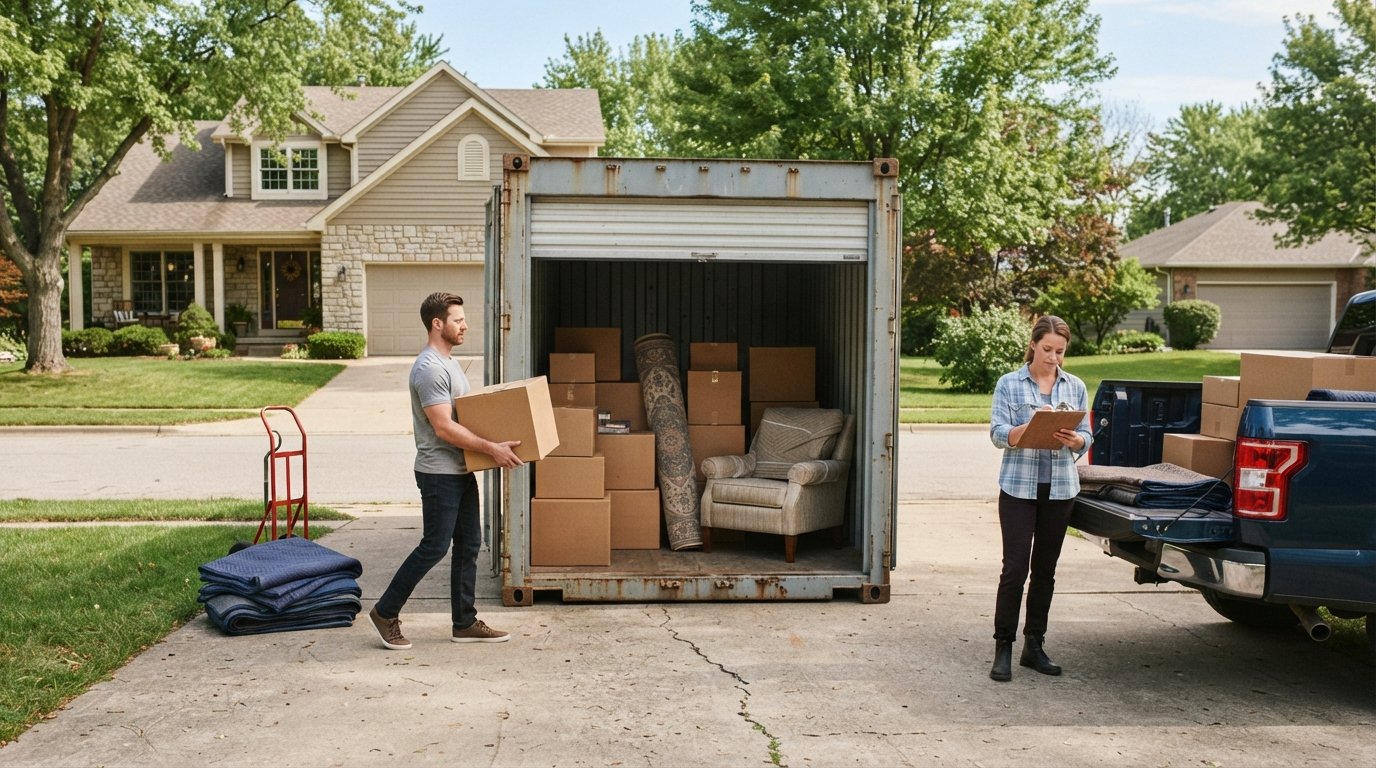
Portable Storage Container Alternatives to Pods for Temporary Storage
Compare portable storage container alternatives to pods for temporary storage. Call (833)-484-8675 to get matched with trusted providers and save on your move.

Your upcoming move or renovation has you needing temporary storage, and you keep hearing the same brand name: PODS. But before you book, it pays to know that the portable storage market has expanded well beyond a single provider. From rival container companies to trailer-based options and even clever self storage workarounds, there are now multiple ways to keep your belongings safe without committing to the first quote you receive. Understanding these portable storage container alternatives to pods for temporary storage can save you hundreds of dollars and a surprising amount of hassle.
The core idea behind any portable storage solution is simple: a weather-resistant unit is delivered to your driveway or a nearby lot, you load it at your own pace, and it is either stored on site or hauled to a secure facility. The differences lie in pricing structures, unit sizes, delivery logistics, and how much control you have over the timeline. Whether you are staging a home for sale, downsizing between leases, or managing a cross-country relocation, the right alternative can make the process smoother and more affordable.
How Portable Container Services, Trailer-Based Storage, and Self Storage Compare on Cost and Flexibility
When you start comparing alternatives, you will quickly encounter three main categories: portable container services (including regional and national competitors to the big brand), trailer-based storage that you tow yourself, and traditional self storage facilities. Each has a distinct cost profile and flexibility level, and the best choice depends on how long you need storage, whether you can keep a unit on your property, and how much heavy lifting you are willing to do.
Portable container services deliver a steel or composite box to your location. You pack it, and the company either stores it on your driveway or moves it to a warehouse. Pricing typically includes an initial delivery fee, a monthly rental rate, and a final pickup or transport fee. Competitors to the major brand often have lower monthly rates or more transparent pricing, but availability varies by region. Trailer-based storage works similarly, except the unit is a trailer that can be towed to your home, loaded, and then towed to a storage lot or your new home. These are often cheaper for short-term needs but require a vehicle capable of towing and a safe place to park.
Self storage, by contrast, involves renting a unit at a facility and moving your items there yourself or hiring movers. The monthly cost is usually predictable, but you pay for every trip and every mile. Flexibility is high in terms of access hours, but you lose the convenience of loading at your own doorstep. To weigh these options, consider the following factors:
- Upfront cost: Container and trailer services often charge a delivery fee that can range from $50 to $200, while self storage may require a deposit and first month's rent.
- Monthly rate: Portable containers typically cost $100 to $300 per month, trailers $50 to $150, and self storage $50 to $250 depending on size and climate control.
- Transport fees: Moving a container to a new city can add $500 to $3,000, whereas self storage requires you to arrange and pay for a moving truck.
- Access flexibility: Portable containers on your property allow 24/7 access; self storage limits access to facility hours; trailers may be locked but accessible if parked at home.
For a deeper dive into how the leading brand structures its pricing and service area, you can review a POD moving services and portable storage solutions guide that outlines typical costs and logistics. That knowledge will help you ask the right questions when comparing alternatives. Keep in mind that the cheapest option is not always the most economical once you factor in fuel, time, and the risk of damage from multiple handling points.
When a Container on Your Driveway Beats a Climate-Controlled Unit
A driveway container is not just a cheaper version of a storage unit; it offers a fundamentally different set of advantages. The most obvious is convenience: you pack at your own pace, take breaks, and never have to schedule a truck or coordinate with a facility's hours. For a local move or a home renovation, this can cut days off the process. You also avoid the double handling that occurs when items are loaded into a truck, unloaded into a unit, and then loaded again for the final move.
Climate control is the main trade-off. If you are storing sensitive items such as wooden furniture, electronics, artwork, or important documents, a climate-controlled self storage unit may be worth the extra cost. However, modern portable containers often feature weather-resistant construction, ventilation, and sturdy locks that protect against rain, wind, and casual theft. For short-term storage (a few weeks to a few months) in a moderate climate, a driveway container is usually sufficient. The key is to prepare your items properly: use furniture covers, avoid storing perishables, and place moisture absorbers inside the unit.
Another scenario where a driveway container wins is when you need to stage a home for sale. You can declutter directly into the container, keep it on site for showings, and then have it moved to your new home. This eliminates the need for a separate storage facility and reduces the number of times your belongings are handled. Just be sure to check local ordinances and HOA rules before the container arrives, as some neighborhoods restrict temporary structures.
Permit, HOA, and Driveway Space Considerations for On-Site Containers
Before you order any portable storage container, verify that you can legally place it on your property. Many municipalities require a permit for temporary structures, especially if the container will sit on a street or sidewalk. Driveway placement is usually exempt, but rules vary widely. A quick call to your city's code enforcement office can save you a fine or a forced removal.
Homeowners associations are another common obstacle. Some HOAs prohibit visible storage containers altogether, while others allow them for a limited time (for example, 30 days) with prior approval. Review your CC&Rs or contact your HOA board before booking. If you live in an apartment or a home without a driveway, a portable container may not be an option at all, and you will need to rely on self storage or a trailer parked at a friend's house.
Driveway space is a practical concern as well. A standard 16-foot container requires a clear area of about 20 feet long and 8 feet wide, with additional room for the delivery truck to maneuver. Measure your driveway and the street approach before scheduling delivery. If space is tight, consider a smaller unit or a trailer-based option that can be parked in a single space. For those who need professional help navigating these logistics, moving companies can often advise on permit requirements and placement. You can also explore free solar power quotes if you are planning a longer-term stay and want to offset energy costs while your belongings are stored on site, though that is a separate consideration from the move itself.
How to Request Quotes for Multiple Storage Formats Through One Platform
Comparing portable storage container alternatives to pods for temporary storage can feel overwhelming if you contact each provider individually. Fortunately, you can streamline the process by using a relocation resource that gathers quotes from multiple service types in one place. Moving.Homes connects you with vetted movers and storage providers who offer portable containers, trailer storage, and traditional self storage, all through a single quote request.
Here is a simple framework to get competitive quotes without the runaround:
- Define your needs: Estimate the volume of items you need to store, the duration (weeks or months), and whether climate control is essential. This will help providers recommend the right unit size and format.
- Submit one request: Use a platform like Moving.Homes to request quotes for portable storage, trailer-based storage, and self storage simultaneously. You will receive responses from multiple providers, allowing you to compare pricing and terms side by side.
- Verify licensing and insurance: Ask each provider for proof of insurance and check online reviews. A lower price is meaningless if your belongings are not protected.
- Confirm logistics: Clarify delivery windows, permit requirements, and whether the provider handles transport to your new home. Get everything in writing before you book.
By using a single quote request, you save time and reduce the risk of overlooking a cheaper or more flexible option. Many providers also offer price matching or discounts for off-peak scheduling, so do not be afraid to negotiate. Remember that the goal is not just the lowest price but the best overall value for your specific situation.
If you are planning a move and need help coordinating storage with your relocation, professional moving companies can manage the entire process, from packing to container delivery to final placement. Get connected with movers who can help with portable storage and temporary storage solutions by requesting a free quote today. With the right alternative to the big brand, you can keep your belongings safe, your budget intact, and your move on schedule.