Planning a Business Relocation: Your Guide to Hiring a Commercial Moving Company

Relocating a business is a monumental undertaking, a complex chess game where every piece, from office furniture to server racks, must be moved without disrupting the delicate balance of daily operations. Unlike a residential move, a commercial relocation involves higher stakes: significant financial investment, stringent timelines, and the very real pressure of minimizing downtime. The success of this critical transition hinges on one pivotal decision: selecting the right commercial moving company. This guide provides a comprehensive roadmap for business leaders, facility managers, and office administrators to navigate the entire commercial moving process, from initial planning to settling into a new space with confidence and efficiency.
Understanding the Scope of Commercial Moving Services
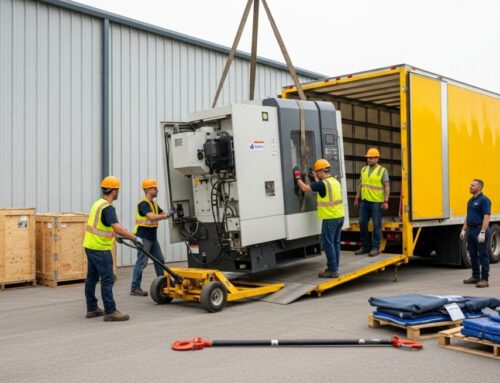
A professional commercial moving company offers far more than just transportation. They provide a suite of specialized services designed to handle the unique challenges of business assets. The core of their service is the physical move, which includes the disassembly, packing, loading, transport, unloading, unpacking, and reassembly of office furniture, equipment, and supplies. However, the scope often extends into critical pre-move planning, including detailed floor plan development and IT infrastructure coordination. Many commercial movers also offer specialized services for sensitive items, such as laboratory equipment, medical devices, or high-value art, requiring climate-controlled transportation and white-glove handling. Understanding this full spectrum is the first step in evaluating potential partners.
The Critical Phases of a Commercial Relocation
A successful business move is methodical, unfolding in distinct, managed phases. Skipping or rushing any phase can lead to costly errors and operational chaos.
Phase 1: Strategic Planning and Vendor Selection
This initial phase begins months before the moving trucks arrive. It involves forming an internal relocation team, defining the project’s budget and non-negotiable deadlines, and creating a detailed inventory of all assets. This inventory is crucial for obtaining accurate quotes and planning the logistics of the new space. The most critical task in this phase is vetting and selecting your commercial moving partner. This requires soliciting detailed bids from at least three reputable companies. Look beyond price, examine the proposed scope of work, insurance coverage, and the project management structure they will assign to your move. A thorough vetting process, including checking references and understanding what to expect from professional moving company services, is non-negotiable for protecting your business.
Phase 2: Pre-Move Preparation and Communication
Once a mover is selected, collaborative planning intensifies. Your moving company should conduct an on-site walkthrough to finalize logistics. Simultaneously, internal communication is paramount. Develop a clear moving timeline for all employees, detailing their responsibilities for packing personal items, labeling boxes, and preparing their workstations. Designate move captains for each department to streamline communication. This is also the time to coordinate with building management at both locations regarding elevator reservations, loading dock access, and certificate of insurance requirements. Proactive communication prevents the most common moving-day frustrations.
Phase 3: Execution: Moving Day and Beyond
Moving day is the culmination of all planning. A well-organized commercial mover will have a crew lead and a project manager on-site to direct operations. The process typically follows a sequenced approach: critical IT infrastructure and server equipment are often moved first or on a separate schedule, followed by specialized department equipment, and then general office furniture and boxes. A clear labeling system, using color-coded tags for different departments or floor zones, is essential for efficient unloading and placement in the new building. The mover’s team should handle the heavy lifting, furniture disassembly/reassembly, and placement of boxes according to the agreed floor plan.
Key Factors to Evaluate When Choosing a Mover
Not all moving companies are equipped for commercial projects. Your selection criteria must be rigorous. First and foremost, verify licensing and insurance. For interstate moves, the company must have a USDOT number. More importantly, review their insurance coverage in detail. Commercial moves involve high-value assets, so you need to understand their valuation options (released value vs. full value protection) and any limitations. Experience is another critical filter. Ask for case studies or references from businesses similar in size and industry to yours. An office mover familiar with tech startups may not be the best fit for relocating a law library or a medical practice. Finally, scrutinize their proposal for clarity. It should be a detailed, line-item estimate, not a vague ballpark figure. Transparency here is the best defense against surprise bills. For a deeper dive into vetting, our guide on how to read and trust moving company reviews offers a proven framework for due diligence.
To effectively plan your budget, it’s wise to gather multiple perspectives. You can start this process by using our partner resource to get a free moving quote and compare services tailored to commercial needs.
Minimizing Business Downtime During the Move
Downtime is the enemy of productivity and profit. A strategic commercial move aims to reduce it to an absolute minimum. Several tactics are essential. Consider a phased or weekend move. Relocating non-essential departments or backend operations first can allow core business functions to continue uninterrupted. A full weekend move, while potentially more expensive due to overtime labor, can enable a business to close on Friday and reopen in the new location on Monday. Another key strategy is the pre-move of IT infrastructure. Coordinating with your IT team and the mover to relocate and set up servers, network hardware, and phone systems ahead of the general staff move can ensure that when employees arrive at the new office, the technology is operational. Clear communication with clients and suppliers about any potential service interruption is also a critical component of downtime management.
Cost Considerations and Budgeting for a Commercial Move
The cost of a commercial relocation is variable, influenced by numerous factors. Understanding these drivers helps in creating a realistic budget and interpreting quotes. Primary cost factors include the distance of the move, the total volume and weight of goods (often calculated by cubic feet or poundage), the number of specialized items requiring extra care, the need for packing materials and labor, and the complexity of access at both locations (e.g., stairs, long carries, limited dock space). Additional services like storage, furniture installation, or electronics reconnection will add to the total. Most reputable commercial movers provide a binding estimate or a not-to-exceed quote, which offers significant financial protection. Always budget for a contingency fund, typically 10-15% of the estimated cost, to cover unforeseen expenses.
Frequently Asked Questions
How far in advance should we book a commercial moving company?
For a local move, aim for 8-12 weeks of lead time. For long-distance or complex relocations, 3-6 months is advisable, especially if moving during peak business seasons (spring and summer).
What is the difference between released value and full value protection?
Released value is basic coverage included at no extra charge, but it provides minimal compensation (e.g., 60 cents per pound per item). Full value protection is more comprehensive, where the mover is liable for the repair, replacement, or cash settlement of lost or damaged items at their current market value. For a commercial move, full value protection is almost always recommended.
Who is responsible for packing employee desks and workstations?
This should be clearly defined in the moving contract. Typically, employees pack their personal items and desk contents into provided boxes, which they label. The moving company is responsible for packing common areas, specialized equipment, and for physically moving all boxes and furniture.
Can our business stay operational during the move?
Yes, through careful planning. Strategies like phased moves (relocating one department at a time), moving after hours, or over a weekend are specifically designed to maintain business continuity. This requires precise coordination with your chosen commercial moving partner.
What happens to old furniture or equipment we don’t want to move?
Many commercial moving companies offer additional services like liquidations, asset resale, or environmentally responsible disposal and recycling of old office furniture and electronics. This should be discussed during the planning phase.
A commercial relocation is a defining project for any organization. While inherently complex, it presents an opportunity for renewal and improved efficiency. By understanding the process, meticulously selecting a qualified commercial moving company, and investing in detailed planning, you transform a potential source of stress into a strategic step forward for your business. The goal is not just to change addresses, but to transition your team and operations seamlessly into a space that supports future growth and success.