

Office Moving Services for Businesses: A Pro Guide
Learn how professional office moving services for businesses reduce downtime, protect assets, and ensure a seamless relocation.

By Brian Davis
Relocating a business is a high-stakes operation. Unlike a residential move, an office relocation involves dozens of desks, hundreds of boxes of sensitive documents, critical IT infrastructure, and a team of employees whose productivity depends on how quickly everything is back online. A single day of downtime can ripple into lost revenue, missed deadlines, and client frustration. Yet many business owners treat office moving as an afterthought, only to find themselves overwhelmed by the logistics. This is where professional office moving services for businesses become not just a convenience, but a strategic investment. A dedicated team of commercial office movers does far more than transport furniture; they engineer the entire move to minimize disruption and protect your assets.
In this guide, we will walk through the essential elements of a successful office relocation, from the initial planning phase to the final walkthrough. We will explore how to choose the right moving partner, what to expect from a professional crew, and how to keep your staff informed and your operations running smoothly. Whether you are moving down the street or across the country, understanding the full scope of commercial moving services will help you avoid costly mistakes and ensure that your new workspace is ready for business from day one.
Why Professional Office Moving Services for Businesses Matter
It is tempting to cut costs by organizing the move with in-house staff and a rented truck. However, this approach often backfires. Employees are not trained to dismantle modular workstations, pack delicate electronics, or safely maneuver heavy filing cabinets through narrow hallways. The risk of injury, property damage, and lost productivity is high. Professional commercial office movers bring specialized equipment, such as furniture dollies, moving blankets, and custom crates, along with the expertise to use them efficiently. They understand the nuances of moving IT equipment, including how to disconnect, label, and reconnect servers and workstations without data loss.
Moreover, a professional moving company offers insurance coverage that protects your business assets during transit. If a $2,000 ergonomic chair is scratched or a $5,000 printer is damaged, the moving company is responsible for the repair or replacement. This liability protection is invaluable. When you attempt a DIY move, you assume all the risk. For businesses with valuable equipment, proprietary data, and a need for minimal downtime, the benefits of hiring a specialist are clear. The investment in a professional move is an investment in business continuity.
Beyond the physical move, professional services also include detailed planning and project management. A reputable mover will conduct a pre-move survey, often using video or in-person walkthroughs, to catalog every item and identify potential challenges. They will create a comprehensive moving plan that includes a timeline, floor plans for the new space, and a detailed inventory list. This level of preparation ensures that nothing is overlooked, from the number of boxes needed to the placement of furniture in the new office. This proactive approach is what separates a seamless relocation from a chaotic one.
Choosing the Right Commercial Office Movers
Selecting the right moving partner is the most critical decision in the entire process. Not all moving companies are created equal. Some specialize in residential moves, while others focus exclusively on commercial relocations. For your business, you need a team that understands the unique demands of an office environment. Here are the key factors to evaluate when researching potential commercial office movers.
Experience and Specialization
Look for a company with a proven track record in office moving. They should have experience with tasks like moving cubicles, server racks, and sensitive electronic equipment. Ask for references from other businesses they have moved, and check online reviews. A mover who has successfully relocated businesses in your industry will be better prepared for your specific needs. For example, a law firm requires careful handling of confidential files, while a tech startup needs meticulous care for its hardware. The right mover will ask you questions about your operations and adapt their approach accordingly.
Licensing and Insurance
Ensure the moving company is properly licensed and insured. For interstate moves, they should have a USDOT number registered with the Federal Motor Carrier Safety Administration (FMCSA). For local moves, check state regulations. Insurance is non-negotiable. You should understand the difference between liability coverage, which is typically minimal, and full value protection, which ensures the mover is responsible for the full replacement value of damaged items. Many businesses opt for additional coverage to protect high-value assets. Always verify the mover's insurance certificate before signing any contract.
Services Offered
Consider the range of services that will make your move easier. Do you need packing and unpacking assistance? Will the mover handle the disassembly and reassembly of office furniture? Do they offer temporary storage if there is a gap between your move-out and move-in dates? Are they equipped to handle specialized items like whiteboards, large copiers, or laboratory equipment? A full-service mover can manage every aspect of the relocation, allowing you to focus on running your business. Some companies also offer IT services, such as data cabling and setup, which can be a significant advantage.
To simplify your evaluation, use this checklist when interviewing potential movers:
- Request a detailed, itemized quote that includes all fees and potential surcharges.
- Ask about their process for handling fragile or high-value equipment.
- Inquire about their contingency plans for unexpected delays or issues.
- Confirm that their crew is trained and background-checked.
- Check their Better Business Bureau rating and any complaints filed.
Once you have narrowed down your options, request a walkthrough or video survey with at least two companies. This will give you a more accurate quote and allow you to compare their professionalism and approach. Remember, the cheapest quote is not always the best. Look for a mover that offers genuine value, reliability, and peace of mind. In our guide on commercial relocation services, we explain the nuances of selecting a partner that aligns with your operational needs.
Planning a Business Move: The Step-by-Step Process
The key to a successful office relocation is meticulous planning. A well-structured plan minimizes downtime, reduces stress, and ensures that nothing is lost or forgotten. Here is a step-by-step framework to guide you through the process, starting several months before your target move date.
1. Establish a Moving Committee and Timeline
Designate a move coordinator or a small team to oversee the project. This person will be the single point of contact for the moving company and will manage internal communication. Create a detailed timeline that works backward from your desired move-in date. Include milestones for tasks such as notifying vendors, updating business licenses, and scheduling the internet and phone installation at the new location. A clear timeline keeps everyone accountable and on track.
2. Conduct a Comprehensive Inventory
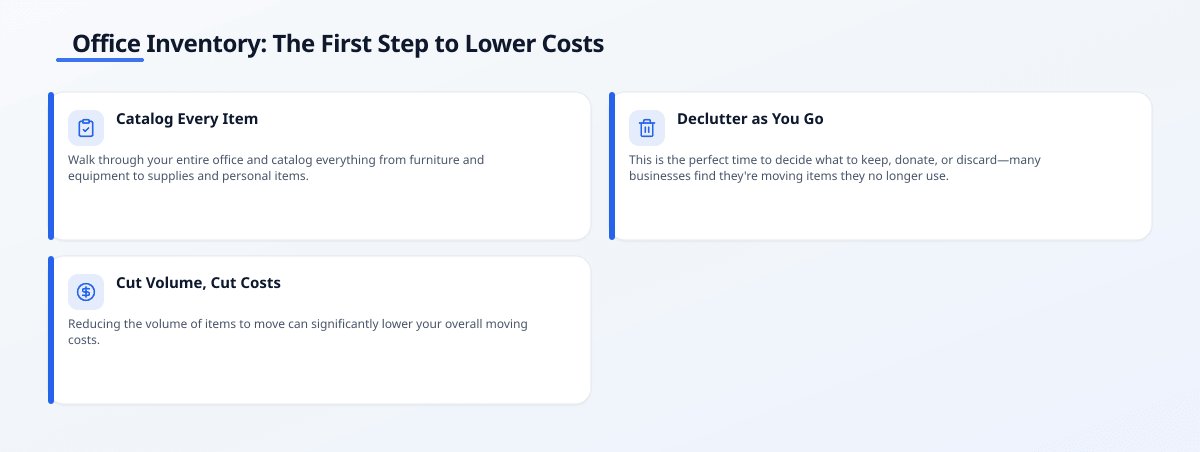
Walk through your entire office and catalog every item, from furniture and equipment to supplies and personal items. This inventory will form the basis of your moving quote and help you decide what to keep, what to donate, and what to discard. This is also the perfect time to declutter. Many businesses find that they are moving items they no longer use. Reducing the volume of items to move can significantly lower your costs.
3. Plan the IT and Equipment Move
Your IT infrastructure is the backbone of your business. Plan its move with extreme care. Back up all critical data before the move. Label every computer, monitor, server, and peripheral with a unique identifier. Use a color-coded system to indicate which workstation goes to which employee in the new office. Coordinate with your IT provider or the moving company's IT specialists to ensure a smooth disconnection, transport, and reconnection. Schedule the move of your servers during off-hours or over a weekend to minimize disruption.
4. Communicate with Your Employees
Your employees are your most valuable asset, and keeping them informed is essential. Hold a meeting to explain the moving timeline, what they need to do to prepare, and what they can expect on moving day. Provide clear instructions on how to pack their personal desks and label their boxes. Assign each employee a number that corresponds to their new workstation. This system ensures that everyone knows exactly where to go and where their belongings will be. Open and frequent communication reduces anxiety and helps everyone adapt to the change.
5. Prepare for Moving Day
In the days leading up to the move, ensure that all boxes are sealed and labeled. Have a designated area where packed boxes are staged, away from foot traffic. On moving day, have a representative from your company on-site to supervise the process and answer any questions from the movers. While the crew is loading the truck at your old office, another team member should be at the new location to direct the unloading and ensure that furniture and equipment are placed according to the floor plan.
Following this framework will help you stay organized and in control. Each step is designed to reduce risk and ensure that your business can resume operations as quickly as possible. A professional moving company will guide you through these steps, but having your own plan ensures you are an informed and prepared partner in the process.
Key Considerations for International Office Relocation
If your business is expanding across borders, the complexity of the move increases exponentially. International office relocation involves customs clearance, import/export regulations, and long transit times. You will need a mover with global expertise, as well as a customs broker who can handle the necessary documentation. In addition to the physical move, you must consider time zone differences, currency exchange, and local labor laws. Your moving partner should be able to coordinate the entire international supply chain, from packing and air or sea freight to final delivery and installation at your new location. This is where a specialized commercial moving service truly proves its worth, ensuring that your business can hit the ground running in a new country.
Minimizing Downtime: Strategies for Business Continuity
The primary goal of any office move is to minimize the time your business is not operating. Downtime means lost productivity and revenue. Professional movers use a variety of strategies to achieve this. They often work after hours, on weekends, or even overnight to avoid disrupting your business day. They also use a process called "phased moving," where departments are moved in stages, allowing parts of the business to remain operational while others are being relocated. This is particularly effective for larger offices. Another strategy is to use a "move manager" who coordinates all logistics in real time, ensuring that the movers are always on schedule.
Technology also plays a crucial role. Many modern movers use digital inventory tracking, where each item is scanned with a barcode. This allows you to monitor the location of every asset in real time, from the old office to the truck to the new office. This level of visibility provides peace of mind and helps resolve any issues quickly. When you hire a professional moving company, you are not just paying for labor; you are paying for their expertise in executing a complex logistical operation with precision.
Cost Factors and How to Budget for Your Office Move
Understanding the cost structure of office moving services is essential for budgeting. The total cost will depend on several factors, including the volume of items, the distance traveled, the number of movers required, and any additional services like packing or storage. Here are the main cost components to consider:
- Hourly rates: For local moves, movers typically charge an hourly rate per mover. The more movers you have, the faster the job, but the higher the hourly cost.
- Distance fees: For long-distance moves, charges are based on weight and mileage.
- Packing services: If you choose to have professionals pack your items, this will add to the cost, but it saves you time and ensures the safety of your belongings.
- Specialty items: Moving items like pianos, large copiers, or laboratory equipment requires special handling and equipment, which will incur additional fees.
- Storage: If you need temporary storage, there will be a monthly fee based on the amount of space required.
- Insurance: Additional insurance coverage beyond the basic liability will increase your costs but provides crucial protection.
To avoid surprise bills, always get a written, binding estimate from your mover. A binding estimate guarantees the total cost, provided you do not change the scope of the move. Be wary of estimates that seem unusually low, as they may be "lowball" quotes that will later be inflated with hidden fees. A reputable company will provide a transparent, detailed quote that outlines all potential costs. While it is tempting to choose the most affordable option, remember that the cheapest move is not always the best value. A higher-quality mover can save you money in the long run by preventing damages and reducing downtime.
Post-Move: Settling into Your New Office
The move is not over when the last box is unloaded. A professional moving crew will place furniture according to your layout, reassemble workstations, and help you unpack. However, there is still work to be done. You will need to ensure that all utilities are connected, that the internet and phone systems are operational, and that employees know where everything is. A good moving company will provide a final walkthrough to ensure that all items are accounted for and that nothing has been damaged. This is also the time to file any claims for damaged items, so it is crucial to document any issues immediately.
Once your employees are settled, it is a good practice to hold a debrief meeting to review the move. Discuss what went well and what could be improved for future relocations. This feedback is valuable for both your team and your moving partner. A successful move is not just about getting to the new location; it is about starting fresh with a workspace that supports your business goals. With careful planning and the right commercial office movers, your new office will be a launchpad for growth and productivity.
In conclusion, office moving services for businesses are a critical component of a successful corporate relocation. They offer the expertise, equipment, and planning necessary to handle the complexities of moving an entire business operation. By choosing the right partner, planning meticulously, and focusing on business continuity, you can transform a potentially stressful event into a smooth transition. Your business deserves a moving experience that is as professional and efficient as the company you run.