
Office Moving Services for Businesses: A 2026 Guide
Discover how professional office moving services for businesses ensure a seamless transition, minimize downtime, and protect your company's assets from start to finish.

By Mark Johnson
Relocating an office is a monumental task that intertwines logistics, employee productivity, and brand reputation. A successful move is not just about transporting desks and computers, it is about ensuring business continuity and minimizing downtime. This is where professional office moving services for businesses become an indispensable partner. By delegating the heavy lifting, planning, and execution to experts, you can focus on what truly matters: your employees and your clients. In this comprehensive guide, we will explore how to navigate the complexities of a corporate move, from strategic planning to final setup, ensuring a seamless transition to your new workspace.
The Strategic Advantages of Hiring Commercial Office Movers
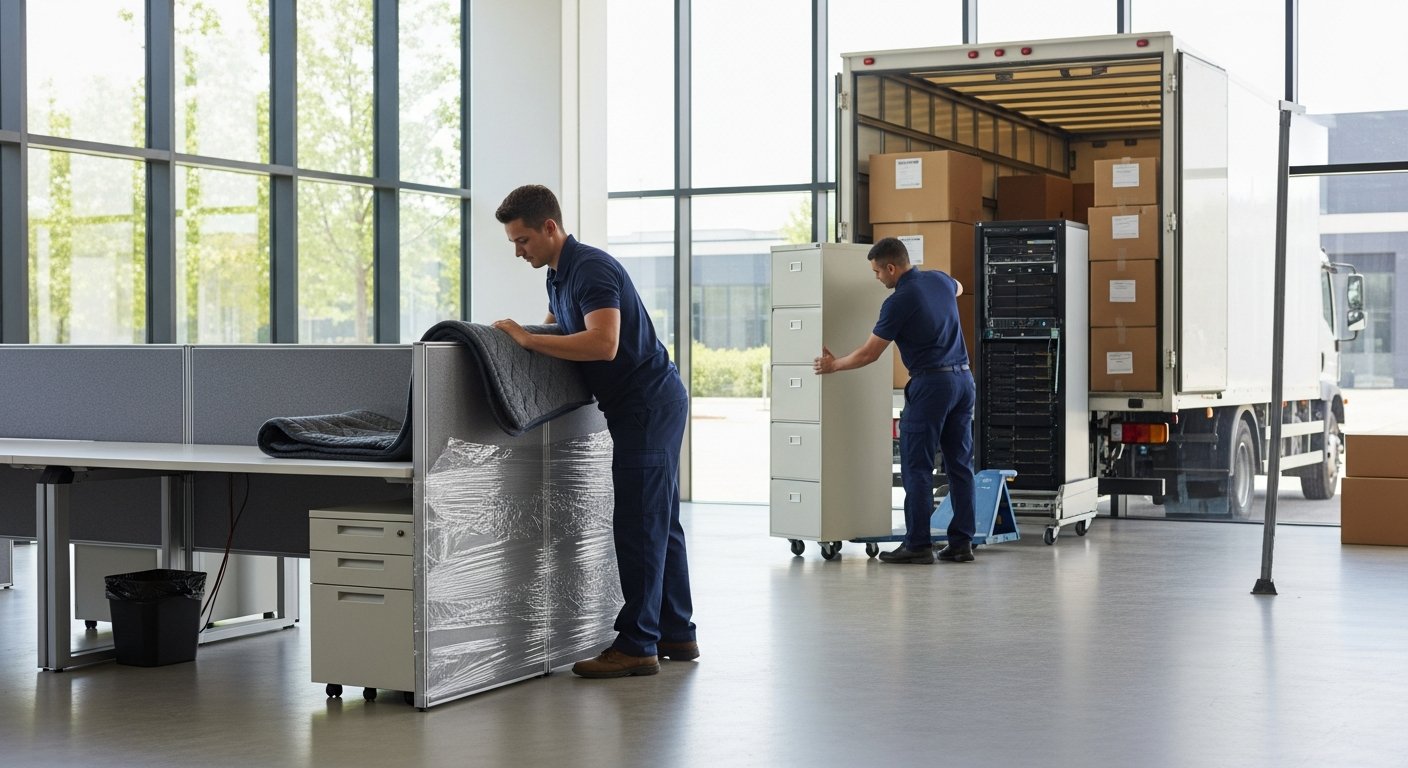
Choosing to hire commercial office movers is a strategic decision that offers benefits far beyond simple transportation. A professional team brings a level of expertise that is critical in the corporate environment, where specialized equipment, sensitive data, and expensive furniture are the norm. They are trained to handle the unique challenges of an office move, such as dismantling modular workstations, managing server racks, and moving heavy filing systems without damaging floors or walls. This expertise directly translates to reduced risk of damage and injury, protecting your assets and your staff.
Moreover, professional office moving services for businesses provide a structured approach to a chaotic process. They conduct pre-move surveys, create detailed floor plans for the new location, and assign project managers who coordinate every aspect of the relocation. This level of organization ensures that every item is accounted for and placed correctly, which is essential for a quick return to normal operations. In our guide on commercial relocation services, we emphasize the importance of a detailed plan for this very reason.
The financial aspect is another significant advantage. While some may see hiring movers as an added expense, it is often more cost-effective than a DIY approach. Consider the hidden costs of a self-managed move: employee time diverted from their primary roles, potential damage to expensive equipment, and the cost of rental trucks, packing materials, and temporary storage. Professional movers bring all this equipment and insurance, providing a single, predictable invoice. This allows you to budget accurately and avoid the surprise bills that often accompany a less organized move.
Risk Management and Insurance: Protecting Your Business Assets
Risk management is a core component of any professional office move. Reputable commercial office movers carry comprehensive liability insurance and offer various levels of valuation coverage for your goods. This is crucial because standard moving insurance may not fully cover the replacement value of high-end office equipment or custom furniture. A professional team will help you understand the different types of coverage, from basic protection to full-value replacement, ensuring you are adequately protected against unforeseen events.
Beyond insurance, professional movers employ rigorous safety protocols. They are trained in proper lifting techniques, use specialized equipment like furniture dollies and straps, and are knowledgeable about OSHA regulations. This significantly reduces the risk of workplace injuries during the move, which could lead to workers' compensation claims and further operational disruption. By prioritizing safety, professional office moving services for businesses protect not just your possessions, but also your most valuable resource, your people.
Planning Your Office Relocation Timeline
A typical office move is a complex project that requires a well-defined timeline to ensure success. Most experts recommend starting the planning process at least three to six months before your target move date. This extended lead time is necessary to handle everything from lease negotiations and space planning to scheduling professional movers and updating your business address. Rushing this process can lead to costly mistakes, such as double-booking moving crews or failing to secure the necessary permits for the new building.
The first step in your timeline is to form a moving committee with representatives from different departments. This team will be responsible for communicating with the moving company, coordinating with the building management of both your old and new locations, and managing the logistics of the move. Once your committee is in place, you can begin the detailed planning, which involves a comprehensive inventory of all your office assets. This inventory should include not only furniture and equipment but also sensitive documents and IT infrastructure, as these require specialized handling and secure transport.
During this phase, you will also need to decide what you will take with you and what you will leave behind. Office moving services for businesses often include a decluttering service to help you dispose of or donate unneeded items, which can reduce your moving costs and streamline the process. Finally, you must plan for the actual move day, including scheduling after-hours or weekend moves to minimize disruption to your operations. A well-structured timeline with clear milestones will keep the project on track and reduce the stress on everyone involved.
Key Services to Look For in an Office Moving Company
Not all moving companies are created equal, and when it comes to office relocation, you need a partner with specific capabilities. Before you decide on an office moving company, you should verify that they offer the following essential services to ensure a smooth and efficient move.
- IT and Electronics Handling: The safe disconnection, packing, transport, and reinstallation of your computer systems, servers, and other sensitive electronics is a critical service that requires specialized skills and materials.
- Modular Furniture and Workstation Dismantling: Professional movers should be able to efficiently dismantle, move, and reassemble workstations, cubicles, and other modular office furniture, saving you significant time and frustration.
- Secure Document and Data Storage: If you have confidential files or need temporary storage for archived documents, your moving company should offer secure, climate-controlled storage options with strict access controls.
- Specialized Equipment Moving: For heavy or fragile items like safes, copiers, and specialized lab or medical equipment, you need movers with the right tools and experience to handle them safely.
These services are not just add-ons, they are the core of a successful corporate relocation. A company that can handle all these tasks in-house is better equipped to manage the entire moving process from start to finish. This end-to-end capability ensures accountability and coordination, as you will have a single point of contact for all your moving needs. When you evaluate potential commercial office movers, ask about these specific services and request examples of their past work in corporate environments.
How to Minimize Downtime and Maximize Productivity
The primary concern for any business during a move is the potential for downtime. Every hour that your employees are not working is a cost to your business. Professional office moving services for businesses are designed to minimize this downtime through meticulous planning and efficient execution. One of the most effective strategies is to schedule the move during non-business hours, such as evenings, weekends, or even overnight. This allows the movers to work without interruption and ensures that your office is ready for business on Monday morning.
Another key factor in minimizing downtime is pre-planning the layout of your new office. Before the movers arrive, you should have a detailed floor plan that specifies where every desk, chair, and piece of equipment should go. Professional movers use color-coded labels and detailed inventories to ensure that items are placed exactly where they need to be, eliminating the need for employees to search for their belongings. This attention to detail is what separates a good moving experience from a chaotic one.
Furthermore, effective communication is essential. Your moving coordinator should be in constant contact with the moving company's project manager, providing updates and resolving any issues in real-time. This proactive communication helps to avoid misunderstandings and ensures that all parties are working towards the same goal. To further reduce disruption, consider staggering the move for different departments. This allows some teams to remain operational in the old office while others are setting up in the new one, ensuring that critical business functions continue without interruption.
Creating a Detailed Moving Budget with No Surprises
One of the biggest fears for any business owner is unexpected costs during a move. A professional office moving company helps you avoid this by providing a detailed, binding estimate. This estimate should be based on a comprehensive survey of your office, taking into account the volume of items, the distance of the move, and any special requirements. A guaranteed pricing model, which Moving.Homes and other reputable companies offer, ensures that the final invoice will not exceed the quoted price, giving you financial peace of mind.
When reviewing your moving budget, it is important to consider all the associated costs, not just the movers' fee. Be sure to include expenses for packing supplies, potential storage fees, insurance premiums, and any costs related to your new lease, such as cleaning services or building deposits. A reliable moving company will provide a transparent breakdown of all fees, so you can plan your finances accordingly. They should also offer options for you to reduce costs, such as doing some of the packing yourselves or decluttering before the move, without compromising on the quality of service.
To avoid hidden charges, always ask about potential fees for things like long carries, stairs, or shuttle services if the new building has specific access restrictions. A reputable company will disclose these potential charges upfront and work with you to find cost-effective solutions. By choosing a mover that prioritizes transparency, you can ensure that your office relocation stays within budget, allowing you to focus your resources on your business growth and success.
Post-Move Services: Beyond the Final Delivery
The end of the physical move is just the beginning of your new chapter. Many office moving services for businesses extend beyond the final delivery to include post-move support. This can include unpacking, debris removal, and even assistance with setting up your new office space. Having professionals handle the unpacking can significantly reduce the burden on your employees, allowing them to focus on their core responsibilities from day one. This service is especially valuable for executive offices and common areas that need to be presentable immediately.
Post-move services also often involve a final walkthrough to ensure that everything has been delivered and placed correctly. A good moving company will not consider the job complete until you are fully satisfied. They will also provide you with a detailed inventory of all items, confirming that everything has arrived in good condition. This final check is crucial for filing any claims for damages, which should be documented at the time of delivery. This level of support and accountability is a hallmark of a professional moving partner.
In addition to the physical setup, your moving company can assist with the logistics of your new space, such as coordinating with third-party vendors for utility setup or internet installation. This holistic approach to relocation ensures that your business can resume operations quickly and efficiently. By leveraging these comprehensive services, you are not just moving your office, you are ensuring the seamless continuation of your business operations in a new, improved environment. This final phase is your opportunity to start fresh and optimize your new workspace for enhanced productivity and employee satisfaction.