
Moving with a Cat Long Distance: How to Reduce Stress
A vet-informed plan for moving with a cat long distance: carrier training, travel kits, and a safe room setup that keeps stress low. Call (833)-484-8675 for moving help.

Your cat knows something is changing long before the boxes appear. The scent of packing tape, the disruption of furniture, and the sudden absence of familiar routines can trigger hiding, excessive grooming, or appetite loss. A long-distance move amplifies every one of those stressors, turning a routine relocation into a weeks-long anxiety event for a pet that thrives on predictability. The good news is that feline stress during a move is highly manageable when you plan around the cat's biology rather than your own schedule. Cats are territorial, routine-driven, and sensitive to novelty, so the goal is not to make the trip exciting but to make it feel as boring and controlled as possible. This guide walks through a practical, vet-informed plan for moving with a cat long distance, covering how to reduce stress before, during, and after the journey, from carrier acclimation to the first night in a new home.
Start with a Vet Visit and Build a Portable Health Record
Schedule a wellness appointment four to six weeks before your move date, which gives you a cushion if the vet finds something that needs follow-up. Ask for a full physical exam and confirm that vaccinations are current, since many states and most airlines or pet transport services require proof of rabies vaccination. If your cat is not microchipped, this is the moment to do it, and update the microchip registry with your new address as soon as you have one. A cat that slips out during loading or unloading is far more likely to be recovered when identification is current.
Request a printed copy of the medical record and also save a digital version to your phone. The record should include vaccination dates, any chronic conditions, current medications, and your vet's contact information. If your cat is prone to anxiety or motion sickness, discuss options before you travel rather than after a meltdown. Your vet may recommend a mild anti-nausea medication, a short-acting anxiolytic, or a non-medicated calming product. Never administer human medication or leftover prescriptions from another pet, because dosing errors in cats are common and dangerous.
This is also the time to refill prescriptions and ask for a written summary you can hand to a new veterinarian. If you are still comparing long-distance moving costs and timelines, factor in one extra week of buffer before the trip so a last-minute vet appointment does not collide with your loading day. A calm cat starts with a healthy cat, and a healthy cat starts with a checkup that is not rushed.
Acclimate Your Cat to the Carrier Weeks in Advance
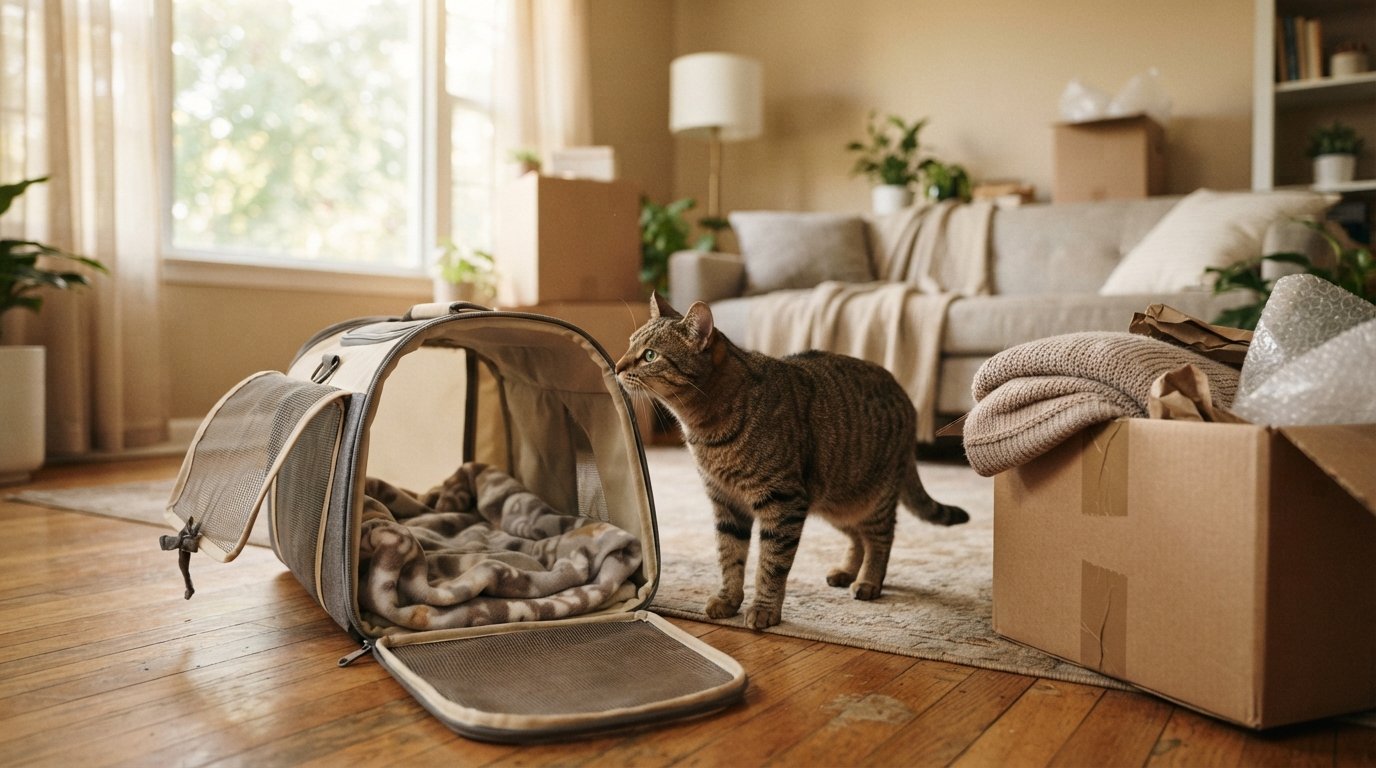
The single most effective stress reducer for long-distance cat travel is a carrier that feels like furniture rather than a trap. Most cats associate the carrier with vet visits, so it triggers immediate resistance. You can break that association by leaving the carrier open in a common room for two to three weeks before the move, with a soft blanket inside and treats or a favorite toy placed near the entrance. Feed occasional meals inside or beside the carrier so the cat learns that the object predicts good things.
Choose a hard-sided carrier with secure latches and good ventilation, sized so your cat can stand, turn around, and lie down comfortably. Avoid soft-sided bags for long car trips, because they collapse and offer less protection in a sudden stop. Line the carrier with a towel that carries your cat's scent, and place a familiar blanket over part of the carrier during travel to reduce visual stimulation while keeping airflow open.
Practice short sessions in the carrier, starting with a few minutes in a parked car and gradually extending to a ten-minute drive. Reward calm behavior with treats and praise, and never punish vocalization. By the time moving day arrives, the carrier should be a known, boring object rather than a mysterious threat. This single habit, done consistently for two to three weeks, does more to reduce stress than almost any product you can buy.
Plan the Route and Choose Your Travel Method Carefully
For most long-distance moves, driving with your cat in a secure carrier is the most controllable option. You set the pace, you can stop when needed, and your cat stays in your presence. Professional pet-relocation services are a reasonable alternative when driving is not feasible, when the move is international, or when your cat has special medical needs. Reputable pet transporters provide climate-controlled vehicles, specialized handling, and regular updates, but they are not all equal, so verify licensing, insurance, and references before booking.
If you drive, plan the route around your cat rather than around your own endurance. Aim for shorter driving days, keep the carrier secured with a seatbelt or in a anchored cargo area, and never let your cat roam free in the vehicle. A loose cat can interfere with pedals, wedge under seats, or escape when a door opens. Keep the car cool and quiet, play soft music at low volume, and avoid leaving the cat alone in a parked vehicle, since temperatures rise quickly even on mild days.
Build a travel kit that covers the entire journey. A well-organized kit prevents frantic searches at rest stops and reduces your own stress, which your cat will read instantly.
- Collapsible litter box, litter, and a small scoop
- Food and water bowls plus a supply of the cat's current food (do not switch brands mid-trip)
- Bottled water and a spill-proof travel bowl
- Harness and leash for controlled breaks, plus a towel and pet-safe cleaning wipes
- Medications, medical records, and a recent photo of your cat in case of separation
Offer small amounts of water at every stop and food only during longer breaks, since a full stomach on a winding road can trigger nausea. Do not open the carrier inside a moving vehicle. If your cat needs a break, secure the car, close all doors, and use a harness and leash before opening the carrier. These habits feel tedious, but they prevent the two most common travel disasters: escape and motion sickness.
Reduce Stress During the Trip with Routine and Quiet
Cats pick up on human tension, so your own composure matters more than any gadget. Speak softly, keep the radio low, and avoid sudden movements. Cover the carrier with a light blanket during highway stretches to limit visual overload, but lift it at rest stops so your cat can see you and hear your voice. If your vet prescribed medication, test the dose at home at least a week before the move so you know how your cat reacts before you are on the road.
Pheromone sprays and wipes, such as synthetic feline facial pheromone products, can help some cats settle. Spray the carrier interior and the blanket at least fifteen minutes before use so the alcohol carrier evaporates. These products are not sedatives and will not work for every cat, but they are low-risk and worth trying during acclimation so you know whether they help before the trip begins.
Keep the same food, the same litter, and the same schedule as closely as possible. Cats are creatures of habit, and small consistencies cue safety. If you must stop overnight, bring the carrier inside and set up a small litter box and water bowl in a closed bathroom. Do not let the cat explore the hotel room freely, because unfamiliar spaces invite hiding and escape attempts. A quiet bathroom with the carrier door open gives your cat a safe zone and gives you peace of mind.
Prepare the New Home Before the Cat Arrives
The most overlooked step in moving with a cat long distance is the destination setup. Before your cat enters the new home, designate one quiet room, ideally a bedroom or bathroom away from the front door, and set it up completely. Place the litter box, food and water bowls, a scratching post, a bed with familiar bedding, and a few toys inside. Block off hiding spots behind appliances and inside cabinets, and check that windows and screens are secure.
When you arrive, carry the cat in the carrier directly into this safe room and close the door. Let the cat stay in the carrier with the door open and allow it to come out on its own schedule. Do not pull the cat out, and do not invite a crowd of helpers in to meet it. Spend quiet time in the room reading or sitting on the floor so your cat can observe you and settle. Keep the room's door closed for at least two to three days, and longer if your cat is still hiding or not eating.
After the first few days, begin supervised exploration of the rest of the home, one room at a time. Keep the litter box in its original location for at least two weeks before moving it gradually to its permanent spot. If you are still finalizing your moving budget and comparing service options, remember that a professional full-service move can reduce your own chaos, which indirectly helps your cat, because a calm owner and a predictable schedule are the best stress reducers available. If you want to estimate costs before committing, a long distance moving cost calculator and quote guide can help you plan without guesswork.
Pack a Pet First-Night Kit and Keep the Routine Intact
The first night in a new home is disorienting for everyone, and for a cat it can be genuinely frightening. A dedicated first-night kit removes the need to dig through boxes while your cat is anxious. Pack it in a clearly labeled bag that travels with you, not in the moving truck. The kit should include enough supplies for at least three days, so you are not forced to shop while your cat is still settling.
- Three days of the cat's current food and a familiar bowl
- A small bag of the same litter plus a temporary litter box
- Medications, a copy of medical records, and a first-aid basics pouch
- A familiar blanket, a worn t-shirt of yours, and one or two favorite toys
- Paper towels, pet-safe cleaning spray, and a spare towel
Set up the safe room before you unpack anything else. A familiar-smelling blanket and your worn t-shirt give the space a scent anchor, which helps cats feel ownership faster. Feed on the same schedule you used before the move, and keep the room dim and quiet during the first evening. If your cat hides for a day or two, that is normal. Offer food and water nearby and resist the urge to coax constantly, because pressure prolongs hiding.
Watch for warning signs that stress is tipping into a health problem. Refusing food for more than twenty-four hours, not using the litter box, labored breathing, or persistent vomiting warrants a call to a veterinarian. Cats are skilled at hiding illness, so changes in appetite and litter box habits are the earliest signals you will get. If you are moving for a new job and exploring broader household decisions, such as energy costs in your new region, resources like independent solar and energy savings guides can help you plan those separate details while you focus on your cat's transition.
Keep the Calm Going After the Move
Settling in takes longer than most owners expect. Give your cat at least two weeks of predictable routine before introducing major changes, such as new furniture arrangements or visitors. Keep the litter box clean, maintain feeding times, and schedule play sessions with a wand toy to rebuild confidence and burn off nervous energy. Scratching posts placed near windows and sleeping areas help cats claim territory, which reduces anxiety.
If your cat continues to hide, over-groom, or vocalize excessively after the first two weeks, consult a veterinarian or a feline behavior specialist. Early intervention prevents small stress responses from becoming chronic problems. Most cats adjust well when the move is handled with patience, a safe room, and consistent routines, and the same planning that protects your cat also makes your own move smoother. For owners who want professional help with the logistics, connecting with vetted movers through a free quote request can free up the time and attention your cat needs during the transition. A long-distance move is stressful for everyone, but with the right preparation, your cat can arrive calm, secure, and ready to claim the new territory as home.