

Long Distance Moving Company Rates: A Cost Breakdown
Understand long distance moving costs and get accurate quotes. Call our team at (833) 762-3578 for a free, binding estimate.

By Mark Johnson
Long distance moving costs can feel like a mystery. You might request a quote from one company and hear one number, then call another and get a price that is thousands of dollars higher. The truth is that long distance moving company rates are not random. They are calculated from a clear set of factors, and once you understand those factors, you can predict your own move cost with surprising accuracy. This guide breaks down exactly what goes into those rates, how to compare quotes fairly, and where you can realistically save money without putting your belongings at risk.
Whether you are moving across the country for a new job or relocating to be closer to family, the financial side of the move is often the most stressful part. The good news is that transparency is possible. By learning how movers price their work, you can walk into the process with confidence and avoid the shock of an unexpected bill on delivery day.
How Long Distance Moving Company Rates Are Calculated
Unlike local moves, which are often billed by the hour, long distance moving company rates are almost always based on two primary factors: the total weight of your shipment and the distance between your origin and destination. The weight is determined by weighing the moving truck on a certified scale before and after loading, and the distance is calculated using the actual miles traveled on approved routes. These two numbers are then multiplied by a per-mile rate that varies from one company to another.
That per-mile rate is not a single, fixed number. It changes based on the time of year, the demand for moving services in your area, and the specific services you request. For example, a basic move where you pack everything yourself and only need the crew to load and unload will have a lower rate than a full-service move with packing, crating, and furniture assembly. The rate also includes a base charge that covers the truck, fuel, and the driver's wages. Fuel surcharges are often listed separately, though some companies fold them into the per-mile figure.
To get an accurate estimate, you need to know the approximate weight of your belongings. Many moving companies offer a free in-home survey, where a representative walks through your home and estimates the weight based on the number of rooms and the types of items you have. You can also use online calculators, but those are less accurate. A professional survey is the best way to ensure your quote is close to the final cost, and it also gives you a chance to ask questions about the process.
Key Factors That Drive Moving Company Long Distance Rates
Besides weight and distance, several other elements influence your final price. Being aware of these can help you make decisions that lower your bill. Here are the most significant ones to keep in mind:
- Time of year: Moving between May and September costs more because demand is highest. Winter moves, especially in the middle of the month, are often cheaper.
- Day of the week: Weekends and the first and last days of the month are peak times. A midweek move can save you hundreds of dollars.
- Service level: Full-service packing, unpacking, and furniture disassembly add to the total. Doing some of that work yourself reduces the rate.
- Accessibility: If the movers have to carry your items up three flights of stairs or through a narrow hallway, expect a higher rate. Elevator access and a clear path to the truck help keep costs down.
- Special items: Pianos, safes, large artworks, and hot tubs require extra equipment and care, which increases the cost.
Each of these factors is within your control to some degree. Even if you cannot change the season of your move, you can choose a midweek date. And while you might not be able to remove a piano from your home, you can get an exact quote for it upfront so there are no surprises later. The goal is to balance convenience with cost, and understanding these variables puts that balance in your hands.
One often overlooked factor is the need for storage. If your new home is not ready on time, your belongings may need to go into a temporary warehouse. Storage fees are usually charged per month, and they can add up quickly. Ask your mover about their storage options and rates before you commit, especially if there is any chance your move dates will change.
How to Compare Long Distance Moving Costs from Different Companies
When you request quotes from multiple movers, you might notice that the numbers vary widely. That does not mean the most expensive company is the best, nor does it mean the cheapest is a bargain. Comparing long distance moving costs requires a careful look at what is included in each estimate. A lowball quote might exclude fuel surcharges, packing materials, or the actual weight of your items, only to be adjusted upward on moving day.
The Federal Motor Carrier Safety Administration (FMCSA) requires interstate movers to provide a written estimate, and you have the right to ask for a binding estimate. A binding estimate locks in the total cost based on the services you requested, and the mover cannot charge more than that amount unless you add services or items. A non-binding estimate is just an approximation, and the final price can be higher based on the actual weight. For your protection, always ask for a binding estimate if possible.
When you receive estimates, compare them side by side. Look at the per-mile rate, the fuel surcharge, the valuation coverage, and any extra fees for stairs, long carries, or specialty items. Also, check the company's complaint history on the FMCSA's website. A slightly higher rate from a company with a clean record is often worth the peace of mind. If you are looking for ways to reduce costs, our guide on affordable long distance moving companies offers practical strategies that have helped many families stay within budget.
Average Long Distance Moving Costs in 2026
While every move is unique, it helps to have a baseline. For a move of about 1,000 miles, the average cost for a full-service move is around $4,500 to $7,000 for a two-bedroom home. A larger four-bedroom home can easily run $10,000 or more. These figures include packing, loading, transportation, and unloading. If you choose a DIY approach and rent a truck, your costs will be lower, but you will also take on the labor and the risk of damage.
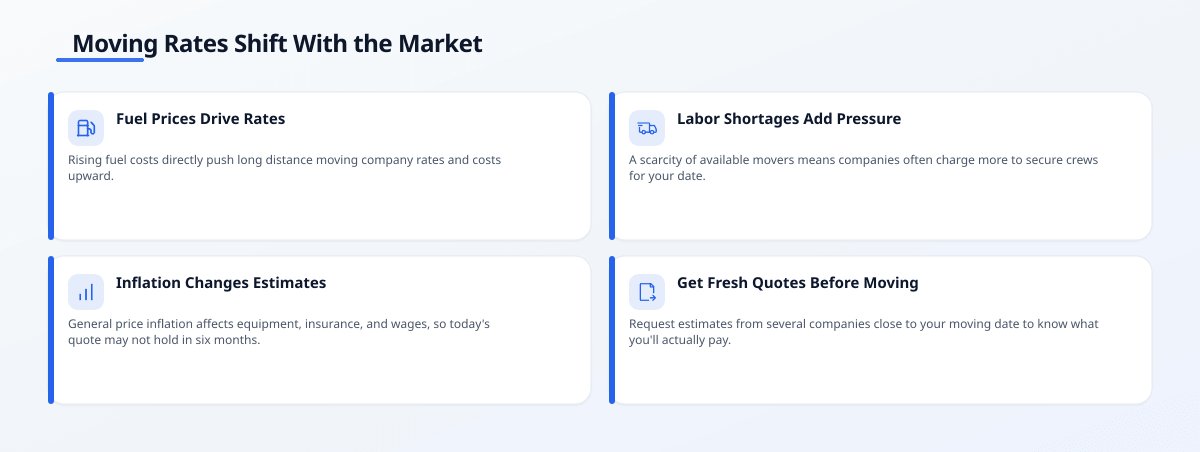
Keep in mind that these averages shift with the market. Fuel prices, labor shortages, and inflation all affect moving company long distance rates. That is why it is so important to get fresh quotes from several companies. The price you see today might not hold in six months, and the only way to know what you will pay is to ask for estimates close to your moving date.
One way to manage costs is to reduce the weight of your shipment. Movers charge by the pound, so every box you donate or sell is money saved. Host a garage sale, give items to charity, or sell them online. You will be surprised at how much you can part with, and your wallet will thank you on moving day.
Hidden Fees and Charges to Watch For
Even with a binding estimate, there are some fees that can sneak into your final bill if you are not careful. The most common is the fuel surcharge, which is often a percentage of the transportation cost. It should be listed on your estimate, but it is worth confirming. Another is the shuttle fee, which applies when the moving truck cannot reach your home and a smaller truck has to be used. This fee is charged separately and can be substantial.
Valuation coverage is another area where costs can rise. Basic liability is included, but it only covers 60 cents per pound per item, which is almost useless for valuables. Full value protection costs more, but it ensures that if an item is lost or damaged, the company must repair or replace it. Make sure you understand the coverage before you sign. If you have expensive items, the extra cost is often worth it.
Finally, be cautious of lowball estimates. If a quote comes in 30% or more below others, it is a red flag. Some companies use this tactic to get your business, then demand more money on delivery day. The FMCSA has strict rules against this, and you have the right to refuse to pay more than the binding estimate. Always get everything in writing and read the fine print.
Ways to Save on Long Distance Moving Costs
Saving money on a long distance move does not mean you have to sacrifice quality. It just means being strategic. One of the most effective ways to cut costs is to move during the off-season. If you have flexibility in your dates, choose a move in October or November. You will likely find lower rates and more availability from movers.
Another approach is to do the packing yourself. Movers charge for packing materials and labor, so if you pack your own boxes, you save on both. Just be sure to use sturdy boxes and proper techniques to protect your items. If you do decide to pack yourself, start early and label every box clearly. This not only saves money but also makes the unpacking process easier.
You can also reduce the distance your movers have to travel. If you are moving to a new city, consider hiring a mover that is based in your destination rather than your origin. Sometimes this can lower the rate because the truck does not have to travel empty to pick you up. Ask about this option when you get quotes. Finally, consider selling or donating items that are not worth moving. The less you have, the less you pay, and the faster your move will be.
Getting Accurate Quotes and Protecting Yourself
The most important step in managing long distance moving company rates and costs is to get accurate quotes from licensed, insured movers. Never hire a company that cannot provide a valid USDOT number. That number allows you to check their safety record and complaint history. A reputable mover will also conduct a virtual or in-person survey before giving you a binding estimate. If a company quotes you a price over the phone without asking about your belongings, walk away.
Once you have your quotes, compare them carefully. Ask each company to explain their pricing structure and list any potential additional fees. Write down the details and keep all paperwork. On moving day, be present when the truck is weighed and when it is unloaded. If the final weight is different from the estimate, you can dispute it with the company or file a complaint with the FMCSA if necessary.
It is also wise to consider your insurance options. Your homeowner's policy may not cover items in transit, so check with your provider. The moving company's valuation coverage is your primary protection, but you can also purchase third-party moving insurance for extra peace of mind. The cost is usually a small percentage of the declared value, and it can save you from significant loss if something goes wrong.
Understanding long distance moving costs is the first step toward a successful relocation. With the right knowledge, you can budget accurately, avoid scams, and choose a mover that fits your needs and your wallet. The effort you put into research before the move will pay off in a smoother, less stressful experience on the big day.