
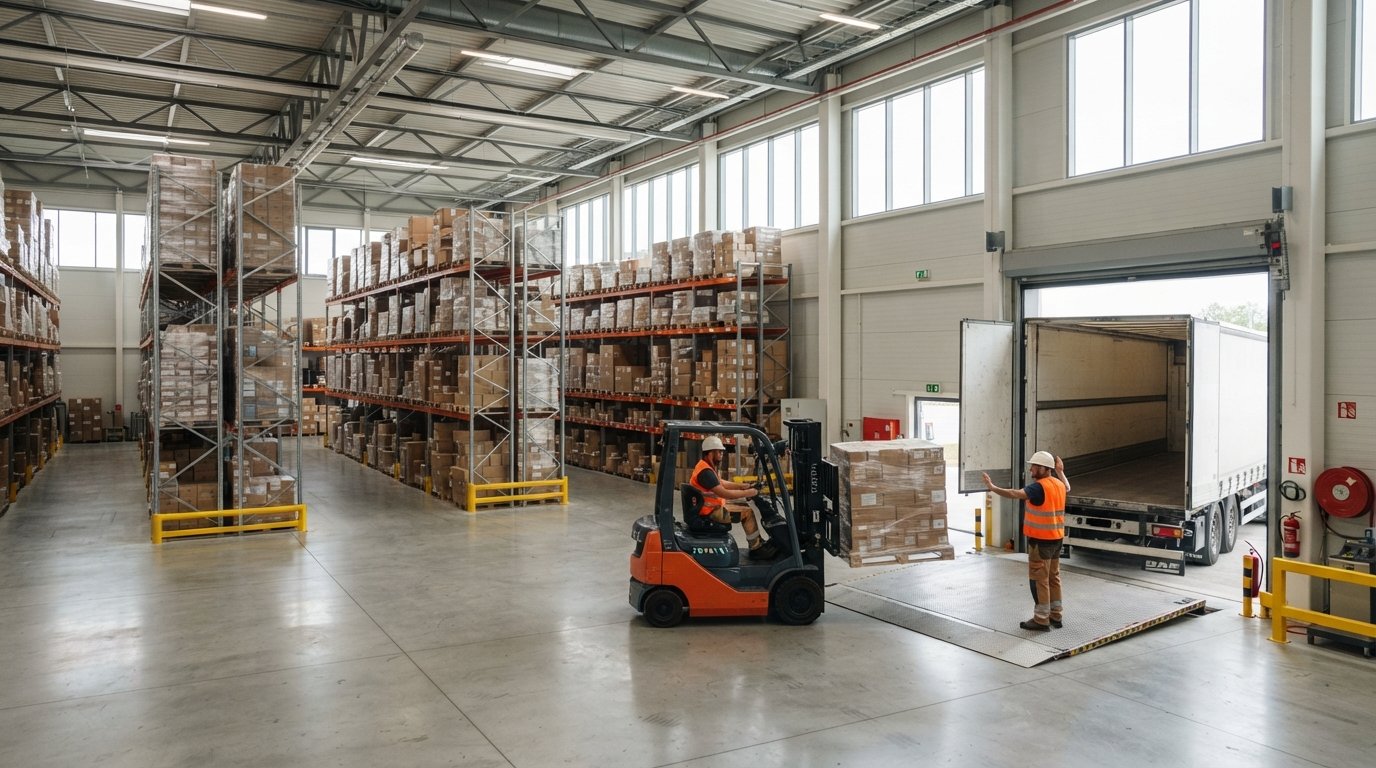
Industrial Storage for Business Inventory During Relocation
Secure industrial storage for business inventory during relocation keeps stock protected and orders moving. Call (833)-484-8675 to plan your move.

By Steven Clark
When a business relocates, the inventory cannot simply pause. Products must keep moving, orders must ship, and production schedules must hold. Yet the moment the warehouse doors close at the old facility, every pallet, rack, and raw material needs a safe place to land. That is where industrial storage for business inventory during relocation becomes the operational backbone of the entire move. Without a clear storage plan, companies face delayed shipments, damaged goods, lost stock, and frustrated customers.
The challenge is not just finding empty space. It is finding the right kind of space, with the right access, security, and climate controls, for exactly as long as the transition takes. Whether the move spans a weekend or several months, the storage decision shapes how smoothly the business emerges on the other side. This guide walks through the practical details: matching storage terms to relocation timelines, protecting inventory, tracking goods in and out, syncing storage with production, and asking storage providers the right questions before signing anything.
Short-Term Versus Long-Term Industrial Storage Needs During a Move
The first decision is how long inventory will sit in storage. Short-term storage typically covers days to a few weeks, often used when the new facility is ready but the move itself is staggered. Long-term storage can stretch for months, common when lease timelines do not align, construction on the new site runs late, or a company is downsizing and selling inventory gradually. Each scenario demands different contract terms, different access expectations, and different cost structures.
For short-term needs, flexibility and speed matter most. A business may need to load out of the old warehouse on a Friday and load into the new one the following Monday. In that case, the storage provider functions almost like a staging area: goods arrive, get counted, and leave quickly. Access hours, dock availability, and the ability to handle a high volume of pallets in a short window are the key criteria. Short-term storage contracts often carry higher per-day rates but lower commitment, which suits moves that are tightly scheduled.
Long-term needs shift the priority toward cost efficiency and stability. When inventory will sit for 60 days or more, businesses should negotiate monthly rates, secure dedicated space rather than shared overflow areas, and confirm that the facility can accommodate ongoing pickups and deliveries, not just a one-time drop. Long-term storage also raises questions about insurance, inventory audits, and how the business will keep products sellable while they are offsite. For companies that need to keep operations running during the gap, long-term storage is less a parking lot and more a temporary distribution center.
A useful way to frame the decision is to map the relocation timeline against storage duration:
- Under two weeks: prioritize fast in and out access, flexible daily rates, and dock scheduling that matches the moving crew.
- Two to eight weeks: negotiate weekly rates, confirm 24/7 or extended access, and plan a mid-storage inventory check.
- Two to six months: secure dedicated space, lock in monthly pricing, and build a pick-and-pack workflow so orders can still ship.
- Six months or more: treat the storage facility as a satellite warehouse with defined SKU locations, regular cycle counts, and a clear exit plan.
Whichever timeline applies, the business should document the expected duration in the contract and ask about penalties or rate changes if the move runs long. Relocation schedules slip, and storage terms that seemed adequate in week one can become expensive by week ten. Building in a buffer, both in time and budget, protects the company from surprises.
Climate, Security, and Access Requirements for Inventory Storage
Not all industrial storage is created equal. A facility that works for steel fittings may be disastrous for paper goods, electronics, or pharmaceuticals. Before choosing a provider, businesses should classify their inventory by sensitivity. Temperature-sensitive products, humidity-sensitive materials, and high-value items each impose different requirements on the storage environment.
Climate control is the first filter. Standard unheated warehouse space is fine for durable goods like metal parts, tools, and many building materials. But products such as food, beverages, cosmetics, medical supplies, and certain electronics need stable temperatures and controlled humidity. Even paper records and cardboard packaging can warp or grow mold in damp conditions. Businesses should ask for documented temperature ranges, humidity readings, and backup power for climate systems. If the provider cannot supply that information, the inventory may be at risk.
Security is the second filter. Industrial storage for business inventory during relocation often involves goods worth far more than the storage fee. Providers should offer gated access, surveillance, alarm systems, and clear policies on who can enter the facility. For high-value inventory, dedicated locked cages or private units within the warehouse add a layer of protection. Businesses should also confirm how the provider screens staff and whether the facility has a documented chain of custody for goods entering and leaving.
Access is the third filter, and it is often overlooked. Some facilities allow access only during business hours, which can stall a moving crew that needs to load at night. Others permit 24/7 access but charge for after-hours staffing. Businesses should match access terms to their operational reality: how often will staff need to retrieve inventory, and at what hours? If the company plans to continue fulfilling orders from storage, daily access with dock availability is essential. If the inventory will simply sit until the new facility opens, tighter access may be acceptable.
Layering these requirements produces a shortlist of viable facilities. A simple comparison matrix helps:
- Climate: ambient, climate-controlled, or temperature-specific with documented logs.
- Security: gated, monitored, alarmed, and optionally caged or private units.
- Access: business hours, extended hours, or 24/7 with dock and forklift support.
- Handling: palletized, racked, floor-stacked, or container-based storage.
Businesses should visit the facility in person before signing. Photos and brochures rarely capture the condition of the loading docks, the cleanliness of the space, or the responsiveness of the staff. A site visit also provides a chance to ask about pest control, fire suppression, and flood history, all of which affect inventory safety.
How to Inventory and Track Goods Moving In and Out of Storage
Inventory visibility is where many relocations go wrong. Goods leave the old warehouse, arrive at storage, and then sit in a black box until the new facility is ready. Without a tracking system, businesses discover missing or damaged items only when it is too late to file a claim. A disciplined inventory process prevents that outcome.
The foundation is a complete pre-move inventory. Before anything leaves the old site, every pallet, carton, and piece of equipment should be logged with a unique identifier. Barcode labels or QR codes work well because they can be scanned at each handoff. The log should capture SKU numbers, quantities, dimensions, weight, and any special handling notes. Photographs of high-value or fragile items add a layer of evidence that supports insurance claims if needed.
During the move into storage, the same identifiers should be scanned or checked off at the storage facility door. This creates a chain of custody that shows exactly when goods arrived and who received them. The storage provider should sign off on the receiving document, and the business should keep a copy. If a pallet is damaged in transit, the damage should be noted on the receiving paperwork before the truck leaves the dock.
While goods are in storage, periodic audits keep the inventory honest. A monthly or biweekly cycle count of a sample of items can catch discrepancies early. For businesses that continue shipping from storage, every outbound order should be logged against the stored inventory so that the remaining stock stays accurate. When the new facility is ready, the outbound process repeats in reverse: scan out, load, and confirm receipt at the destination.
Technology simplifies this work. Warehouse management software, even a lightweight version, can track locations within the storage facility, flag low stock, and generate reports. For smaller operations, a shared spreadsheet with barcode scanning can suffice, provided someone owns the process. The key is consistency: the same tracking method should be used at every handoff, and the data should be reviewed regularly.
Businesses should also clarify who is responsible for inventory accuracy while goods are in storage. Some providers offer inventory management as an add-on service, scanning and reporting on stored goods. Others expect the client to manage everything. The contract should state clearly where responsibility lies, because ambiguity in this area is a common source of disputes.
Coordinating Storage with Production and Shipping Schedules
The most successful relocations treat storage as part of the supply chain, not as a separate parking lot. When storage is coordinated with production and shipping schedules, the business can keep fulfilling orders during the transition. When it is not, customers experience delays and the company loses revenue.
The first step is to identify which inventory must remain accessible. Not every item needs the same treatment. Fast-moving products that customers order daily should be stored in an accessible area of the facility, ideally near the dock, so they can be picked and shipped quickly. Slow-moving or seasonal inventory can go deeper into the warehouse or into less accessible storage. Segmenting inventory by velocity prevents the entire stock from becoming equally difficult to reach.
Next, businesses should map the shipping workflow. If orders will be fulfilled from storage, the facility needs a designated pick-and-pack area, packing supplies, and a carrier pickup schedule. The storage provider should know in advance that the client will be running a fulfillment operation from the space, because not all facilities permit it. Some industrial storage is strictly storage-only, with no working space for packing or staging. Confirming this early avoids a costly mismatch.
Production schedules add another layer. Manufacturers that rely on raw materials or components need a steady flow of inputs even while the plant is moving. Storing raw materials at a facility that can release them on short notice keeps the production line running. This may require a dedicated release process, such as a daily cutoff time for pickup requests. The business should agree on that process with the storage provider and document it in the contract.
A practical coordination framework looks like this:
- Classify inventory by velocity and sensitivity: fast-moving, slow-moving, and sensitive.
- Assign storage locations based on classification, keeping fast movers near the dock.
- Define the fulfillment workflow, including pick, pack, and carrier pickup times.
- Set release schedules for raw materials and components needed by production.
- Review the plan weekly during the relocation and adjust as the new facility comes online.
Communication is the glue. The storage provider, the moving crew, and the internal operations team should share a single schedule that shows when goods arrive, when they ship, and when they move to the new site. A short weekly call or shared document keeps everyone aligned and surfaces problems before they become delays. For larger relocations, appointing a single point of contact on each side prevents conflicting instructions.
What to Confirm with Storage Providers Before Signing
The contract is where good intentions meet real risk. Before signing, businesses should confirm a set of details that determine whether the storage arrangement will actually work. Skipping this step is how companies end up with surprise fees, restricted access, or inventory they cannot retrieve when they need it.
Start with pricing and terms. Ask for a written breakdown of monthly or weekly rates, any setup or handling fees, charges for after-hours access, and the notice required to vacate. Confirm whether rates are locked for the expected duration or subject to change. If the move runs long, what happens to the rate? A clear answer prevents budget blowouts. For broader context on how storage buildings and relocation services fit together, see this guide to storage building movers and relocation services.
Insurance and liability come next. The storage provider's insurance may cover only a limited value per pound, which is often far below the actual worth of business inventory. Businesses should ask for the provider's coverage details and consider supplemental insurance for high-value goods. The contract should state who is liable for damage, theft, or loss, and under what conditions claims can be filed. Documentation from the inventory process supports those claims.
Access and handling rules deserve close attention. Confirm the hours of access, whether forklifts and pallet jacks are available, and whether the client's staff can enter the facility unsupervised. Ask about dock availability and scheduling, especially if multiple trucks will arrive on the same day. If the business plans to run fulfillment from storage, confirm in writing that packing and carrier pickups are permitted.
Finally, verify the facility's operational standards. Ask about pest control schedules, fire suppression systems, roof and flood history, and security staffing. A provider that hesitates on these questions may not be the right partner. It also helps to check references from other business clients who have used the facility for relocation storage. Their experience reveals how the provider handles problems when they arise.
For businesses that also need help with repairs or maintenance at the new facility during the transition, services such as Repairmen connect property owners with vetted local professionals for appliance repair, remodeling, and emergency fixes. Coordinating those tasks alongside the move keeps the new site ready for inventory as soon as storage ends.
When the right storage partner is in place, the relocation stops being a disruption and becomes a managed transition. Inventory stays protected, orders keep shipping, and the business arrives at its new facility ready to operate. The work of choosing, tracking, and coordinating storage pays for itself in avoided delays, reduced damage, and customers who never notice the move happened.