
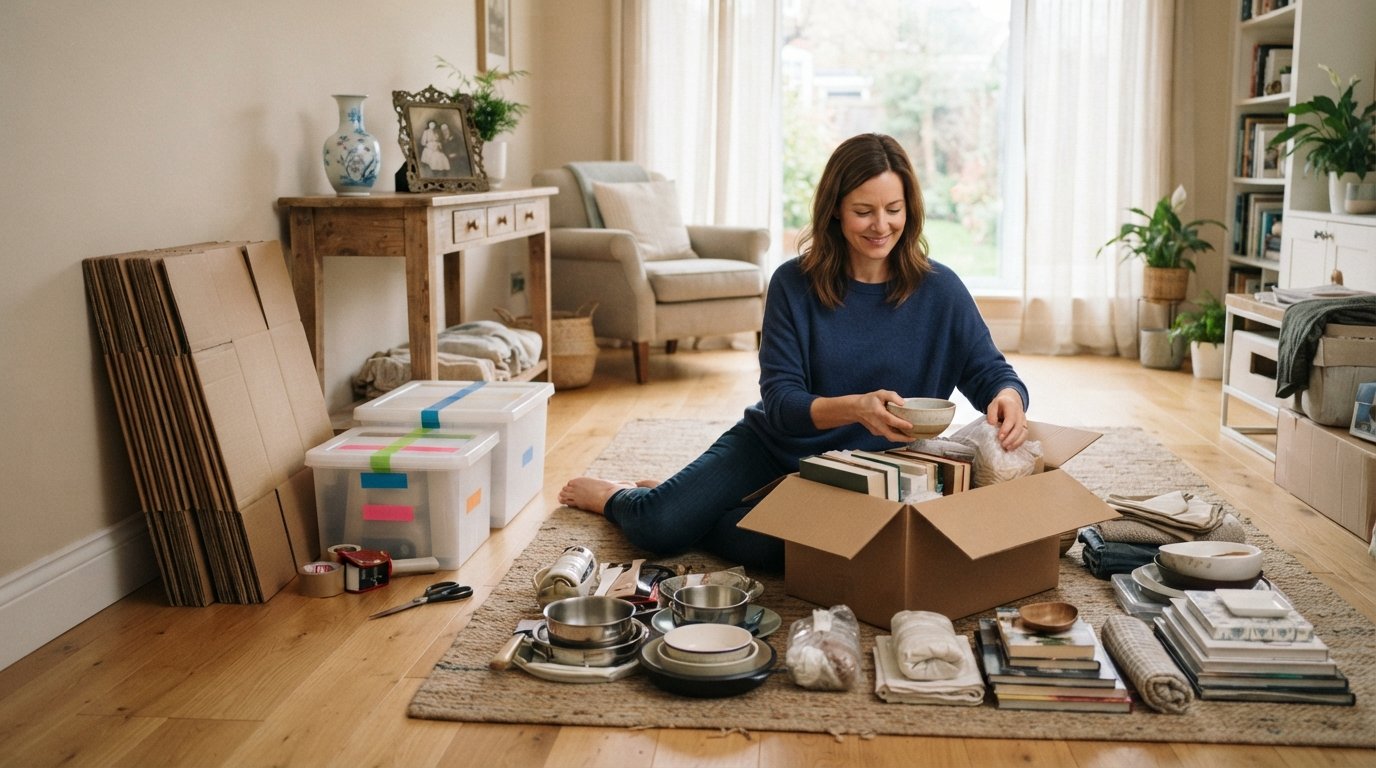
How to Prepare for Professional Packers Before They Arrive
Prep for packing day the right way. Call (833)-484-8675 to compare local packing providers and protect your belongings.

By Megan Hall
You have booked a professional packing crew, and the hardest part feels like it should be over. In reality, the 48 hours before they ring your doorbell often determine whether packing day runs like a well-rehearsed operation or a chaotic scramble. The difference between a smooth, efficient pack-out and a stressful one rarely comes down to the crew's skill alone. It comes down to how well you, the homeowner, set the stage. This guide walks you through exactly how to prepare for professional packers before they arrive, from decluttering and sorting to labeling rooms and flagging fragile heirlooms. Done right, this prep work protects your belongings, speeds up the job, and can even lower your final bill because packers charge by time and materials.
It helps to understand the division of labor before you start. Professional packers handle the boxes, tape, padding, and technique. You handle the decisions: what gets packed, what gets left behind, what travels with you, and what needs special instructions. When those decisions are made in advance, the crew works faster, uses fewer materials, and makes fewer judgment calls that could cost you money or peace of mind. If you are still weighing whether full-service packing is worth the expense, the breakdown in professional packers vs DIY cost can help you see where the real savings and trade-offs sit.
Declutter and Sort Before the Crew Arrives
The single most valuable thing you can do before packing day is to reduce what needs to be packed. Every item a packer touches adds time, materials, and weight to your move. A crew that spends four hours wrapping items you could have donated or discarded is a crew billing you for four hours of avoidable work. Walk through each room with a critical eye and sort belongings into three clear piles: keep, donate or sell, and discard. Be honest about items you have not used in a year or more. That unused bread maker, the stack of old textbooks, and the mismatched linens are all candidates for leaving behind.
Decluttering also protects your budget on the back end. Moving companies price local moves by the hour and long-distance moves by weight, so fewer items mean lower costs on both fronts. It also reduces the chance that packers spend time carefully wrapping something you intended to toss. Set a deadline for your decluttering pass, ideally a few days before the crew arrives, so donation pickups and trash removal can happen before the house fills with boxes.
Once you have sorted, organize what remains by category and destination. Group items that belong together in the new home, and consolidate small loose objects into drawers or bins so packers are not chasing individual items around a room. A simple framework helps:
- Keep and pack: Items going to the new home, grouped by room.
- Donate or sell: Usable items you no longer need, staged in a garage or corner for pickup.
- Discard: Broken, expired, or unwanted items, removed before packing day.
- Personal transport: Valuables, documents, and essentials you will move yourself.
That last category deserves special attention. Anything you would be devastated to lose, or that you need immediately upon arrival, should not go into a moving truck at all. Sort those items into a separate area well before the crew shows up so there is no confusion on packing day.
Set Aside Essentials and Valuables You Will Transport Yourself
Professional packers are trained to wrap and box efficiently, but no packing crew should be responsible for your passport, jewelry, prescription medications, or the laptop holding your business files. Before the crew arrives, create a clearly labeled "do not pack" zone, ideally in a locked closet or a room the packers have been told to skip. Fill it with the items you will carry in your own vehicle or keep with you during the move. This prevents the most common and most painful moving mistake: a critical item getting sealed into a box that will not be opened for weeks.
Think beyond obvious valuables. Essentials for the first 24 to 48 hours in the new home should travel with you, including a change of clothes, toiletries, phone chargers, basic tools, paper plates and utensils, and any medications. If you have children or pets, include their immediate necessities too. A small "first night" kit saves you from digging through boxes at midnight in an unfamiliar house.
Also consider items that are irreplaceable or difficult to insure: family photos, heirlooms, financial documents, and small electronics. Photograph these items before the move and keep the images on your phone. If you are moving high-value items and want to understand how valuation and protection work with independent providers, ask the moving company for written details before packing day rather than after. Clear communication early prevents disputes later.
Finally, secure firearms, medications, and hazardous materials according to local rules. Many moving companies cannot transport certain items, including propane tanks, paint, and some cleaning chemicals. Set these aside for proper disposal or personal transport, and confirm any restrictions with your moving company in advance so the crew does not arrive to find items they cannot legally pack.
Clear Pathways and Label Rooms for Efficiency
Packing crews move fast, and they move best when they have room to work. A cluttered hallway or a bedroom packed with furniture blocks access and slows the entire job. Before the crew arrives, clear pathways through the home, remove trip hazards like loose rugs and cords, and make sure there is a clear route from each room to the exit. If possible, move large furniture slightly away from walls so packers can reach behind and around it without straining.
Create a dedicated staging area near the entrance for packed boxes and materials. This keeps the crew from stacking boxes in awkward corners and makes loading day faster too. If you have a garage or covered porch, designate it as the box staging zone. Make sure it is dry and secure, since cardboard loses strength when wet.
Labeling is where a little preparation pays off enormously. Post a sign on each room's door with the room name and any special instructions, such as "fragile items inside" or "do not pack items in the closet." Use consistent room names that match your new home's layout, because packers will write those names on boxes. Consistency here makes unpacking dramatically easier and helps the crew place boxes in the right rooms at your destination.
A simple labeling system includes:
- Room name signs: Posted on each door, matching your new home's room names.
- Priority labels: Mark rooms or closets that should be packed first or last.
- Do-not-pack zones: Clearly marked areas for valuables and essentials.
- Fragile flags: Notes on shelves or cabinets holding delicate items.
Walk the crew leader through the home when they arrive and point out these labels. A five-minute orientation can save an hour of confusion and prevent mistakes that are hard to undo once tape is sealed.
Communicate Special Handling Instructions to the Crew
Every home has items that need extra care: a fragile antique mirror, a piano, artwork, or a collection of glassware. Professional packers handle these items regularly, but they cannot read your mind. Before packing day, make a list of items requiring special handling and share it with the moving company when you confirm the job. On arrival, walk the crew leader through the home and point out each item, explaining what makes it delicate or valuable.
Be specific and practical. Instead of saying "be careful with the china," say "the china in the dining room hutch is hand-painted and should be wrapped individually." If an item has a history of damage or a repair, mention it. If a piece of furniture needs disassembly, confirm whether the crew handles that or whether you need to arrange it separately. Clear instructions reduce the chance of damage and give the crew the information they need to pack appropriately.
Communication also covers logistics. Tell the crew where to park, which entrance to use, and whether there are stairs or elevators. If your building requires a certificate of insurance or has moving hours, share those details in advance. For homeowners planning broader renovations around the move, resources like contractor project planning guides can help you coordinate timelines and budget for repairs, though packing day itself is best kept focused on the move.
If you have items you are unsure about, ask before the crew starts. Most moving companies appreciate questions in advance rather than surprises on packing day. A short written inventory of special items, shared with the crew leader, is a simple tool that keeps everyone on the same page.
What to Expect During the Packing Process
Understanding how professional packers work helps you prepare realistically and avoid unnecessary stress on the day. Most crews arrive in the morning with boxes, tape, padding, and wrapping materials. The crew leader will typically walk through the home with you, confirm priorities, and then assign team members to rooms. Packing usually proceeds room by room, with boxes labeled by room and contents. Expect the crew to work efficiently and to ask occasional questions about ambiguous items.
You do not need to hover, but you should be available for questions during the first hour, especially if there are items you want handled in a specific way. After the initial walkthrough, you can step back and let the crew work. Keep children and pets away from the packing areas for safety and efficiency. If you plan to order food or take a break, let the crew leader know so they can plan around it.
At the end of packing day, do a final walkthrough with the crew leader. Check that all rooms have been packed as agreed, that do-not-pack zones were respected, and that boxes are labeled clearly. Confirm the inventory list and ask about anything that seems unclear. This is also the moment to note any concerns before the truck is loaded, since addressing issues early is far easier than resolving them after delivery.
If you are comparing service options or want to understand how packing fits into a full-service move, take time to review what different providers include before the crew arrives. Knowing what to expect, from materials to labeling standards, helps you ask better questions and hold the crew to a clear standard. When you are ready to compare options, you can request quotes from independent local providers through Moving.Homes and choose the packing service that fits your home and budget.
The right preparation turns packing day from a source of anxiety into a controlled, efficient process. Declutter and sort so the crew packs only what you need. Set aside valuables and essentials in a clearly marked zone. Clear pathways, label rooms, and communicate special handling instructions up front. Then let the professionals do their job while you stay available for questions. A few hours of preparation before the crew arrives can save you time, money, and a great deal of stress on moving day.