
How Modular Home Movers Relocate Manufactured Homes Safely
Professional modular home movers use specialized equipment and permits to safely transport manufactured houses. Understanding this process is key to a successful relocation.

By Lisa Anderson
Relocating a manufactured or modular home is a monumental task that differs drastically from a traditional house move. It involves transporting a large, often fully assembled structure across roads, around obstacles, and onto a new foundation. This complex process requires specialized knowledge, heavy equipment, and meticulous planning. For homeowners considering this option, whether for a change of scenery, to be closer to family, or to move a home from a dealer’s lot to their land, understanding the role of professional modular home movers is the first critical step. This guide delves into the intricate process of how manufactured homes are relocated, the expertise required, and what you need to know to ensure a successful transition for your home.
The Critical Role of Professional Movers in Manufactured Home Relocation
Attempting to move a modular or manufactured home without professional help is not only dangerous but often illegal. These structures, while built to be transportable, are extremely heavy and wide. Professional modular home movers possess the specific licensing, insurance, and equipment mandated by state and federal departments of transportation. They navigate a web of regulations concerning permits, travel routes, utility disconnections, and escort vehicles. Their expertise begins long before the home is lifted off its blocks. A reputable mover will conduct a thorough site inspection at both the current and new locations. They assess access roads, overhead clearance from power lines and trees, ground conditions, and the need for any temporary removal of obstacles like mailboxes or fences. This preliminary work is essential for creating a viable moving plan and accurate cost estimate, preventing costly surprises on moving day.
Preparing the Home for Transport: A Step-by-Step Process
Once a mover is contracted and a plan is in place, the detailed preparation of the home begins. This phase is crucial for protecting the home’s integrity and ensuring a safe journey. It is a multi-step process that homeowners can prepare for to facilitate a smoother operation.
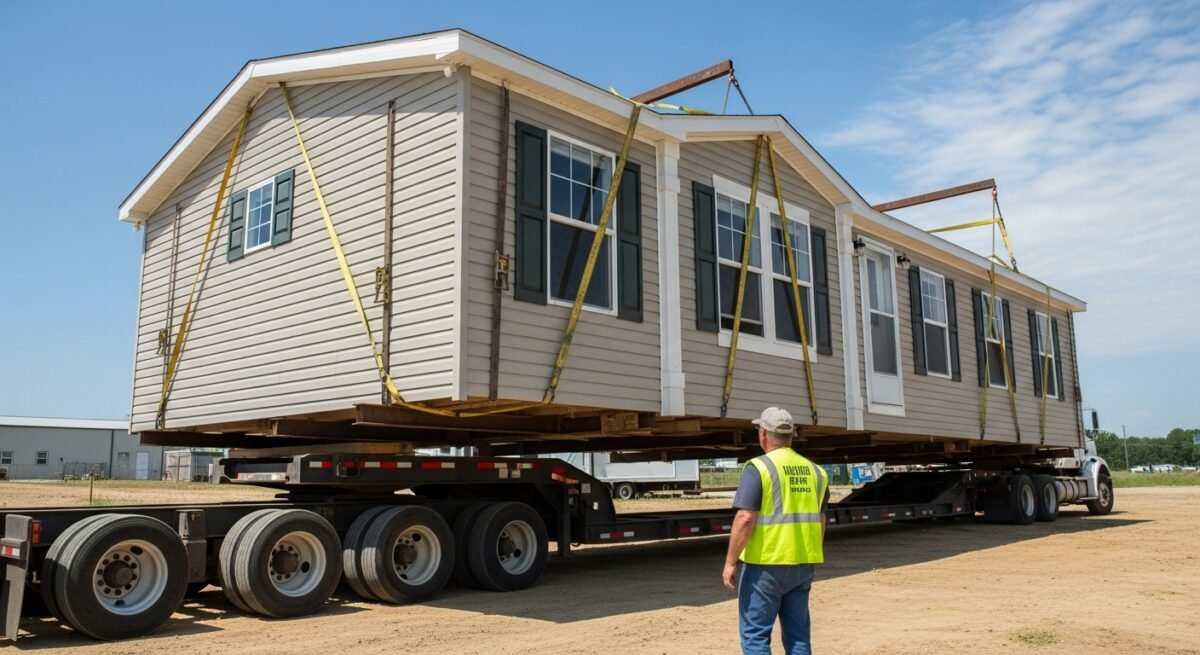
First, all utilities must be officially disconnected by the respective service providers. This includes electricity, gas, water, and sewer. The mover will then secure the home’s interior and exterior. Inside, all loose items must be removed, and appliances are typically strapped down. Cabinets and doors are often taped shut. The most critical work happens to the structure itself. The home must be separated from its foundation, whether it’s a permanent perimeter foundation or temporary piers. Steel beams are then slid underneath the home’s frame. These I-beams provide the structural support needed for the trailer axles. The home is then carefully raised using hydraulic jacks, and the axles and wheels are attached to the beams. Simultaneously, the roof may be braced, and protruding features like carports or decks might need to be detached. For a deeper look at the safety protocols involved, our guide on mobile home movers and safe relocation provides detailed insights.
The Transportation Phase: Navigating the Journey
The actual transport is the most visible and logistically intense part of the process. The home, now on its wheeled carriage, becomes a super-load. The moving company is responsible for obtaining all necessary travel permits from every city, county, and state the home will pass through. These permits dictate the approved route, travel times (often restricted to daylight hours), and the required escort vehicles. Typically, a pilot car with a “Wide Load” sign leads the way, followed by the home itself, and sometimes a follow-up vehicle. The movers must coordinate with utility companies to temporarily lift or disconnect power lines along the route. The driver must possess exceptional skill to navigate turns, bridges, and uneven roadways while managing the immense weight and dimensions of the load. Progress is slow and methodical, often averaging only 20-30 miles per day on challenging routes.
Key Equipment Used by Mobile Home Movers
The success of the move hinges on specialized heavy machinery. Understanding this equipment underscores why professional movers are indispensable. The primary tools include heavy-duty tractors designed for towing massive weights, multi-axle trailers with hydraulic steering for maneuverability, and hydraulic jacking systems capable of lifting tens of thousands of pounds. Steel I-beams serve as the backbone, transferring the home’s weight to the axles. Additionally, movers use a variety of straps, chains, and braces to secure the home’s structure during transit, preventing shifting or damage from wind and road vibration.
Site Preparation and Reinstallation at the New Location
The work is far from over once the home arrives at its new destination. The new site must be fully prepared in advance. This includes having a properly constructed and level foundation ready, whether it’s a new concrete perimeter, piers, or a basement. All utility connections (water, sewer, electrical, gas) must be stubbed and ready for final hookup after the home is set. Upon arrival, the mover will carefully back the home into position over the foundation. Using hydraulic jacks, they will lower the home onto its new supports with precision leveling. The steel beams are then removed. The reconnection process begins: the home is anchored to the foundation as per local code, the roof bracing is removed, and any detached porches or steps are reattached. Finally, the homeowner arranges for utility companies to perform the final connections and inspections. A crucial final step is to have the home professionally releveled and blocked after it has settled for a few weeks, as the move can cause slight shifts.
Cost Factors and Choosing the Right Moving Company
The cost to relocate a manufactured home varies widely, typically ranging from $5,000 to $20,000 or more, depending on numerous variables. Distance is a primary factor, but other elements significantly impact the price. The size and weight of the home are fundamental. A double-wide costs more to move than a single-wide. The complexity of the two sites is critical: tight access, steep driveways, or heavily wooded lots increase labor and time. Permit fees, which vary by jurisdiction, and the required number of escort vehicles add to the cost. Additional services like disconnecting/reconnecting porches, skirting removal, or tree trimming will be extra. To plan a smooth home relocation, it is vital to get multiple detailed, written estimates. Choose a mover with strong references, verifiable insurance, and specific experience with homes like yours. Ensure they handle all permitting and provide a clear contract outlining all services and responsibilities.
Frequently Asked Questions
Can any manufactured home be moved?
Not always. Older homes may not meet current highway safety standards or may be too structurally compromised to withstand a move. A professional mover must inspect the home’s frame and overall condition to determine its mobility.
How long does the entire relocation process take?
From initial planning to final utility hookup, the process can take several weeks to a few months. The physical transport itself may only take a few days for a short move, but permitting, site prep, and coordination extend the timeline significantly.
Do I need special insurance for the move?
Yes. Your standard homeowner’s insurance likely will not cover the home during transit. Your moving company should have cargo insurance, but you may need to purchase a separate transit insurance policy for full coverage.
What’s the difference between a modular and a mobile home mover?
While the terms are often used interchangeably, “mobile home” typically refers to older homes built before 1976. “Manufactured home” is the term for post-1976 homes built to the HUD Code. “Modular homes” are built to state building codes. The moving process is very similar, but modular homes are often placed on permanent foundations and may require more extensive preparation to move.
Who handles disconnecting and reconnecting utilities?
The homeowner is responsible for contacting utility providers to schedule disconnections before the move and reconnections after the home is set. The mover handles the physical separation of the home from the utility lines at the hookup points.
Relocating a manufactured or modular home is a significant undertaking that underscores the value of specialized professionals. By entrusting the job to experienced modular home movers, homeowners can navigate the complex regulations, logistical hurdles, and physical challenges inherent in transporting a structure. Thorough preparation, clear communication with your chosen mover, and realistic expectations about cost and timeline are the pillars of a successful relocation. With careful planning and expert execution, your home can safely reach its new destination, ready to become a familiar haven in a new setting.