
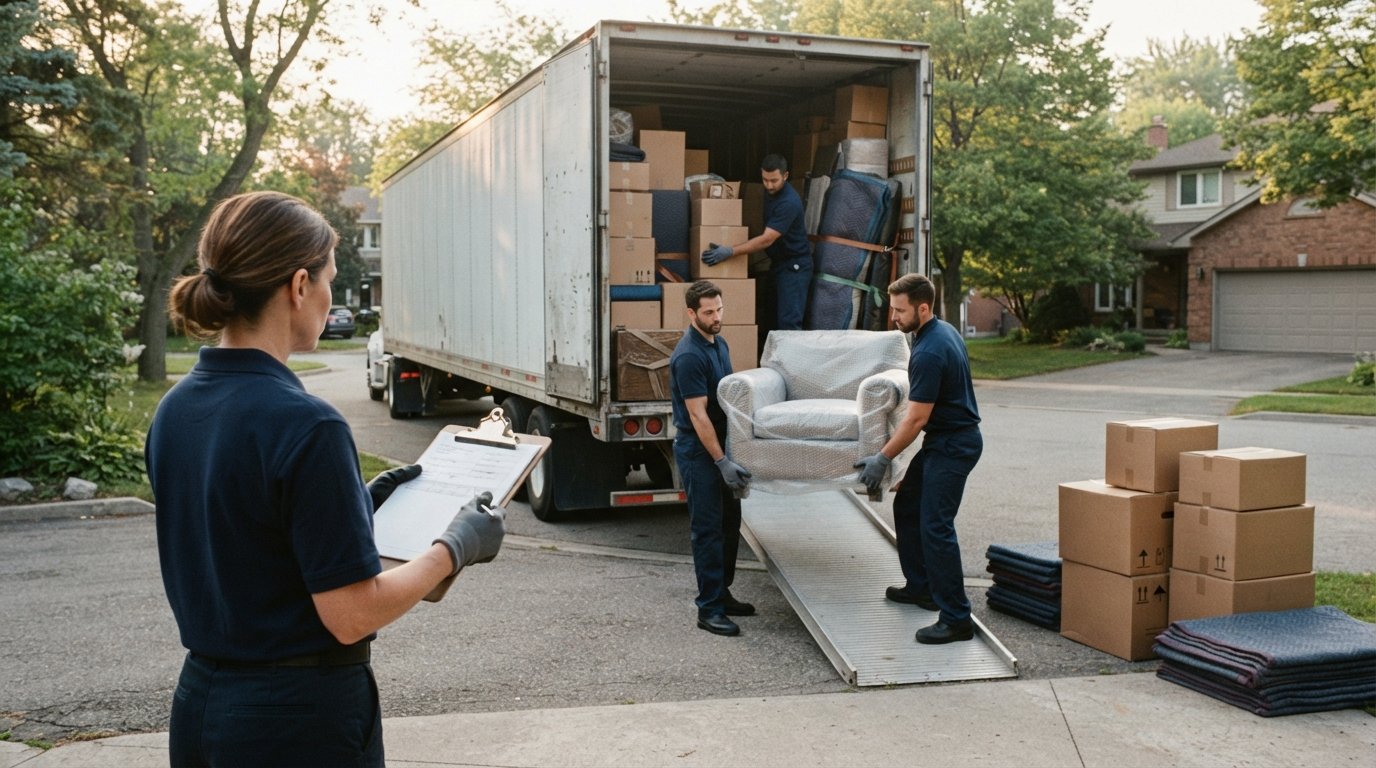
How Household Goods Are Transported During a Long Distance Move
Understand how household goods are transported during a long distance move, from loading to delivery. Call 8334848675 for expert relocation assistance.

By Lisa Anderson
The moment the moving truck pulls away from your old driveway, a quiet anxiety often settles in. You have handed over your entire life, from heirloom furniture to daily essentials, to a crew of people you just met. For anyone preparing for a major relocation, understanding exactly how household goods are transported during a long distance move is the difference between a peaceful transition and a nerve-wracking waiting game. This process is not a random loading of boxes into a truck; it is a highly structured logistical operation involving inventory tracking, weight distribution, and often, multiple modes of transportation. Knowing the journey your belongings take can help you prepare better, set realistic expectations for delivery, and ensure that your valuables arrive safely at your new doorstep.
The Logistics of Long Haul Transport: Trucks, Trains, and Containers
When you move across the country, your goods rarely travel in a single, dedicated vehicle that drives nonstop to your destination. Instead, professional movers utilize a hub-and-spoke system or specialized carriers to maximize efficiency. The vast majority of household goods are transported in large semi-trailers, typically 53 feet long. However, for long distance moves, these trailers are often loaded with the belongings of multiple families, a practice known as consolidation. This method helps reduce costs and carbon footprint, but it requires a sophisticated inventory system to ensure that your items are tracked from pickup to delivery.
The specific method of transport often dictates the timeline and the level of handling your items will receive. For instance, a dedicated truck means your goods are picked up and delivered directly, which is faster but more expensive. On the other hand, consolidated shipments may sit in a warehouse for a few days while waiting for other shipments to fill the truck. Understanding these nuances is part of the broader education found in guides like the Long Distance Moving Companies and Storage Options Guide, which explains how storage fits into the transport equation.
Beyond standard trucks, some long distance moves utilize rail or sea containers. This is particularly common for international relocations or moves to remote areas like Alaska or Hawaii. In these cases, your goods are packed into a weatherproof container, sealed, and then transported via train or ship. While this is highly secure because the container is not opened until it reaches the destination, it can significantly extend the transit time. The choice of transport mode is usually determined by the moving company's logistics team, based on your destination, budget, and the volume of goods being moved.
Preparation and Packing: Securing Items for the Road
Before any box is lifted, the preparation phase determines how well your items will survive the journey. Long distance transport subjects your belongings to vibrations, temperature changes, and shifting forces. Professional packing is not just about wrapping items in paper; it is about engineering a protective environment. Padded moving blankets, custom crates for televisions and mirrors, and double-walled boxes for heavy items are standard. The goal is to eliminate movement inside the box and movement of the box inside the truck.
Inventory creation is another critical step. A professional crew will tag every single item with a numbered sticker and record it on a master inventory list. This list travels with the driver and is used to verify that everything arrives at the destination. It is also the document you will use to file a claim if something goes missing or is damaged. This level of detail is essential when you are moving across state lines, as it provides a legal record of the transaction.
For those opting for a full-service move, the loading process is handled entirely by trained professionals. They know how to build "tiers" in the truck, starting with heavy items like appliances and exercise equipment on the floor and stacking lighter boxes on top. They use straps and load bars to create bulkheads that prevent the load from shifting during sudden stops or turns. If you are handling the packing yourself to save money, remember that the quality of your packing directly impacts how well your goods are transported. Using professional-grade materials and techniques is an investment in the safety of your home.
Loading, Weight Distribution, and the Journey
Once the truck is loaded, the physical journey begins. If you are using a full-service mover, the driver is responsible for the security of the load. For long distance moves, drivers must comply with federal regulations regarding hours of service, meaning they must rest periodically. This is one reason why a cross-country move can take anywhere from a few days to a couple of weeks. The driver is not just driving; they are managing the weight distribution and ensuring the load remains stable.
Weight distribution is a science. Too much weight in the back can make the truck difficult to steer, while too much in the front can overload the axles. Movers distribute heavy items evenly and low to the ground. This is also why they might ask you to separate items you will need immediately upon arrival, as these "load last, unload first" items are packed near the door. If you are curious about the costs associated with these logistics, you can always request free quotes from local contractors for related home services, but for the move itself, the transport logistics are handled by the moving company.
During transit, your goods are exposed to the elements. While trucks are enclosed, extreme heat or cold can affect items like electronics, candles, and musical instruments. This is why climate-controlled storage is sometimes used as a buffer. If your goods need to be stored before final delivery, they are typically held in a secure warehouse. This adds a layer of complexity to the transport timeline, as the goods must be unloaded, stored, and then reloaded onto a different truck for final delivery. It is a process that requires patience and clear communication with your move coordinator.
Delivery Day: Unloading and Reassembly
The final stage of the transport process is the delivery. When the truck arrives at your new home, the driver will typically ask you to verify the inventory list before unloading begins. You should be prepared to check off items as they are brought in. This is the moment of truth where you confirm that the number of boxes matches the inventory. If you notice anything missing, note it on the inventory sheet immediately.
Unloading is the reverse of loading, but it comes with its own challenges. The crew must navigate doorways, stairs, and tight corners in a home they have never seen before. They will often reassemble furniture that was disassembled for the move, such as beds and dining tables. However, for long distance moves, reassembly is often limited to basic items. If you have complex modular furniture, you may need to hire a handyman to put it back together.
It is important to understand that the transport process is a chain of custody. Once the goods are in your new home and the paperwork is signed, the responsibility shifts to you. Inspecting your items for damage before the movers leave is crucial. If you spot damage, document it with photos and note it on the delivery receipt. This documentation is required for any claims process. Moving is a collaborative effort, and understanding how your goods are transported helps you play your part in ensuring a successful outcome.
Tracking Your Shipment and Communication
In the digital age, tracking your household goods is easier than ever. Most reputable long distance moving companies offer online portals or apps where you can see the status of your shipment. You might see updates like "Loaded," "In Transit," or "Arrived at Destination Warehouse." However, it is important to manage expectations. Unlike a package from an online retailer, a moving truck does not have real-time GPS tracking for customers, primarily for security reasons.
Communication is key. You should have a primary point of contact, often a move coordinator, who can answer questions about the transport status. If your goods are delayed due to weather or mechanical issues, the company should notify you. Being proactive in your communication can alleviate stress. For example, if you are driving to your new home and will arrive a day later than the truck, let the company know so they can adjust the delivery schedule.
Ultimately, how household goods are transported during a long distance move is a blend of physical labor and logistical planning. From the careful wrapping of a lamp to the strategic placement of a heavy sofa in the truck, every step is designed to protect your investment. By choosing a reputable mover and understanding the process, you can ensure that your belongings make the journey as smoothly as you do.