Green Packing Hacks for an Eco-Friendly Move
Moving creates mountains of waste. Between bubble wrap, packing peanuts, and cardboard boxes that get used once and thrown away, a single household relocation can fill several dumpsters with material that will sit in a landfill for centuries. But it does not have to be that way. A sustainable move is possible when you choose the right eco-friendly packing materials and adopt a few simple habits. This guide walks you through the best eco-friendly packing materials for a sustainable move, from reusable containers to natural cushioning options, and shows you how to source them without spending a fortune.
Why Conventional Packing Materials Harm the Environment
Standard moving supplies are designed for convenience, not the planet. Corrugated cardboard boxes, while recyclable in theory, often end up contaminated with tape, labels, and food residue, making them unrecyclable. Plastic bubble wrap and foam peanuts are petroleum-based products that take hundreds of years to break down. Even paper-based packing paper, if treated with dyes or coatings, can introduce toxins into the recycling stream. The cumulative impact is staggering: Americans generate an estimated 4.5 million tons of waste from moving and shipping materials each year.
Switching to eco-friendly alternatives reduces your carbon footprint, keeps plastic out of oceans, and often saves you money. Many sustainable options are reusable, meaning you can pass them along to the next person moving. This creates a circular system that benefits everyone.
Reusable Plastic Bins: The Zero-Waste Champion
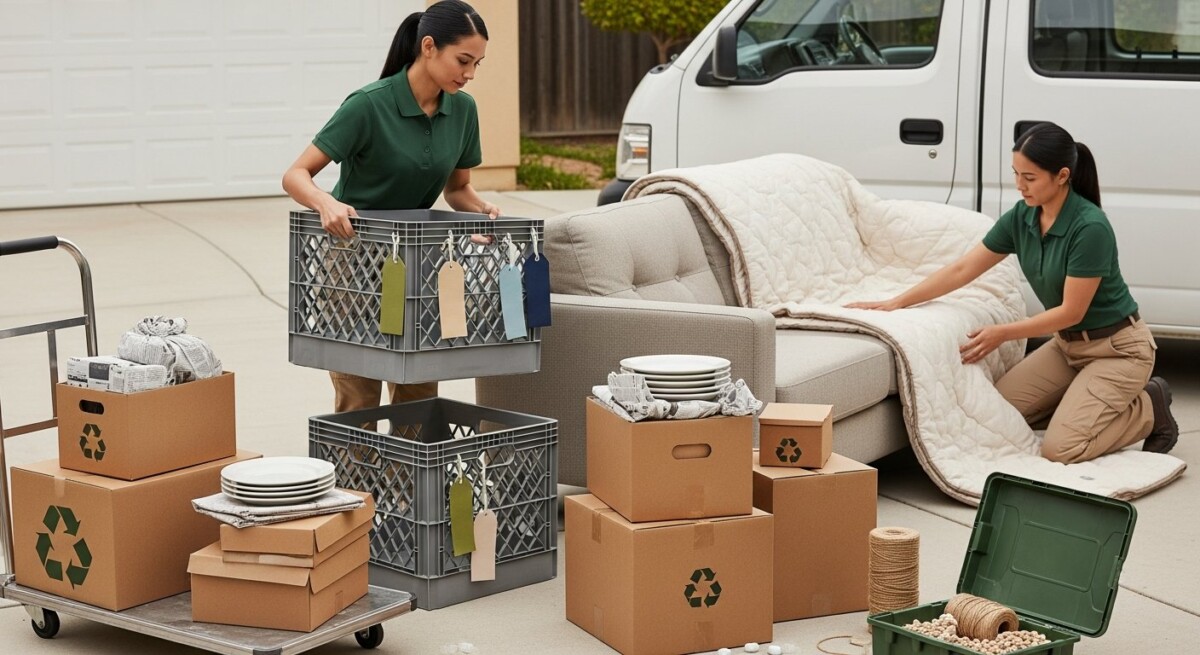
The single most impactful swap you can make is replacing cardboard boxes with reusable plastic moving bins. Companies like ZippGo, Bin It, and local rental services offer sturdy, stackable bins made from recycled plastic. You rent them for a set period, fill them with your belongings, move them, and then return them to be cleaned and used again. A single bin can be reused hundreds of times before it is recycled into a new product.
Reusable bins are also better for your items. They have reinforced corners, locking lids, and uniform dimensions that stack securely in a truck. Unlike cardboard, they do not collapse under weight, and they protect against moisture and pests. For the cost of buying dozens of cardboard boxes, you can rent bins for your entire move. Afterward, you have no boxes to break down and no recycling to manage. In our guide on how to find economical movers for Oklahoma, we explain how combining bin rentals with professional movers can lower your total relocation cost.
Where to Find Bin Rentals
Search for “reusable moving bin rental” plus your city name. Many local moving companies now offer this service as an add-on. National chains like U-Haul also sell plastic moving boxes, though renting remains the greener choice because it keeps the bins in circulation longer. If you move frequently, buying a set of heavy-duty plastic bins for personal use is a worthwhile investment. They will pay for themselves after two or three moves.
Biodegradable Packing Peanuts and Cushioning
Traditional Styrofoam peanuts are a nightmare for the environment. They never fully decompose and break into microplastics that contaminate soil and water. Biodegradable packing peanuts made from cornstarch or wheat starch offer a guilt-free alternative. These dissolve in water, compost in commercial facilities, and do not release toxins. When you receive a package with biodegradable peanuts, you can simply toss them into your compost bin or dissolve them in the sink.
For cushioning larger items, consider air pillows made from recycled plastic. These are inflatable cushions that take up minimal space when deflated and can be reused multiple times. Many moving supply stores sell them, and you can also save the ones that come with online deliveries. Just puncture them to deflate, store them flat, and reinflate when needed.
Natural Alternatives You Already Own
Before buying any packing material, look around your home. You likely have plenty of items that can serve as cushioning:
- Clean towels, washcloths, and dish rags wrap dishes and glassware beautifully.
- Sheets and pillowcases bundle fragile items together and prevent scratches.
- Clothing, especially sweaters and jeans, provides excellent padding for lamps, vases, and picture frames.
- Newspaper and magazine pages, though not as strong as packing paper, work well for wrapping non-porous items like plastic containers.
These household items are free, already in your possession, and will be unpacked anyway. Using them eliminates the need for single-use cushioning entirely. Just be careful with ink transfer: keep newspaper away from white fabrics and porous ceramics. For delicate heirlooms, pair household textiles with biodegradable packing peanuts for extra protection.
Corrugated Cardboard: Use It Smarter, Not Harder
Cardboard is not inherently bad, but its environmental cost comes from single use. If you do use cardboard boxes, maximize their lifespan. After your move, break them down flat and offer them on local freecycle groups, Buy Nothing Facebook groups, or Craigslist. Someone else will use them for their own move. This extends the box’s life and keeps it out of the waste stream.
When buying new cardboard boxes, look for those made from 100 percent post-consumer recycled content. Avoid boxes with glossy coatings or heavy tape, as these complicate recycling. You can also ask local liquor stores, grocery stores, and bookstores for their discarded boxes. They often have sturdy, clean boxes that they would otherwise throw away. Just remove any staples or tape before reuse.
Cardboard Alternatives: Honeycomb Paper and Mushroom Packaging
Innovative alternatives to cardboard are emerging. Honeycomb paper wrap is a strong, lightweight material made from kraft paper that expands into a three-dimensional cushion. It is fully recyclable and biodegradable. Mushroom packaging, grown from agricultural waste and mycelium, is another cutting-edge option. It is compostable at home and provides excellent shock absorption for fragile electronics. While still niche and more expensive than traditional materials, these options are worth considering for high-value items or if you are committed to a zero-waste move.
Eco-Friendly Tape and Labels
Standard packing tape is plastic-based and non-recyclable. It also contaminates cardboard, making the boxes harder to recycle. Switch to paper tape that is reinforced with natural rubber adhesive. Paper tape is strong enough to seal heavy boxes but breaks down in the recycling process along with the cardboard. You can find it at most moving supply stores and online retailers.
For labels, avoid plastic address labels and stickers. Use paper labels or write directly on the box with a marker. If you must use labels, choose ones made from recycled paper and printed with vegetable-based ink. Better yet, use a system of colored paper tape or chalk markers on reusable bins to identify rooms without any waste at all.
How to Pack Fragile Items Without Plastic
Many people assume that fragile items require bubble wrap, but that is not true. A combination of the right techniques and sustainable materials protects your valuables just as well. Start by wrapping each item individually in clean cotton cloth or unprinted kraft paper. Then nestle them in a box lined with crumpled newspaper or biodegradable peanuts. For stemware and glassware, place a rolled-up pair of socks inside each glass before wrapping. The sock absorbs shock and prevents the glass from shattering.
For mirrors and artwork, use corrugated cardboard edge protectors made from recycled content. Slide them over the corners and then wrap the entire piece in a moving blanket or thick quilt. Secure the blanket with paper tape. This method creates a padded cocoon that is fully reusable. After the move, wash the blanket and use it again.
Sourcing Eco-Friendly Materials Locally
Finding sustainable packing materials is easier than ever. Start with these steps:
- Check your local moving company’s website. Many now offer eco-friendly packing services and sell sustainable supplies.
- Visit zero-waste stores in your area. They often stock biodegradable packing peanuts, paper tape, and reusable bins.
- Join community swap groups. People frequently give away leftover packing materials after their own moves.
- Ask friends and family who recently moved if they have supplies to pass on.
If you are hiring professional movers, ask them directly about their packing material policies. Some companies, like those featured on Moving.Homes, offer packing services using recycled and recyclable materials. You can request that they use paper tape instead of plastic tape and avoid Styrofoam entirely. A reputable mover will accommodate these requests.
Frequently Asked Questions
Are reusable plastic bins really better than cardboard?
Yes, when used in a rental model. A single bin reused 50 or more times has a lower environmental impact than 50 single-use cardboard boxes. However, if you buy plastic bins and only use them once, the environmental cost is higher than cardboard. The key is reuse, whether through rental or personal ownership.
Can I compost biodegradable packing peanuts at home?
Only if your home compost system reaches high temperatures, around 140 degrees Fahrenheit. Most backyard bins do not get that hot. You can instead dissolve them in warm water and pour the solution down the drain. The cornstarch will break down safely in wastewater treatment. For best results, check the label to confirm the peanuts are truly compostable and not made from polystyrene.
What is the cheapest eco-friendly packing material?
Items you already own: towels, clothing, linens, and newspaper. These are free and eliminate the need to purchase any new material. Next cheapest is recycled cardboard boxes sourced from local stores. Renting reusable bins is a small upfront cost that often pays for itself compared to buying new cardboard.
How do I dispose of packing materials after a sustainable move?
Offer them to someone else moving. Post on social media or community boards. Biodegradable peanuts can be dissolved or composted. Paper tape and cardboard go in recycling. Reusable bins go back to the rental company. The goal is zero waste, so plan your disposal before you start packing. For more guidance, the team at startautoloan.com offers resources on managing moving expenses and logistics.
Making the Shift Toward a Greener Move
Adopting eco-friendly packing materials does not require a complete overhaul of your moving plan. Start with one or two swaps: replace cardboard boxes with reusable bins for your heaviest items, use towels instead of bubble wrap for kitchenware, and switch to paper tape. Each small change reduces waste and sets a new standard for how you approach relocation. Your move will be lighter on the planet, easier on your wallet, and just as safe for your belongings. For personalized advice and to connect with movers who share your sustainability values, call Moving.Homes at (833) 762-3578. A representative can help you plan a move that aligns with your eco-friendly goals while ensuring professional handling of your items.