
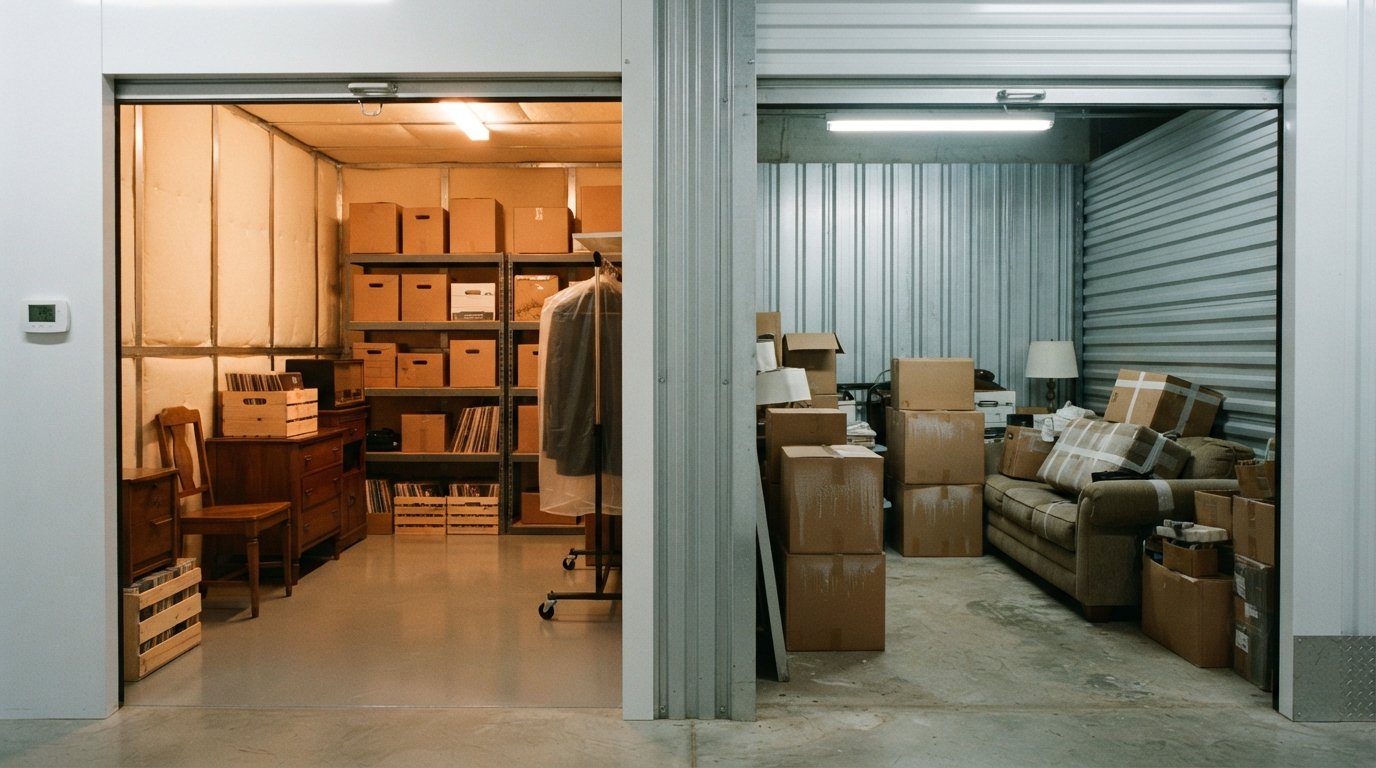
Climate Controlled vs Standard Storage Unit for Household Goods
Compare climate controlled vs standard storage unit for household goods. Protect valuables from damage. Call 8334848675 for expert moving and storage help.

By Jennifer Davis
Your grandmother's antique dining table, your collection of vinyl records, or your home office electronics can all suffer irreversible damage in the wrong storage environment. Choosing between a climate controlled and a standard storage unit for household goods is not a minor detail. It determines whether your belongings come out of storage in the same condition they went in, or with warped wood, cracked screens, and musty fabric. This guide breaks down exactly how each option works, what they cost, and which one fits your specific situation.
What Is a Climate Controlled Storage Unit?
A climate controlled storage unit actively regulates temperature and often humidity levels to keep the interior environment stable year round. Most facilities maintain temperatures between 55 and 85 degrees Fahrenheit, adjusting automatically as outside conditions change. Some units also control humidity, keeping it below 55 percent to prevent mold and mildew growth.
These units are typically located inside a building with insulation, vapor barriers, and HVAC systems. The goal is not to create a perfectly comfortable living space, but to prevent the extreme swings that destroy sensitive materials. A climate controlled unit might keep the temperature at 70 degrees in summer and 60 degrees in winter, never letting it drop below freezing or rise above 90.
Humidity control matters just as much as temperature. In humid climates, moisture in the air penetrates cardboard boxes, fabric, and wood. Over weeks or months, that moisture feeds mold spores and causes swelling, warping, and that unmistakable musty smell. Climate controlled facilities in humid regions often run dehumidifiers alongside their HVAC systems to keep relative humidity in a safe range.
What Is a Standard Storage Unit?
A standard storage unit, sometimes called a drive-up or non-climate unit, is essentially a metal or concrete box with a roll-up door. It protects your belongings from rain, snow, and direct sunlight, but it does nothing to regulate temperature or humidity. On a 95 degree summer day, the inside of a standard unit can easily reach 110 degrees or higher. In winter, it can drop to freezing or below.
Standard units are typically cheaper, more widely available, and easier to access with a vehicle. You can often park right in front of the door and unload directly into the unit. For short-term storage of durable, non-sensitive items, they work perfectly fine.
The trade-off is environmental exposure. Anything vulnerable to heat, cold, or moisture will degrade faster in a standard unit. That does not mean instant ruin, but it does mean risk. A few weeks in July might be fine for plastic bins and metal tools. Six months through a humid summer and a freezing winter is a different story.
How Temperature and Humidity Damage Household Goods
Heat causes wood to expand and contract, which leads to cracks, warping, and joint separation in furniture. It softens adhesives, melts wax, and can cause electronics to malfunction or degrade internally. Cold makes plastics brittle, causes leather to crack, and can freeze liquids that then expand and break their containers.
Humidity is the slower, sneakier threat. Moisture in the air condenses on cool surfaces, feeds mold and mildew, and causes paper, fabric, and cardboard to deteriorate. Metal items rust. Wood swells. Glue fails. By the time you notice the damage, it is often too late to reverse.
Temperature swings are worse than steady extremes. When the air heats up during the day and cools at night, moisture condenses on your belongings repeatedly. This cycle accelerates corrosion, mold growth, and material fatigue. A climate controlled unit eliminates those swings by holding conditions steady.
Which Household Items Need Climate Control?
Not everything you own requires a climate controlled unit. But some items are genuinely at risk in a standard unit, especially for storage periods longer than a few weeks. Here is a practical breakdown of what belongs where:
- Electronics: Televisions, computers, gaming consoles, speakers, and cameras contain sensitive components and screens that can crack or corrode in extreme temperatures and humidity.
- Wood furniture: Antiques, solid wood tables, dressers, and pianos warp, crack, and lose their finish when exposed to heat and moisture swings.
- Fabric and upholstery: Sofas, mattresses, rugs, and clothing absorb moisture and become breeding grounds for mold and mildew.
- Paper and photographs: Books, documents, photo albums, and artwork yellow, curl, and deteriorate rapidly in humid conditions.
- Musical instruments: Guitars, violins, and pianos are extremely sensitive to humidity and temperature changes.
- Leather goods: Jackets, shoes, and furniture crack and dry out in heat, and grow mold in damp conditions.
On the other hand, items like plastic bins, metal tools, lawn equipment, bicycles, and basic kitchenware can usually handle a standard unit without issue. If your storage inventory is mostly durable, non-porous goods, you may not need to pay the climate control premium.
Cost Difference Between Climate Controlled and Standard Units
Climate controlled units typically cost 20 to 50 percent more per month than standard units of the same size. The exact premium depends on your region, the facility, and current demand. In high humidity areas like the Southeast or in extreme temperature regions like the Midwest, the gap tends to be wider because climate control is more expensive to operate.
As a rough benchmark, a 10x10 standard unit might rent for 100 dollars per month, while the same size climate controlled unit could run 140 to 160 dollars. A 10x20 standard unit at 180 dollars might become 250 to 280 dollars with climate control. Over a 12 month storage period, that difference adds up to several hundred dollars or more.
When evaluating the cost, compare it against the replacement value of what you are storing. If you are storing 5,000 dollars worth of electronics, furniture, and instruments, paying an extra 50 dollars per month for climate control is cheap insurance. If you are storing 500 dollars worth of plastic bins and old tools, the math may not justify the upgrade. Also consider whether professional movers can transport your goods directly to a storage facility, which simplifies the logistics and reduces handling risk.
For homeowners planning larger projects or repairs before a move, platforms like FreeQuotes.Contractors can connect you with vetted local contractors for everything from HVAC installation to flooring, ensuring your home is ready for your belongings when they come out of storage.
When a Standard Storage Unit Makes Sense
Standard storage units are not inherently bad. They are a practical, budget friendly option for the right situations. If you need short-term storage during a local move, and your belongings will be in and out within a few weeks, a standard unit is often perfectly adequate. The same goes for storing durable items that are not sensitive to heat, cold, or moisture.
Seasonal items like holiday decorations, sporting equipment, and lawn furniture can usually tolerate a standard unit, especially if they are properly packed with moisture barriers. Business inventory that is not perishable or temperature sensitive may also be fine. The key is honest assessment: if nothing in your unit will crack, warp, mold, or rust, you can save money with a standard option.
Standard units also tend to be more available and easier to access. If you need to get in and out frequently, a drive-up standard unit is more convenient than navigating hallways and elevators in a climate controlled building. For short-term, low-risk storage, convenience and cost often win.
When Climate Control Is Worth the Investment
Climate control becomes essential when you are storing items that cannot be replaced or repaired easily. Family heirlooms, antique furniture, professional equipment, and valuable electronics all justify the extra cost. If you are storing anything for more than three months, especially through a full summer or winter, climate control dramatically reduces the risk of damage.
Geography matters too. If you live in a region with high humidity, extreme heat, or freezing winters, the case for climate control is stronger. In mild climates like coastal California, the risk is lower, though humidity near the coast can still be a concern. In Phoenix, Miami, or Minneapolis, the environmental swings are severe enough that climate control is almost always the safer choice for sensitive goods.
Consider your timeline and the total value of your stored items. If you are storing a household of furniture and electronics for six months or more, the potential replacement cost of damaged goods far exceeds the monthly premium for climate control. In that scenario, climate control is not an upgrade, it is basic risk management. If you need help moving those items into storage, you can connect with climate controlled storage movers who specialize in handling sensitive household goods.
How to Decide: A Practical Framework
Use this simple decision process to choose the right unit for your situation:
- Inventory your items: List everything going into storage and flag anything sensitive to heat, cold, or humidity.
- Estimate storage duration: Less than one month, one to three months, or longer than three months.
- Check your climate: Does your area experience extreme heat, freezing temperatures, or high humidity?
- Calculate the value at risk: Add up the replacement cost of sensitive items and compare it to the monthly climate control premium.
- Choose the lower risk option: If the value at risk exceeds the extra cost, choose climate control.
After working through this framework, most people storing a full household of goods for more than a few weeks will find that climate control is the smarter financial decision. The cost of replacing a water damaged sofa, a warped antique table, or a dead laptop quickly exceeds a year of climate control premiums.
If you are still unsure, ask the facility manager what conditions their standard units reach in peak summer and winter. A reputable facility will give you honest numbers. If they cannot or will not, that is a red flag. Also ask whether the climate controlled units include humidity control or only temperature control, since humidity is often the bigger threat.
Packing Tips for Either Storage Type
Regardless of which unit you choose, how you pack determines how well your belongings survive storage. Use sturdy boxes and plastic bins rather than flimsy cardboard. Leave a small gap between boxes and the walls to allow air circulation. Place pallets or plastic sheeting on the floor to create a moisture barrier between your items and the concrete.
Do not stack heavy boxes on top of fragile ones, and label everything clearly so you can find what you need without tearing the unit apart. For furniture, disassemble what you can, wrap legs and corners with moving blankets, and avoid placing anything directly on the floor. If you are storing mattresses, use a mattress bag to keep moisture and pests out.
For electronics, remove batteries, wrap items in anti static material, and store them in sealed plastic bins with desiccant packets. For clothing and fabric, clean everything before storing, since even small amounts of dirt or oil can attract pests and cause stains over time. Cedar blocks or lavender sachets can help deter insects without harsh chemicals.
Making the Right Choice for Your Move
The decision between climate controlled and standard storage comes down to what you are storing, how long you are storing it, and where you live. Standard units are a cost effective choice for durable, short-term storage. Climate controlled units are the safer option for valuable, sensitive, or long-term storage. Neither is universally right or wrong.
Think of it this way: storage is not just about space, it is about preservation. You are paying to keep your belongings safe until you need them again. If the items in storage represent a significant financial or emotional investment, protect that investment with the environment that matches its needs. If you are storing basic, replaceable goods for a short time, save your money and choose standard.
When you are ready to move your household goods into storage, getting professional help can make the process faster and safer. Get connected with movers who can help with packing, loading, and transporting your items to the storage facility of your choice, so your belongings arrive in the same condition they left your home.