
What to Pack in a First Night Box for a Family Move
A first night box keeps your family fed, clean, and calm on move-in day. Call 8334848675 to connect with packing pros who make it easy.

By Mark Johnson
The moving truck pulls away, the kids are hungry and overtired, and every box in the house looks exactly the same. Somewhere in that mountain of cardboard are the pajamas, the phone chargers, the toothbrushes, and the one stuffed animal your youngest cannot sleep without. This is the moment a first night box proves its worth. Packing one box (or a small labeled tote) with everything your family needs for the first 24 hours in the new home turns chaos into calm, and it takes less than an hour to assemble.
A first night box is exactly what it sounds like: a dedicated container that travels with you, not with the movers, and holds the essentials for sleeping, eating, washing, and settling in before the rest of the house is unpacked. For families, it matters even more than it does for solo movers, because children need routine, comfort items, and quick access to basics when everything around them is unfamiliar. Get connected with movers who can help with packing services and your first night box can stay untouched in your car while the professionals handle the rest of the house.
Why a First Night Box Saves Your Sanity
Professional organizers and seasoned movers agree on one rule: the first night box is the last thing packed and the first thing unpacked. When you arrive at your new home after a long day of loading, driving, and unloading, your energy is gone. Digging through twenty unlabeled boxes for a bottle of baby formula or a phone charger is the fastest route to a meltdown, for both you and your kids.
There is also a practical safety angle. Children in a new, half-unpacked house can get hurt on stray tools, trip over boxes, or wander into rooms that are not yet childproofed. A first night box keeps everyone fed, clean, and occupied while you focus on the big picture, like locating the water shutoff valve and figuring out which box has the coffee maker.
Finally, a first night box protects your budget. When essentials are buried, families end up ordering takeout, buying duplicate toiletries, or paying for a last-minute hotel room. One well-packed box can save you a surprising amount of money on move-in day, and if you want to understand where those savings fit into the bigger picture, our guide to packers and movers pricing breaks down typical costs for packing labor, materials, and full-service options.
What to Pack in a First Night Box for a Family Move
Think of the first night box as a mini version of your home: sleep, hygiene, food, comfort, and logistics. The exact contents will vary by family size and ages, but the categories stay the same. Below is a practical checklist you can adapt, and the best part is that most of these items are already in your house, so you can assemble the box the day before the move without buying anything new.
Start with the items you would reach for in the first hour after walking through the door. That includes keys and paperwork, medications, chargers, and a way to feed everyone without cooking. Then layer in comfort and routine items for kids, because bedtime on night one sets the tone for the whole first week.
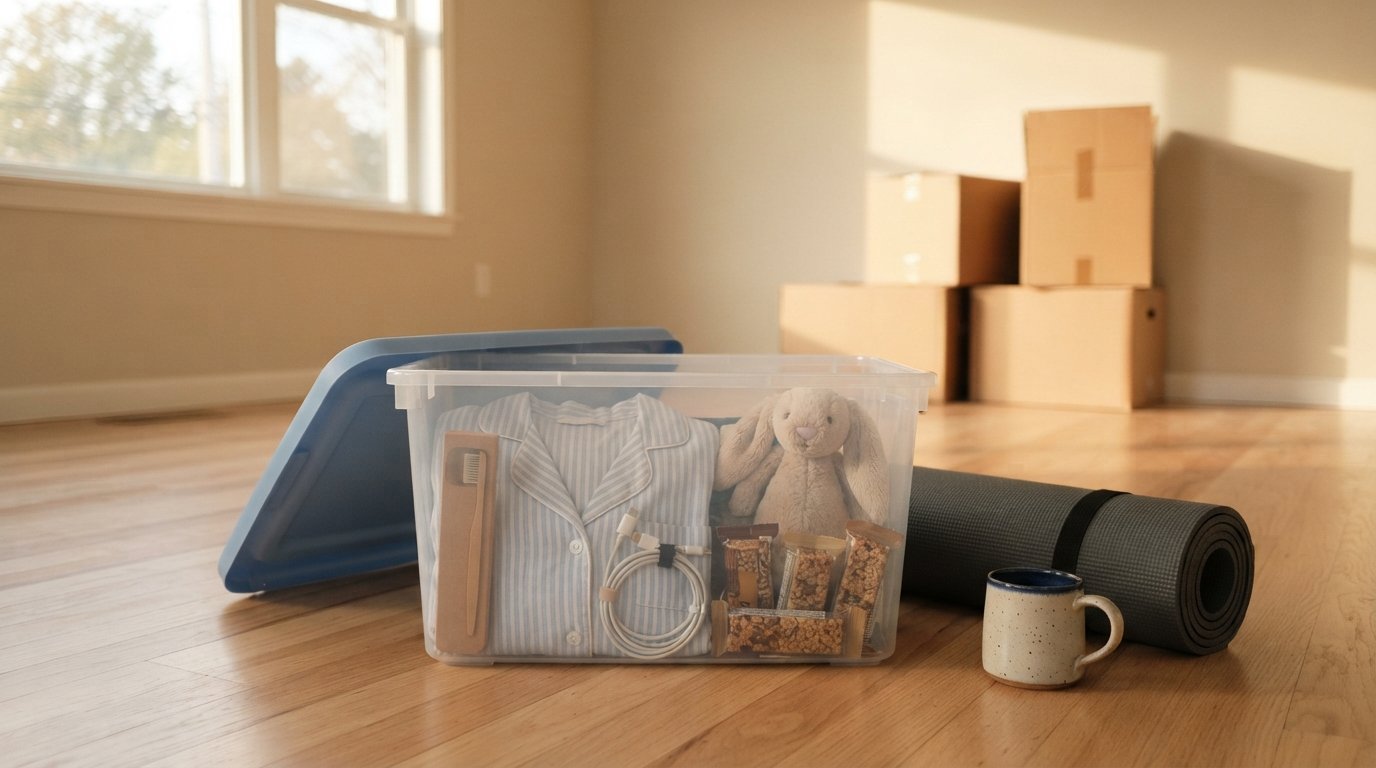
- Sleep essentials: pajamas for each family member, pillows, fitted sheets for each bed, a favorite blanket or stuffed animal, and a sound machine or night light for kids.
- Bathroom basics: toothbrushes, toothpaste, soap, shampoo, towels, toilet paper, and any prescription medications.
- Kitchen quick-start: paper plates, napkins, plastic utensils, cups, paper towels, trash bags, and shelf-stable snacks or a simple breakfast for the morning.
- Clothing: one complete outfit per person for the next day, plus socks and underwear.
- Tech and logistics: phone chargers, a power strip, a small toolkit with a screwdriver and box cutter, and the folder with closing documents, keys, and moving paperwork.
Beyond the basics, add a few items that make the new house feel like home immediately. A favorite book, a small speaker for music, a deck of cards, or a simple craft activity can keep kids busy while you unpack the kitchen. If you have pets, include their food, bowls, leash, and a familiar toy so they settle faster too. Label the box clearly on all sides with the words FIRST NIGHT in bold marker, and keep it in your car rather than on the moving truck.
For families with infants or toddlers, add a dedicated section: diapers, wipes, formula or breast pump supplies, a portable changing pad, and a pack-and-play sheet. These items are non-negotiable on night one, and they are easy to forget when you are focused on furniture and boxes. If your move involves professional packers, tell them explicitly which items you are keeping with you so nothing gets loaded by mistake.
How to Pack the Box Like a Pro
Packing a first night box is less about volume and more about order. Use a clear plastic tote with a lid if possible, because you can see the contents at a glance, and it doubles as a stable surface in an empty kitchen. If you prefer cardboard, choose a medium box rather than a large one so it stays manageable to carry.
Layer the box from least urgent to most urgent. Items you will not need until bedtime (pajamas, sheets, pillows) go at the bottom. Items you will need within minutes of arrival (keys, medications, chargers, snacks, toilet paper) go on top. Zip-top bags are your friend here: group toothbrushes and toothpaste in one bag, chargers and cables in another, and small toys in a third. This keeps tiny items from scattering the moment you open the lid.
- Choose your container and label it FIRST NIGHT BOX on every side.
- Pack sleep items first, then bathroom, kitchen, clothing, and tech.
- Group small items into labeled zip-top bags.
- Place the most urgent items on top for instant access.
- Keep the box in your personal vehicle, never on the moving truck.
One more pro tip: pack a second, smaller box just for the kids. Fill it with a change of clothes, a snack, a book, and a quiet toy for each child. This gives them ownership of something on moving day and gives you a fast answer when someone asks, where is my stuff? Children handle relocation better when they have a small, predictable kit of their own, and it costs you almost nothing to put together.
Assign Roles So Nothing Gets Lost
In a family move, the first night box works best when everyone knows their job. One adult should own the box from packing through unpacking, which means that person is responsible for keeping it in the car, carrying it inside first, and setting it in a central spot like the kitchen counter or the primary bedroom. If two adults are sharing the load, split it: one manages the first night box, the other manages the kids and pets during arrival.
Older children can carry their own small bag with a change of clothes and a comfort item, which reduces the number of times you hear, I cannot find my pajamas. For younger kids, keep their items in the main box but tell them where it will be. A quick walk-through of the plan before moving day (we sleep here, we eat here, your bear is in this box) lowers anxiety and makes bedtime smoother.
If you have hired professional movers, confirm with the crew leader which boxes must stay with you. Reputable companies handle this all the time, and being clear upfront prevents the first night box from ending up at the bottom of a packed truck. When you request quotes through Moving.Homes, you can ask about packing services and note that you will keep a personal essentials box with you, so your move plan reflects how your family actually operates.
Special Situations: Babies, Pets, and Long-Distance Moves
Families with babies need a slightly different first night box, sometimes called a baby go-bag. Include enough diapers and wipes for 48 hours, a full feeding setup, a portable bassinet or pack-and-play sheet, a swaddle or sleep sack, and a thermometer. If you are moving long distance and staying in a hotel en route, pack two days of supplies and refill the box at each stop.
Pets add another layer. Keep their food, bowls, medications, leash, litter supplies, and a familiar blanket in the car with you, not on the truck. On arrival, set up one quiet room with their bed and water before you open the rest of the house. This reduces stress for animals who have no idea why their world just changed.
Long-distance moves deserve an expanded version of the first night box: extra phone chargers, a printed list of important phone numbers, cash for tips and drive-through meals, a cooler with drinks and perishable snacks, and a folder with hotel confirmations and moving documents. If your move crosses state lines, keep your driver's license, insurance cards, and any school or medical records in the box as well. For homeowners tackling repairs or upgrades after the move, platforms like FreeQuotes.Contractors can connect you with vetted local contractors for projects like painting, flooring, or HVAC work, so your new house becomes a home faster.
Common Mistakes to Avoid
The most common mistake is treating the first night box as an afterthought and packing it on the truck. Once it is loaded, you will not see it until unloading day, which defeats the entire purpose. Pack it the night before, seal it, and put it in the car before the movers arrive.
Another mistake is overpacking. A first night box is not a survival kit for a week; it is a bridge to the moment when the kitchen and bathrooms are functional. If the box is too heavy or too full, you will dread carrying it and you will not find anything quickly. Keep it to one tote plus one small kids bag per child, and resist the urge to add just one more thing.
Finally, do not forget the boring logistics: toilet paper, trash bags, hand soap, and a working flashlight. These are the items families miss most on night one, and they cost almost nothing to include. A printed checklist taped to the lid ensures you can repack the same box for future moves, and it gives you a template to share with friends who are relocating.
Moving day will always be a little chaotic, but the first night does not have to be. With a well-planned first night box, your family walks into the new house with clean pajamas, full stomachs, charged phones, and a clear path to bedtime. Pack it early, label it boldly, keep it with you, and let the rest of the boxes wait until morning.