Trailer Moving Company Services and Transportation Options
Relocating a trailer, whether it is a travel trailer, a fifth-wheel, a flatbed utility trailer, or a specialized equipment hauler, presents a unique set of logistical challenges. Unlike standard household goods, trailers are oversized, heavy, and often require specific permits and driving expertise. Attempting to move one yourself without the proper truck or experience can lead to costly damage, accidents, or legal issues. This is where a professional trailer moving company becomes an essential partner. These specialized providers offer a range of transportation options designed to handle the complexity of moving your trailer safely and efficiently, saving you time and protecting your investment.
Understanding the Scope of Trailer Moving Services
Trailer moving services go far beyond simply hitching a trailer to a truck and driving away. A reputable company offers a comprehensive suite of solutions that address the entire relocation process. This includes the initial assessment of the trailer’s size and weight, route planning for low-clearance roads and bridges, securing all necessary permits, and using specialized equipment to load and unload. For businesses, this often means coordinating with inventory management and scheduling. For individuals, it means the peace of mind that comes from knowing professionals are handling a valuable asset. The core offering is the safe, timely, and legally compliant transportation of your trailer from point A to point B, regardless of distance.
When You Should Hire a Trailer Transport Mover
There are several clear scenarios where hiring a trailer transport mover is not just a convenience but a necessity. First, if you are moving a trailer that is inoperable or has mechanical issues, a tow truck or flatbed carrier is required. Second, long-distance moves, particularly across state lines, involve complex regulations that vary by jurisdiction. Professional movers understand these rules and handle the paperwork. Third, if you own a high-value or custom trailer, the expertise of a professional reduces the risk of damage during transit. Finally, if you simply lack the appropriate vehicle (a heavy-duty truck with the correct hitch and brake controller), it is safer and often more cost-effective to hire a specialist than to rent or buy equipment you will use infrequently.
Key Transportation Options for Your Trailer
Not all trailers are the same, and neither are the methods used to transport them. A professional trailer moving company offers several transportation modes, each suited to different types of trailers and customer needs. The most common options include tow-away, drive-away, and flatbed hauling. Understanding the differences helps you choose the best service for your specific situation and budget.
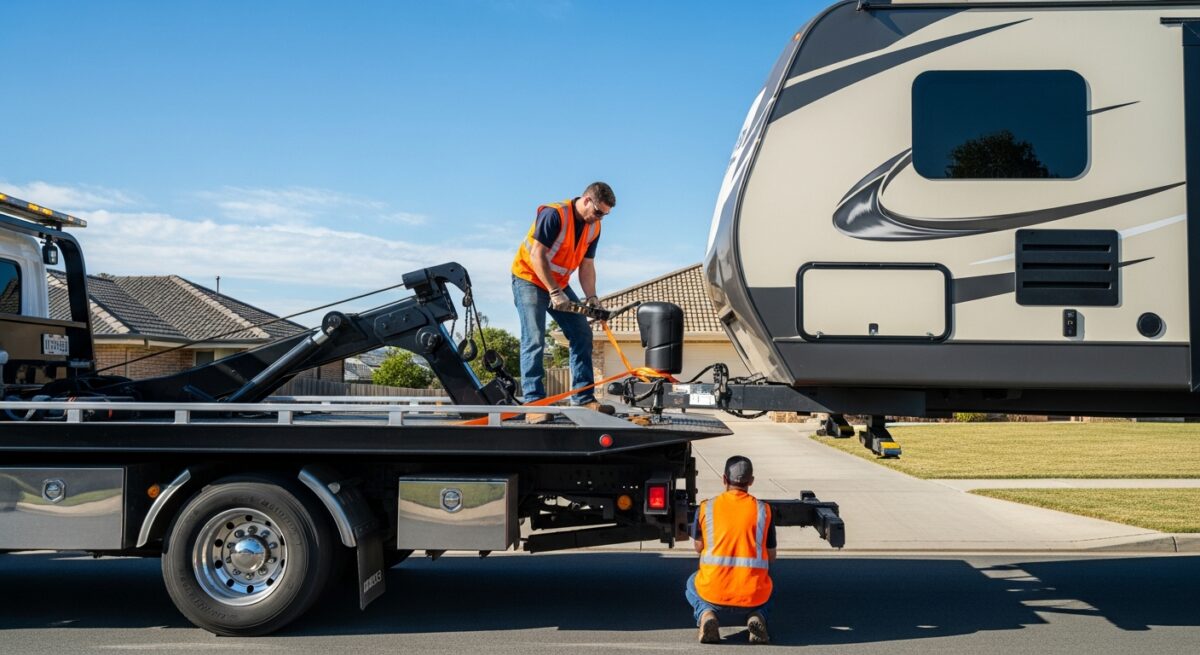
- Tow-Away Service: The trailer is hitched to a specialized tow truck or a heavy-duty service vehicle. This is ideal for inoperable trailers, short to medium distances, and situations where the trailer needs to be delivered directly to a specific spot, like a campsite or storage facility.
- Drive-Away Service: A professional driver comes to your location, inspects the trailer, and drives it to the destination. This option is only available for trailers that are roadworthy and have valid registration. It is often the most economical choice for moving a functional travel trailer or cargo trailer across the country.
- Flatbed Hauling: The trailer is loaded onto a flatbed truck, often using a winch or a lift gate. This is the preferred method for heavy equipment trailers, large fifth-wheels, or trailers that are too wide or tall to be towed safely. Flatbed hauling protects the trailer’s tires and suspension from road wear and is excellent for long-distance moves.
Each method comes with its own set of advantages regarding cost, speed, and safety. A tow-away service is generally faster for short hops, while flatbed hauling offers the highest level of protection for high-value cargo. Drive-away services are typically the most affordable for functional trailers. A good moving consultant will ask about your specific trailer type and your timeline to recommend the right match. For businesses relocating a fleet of trailers or equipment, coordinating these services can be as complex as a full-scale corporate move. In our guide on corporate relocation services, we explain how to manage multi-asset logistics efficiently.
How to Choose a Reliable Trailer Moving Company
Selecting the right company is the most critical decision in the process. Not all movers are equipped to handle the unique demands of trailer transportation. You need a company that has the proper licensing, insurance, and equipment. Start by verifying that they are registered with the Federal Motor Carrier Safety Administration (FMCSA) and have a valid USDOT number. This ensures they are legally allowed to transport goods across state lines. Next, ask for proof of insurance that covers the full value of your trailer during transit. A reputable company will provide this documentation without hesitation.
You should also inquire about their experience with your specific type of trailer. Ask for references or case studies from similar moves. Professional companies should be transparent about their process, including how they handle permits for oversized loads, their tracking capabilities, and their communication protocols. Finally, get a detailed, written quote that breaks down all costs, including fuel surcharges, mileage fees, tolls, and permit fees. Avoid companies that give vague estimates over the phone without inspecting the trailer. The best providers offer guaranteed pricing, ensuring that the quote you receive is the price you pay, with no surprise charges on moving day.
The Logistics of Long-Distance Trailer Transportation
Moving a trailer over a long distance, such as across the country, involves a sophisticated level of planning. The route must be carefully mapped to avoid low bridges, weight-restricted roads, and tunnels that cannot accommodate the trailer’s dimensions. This is not a task for general GPS navigation. Professional dispatchers use specialized software designed for oversized loads. They also coordinate with state highway patrols and local authorities to secure permits, which can take days or weeks to process depending on the route. For example, moving a large fifth-wheel from the East Coast to the West Coast may require permits from ten or more states, each with its own regulations and fees. A professional company manages this entire bureaucratic process, saving you an enormous amount of time and frustration.
Another critical aspect of long-distance moves is scheduling. A trailer moving company will work with you to establish a pickup and delivery window. For time-sensitive moves, such as when you are relocating for a job or need the trailer for an upcoming trip, express services are often available for an additional fee. During transit, many companies offer GPS tracking so you can monitor the progress of your trailer in real-time. This transparency is a significant advantage over moving it yourself, where you are solely responsible for the vehicle and any unforeseen delays. The peace of mind that comes from professional management of these logistics is often the primary reason people choose to hire a trailer transport mover.
Cost Factors for Trailer Moving Services
The cost of hiring a trailer moving company varies widely based on several key factors. Understanding these factors will help you budget accurately and compare quotes effectively. The most significant cost drivers include the distance of the move, the size and weight of the trailer, the transportation method chosen, and the time of year. Typically, longer distances and heavier loads result in higher costs. Flatbed hauling is generally more expensive than tow-away or drive-away services due to the specialized equipment required. Additionally, moving during peak season (May through September) often commands a premium due to higher demand.
Other cost considerations include the need for expedited service, storage fees if the trailer cannot be delivered immediately, and charges for additional services like loading or unloading assistance. Some companies charge a flat fee for the entire move, while others charge by the mile. It is essential to get a clear breakdown from each provider. Ask about potential surcharges for remote locations, difficult access roads, or permits for oversized loads. A trustworthy company will be upfront about these costs. While it may be tempting to choose the lowest quote, it is crucial to balance price with the company’s reputation and insurance coverage. Paying slightly more for a reliable, insured provider is better than risking damage to your valuable trailer with an unqualified hauler.
Frequently Asked Questions About Trailer Moving
Do I need to be present during pickup and delivery?
Yes, it is strongly recommended that you or a designated representative be present for both the pickup and delivery. At pickup, you will walk around the trailer with the driver, documenting its condition, and sign a bill of lading. At delivery, you will inspect the trailer again to ensure no damage occurred during transit. This process protects both you and the moving company.
Can I put personal belongings inside my trailer during transport?
Most companies allow you to store personal items inside the trailer, but there are important restrictions. Hazardous materials like propane tanks, gasoline, and batteries must be removed. Additionally, the total weight of the trailer including your belongings must not exceed the legal weight limits for the transportation method. You should disclose all items to the moving company so they can plan accordingly.
How far in advance should I book a trailer moving service?
For long-distance moves, it is best to book at least two to four weeks in advance. This allows the company time to secure the necessary permits, plan the route, and schedule a driver. For local moves, a week’s notice is often sufficient. Last-minute bookings are possible but may incur a premium fee or limited availability.
What if my trailer breaks down during transit?
Professional trailer moving companies have contingency plans for breakdowns. If you are using a tow-away or drive-away service, the company will dispatch a repair service or a replacement vehicle. If your trailer is on a flatbed, the truck’s mechanical issues are the hauler’s responsibility, and they will arrange for a replacement truck. Ensure your contract specifies who is responsible for repairs and any associated costs.
Managing the financial side of a move, especially when transporting large assets like trailers, can be a significant burden. Many people look for ways to offset these expenses. For example, if you are financing the trailer or the vehicle used to tow it, you might consider options to reduce your monthly payments. You can learn more about potential savings by exploring resources like car loan refinancing, which can free up cash for your moving budget.
Making Your Final Decision
Choosing the right trailer moving company and transportation option is a decision that impacts the safety of your property and your overall stress levels during a relocation. By understanding the different services available, from tow-away to flatbed hauling, and by asking the right questions about licensing, insurance, and pricing, you can make an informed choice. A professional company does more than just move a trailer. They provide expertise in logistics, legal compliance, and risk management. This investment in professional service ensures that your trailer arrives at its destination safely, on time, and without the headaches of doing it yourself. Whether you are moving a single recreational vehicle or a fleet of commercial trailers, the right partner makes all the difference.