
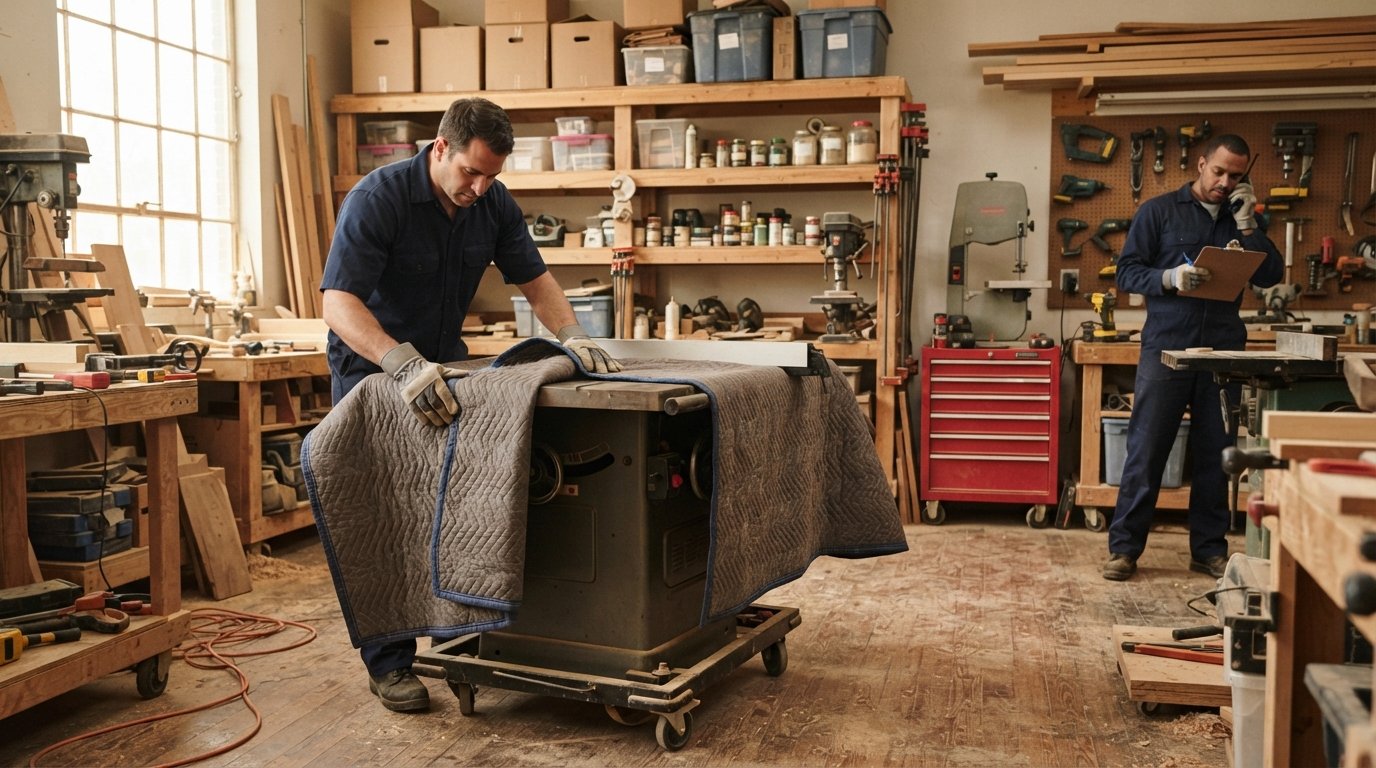
Moving a Home Business or Workshop Full of Tools and Equipment
Moving a home business or workshop full of tools and equipment requires a solid plan to protect your assets. Call (833)-484-8675 for expert moving help.

Your workshop is not just a room full of stuff. It is the engine of your income, a collection of tools you have invested in over years, and often a space that holds hazardous materials, heavy machinery, and business inventory that cannot simply be tossed into the back of a pickup truck. Moving a home business or workshop full of tools and equipment is a different animal from a standard household move. The stakes are higher, the logistics are more complex, and the margin for error is smaller. Whether you are relocating a woodworking shop, an auto repair business, a pottery studio, or a home-based electronics assembly operation, you need a plan that protects your assets, keeps your business running, and gets you back to work as quickly as possible.
This guide walks you through the entire process, from taking inventory of high-value tools and securing insurance to handling hazardous materials, moving heavy machinery, and setting up your new workspace. You will learn how to minimize downtime, avoid common pitfalls, and make smart decisions about what to move yourself and what to hand off to professionals. By the end, you will have a clear roadmap for moving your home business or workshop with confidence.
Start with a Thorough Inventory and Insurance Review
Before you pick up a single box, you need to know exactly what you own. A detailed inventory serves two critical purposes: it helps you plan the move, and it provides the documentation you need if something is damaged or lost. For a home business or workshop, a generic list of household items will not cut it. You need to record each high-value tool, piece of equipment, and inventory item, including serial numbers, purchase dates, and estimated replacement values. Photographs and video walkthroughs of your workshop can be invaluable, especially if you need to file an insurance claim later.
Once your inventory is complete, review your insurance coverage. Most homeowner's policies have limited coverage for business property, and standard moving insurance may not fully protect high-value tools or specialized equipment. You may need to purchase additional coverage or a separate rider for your business assets. If you are hiring professional movers, ask them about their valuation options and what is covered. For expensive items like CNC machines, 3D printers, or industrial sewing machines, consider specialized transit insurance. Document everything and keep copies in a safe place, ideally in the cloud, so you can access them during the move.
Here are the key items to include in your workshop inventory:
- Power tools (drills, saws, routers, sanders) with model and serial numbers
- Heavy machinery (table saws, lathes, mills, presses) with weights and dimensions
- Hand tools and specialty equipment
- Business inventory, raw materials, and finished goods
- Hazardous materials (fuels, solvents, paints, chemicals)
- Electronics, computers, and sensitive instruments
Having this information at your fingertips will also help you get accurate moving quotes. Professional movers will want to know the volume and weight of your equipment, and any special handling requirements. In our guide on moving home costs: complete budget guide for 2026, we explain how to budget for these kinds of moves, including the extra costs associated with heavy or specialized items.
Secure Hazardous Materials, Fuel, and Chemicals
One of the biggest challenges when moving a home business or workshop full of tools and equipment is dealing with hazardous materials. Flammable liquids, solvents, paints, adhesives, propane tanks, and chemicals cannot be loaded onto a moving truck, and many are prohibited from being transported across state lines without proper permits. Your first step is to identify everything in your workshop that falls into this category. Check labels for hazard symbols and read the safety data sheets if you have them.
For materials you no longer need, dispose of them properly through your local hazardous waste facility. Do not pour them down the drain or throw them in the trash. If you have usable materials that you want to keep, you have a few options. You can transport small quantities yourself in approved containers, following all safety regulations, or you can arrange for a licensed hazardous materials mover to handle them. Some moving companies specialize in this type of transport, but it is often expensive. Another option is to give away or sell usable materials to fellow hobbyists or businesses in your area, which saves you the hassle and cost of moving them.
Plan ahead for hazardous materials by creating a separate list and deciding on a disposal or transport strategy at least a month before your move. This is not something you want to leave to the last minute. Also, remember that even non-hazardous liquids like paint or cleaning supplies can leak and damage other items, so pack them securely and keep them separate from your tools.
Plan for Heavy Machinery, Benches, and Shelving
Workshops are full of heavy, awkward items that require special handling. Table saws, workbenches, shelving units, tool chests, and large machinery are not only heavy but also difficult to maneuver through doorways and down stairs. Start by measuring everything and mapping out the path from your workshop to the moving truck. You may need to disassemble some items, such as removing legs from benches or detaching motors from larger machines. Keep all hardware in labeled bags and tape them to the item they belong to.
For very heavy items, consider hiring professional movers with experience in commercial or industrial relocations. They have the equipment (dollies, straps, lifts) and trained personnel to move heavy machinery safely. If you decide to move items yourself, invest in proper moving equipment like heavy-duty furniture dollys, lifting straps, and plywood to protect floors. Never try to move a heavy machine alone; always have help and use safe lifting techniques.
Shelving and storage units can often be disassembled and reassembled, but label all parts clearly. If you have built-in shelving or workbenches that are attached to the walls, you will need to detach them and repair the walls before moving out. Take photos of how everything is assembled to make reassembly easier at your new location. For fragile or precision equipment, use custom crating or original packaging if you still have it.
Keep Your Business Running During the Move
For many home business owners, downtime means lost income. The key to keeping your business running during the move is careful planning and communication. Start by creating a timeline that includes not just the moving days but also the weeks before and after. If possible, arrange to move your workshop in phases, keeping essential tools and equipment with you or in a temporary location so you can continue working. For example, you might move your office and computer equipment first, then your heavy machinery, and finally your inventory.
Notify your clients and suppliers about the move well in advance. Update your business address, phone number, and website as soon as possible. Set up mail forwarding and ensure your email and phone systems are transferred smoothly. If you need to pause operations for a few days, communicate that clearly and set expectations for when you will be back up and running. Consider using a temporary workspace or a storage unit with power access if you need to keep working during the transition.
Another strategy is to outsource or delegate tasks during the move. If you have employees, assign them specific responsibilities. If you work alone, consider hiring a virtual assistant or temporary help to handle customer inquiries while you focus on the physical move. The goal is to minimize disruption and maintain cash flow, so prioritize the tools and equipment you need to generate income and move those first.
Storage and Setup Priorities at the New Location
Once you arrive at your new location, the work is not over. Setting up your workshop efficiently will save you time and frustration later. Before you move, measure your new space and plan the layout. Where will the heavy machinery go? Do you have adequate power outlets and ventilation? Will you need to install new lighting or electrical circuits? Knowing these answers ahead of time will help you prioritize what to unpack first.
When you arrive, focus on setting up your essential workstations first. Unpack the tools and equipment you need for your most common tasks, and leave the rest for later. This approach gets you back to work faster and reduces the feeling of being overwhelmed. If you are using a storage unit, keep frequently used items accessible and label boxes clearly. Consider creating a floor plan for your new workshop and placing items accordingly as you unpack.
Finally, do not forget about safety. Check that your new workshop meets local codes for electrical, fire safety, and ventilation. Install smoke detectors and fire extinguishers, and make sure hazardous materials are stored properly. If you are moving a business that involves solar energy or renewable energy equipment, you might also want to explore free solar power quotes to see if solar can power your new workshop and reduce your energy costs. A well-planned setup will make your new workshop safer and more efficient from day one.
Moving a home business or workshop full of tools and equipment is a complex undertaking, but with the right preparation, it can be done smoothly. By inventorying your assets, securing hazardous materials, planning for heavy machinery, keeping your business running, and prioritizing your setup, you protect your investment and get back to what you do best. Take the time to plan, and do not hesitate to bring in professional movers who understand the unique needs of a workshop move. Your tools and equipment are the backbone of your business, so treat them with the care they deserve.