
How to Move a Saltwater Aquarium Safely: A Step-by-Step Guide
Moving a saltwater aquarium safely requires planning and speed. Call (833)-484-8675 for expert moving help and protect your livestock.

By Amanda Lewis
Moving a saltwater aquarium is one of the most delicate tasks a hobbyist can face. Unlike freshwater tanks, saltwater systems rely on a fragile balance of live rock, beneficial bacteria, and sensitive invertebrates. A single mistake during transport can crash an established reef or kill prized fish. Yet with careful planning, the right containers, and a clear timeline, you can relocate your entire marine ecosystem without losing a single specimen. This guide walks you through every phase of the process, from preparing the tank weeks in advance to re-acclimating livestock in your new home. Whether you are moving across town or across the country, the principles remain the same: minimize stress on livestock, preserve as much biological filtration as possible, and set the tank back up quickly at the destination.
Plan Ahead: Timing and Logistics for Your Aquarium Move
Success starts long before you drain a single gallon of water. Saltwater aquariums are living systems, and livestock cannot survive indefinitely in transport containers. Your first decision is whether to move the tank yourself or hire professionals. For local moves, a DIY approach is feasible if you have enough hands and a vehicle large enough for the tank and containers. For long-distance moves, however, you may need to ship livestock overnight or entrust the move to a specialist. In either case, the goal is to minimize the time fish and corals spend in bags or buckets. Most fish can survive 12 to 24 hours in properly oxygenated bags, but corals and sensitive invertebrates are less forgiving. Plan your move so that the tank is broken down and set back up within a single day whenever possible.
Create a detailed timeline working backward from your move date. Two weeks before the move, stop adding new livestock and begin collecting supplies: food-grade buckets with lids, battery-powered air pumps, fish bags, rubber bands, insulated coolers, and heat packs. One week before, do a partial water change and clean the tank glass to reduce algae growth during transport. The day before, prepare fresh saltwater at the destination if possible, or plan to mix it immediately upon arrival. If you are hiring a moving company for the rest of your household goods, consider using a professional service to handle the heavy lifting of furniture and boxes while you focus on the aquarium. For guidance on choosing between professional movers and DIY for furniture, see our guide on hiring furniture movers vs DIY moving.
Short Distance vs Long Distance: Time Limits for Livestock
The duration of the move dictates your transport strategy. For moves under two hours, fish and corals can remain in insulated containers with battery-powered air pumps. You can transport live rock in buckets of saltwater to keep it wet and preserve beneficial bacteria. For moves lasting two to six hours, you will need to bag fish individually with oxygen, place them in insulated coolers, and monitor temperature closely. Corals should be bagged separately and kept upright to avoid tissue damage. Live rock can be transported in buckets with just enough water to keep it submerged, but the water will slosh and may lose oxygen, so consider using a small air pump in each bucket.
For long-distance moves exceeding six hours, the risk of livestock loss rises sharply. If you are driving, plan to stop every few hours to check temperature and oxygen levels. Battery-powered air pumps are essential. For moves over 12 hours, shipping livestock overnight via a reputable courier is often safer than transporting them in a vehicle. This requires careful bagging with pure oxygen, double-bagging, and insulated boxes with heat or cold packs depending on the season. Corals can be shipped the same way, but they require more careful packing to prevent damage. Always have a backup plan: if a flight is delayed or a vehicle breaks down, you need a way to keep water circulating and temperature stable.
Transporting Fish, Corals, and Live Rock in Containers
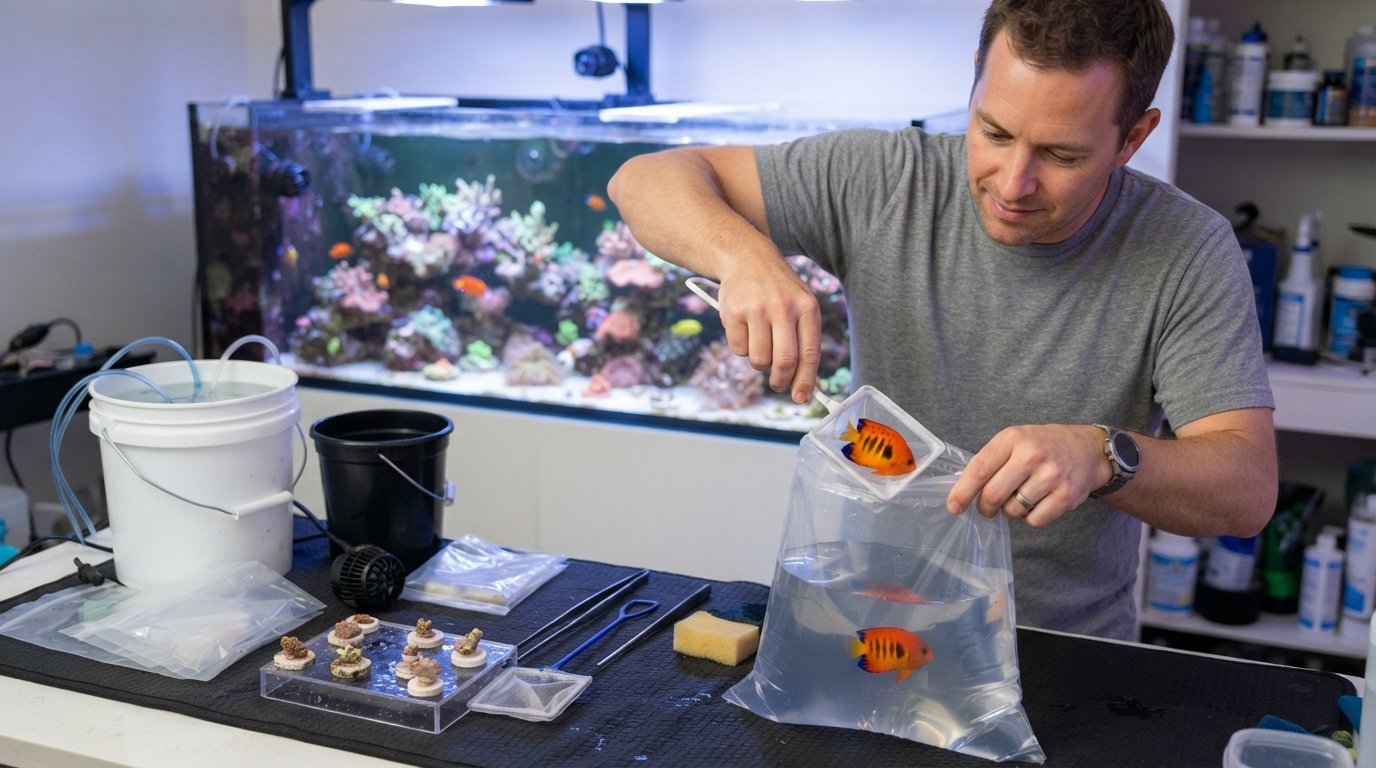
Fish should be caught and bagged individually. Use clear fish bags filled one-third with tank water and two-thirds with pure oxygen. Secure each bag with a rubber band, then place it inside a second bag for extra protection. Float the bags in an insulated cooler with a lid to maintain temperature. Do not overpack the cooler; leave space for air circulation. For larger fish, use specimen containers or large bags with plenty of water. Avoid feeding fish for 24 hours before the move to reduce waste in the bags.
Corals require special handling. Soft corals can be bagged like fish, but stony corals should be placed in individual containers with enough water to cover them completely. Keep them upright to prevent abrasion. If you have a large colony, consider fragging it before the move to reduce size and stress. Live rock is the backbone of your biological filtration. Transport it in buckets or coolers filled with saltwater. Do not let live rock dry out; even a few minutes of exposure can kill beneficial bacteria. If you have a lot of rock, use multiple containers and keep them covered to prevent light exposure, which can cause algae blooms.
Invertebrates such as shrimp, crabs, and snails can be bagged like fish, but they are more sensitive to changes in temperature and salinity. Use separate bags and avoid overcrowding. Anemones should be transported in a container with water and a piece of live rock for attachment. Keep them in a dark, stable environment. For all livestock, label each bag or container with the species name and any special care instructions. This helps you prioritize acclimation at the destination.
Draining, Securing, and Packing the Tank and Equipment
Before draining the tank, unplug all equipment and remove heaters, filters, and pumps. Clean them thoroughly with fresh water (never soap) and allow them to dry. Save as much tank water as possible in food-grade buckets or containers. This water contains beneficial bacteria and helps minimize stress on livestock during acclimation. However, do not transport more water than necessary; water is heavy and can spill. For most moves, saving 50 percent of the original water is sufficient. If you are moving long distance, you may need to mix new saltwater at the destination, so bring extra salt mix and a refractometer.
Drain the tank down to the substrate level. If you have a sand bed, you can leave a shallow layer of water to keep it moist, but avoid transporting a deep sand bed as it can become anaerobic and release hydrogen sulfide. For deep sand beds, it is safer to remove the sand and transport it in buckets, then rinse it before reuse. Alternatively, plan to replace the sand with new live sand at the destination. Remove all decorations, rocks, and equipment. Clean the tank glass with an algae scraper and wipe down the inside with fresh water. Dry the tank completely before moving to prevent mold and mildew.
Secure the tank for transport. Use moving blankets or foam padding to protect the glass or acrylic. Place the tank on a sturdy piece of plywood in the vehicle to distribute weight evenly. Never carry a tank by its rim or braces; always support the bottom. Use ratchet straps to secure the tank in place. For large tanks, you may need a furniture dolly and at least two strong people. If you are using a professional moving company for the rest of your belongings, confirm that they are insured to handle aquariums, or consider hiring a specialist. For a broader look at when to hire professionals for heavy items, our article on hiring furniture movers vs DIY moving offers useful criteria.
Water Chemistry and Re-acclimation in the New Home
Once you arrive at your new home, the clock is ticking. Set up the tank stand in its final location, ensuring it is level and can support the weight. Place the tank on the stand and begin adding substrate and live rock. If you transported live rock in water, keep it submerged as you transfer it. Add the saved tank water, then top off with fresh saltwater mixed to the correct salinity (typically 1.023 to 1.025 specific gravity). Start the filtration and heating systems immediately. Bring the water up to the proper temperature (around 78°F for most reefs) as quickly as possible.
While the tank is stabilizing, begin acclimating livestock. Float the bags in the tank for 15 to 20 minutes to equalize temperature. Then, use the drip acclimation method: slowly add tank water to each bag over 30 to 45 minutes. This is especially important for invertebrates and corals, which are sensitive to changes in salinity and pH. Test the water parameters in the tank before adding livestock: ammonia, nitrite, nitrate, pH, and salinity. If ammonia or nitrite is present, you may need to use a bacterial supplement or perform a water change. Do not add all livestock at once; introduce the most sensitive species first and monitor for signs of stress.
Keep the lights off for the first 24 hours to reduce stress on fish and corals. Monitor temperature and salinity closely for the first week. It is common for the tank to experience a mini-cycle after a move due to the disruption of beneficial bacteria. Be prepared to do frequent water changes and test parameters daily until the system stabilizes. If you have lost any livestock during the move, remove them immediately to prevent ammonia spikes. With patience and careful monitoring, your aquarium will recover and thrive in its new home.
Special Considerations for Long-Distance and International Moves
Moving a saltwater aquarium over long distances or internationally adds layers of complexity. For interstate moves, you may need to comply with state regulations regarding the transport of live fish and corals. Some states require permits or health certificates. Check with your destination state's fish and wildlife agency. For international moves, customs regulations are even stricter. Many countries require import permits for live animals, and some prohibit certain species. You will likely need to work with a professional live animal shipper who can handle the paperwork and ensure compliance with airline and customs rules.
If you are moving internationally, consider rehoming your livestock rather than subjecting them to a stressful journey. Selling or donating to a local hobbyist or aquarium store is often the most humane option. If you must move them, plan for a door-to-door shipping service that specializes in live fish. These services use oxygenated bags, insulated boxes, and temperature controls. The cost can be significant, but it is often the only way to ensure the survival of your animals. For international moves, also consider the voltage and plug type of your equipment; you may need transformers or new equipment. For more on planning a move abroad, see our guide on international moving.
For any move, whether local or long distance, having a reliable plan for the rest of your household goods is essential. While you focus on the aquarium, you can use a service like Moving.Homes to get free quotes from professional movers. They can handle packing, loading, and transportation of your furniture and boxes, freeing you to concentrate on the delicate task of moving your saltwater tank. To explore energy-efficient solutions for your new home, visit SolarEnergy.ai for expert guides on solar panel installation and savings.
Final Checklist for a Safe Aquarium Move
To ensure nothing is overlooked, use this checklist as your move day approaches. Gather all supplies in one place, label everything clearly, and have a helper on hand. Remember that preparation and speed are your best allies.
- Collect food-grade buckets, fish bags, rubber bands, battery-powered air pumps, insulated coolers, and heat packs.
- Stop feeding fish 24 hours before the move.
- Bag fish and corals individually with oxygen; place in coolers.
- Transport live rock submerged in saltwater.
- Drain the tank, leaving substrate moist; clean and dry equipment.
- Secure the tank in the vehicle with padding and straps.
- At the destination, set up the tank immediately and acclimate livestock slowly.
Following these steps will greatly increase the chances of a successful move. Saltwater aquariums are resilient when given proper care, and with a calm, methodical approach, you can preserve the health of your marine ecosystem. For additional support with the logistics of your move, including packing and transportation of household goods, consider reaching out to professional movers who can handle the heavy lifting while you focus on your aquarium.