
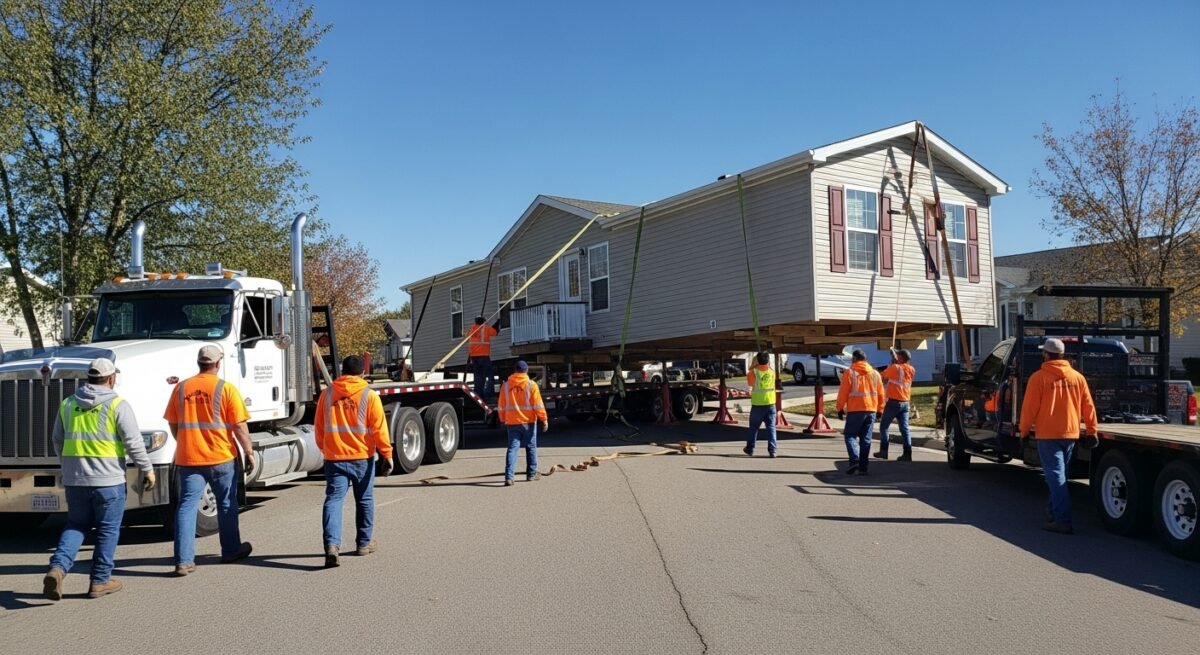
How Mobile Home Movers Relocate Manufactured Homes Safely
Understanding how professional mobile home movers operate ensures a safe, compliant relocation of your manufactured home. Call (833) 762-3578 for expert guidance.

By Brandon Hall
Relocating a manufactured home is a monumental task that involves far more than hitching a trailer to a truck. It’s a complex, highly regulated process that requires specialized expertise, heavy equipment, and meticulous planning. For homeowners considering a move, whether across town or across the state, understanding how professional mobile home movers operate is the first critical step toward a successful and secure relocation. This intricate procedure safeguards your significant investment and ensures the structural integrity of your home throughout its journey.
The Specialized World of Manufactured Home Moving
Moving a manufactured home is fundamentally different from a traditional site-built house move or a standard rental truck relocation. These structures, often called mobile homes or trailer homes, are built in factories to federal HUD code standards and transported to their initial site. Relocating them again is a task for specialists, not general contractors or typical moving companies. Professional manufactured home movers possess a unique combination of skills, licensing, and equipment designed specifically for this purpose. They understand the engineering principles of these homes, including how they are framed, how weight is distributed, and where stress points are located during transport. This expertise is non-negotiable, as improper handling can lead to severe structural damage, from cracked drywall and misaligned doors to catastrophic frame failure.
The process begins long before the moving day. Reputable movers conduct a thorough site inspection at both the current and destination locations. They assess access roads, overhead clearance from power lines and trees, ground conditions, and the home’s specific construction details. This planning phase is where potential problems, like a narrow bridge or a steep driveway, are identified and solutions are engineered. It’s also when necessary permits are secured. Moving a wide load like a manufactured home requires permits from every state, county, and municipality the home will pass through. These permits dictate the specific route, travel times (often restricted to daylight hours), and whether police escorts are required. Navigating this bureaucratic maze is a core service provided by experienced trailer home movers.
The Step-by-Step Relocation Process
The physical move is a choreographed sequence of events where each step must be executed with precision. While the specifics can vary based on the home’s size (single-wide, double-wide, or triple-wide) and distance, the core stages remain consistent.
First, the home must be prepared for travel. This goes beyond packing your belongings. The mover will oversee or directly handle the disconnection of all utilities (water, sewer, electricity, gas) by licensed professionals. Any attached structures like porches, decks, or skirting are removed. Inside, the home is secured: furniture is anchored, cabinet doors are latched or taped shut, and appliances are prepared. For double-wide and triple-wide homes, the two or more sections must be separated. This is a delicate operation involving cutting the marriage line roof cap, separating the interior walls and flooring at the seam, and carefully dividing the electrical and plumbing connections that join the sections.
Next comes the actual lifting and positioning onto the transport rig. This is where the heavy machinery comes into play. The most common method involves using a fleet of specialized hydraulic jacks to lift the home evenly off its foundation (piers or blocks). Once sufficiently high, a steel frame, often called a dolly or bogie, is rolled underneath. The home is then lowered onto this frame, which is equipped with multiple axles and heavy-duty tires. The entire assembly (home and dolly) is then hitched to a powerful semi-truck tractor. For particularly long or challenging moves, the home may be placed on a multi-axle flatbed trailer. The method chosen depends on the mover’s assessment of the safest and most efficient transport for that specific home.
Critical Equipment and Safety Protocols
The equipment used by professional mobile home movers is not found at your local equipment rental yard. It is industrial-grade machinery built for immense loads. Key pieces include:
- Hydraulic Jacking Systems: Synchronized sets of jacks that lift the home evenly to prevent twisting or racking the frame.
- Transport Dollies (Bogies): Multi-axle, steerable undercarriages that distribute the home’s weight and provide a stable rolling platform.
- Gooseneck Hitches and Heavy-Duty Tractors: The truck and hitch system that pulls the dolly, requiring significant horsepower and torque.
- Pilot Cars and Height Poles: Escort vehicles that travel ahead and behind the wide load to warn other traffic and check for overhead obstructions.
Safety governs every aspect of the operation. The mover’s crew is trained in securing the load, balancing weight distribution, and navigating roads with an oversized vehicle. They constantly monitor the home during transit for any shifting or signs of stress. Furthermore, comprehensive insurance is paramount. Homeowners must verify that the moving company carries not only auto liability insurance for the truck but also cargo insurance that specifically covers the manufactured home structure during transit. You should also contact your own insurance provider to understand your policy’s coverage during a move. For the transport of your personal belongings inside the home, many homeowners opt for separate professional moving services or a reputable rental truck to reduce risk and ensure safe handling.
Cost Factors and Choosing the Right Mover
The cost to move a manufactured home is highly variable, typically ranging from several thousand to tens of thousands of dollars. Key factors influencing the price include:
- Distance: This is the primary cost driver, covering fuel, labor hours, and per-mile permit fees.
- Home Size and Weight: A double-wide costs significantly more to move than a single-wide due to the need to separate, transport, and reassemble two sections.
- Route Complexity: Easy highway travel is less expensive than a route requiring backroads, tight turns, or special escorts.
- Site Work: Costs for disconnecting/reconnecting utilities, removing/rebuilding porches, and preparing the new foundation (blocking, leveling, anchoring).
- Additional Services: Packing, storage, or repairs conducted by the mover.
Choosing the right mover is the most important decision you will make. Start by seeking companies that specialize in manufactured homes, not general freight. Verify their licensing with the Department of Transportation (USDOT number) and check for any complaints with the Better Business Bureau. Insist on multiple detailed, written, in-person estimates. Be wary of quotes given solely over the phone. A legitimate mover will want to inspect the home and both sites first. Ask for proof of insurance and request references from past clients. Finally, ensure everything is documented in a clear, detailed contract that outlines the scope of work, timeline, payment schedule, and insurance responsibilities. For broader advice on vetting relocation professionals, our guide on how to find good movers in your local area offers a useful framework that applies to this niche as well.
Frequently Asked Questions
Can any manufactured home be moved?
Not always. Older homes (pre-1976 HUD Code) or homes in poor structural condition may be deemed unfit for travel by a professional mover. Local zoning laws at the destination may also prohibit placing an older home.
How long does the entire process take?
From initial consultation to being settled in at the new site, plan for several weeks to a few months. The physical transport itself for a long-distance move may take days, but permitting, site preparation, and utility hookups add considerable time.
Do I need a new foundation at the new location?
Yes. A proper, permitted foundation is required. This typically involves setting and leveling concrete piers or blocks according to local building code and the home manufacturer’s specifications. Your mover often handles this as part of the service.
What are the biggest risks of a DIY move?
Attempting to move a manufactured home without professional expertise risks catastrophic damage to the home, serious injury, and major legal liabilities from accidents or permit violations. The potential cost of mistakes far outweighs the price of hiring professionals.
Who handles the utility connections?
The moving company typically coordinates or subcontracts licensed technicians to disconnect utilities at the old site and reconnect at the new one. This is a separate but crucial cost in the moving budget.
Relocating a manufactured home is a significant undertaking that underscores the importance of specialized knowledge and equipment. By partnering with experienced, licensed mobile home movers, homeowners can navigate the complexities of permits, transport logistics, and site work with confidence. This professional approach protects your home’s value and integrity, transforming a potentially daunting process into a well-executed transition to a new chapter. The investment in expert movers is ultimately an investment in the safety and longevity of your home.