
Heavy Lifting Movers: What They Do and When You Need Them
Heavy lifting movers use specialized equipment to safely transport pianos, safes, and commercial machinery. Hiring them protects you from injury and prevents costly damage to property and valuables.

By Michelle Carter
Moving a home or business is a monumental task, but the most daunting aspect often isn’t the packing or the logistics, it’s the sheer physical weight of your belongings. Grand pianos, antique safes, commercial equipment, and oversized furniture present challenges that go far beyond standard moving. This is where the specialized expertise of heavy lifting movers becomes not just a convenience, but a critical necessity. These professionals are equipped with the tools, training, and techniques to handle items that would be impossible, unsafe, or prohibitively expensive for a typical moving crew or a DIY effort. Understanding their role is the first step in ensuring your most valuable and cumbersome possessions are transported safely.
Defining Heavy Lifting Movers and Their Specialized Role
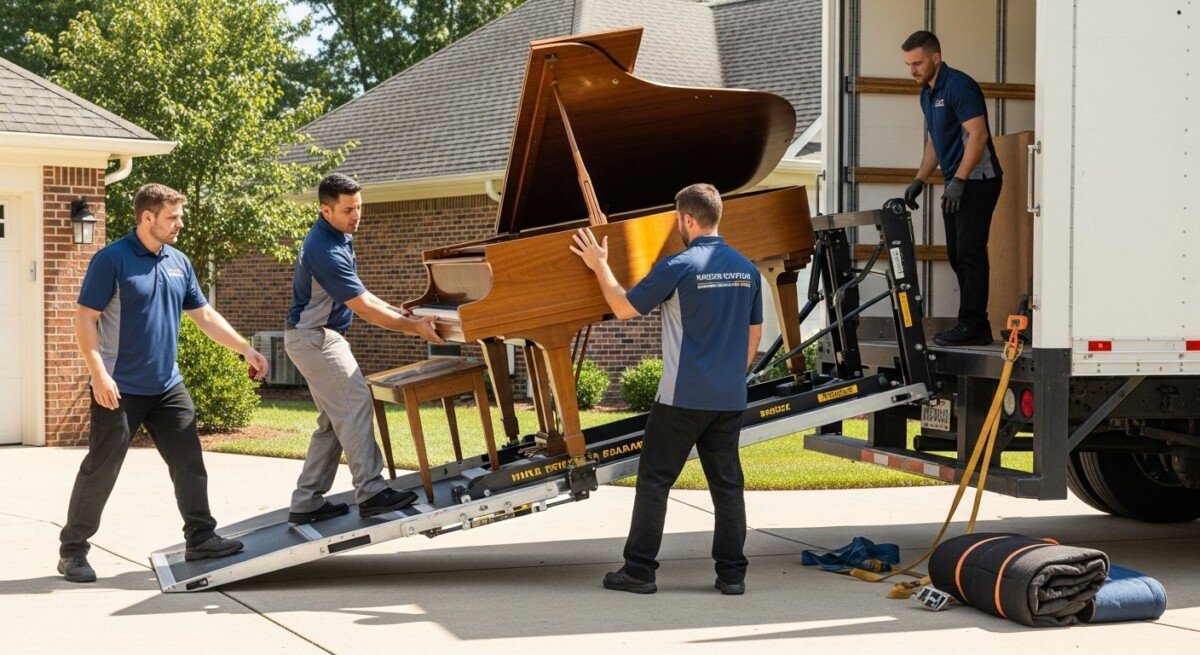
Heavy lifting movers are not your average moving company. While a standard residential mover focuses on boxes, furniture disassembly, and loading a truck, heavy lifting specialists are defined by their capacity to manage objects of extreme weight, size, and fragility. Their work often involves a distinct set of equipment, including hydraulic lifts, specialized dollies, rigging gear, and reinforced ramps. The teams themselves are trained in weight distribution, securement physics, and safe maneuvering techniques for navigating stairs, tight corners, and uneven terrain. The core distinction lies in risk management: they assume the liability for moving items that carry a high risk of personal injury or property damage if handled incorrectly.
This specialization means their services are often deployed in specific scenarios. Residential clients might need them for a single, monumental item, while commercial or industrial moves may involve an entire inventory of heavy machinery. The planning phase is also markedly different, frequently requiring pre-move surveys, structural assessments of the building, and detailed route planning to ensure doorways, hallways, and floors can support the weight and dimensions of the load. It’s a calculated operation, not just a muscle-powered lift.
Key Situations That Demand Heavy Lifting Expertise
Recognizing when to call in the experts can save you from costly mistakes, injuries, and damaged property. The need for heavy lifting movers extends beyond simple weight; it encompasses complexity, value, and safety.
First, consider weight and dimensions. Any item that requires more than two or three people to lift safely, typically over 150-200 pounds, is a candidate. This includes items like pool tables, which require disassembly and precise handling of the slate bed, large gun safes, grand pianos (especially those needing to go up or down stairs), and industrial appliances. Second, consider fragility and high value. A massive, centuries-old grandfather clock or a delicate sculpture may not weigh a ton, but its irreplaceable nature and structural complexity demand the white-glove care and custom crating that heavy lifting specialists provide. Third, environmental challenges dictate the need. Navigating a narrow spiral staircase, moving an item from a high-floor apartment without a freight elevator, or transporting something across a long, sloping yard are all scenarios where standard moving equipment fails.
For businesses, the need is even more pronounced. Relocating office server racks, medical imaging equipment, manufacturing machinery, or restaurant kitchen hoods involves not just moving weight, but often disconnecting, re-calibrating, and re-installing sensitive technology. A mistake here means lost revenue and operational downtime. In these high-stakes situations, the investment in specialized movers is a form of insurance. As part of your broader moving planning, knowing how far in advance to book movers is crucial, and for heavy lifting services, you often need to book even earlier due to their specialized scheduling.
The Specialized Equipment and Techniques Used
The arsenal of a heavy lifting mover is what separates them from a strong group of friends. This equipment is designed to do one thing: move massive weight with control and precision while minimizing human strain and property contact.
- Motorized Stair Climbers and Power Dollies: These are not simple hand trucks. Motorized stair climbers use a tracked or wheeled system to mechanically walk heavy items up and down stairs with minimal effort from the crew, protecting both the workers and the staircase.
- Hydraulic Lifts and Gantries: For items that need to be lifted vertically, such as loading a heavy safe onto a truck bed or moving machinery over an obstacle, portable hydraulic lifts and gantry systems provide stable, controlled elevation.
- Rigging and Sliding Systems: When an item cannot be carried, it may be slid on specialized skates or pulled using pulley and rigging systems. This is common for moving heavy equipment across a flat factory floor or positioning a piano in a room with delicate flooring.
- Custom Crating and Cradles: Heavy items need custom-fitted support for transit. Movers will build wooden crates or cradles that suspend the item securely, preventing any shifting or point-load pressure that could cause damage during transport.
- Structural Reinforcement Gear: This includes items like load-bearing runners to protect hardwood floors, reinforced ramps capable of holding thousands of pounds, and door-jamb protectors designed for wider loads.
The technique is as important as the tool. Crews are trained in communication, using coordinated commands to move in unison. They understand how to balance a load’s center of gravity and how to use leverage to their advantage. This systematic approach turns a seemingly impossible task into a routine, safe procedure.
How to Vet and Hire the Right Heavy Lifting Service
Choosing the wrong mover for a heavy item can be disastrous. Your vetting process must be more rigorous than hiring a standard moving company. It begins with identifying true specialists. Look for companies that explicitly advertise heavy lifting, rigging, machinery moving, or piano moving services. Their website and marketing should showcase the specialized equipment mentioned earlier.
A mandatory, in-person estimate is non-negotiable. A reputable heavy lifting mover will insist on seeing the item and the environment (both origin and destination) to assess challenges like stairwell width, door clearances, and ground surfaces. During this visit, ask pointed questions about their experience with items similar to yours. Request references or case studies. Crucially, verify their insurance and licensing. They should carry significantly higher liability coverage than a standard household mover, often into the millions of dollars, and their policy should specifically cover the type of rigging and heavy lifting they will perform. Workers’ compensation insurance for their crew is also essential to protect you from liability if a worker is injured on your property.
Understanding the quote is vital. It should be a binding, not-to-exceed estimate that details all costs: hourly labor rates, equipment fees, travel time, and any potential extra charges for unforeseen complications. A lowball quote is a major red flag; proper heavy lifting is resource-intensive. For a broader framework on selecting reliable professionals, our resource on how to find good movers in your local area provides a solid foundation that you can apply with these added layers of scrutiny.
Cost Considerations and Investment Value
The cost of hiring heavy lifting movers is understandably higher than standard moving services. You are paying for specialized labor, expensive equipment transport and operation, and assuming significantly lower risk. Pricing models can vary: it may be a flat project fee for a single item (e.g., $500 to $1500+ for a piano move), or an hourly rate for the crew plus an equipment fee (e.g., $150-$300 per hour per technician, plus a $200+ fee for the stair climber).
While the upfront cost may give pause, consider the alternative costs. The financial risk of damaging a $15,000 piano, a $10,000 slate pool table, or a $50,000 piece of medical equipment far outweighs the moving fee. The personal risk of serious, life-altering injury from attempting to lift hundreds of pounds cannot be quantified. Furthermore, property damage to your home’s floors, walls, or stairs during a botched DIY move can lead to thousands in repairs. When viewed through this lens, the fee is a strategic investment in safety, asset protection, and peace of mind. For those ready to begin planning their move and understand the specific costs involved, you can get a free moving quote from our network of vetted providers, including those specializing in heavy lifting.
Frequently Asked Questions
What is considered a “heavy lift” for movers?
While definitions vary, most professional heavy lifting movers classify items over 150-200 pounds, or those that are overly bulky, fragile, or require special equipment to move, as heavy lifts. Common examples include pianos, safes, pool tables, arcade games, large sculptures, and commercial appliances.
Can regular movers handle heavy items?
Some full-service moving companies have crews and equipment for moderately heavy items. However, for objects that are extremely heavy (over 300-400 lbs), require rigging, or involve complex stair navigation, a dedicated heavy lifting specialist is strongly recommended. Always ask specifically about an item’s weight and dimensions when booking.
How do I prepare my home for a heavy lift?
Clear a wide path. Remove all obstacles, rugs, and decor. Protect floors with laid-down cardboard or ram board if the movers don’t provide it. Ensure the movers have clear access to parking close to the entrance. Communicate any known issues, like weak floorboards or narrow landings, in advance.
Do heavy lifting movers disassemble and reassemble items?
Yes, this is a core part of their service for items like pool tables, large gym equipment, and some machinery. They have the tools and knowledge to break down an item safely for transport and rebuild it correctly at the destination. This service is typically included in the project quote.
What if my item doesn’t fit through the door?
A professional heavy lifting crew will assess this during the in-home estimate. They have solutions, which may include removing door frames (and reinstalling them), using a crane through a window (for high-floor moves), or in rare cases, recommending professional disassembly of the item itself. They will present these options and associated costs upfront.
Incorporating heavy lifting movers into your relocation plan is an act of prudent management. It transforms a potential crisis point into a smoothly executed step. By identifying the need, vetting specialists, and understanding the value of their service, you safeguard your health, your property, and your most valuable possessions. The true measure of a successful move isn’t just that everything arrived, but that it arrived without incident, thanks to the right expertise applied at the right time.