Essential Apartment Walkthrough Checklist Before Moving In
You have signed the lease, paid the deposit, and marked your calendar for move-in day. But before you haul a single box through the door, there is one critical step that can save you hundreds of dollars and countless headaches: a thorough apartment walkthrough. Too many renters skip this step or rush through it in fifteen minutes, only to discover stained carpets, leaky faucets, or cracked tiles weeks later. A systematic apartment walkthrough checklist before moving in ensures you document every existing issue, protects your security deposit, and gives you leverage to request repairs before you settle in. This guide walks you through exactly what to inspect, how to document problems, and what to do when you find something wrong.
Why a Pre-Move Walkthrough Matters More Than You Think
Your security deposit often equals one month’s rent. Landlords can deduct from that deposit for damages beyond normal wear and tear. Without documented proof of pre-existing damage, you could be charged for that broken blind or that scratched floor when you move out. A walkthrough flips the power dynamic. It puts you in control of the evidence. By completing a detailed apartment walkthrough checklist before moving in, you create a record that protects your finances and sets clear expectations with your property manager.
Beyond protecting your deposit, a walkthrough helps you identify safety hazards and maintenance issues that could affect your daily life. A loose railing, a malfunctioning smoke detector, or a hidden water stain might not stop you from moving in, but knowing about them early lets you request fixes before your furniture arrives. In our guide on Full Service Moving Cost: What’s Included and Pricing, we explain how professional movers can coordinate with your walkthrough schedule to ensure a smooth transition.
What to Bring on Your Walkthrough
Arriving unprepared is the most common mistake renters make. You need more than just your phone. Pack these items before you head to the property:
- A fully charged phone with video recording capability and a flashlight app
- A printed or digital copy of your apartment walkthrough checklist (or this article)
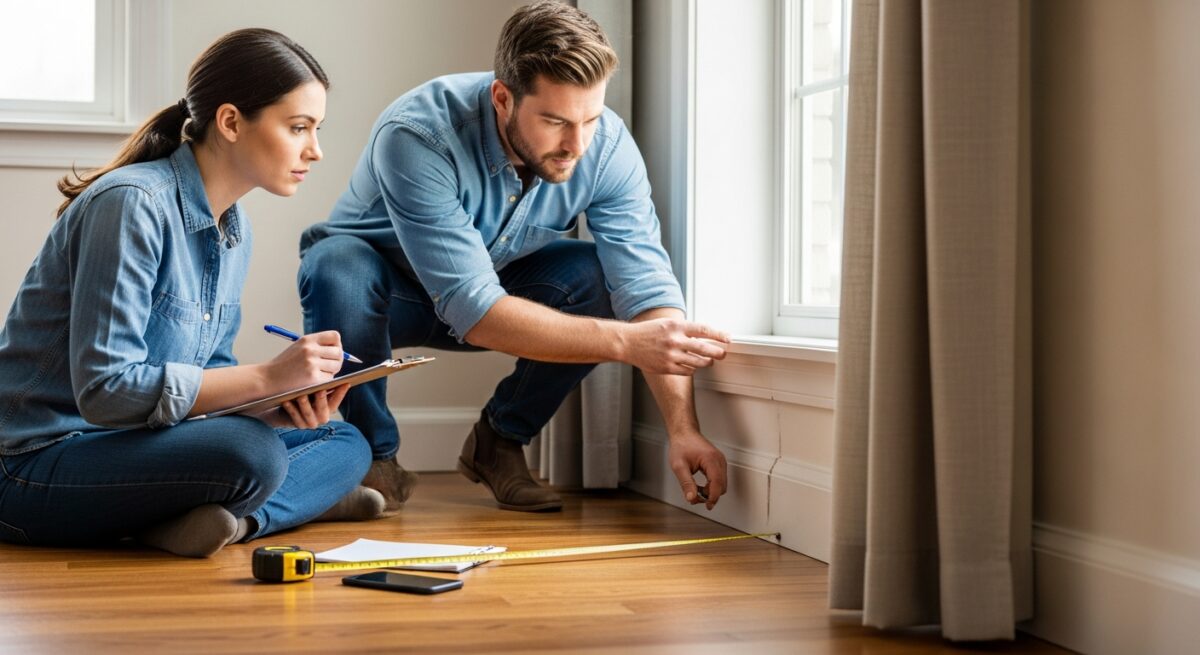
- A tape measure to confirm room dimensions match the floor plan
- A small notepad and pen for quick notes
- Sticky notes or painter’s tape to mark problem areas during the tour
Take your time. Plan for at least 45 minutes to an hour for a standard one-bedroom apartment. Larger units need more time. If the landlord or property manager seems rushed, politely explain that you want to be thorough to avoid disputes later. Most reasonable landlords will appreciate your diligence.
Start Outside: The Exterior Inspection
Begin your walkthrough from the outside in. Check the building entrance, hallway, and your apartment door. Look for security concerns like broken locks, poorly lit entryways, or damaged intercom systems. These issues affect your safety and comfort from day one.
Inspect the apartment door closely. Does the deadbolt engage smoothly? Is there a peephole or security chain? Are there any signs of forced entry or previous damage to the door frame? A door that sticks or doesn’t latch properly is a security risk and a maintenance problem. Document any issues with photos and video.
Room-by-Room Inspection: Walls, Floors, and Ceilings
Once inside, work through each room methodically. Start with the largest room and move clockwise. This systematic approach prevents you from missing anything. For every room on your apartment walkthrough checklist before moving in, examine the following elements:
Walls and Paint. Look for scuffs, holes, nail pops, peeling paint, or uneven patches. Use your flashlight at a low angle to highlight imperfections that might be invisible in normal light. Note the color and condition of the paint so you can match touch-ups when you move out. If the paint is chipping or bubbling, that could indicate moisture behind the wall.
Floors. Whether you have carpet, hardwood, laminate, or tile, walk every square foot. For carpet, look for stains, burns, ripples, or worn areas near doorways. For hard surfaces, check for scratches, chips, warping, or loose tiles. Run your hand along the floor to feel for uneven transitions between rooms. Photograph any damage with a ruler or coin next to it for scale.
Ceilings. Water stains on the ceiling are a red flag. They indicate a past or active leak from the unit above or the roof. Even if the stain is dry and old, document it. Ceiling cracks can be normal settling or a sign of structural issues. If you see discoloration, bulging, or peeling paint, ask the landlord about the history of that damage.
Windows, Doors, and Lighting
Open and close every window and door in the apartment. Windows should slide or crank smoothly and lock securely. Check for broken seals between double-pane glass, which cause fogging and reduce energy efficiency. Inspect screens for tears or holes. If windows are painted shut, that is a maintenance issue you want noted before you move in.
Test every light switch and ceiling fixture. Bring a small plug-in device like a phone charger to test all electrical outlets. Use your outlet tester if you have one. Loose outlets or switches that don’t work can be dangerous and frustrating. Note any missing switch plates or exposed wiring.
Kitchen: The Most Expensive Room to Fix
The kitchen deserves extra attention because repairs here are costly. Start with the sink. Turn on both hot and cold water, check the water pressure, and look for leaks under the sink. Run the garbage disposal if there is one. Let the water run for at least thirty seconds to see if it drains properly. Slow drainage could mean a clogged pipe.
Open and close every cabinet and drawer. Check for sticky tracks, broken hinges, or water damage inside the cabinets under the sink. Pull out the refrigerator and stove slightly to inspect the floor and wall behind them. Test the stove burners and oven. Turn on the refrigerator and freezer to confirm they cool properly. Listen for unusual noises from appliances.
Check the countertops for cracks, burns, or stains. Look at the backsplash for missing grout or tiles. If the apartment includes a dishwasher, run it on a short cycle to ensure it fills, washes, and drains without leaking. A comprehensive apartment walkthrough checklist before moving in catches these expensive issues before you are responsible for them.
Bathroom: Moisture and Mold Hotspots
Bathrooms are prone to water damage and mold. Flush every toilet multiple times to check for running water or weak flushes. Look around the base of the toilet for signs of leakage or rotting floor. Turn on the shower and sink, testing both hot and cold water pressure. Let the shower run for a few minutes to check for proper drainage and to see if the exhaust fan works.

Inspect the grout and caulking around the tub, shower, and sink. Missing or cracked caulk allows water to seep behind walls, leading to mold. Use your flashlight to look for black spots in corners or under the sink. Check the vanity cabinet for water stains or swelling. Test the bathroom fan. It should pull steam out effectively within a minute or two.
Open the medicine cabinet or mirror doors. Check for rust, broken shelves, or loose mounting. If the bathroom has a window, try opening it for ventilation. Document any slow drains, low water pressure, or signs of previous water damage.
HVAC, Thermostat, and Water Heater
Turn on the heating and cooling system. Let it run for at least five minutes. Listen for unusual banging, rattling, or squealing sounds. Check that air comes out of every vent in the apartment. Uneven airflow could indicate duct problems. If the thermostat is programmable, test the settings.
Locate the water heater if it is inside your unit. Check for rust, leaks, or puddles around the base. Note the temperature setting. If there is a visible inspection tag, check the date of the last service. Ask the landlord about the age of the HVAC system and water heater. Older systems are more likely to fail during your tenancy.
Test the smoke and carbon monoxide detectors. Press the test button to confirm they sound. If they are battery-operated, ask when the batteries were last changed. Some states require detectors to be hardwired. Knowing the detector status is part of a thorough apartment walkthrough checklist before moving in.
Storage Spaces, Closets, and Utility Areas
Open every closet door. Check for adequate shelving, hanging rods, and lighting. Look at the closet floor for signs of pests, water damage, or previous tenant damage. If the apartment has a balcony, patio, or storage unit, inspect those spaces too. Check the railing for stability, the flooring for damage, and the door lock for security.
If your unit has a washer and dryer hookup or included appliances, test them. Run a small load on the washer to check for leaks. Clean the lint trap on the dryer and run it for a few minutes. Look at the vent hose for kinks or damage. These appliances are common sources of water damage and fire hazards.
Document Everything Like a Detective
Your documentation is your only proof if a dispute arises. Use your phone to take wide-angle photos of every room, plus close-ups of any damage. Record a continuous video walkthrough where you narrate what you see. Capture the date and time in the video file metadata. If the landlord provides a move-in condition form, fill it out together and keep a signed copy.
Create a digital folder on your phone or cloud storage with all photos, videos, and notes. Send a summary email to the landlord or property manager within 24 hours of the walkthrough. Include a list of issues you found and request written confirmation that they will be addressed. This creates a paper trail that protects you later.
If you discover significant problems like mold, structural damage, or inoperable utilities, you have options. You can request repairs before moving in, negotiate a lower rent, or in extreme cases, void the lease. Most landlords will fix genuine issues to keep a good tenant. A documented walkthrough gives you the evidence you need for these conversations.
Frequently Asked Questions
How long should an apartment walkthrough take?
Plan for 45 minutes to an hour for a standard one-bedroom apartment. Larger units or houses may take two hours or more. Never rush this process.
Can I request a second walkthrough before moving in?
Yes. If you found significant issues during the first walkthrough, request a second visit after repairs are completed to verify the work.
What if the landlord refuses to do a walkthrough with me?
Conduct the walkthrough yourself and document everything thoroughly. Send your notes and photos to the landlord via email requesting confirmation. This still protects you.
Should I use a paper checklist or an app?
Either works as long as you are systematic. A printed checklist is simple and reliable. Apps like Notion or Google Keep can work, but avoid apps that require internet access in areas with poor reception.
What if I find a problem after I move in?
Report it to the landlord in writing immediately. In many states, you have a short window (often 3-7 days) to report issues that were not visible during the walkthrough. Act fast.
Your move-in day should be exciting, not stressful. By investing an hour in a detailed apartment walkthrough checklist before moving in, you protect your deposit, secure necessary repairs, and start your tenancy with confidence. For more tips on a smooth relocation, visit Moving.Homes for expert guides, packing advice, and professional moving services that handle the heavy lifting so you can focus on settling in.