Eco-Friendly Moving Tips Sustainable Packing Materials
Moving to a new home is a fresh start, but it often comes with a mountain of waste. Cardboard boxes, plastic bubble wrap, and Styrofoam peanuts pile up quickly, and most of it ends up in a landfill after the last box is unpacked. For environmentally conscious movers, this creates a dilemma: How do you protect your belongings without harming the planet? The answer lies in a combination of smart planning and sustainable choices. By adopting eco-friendly moving tips and using sustainable packing materials, you can reduce your carbon footprint while still ensuring your possessions arrive safely. This guide walks you through practical strategies that save money, cut waste, and make your next move greener from start to finish.
Why Sustainable Packing Matters for Your Move
The moving industry generates an enormous amount of solid waste each year. A typical household move can produce dozens of cardboard boxes, rolls of plastic tape, and foam fillers that take centuries to decompose. Beyond the environmental cost, there is also a financial one: buying brand-new packing supplies adds up quickly. Shifting to sustainable packing materials addresses both problems. Instead of purchasing single-use plastics and virgin cardboard, you can use recycled, rented, or repurposed alternatives that are just as effective. This approach aligns with a broader lifestyle of reducing, reusing, and recycling, and it sets a positive tone for your new home. For families and individuals who prioritize sustainability, incorporating these eco-friendly moving tips into your relocation plan is a natural extension of everyday values.
Plan Ahead to Minimize Waste
The most effective eco-friendly moving tip is to start early. Last-minute moves often force you to buy whatever packing supplies are available, which usually means new plastic and cardboard. By planning two to four weeks ahead, you give yourself time to source sustainable packing materials without the pressure of a deadline. Begin by taking inventory of everything you own. This step helps you determine exactly how many boxes and how much cushioning you need, preventing overbuying. Next, create a timeline for acquiring materials: gather free boxes from local stores first, then rent reusable plastic bins, and finally purchase any specialty items like biodegradable bubble wrap. A well-organized schedule reduces waste and stress simultaneously.
Declutter Before You Pack
Every item you do not move is an item that does not need packing material. Moving is an ideal time to declutter your home. Sort through closets, basements, and attics, and separate items into categories: keep, donate, sell, and recycle. Donating gently used clothing, furniture, and kitchenware to charities keeps these items out of landfills and gives them a second life. Selling valuable items through online marketplaces or garage sales puts cash back in your pocket. Recycling electronics, batteries, and hazardous materials responsibly ensures they do not contaminate the environment. By reducing the volume of your move, you directly cut down on the number of boxes and padding materials required. This is one of the simplest and most impactful eco-friendly moving tips you can apply.
Top Sustainable Packing Materials to Use
When it comes to sustainable packing materials, you have more options than ever. The goal is to choose products that are either biodegradable, made from recycled content, or designed for multiple uses. Below is a list of the most effective alternatives to traditional packing supplies:
- Reusable plastic bins: Companies offer rentable, stackable bins made from recycled plastic. You pay a deposit, use them for your move, and return them afterward. This eliminates cardboard waste entirely.
- Biodegradable bubble wrap: Made from recycled paper or plant-based materials, this cushioning breaks down naturally. It provides the same protection as plastic bubble wrap without the long-term environmental harm.
- Corrugated cardboard boxes (recycled content): If you prefer cardboard, choose boxes with high post-consumer recycled content. After the move, recycle them again or pass them along to someone else moving.
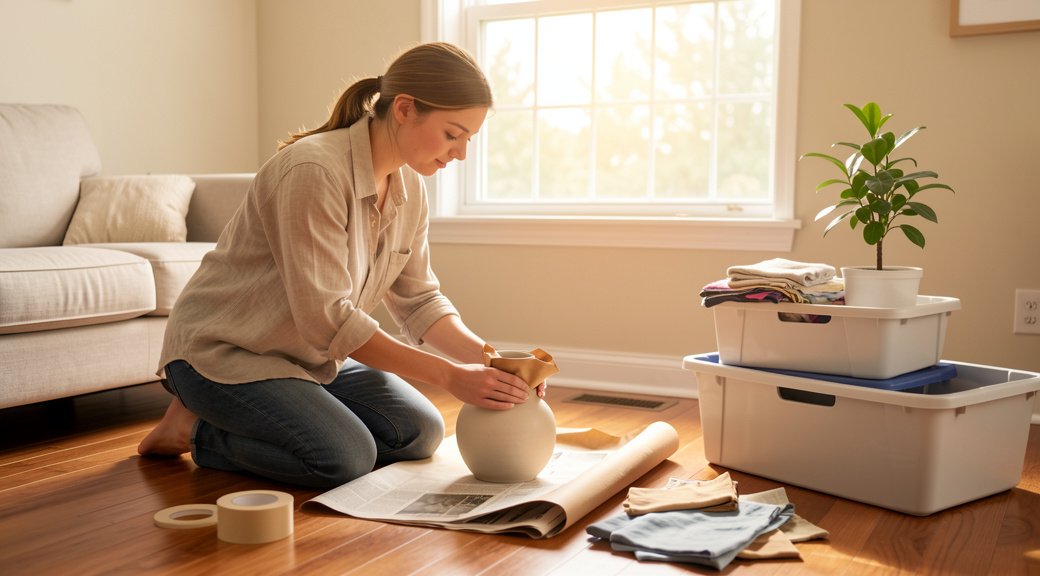
- Old newspapers and magazines: Instead of buying new packing paper, use stacks of old newspapers or magazines for wrapping dishes, glasses, and fragile items. They work perfectly and keep paper out of the recycling bin temporarily.
- Fabric scraps and towels: Use blankets, towels, t-shirts, and linens as padding for furniture and electronics. You are moving these items anyway, so they double as free, reusable cushioning.
These sustainable packing materials perform just as well as their conventional counterparts. For example, reusable bins are sturdier than cardboard and stack more efficiently, reducing the number of trips required. Biodegradable bubble wrap protects glassware without leaving plastic residue in the environment. By choosing these options, you align your move with eco-friendly moving tips that benefit both your budget and the planet.
Where to Source Free and Recycled Supplies
Finding sustainable packing materials does not have to be expensive. Many resources exist for acquiring boxes and padding at little to no cost. Start by visiting local liquor stores, grocery stores, and bookstores. These businesses receive large shipments regularly and often have sturdy boxes they are happy to give away. Liquor boxes are especially useful because they are designed to hold heavy bottles and come with dividers for glassware. Next, check community platforms like Freecycle, Nextdoor, or local Facebook groups. People who have recently moved often post their used boxes and packing supplies for free. You can also post a request yourself and receive offers within days. Additionally, office supply stores and big-box retailers sometimes have recycling bins where customers can drop off used boxes for reuse. If you are willing to pick them up, you can collect everything you need without spending a dime. These strategies are core eco-friendly moving tips because they keep materials in circulation rather than sending them to a landfill.
Packing Techniques That Reduce Material Use
How you pack matters just as much as what you pack with. Efficient packing techniques allow you to use fewer materials while protecting your items more effectively. Start by using the right size box for each category of item. Small boxes handle heavy items like books and canned goods, while large boxes hold lightweight items like bedding and pillows. Overstuffing a large box with heavy items can cause it to tear, requiring additional tape or reinforcement. Instead, distribute weight evenly and fill empty spaces with soft items like clothing or towels. For fragile items, wrap each piece individually with paper or fabric, then nest them together in a box with crumpled paper as filler. This method reduces the need for excessive bubble wrap. Also, avoid using excessive tape. Two strips of high-quality packing tape across the bottom and top seams are usually sufficient. By packing thoughtfully, you minimize waste and maximize the protection of your belongings. These eco-friendly moving tips help you achieve a sustainable move without sacrificing safety.
Renting Reusable Moving Boxes
One of the most convenient sustainable packing materials available today is the reusable plastic moving bin. Services like Frogbox, Bungo Box, and local rental companies deliver sturdy, stackable bins to your door and pick them up after your move. The bins are made from recycled plastic and are designed to last for hundreds of uses. Renting them offers several advantages over cardboard. First, they are uniform in size, which makes loading a moving truck more efficient. Second, they have built-in lids and handles, so you do not need tape or extra reinforcement. Third, they protect your items from moisture and pests better than cardboard. The cost is often comparable to buying new cardboard boxes, especially when you factor in the time saved from hunting for boxes and breaking them down afterward. Many rental companies also offer biodegradable packing paper and recycled padding as add-ons. For anyone serious about eco-friendly moving tips, renting reusable bins is a game-changer.
Green Packing for Special Items
Some items require extra care during a move, but that does not mean you have to resort to plastic foam or chemical-laden packing peanuts. For art, antiques, and electronics, there are sustainable packing materials that provide high-level protection. For framed artwork, use cardboard corner protectors made from recycled materials and wrap the piece in a clean cotton sheet or blanket. For mirrors and large glass panels, purchase corrugated cardboard sheets and tape them around the edges. For electronics, use anti-static bubble wrap made from recycled materials or wrap components in soft clothing. For fragile sculptures or ceramics, shredded newspaper or biodegradable packing peanuts made from cornstarch work well. These peanuts dissolve in water and are compostable, unlike Styrofoam. For furniture, use moving blankets made from recycled fibers. These blankets are reusable and can be rented from moving companies. By choosing these options, you protect your valuables while sticking to sustainable packing materials.

Unpacking and Recycling After the Move
The sustainability effort does not end when you arrive at your new home. How you handle the aftermath of unpacking is just as important. If you used cardboard boxes, break them down flat and recycle them at your local recycling center. Many municipalities accept cardboard in curbside bins, but check for any restrictions on tape or labels. If you used reusable bins, schedule a pickup with the rental company. If you used biodegradable packing peanuts, you can compost them in a home compost pile or dissolve them in water. For plastic bubble wrap that you already own, store it for future moves or offer it to friends who are planning a move. Avoid throwing any packing materials into the trash unless they are truly beyond reuse. Additionally, consider donating leftover boxes to a local moving company, a school, or a community group. These actions close the loop on your sustainable move. Integrating these eco-friendly moving tips into your unpacking routine ensures that your relocation has a minimal environmental impact from start to finish.
Frequently Asked Questions
What are the most eco-friendly packing materials for a move?
Reusable plastic bins are the most sustainable option because they eliminate cardboard waste entirely. Biodegradable bubble wrap, recycled cardboard boxes, and fabric scraps are also excellent choices for sustainable packing materials.
How can I get free moving boxes sustainably?
Visit local liquor stores, grocery stores, and bookstores for free boxes. Also check community platforms like Freecycle, Nextdoor, and Facebook Marketplace. Many people give away used boxes after their own moves.
Is renting moving boxes cheaper than buying cardboard?
Renting boxes is often comparable in cost to buying new cardboard, especially when you consider the time saved and the durability of reusable bins. You also avoid the waste of disposing of dozens of cardboard boxes after the move.
Can I use towels and clothes as packing material?
Yes. Towels, blankets, t-shirts, and linens make excellent padding for dishes, glassware, and electronics. They are free, reusable, and reduce the need for plastic bubble wrap. This is one of the easiest eco-friendly moving tips to implement.
What should I do with leftover packing materials after my move?
Recycle cardboard boxes, compost biodegradable materials, and store reusable items like bins or bubble wrap for future moves. You can also donate supplies to friends or local moving groups.
Are biodegradable packing peanuts effective?
Yes. Biodegradable packing peanuts made from cornstarch provide the same cushioning as Styrofoam peanuts but dissolve in water and are compostable. They are a safe and sustainable choice for fragile items.
Start Your Green Move Today
An eco-friendly move is not about perfection. It is about making intentional choices that reduce waste and protect the environment. By planning ahead, sourcing sustainable packing materials, and packing efficiently, you can significantly lower the environmental impact of your relocation. Every box you reuse, every roll of tape you save, and every plastic alternative you choose makes a difference. For more guidance on sustainable relocation strategies, explore our Eco-Friendly Moving Practices for a Greener Relocation guide. If you are ready to take the next step, professional movers can help you execute these ideas smoothly. Visit Doctors Home for additional resources on sustainable home and moving solutions. Your new home deserves a fresh start that respects the planet.