Car Relocation Services Cost and Process Explained
Moving a vehicle across the country or even to a neighboring state can feel like a daunting logistical puzzle. You have already coordinated the move of your household goods, but now you face the question of how to get your car from point A to point B without draining your budget or your time. This is where professional car relocation services come into play. These providers handle the heavy lifting of transporting your vehicle, offering a safe and efficient alternative to a long, stressful road trip. Understanding the true cost and the step-by-step process behind these services is essential for anyone planning a relocation, whether you are moving for a new job, heading to school, or simply starting fresh in a new city.
Many people assume that driving their own car is the cheapest option, but that calculation often overlooks hidden expenses like fuel, hotel stays, meals, and potential wear and tear on the vehicle. Professional vehicle transport services provide a predictable cost and free up your time for other moving tasks. This article breaks down the pricing structure of car relocation services and walks you through the entire shipping process, from getting a quote to receiving your vehicle at the destination. By the end, you will have a clear picture of what to expect and how to choose the right auto shipping company for your needs.
How Car Relocation Service Pricing Works
The cost of shipping a car is not a flat rate. Several variables influence the final price you pay. The most significant factor is the distance of the move. A short, 200-mile relocation will naturally cost less than a cross-country shipment from New York to California. However, distance is just the starting point. The type of transport you choose, the size and weight of your vehicle, and the time of year all play a role in determining the quote.
To get an accurate estimate, you need to understand the two primary pricing models used by most auto shipping companies. The first is open transport, which is the most common and affordable option. Your vehicle is loaded onto an open trailer alongside several other cars. The second is enclosed transport, where your vehicle is placed inside a covered trailer for maximum protection. Enclosed shipping is typically 30 to 50 percent more expensive than open transport, but it is the preferred choice for luxury, classic, or high-value vehicles.
Beyond the transport method, carriers also consider the vehicle’s operability. A car that runs and drives is easier to load and unload, resulting in a lower price. Inoperable vehicles require special equipment like a winch, which adds to the labor and cost. Additionally, the time of year can affect pricing. Demand for car relocation services spikes during the summer months and around holidays, leading to higher rates. Winter shipping in northern states may also carry a premium due to weather-related challenges.
Key Factors That Influence the Final Quote
Before you request a quote from any vehicle transport service, it helps to know exactly what the carrier is evaluating. Here are the primary cost drivers you should be aware of:
- Distance and Route: Longer distances cost more, but the per-mile rate often decreases for very long hauls. Rural or remote routes may cost more due to limited carrier availability.
- Vehicle Size and Weight: Larger vehicles like SUVs, trucks, and vans take up more space on the trailer and weigh more, which increases fuel consumption and the overall price.
- Transport Type: Open transport is economical, while enclosed transport provides premium protection at a higher cost.
- Season and Demand: Peak moving season (May through September) sees higher rates. Booking well in advance can help lock in a better price.
- Delivery Timeline: Expedited shipping or guaranteed pickup/delivery windows come with a premium. Flexible timelines usually result in lower costs.
Understanding these factors allows you to make informed decisions. For example, if you have a standard sedan and are flexible with the pickup date, you can likely secure a very competitive rate. On the other hand, if you need a guaranteed delivery date for a classic car in the middle of summer, you should budget for a higher expense.
The Step-by-Step Process of Shipping a Car
Once you understand the pricing, the next logical step is learning how the actual process works. Most car relocation services follow a similar sequence of events, from initial quote to final delivery. Knowing these steps helps you prepare and reduces the chance of surprises along the way.
The process begins with research and comparison. You will want to gather quotes from multiple auto shipping companies. Be wary of quotes that are significantly lower than the competition, as they may indicate hidden fees or unreliable service. Look for companies with a solid reputation, proper licensing (USDOT number), and clear terms of service. Once you select a provider, you will book the shipment and pay a deposit, typically around 10 to 20 percent of the total cost.
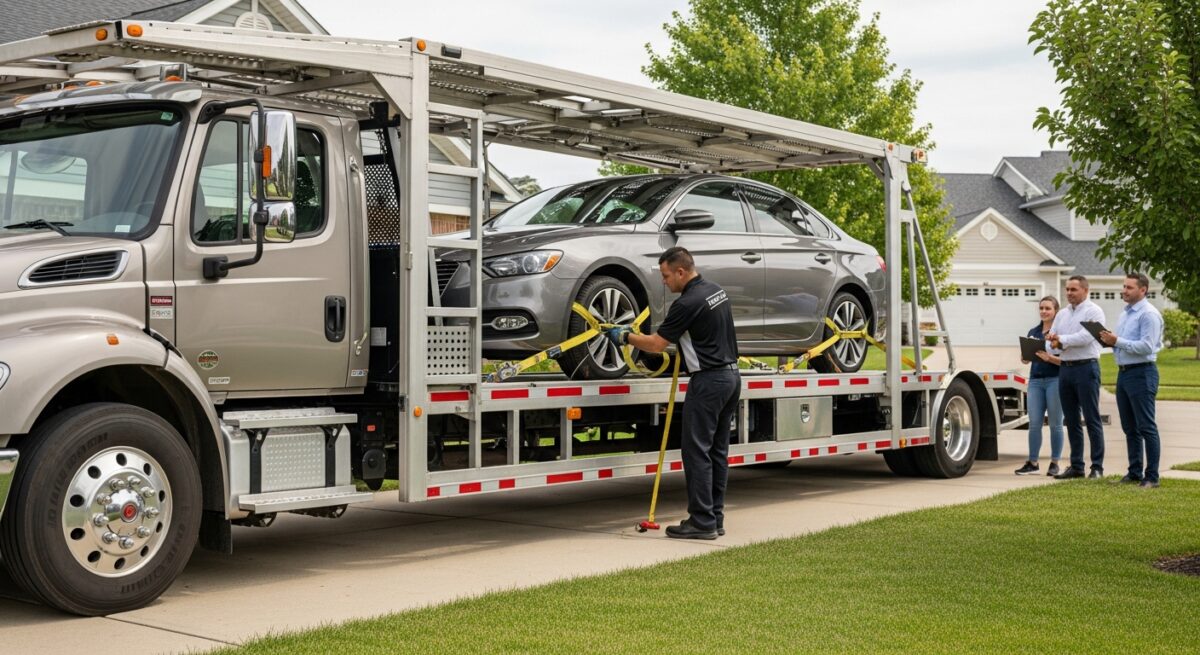
After booking, the carrier will assign a driver and provide you with a pickup window, which is usually a range of several days. On the scheduled day, the driver will arrive to inspect your vehicle. This is a critical step. You and the driver will complete a walk-around inspection, noting any existing damage such as scratches, dents, or windshield chips. Both parties sign a bill of lading, which serves as the official receipt and condition report. Make sure to keep a copy of this document.
The transit time depends on the distance. A cross-country move can take 7 to 10 days, while a regional move may only take 1 to 3 days. During transit, you can typically track your vehicle’s progress through the carrier’s dispatch office. When the vehicle arrives at the destination, you will perform another inspection before accepting delivery. Compare the condition of the car against the bill of lading. If there is new damage, note it on the paperwork before signing. Once you are satisfied, you pay the remaining balance, and the process is complete.
Preparing Your Vehicle for Transport
Proper preparation ensures a smooth pickup and protects your vehicle during transit. Carriers have specific requirements, and failing to meet them can cause delays or additional fees. Follow these steps before the driver arrives:
- Clean the vehicle: A clean car makes it easier to spot existing damage during the inspection. Wash the exterior and vacuum the interior.
- Remove personal items: Carriers are not liable for personal belongings left inside the vehicle. Remove all loose items, including toll passes, phone chargers, and floor mats.
- Check for leaks and mechanical issues: Ensure the battery is charged, the tires have proper pressure, and there are no fluid leaks. An inoperable vehicle may require special handling.
- Disable toll pass tags and alarms: Toll passes can trigger charges while the truck is in transit. Alarms can drain the battery or cause disturbances.
- Leave only a quarter tank of fuel: A full tank adds unnecessary weight, which increases fuel costs for the carrier. A quarter tank is sufficient for loading and unloading.
Taking these steps not only protects your vehicle but also builds goodwill with the carrier. A well-prepared car loads faster and reduces the risk of disputes over damage. Remember that the driver is handling multiple vehicles, so making their job easier can lead to better service.
Comparing Open vs. Enclosed Transport
One of the most important decisions you will make when choosing a car relocation service is whether to use open or enclosed transport. Each option has distinct advantages and trade-offs. Open transport is the industry standard because it balances cost and efficiency. Your vehicle travels on an open trailer alongside 7 to 10 other cars. This method is widely available and offers the fastest scheduling options. For the vast majority of vehicles, open transport provides perfectly safe and reliable service.
Enclosed transport, on the other hand, offers a higher level of protection. The vehicle is loaded into a covered trailer that shields it from road debris, weather, and other hazards. This option is strongly recommended for classic cars, exotic sports cars, luxury vehicles, and any car with a custom paint job or low ground clearance. The trade-off is the cost, which can be 30 to 50 percent higher than open transport. Additionally, enclosed carriers have limited capacity, which may result in longer wait times for pickup and delivery.
For those moving a standard family sedan or SUV across the country, open transport is almost always the right choice. The risk of damage is low, and the cost savings are significant. However, if you are shipping a vehicle that holds sentimental or high monetary value, the peace of mind provided by enclosed transport is well worth the extra expense. In our guide on commercial relocation services for businesses, we discuss how companies often choose enclosed transport for executive vehicles and fleet assets.
Frequently Asked Questions About Car Relocation Services
How far in advance should I book car relocation services?
It is recommended to book at least two to three weeks before your desired pickup date. During peak moving season, booking four to six weeks in advance is advisable to secure your preferred window.
Is my car insured during transport?
Yes, reputable carriers carry cargo insurance that covers your vehicle while it is on the trailer. However, the coverage limits vary. You should verify the amount of coverage and consider purchasing additional insurance if your vehicle is high-value.
Can I ship personal items inside my car?
Most carriers prohibit personal items in the vehicle due to liability concerns. Some allow a small amount of items in the trunk, but you should check with the company beforehand. Anything loose inside the cabin is generally not allowed.
What happens if my car is damaged during transport?
Any damage should be noted on the bill of lading at delivery. You then file a claim with the carrier’s insurance. Taking photos at pickup and delivery is the best way to document the condition and support your claim.
How long does cross-country car shipping take?
Transit time for a cross-country move typically ranges from 7 to 14 days, depending on the specific route and the carrier’s schedule. Direct routes with fewer stops are faster than those requiring multiple transfers.
Do I need to be present for pickup and delivery?
Yes, you or a designated representative must be present to inspect the vehicle and sign the paperwork at both ends. If you cannot be there, you can authorize someone else in writing.
Making the Right Choice for Your Move
Car relocation services simplify one of the most complicated parts of a long-distance move. By understanding the cost structure and the step-by-step process, you can approach the task with confidence. You now know that distance, vehicle size, transport type, and timing all affect the price. You also understand the importance of the inspection process and the need to prepare your vehicle properly before pickup.
Choosing the right auto shipping company requires due diligence. Look for providers with transparent pricing, positive customer reviews, and proper licensing. Do not hesitate to ask questions about insurance, scheduling, and their policies on delays. A trustworthy company will be happy to provide clear answers. For many people, the convenience of having their vehicle delivered directly to their new home is worth every penny. It allows you to focus on other critical aspects of your relocation, such as unpacking, setting up utilities, and exploring your new neighborhood. If you are planning a move and need financing for a new vehicle or a relocation loan, you can explore options at StartAutoLoan.com to see if a loan fits your budget. With the right preparation and a reliable transport partner, your car can arrive safely and on time, completing your move with one less worry.