Artwork Packing Guide for Safe Moving
Moving a home or office involves countless details, but few tasks inspire as much anxiety as transporting valuable artwork. A painting knocked against a doorframe, a sculpture chipped in transit, or a framed print exposed to moisture can turn a successful move into a heartbreaking loss. Whether you own original oil paintings, limited-edition prints, family photographs, or delicate sculptures, proper preparation is the difference between arrival and ruin. This artwork packing guide for safe moving provides the step-by-step methods and materials you need to protect your collection from start to finish.
Understanding why artwork requires special treatment is the first step. Unlike furniture or boxes of books, art is often irregularly shaped, extremely fragile, and sensitive to temperature and humidity. Canvas can tear, frames can snap, glass can shatter, and pigments can react to heat or moisture. Standard moving boxes and packing peanuts simply will not suffice. By following professional techniques, you can eliminate guesswork and ensure each piece arrives exactly as it left. Below, we break down the entire process from assessment to unpacking, with clear guidance on materials, wrapping, crating, and transportation.
Assess Your Collection and Gather the Right Materials
Before you touch a single frame, walk through your space and catalog every piece of art you plan to move. Note the dimensions, framing type, and medium. Is the piece behind glass or acrylic? Is it a heavy canvas on a wooden stretcher or a lightweight print in a metal frame? This assessment helps you determine which pieces require custom crating and which can travel safely in standard boxes with proper padding. For extremely valuable or sentimental items, consider professional handling. In our guide on Safe Moving Art and Antiques, we explain how to evaluate items that may need white-glove service.
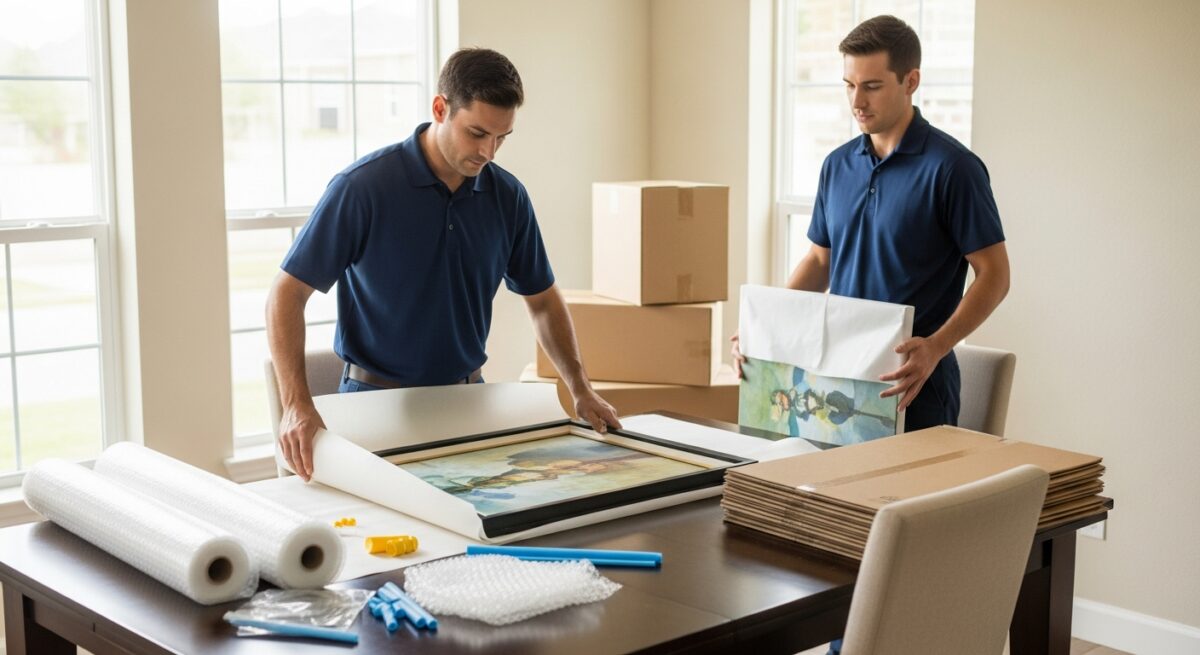
Once you know what you are working with, assemble your packing supplies. Do not rely on old newspaper or random cardboard. Invest in the following materials for the best results:
- Kraft paper or glassine paper for wrapping surfaces without scratching
- Bubble wrap in multiple thicknesses (small cell for glass, large cell for cushions)
- Corner protectors made of cardboard or foam for frame edges
- Cardboard sheets or corrugated pads to sandwich flat pieces
- Moving blankets or quilted furniture pads for large canvases
- Strong packing tape, stretch wrap, and a utility knife
- Mirror or picture boxes (adjustable cardboard boxes designed for frames)
- Custom wooden crates for oversized, heavy, or highly valuable pieces
Never wrap artwork directly in newsprint. The ink can transfer onto the surface or frame, causing permanent stains. Glassine paper is acid-free and breathable, making it ideal for protecting painted surfaces. Bubble wrap should be used with the smooth side against the art to prevent textured impressions. Having the correct materials on hand before you start saves time and prevents last-minute improvisation that could damage your collection.
Prepare Each Piece: Cleaning, Removing Hardware, and Labeling
Preparation goes beyond wrapping. Start by gently dusting the frame and the back of the piece with a soft, dry cloth. If the glass is dirty, clean it with a microfiber cloth and a minimal amount of glass cleaner sprayed on the cloth, not directly on the artwork. Wait until the surface is completely dry before packing. Remove any hanging wires, hooks, or sawtooth hangers from the back of the frame. These metal pieces can snag on wrapping materials or scratch adjacent artwork during transit. Place the hardware in a labeled bag and tape it to the back of the frame so it stays with the piece.
For canvas paintings without glass, check that the canvas is taut on the stretcher bars. Loose canvas can be gently tightened by tapping the wedges in the corners, but do not attempt major repairs yourself. If a piece has loose flaking paint or a cracked frame, consult a conservator before moving. Once the piece is clean and hardware-free, apply a piece of painter’s tape in an X shape across any glass surface. This prevents the glass from shattering into the artwork if it breaks and makes cleanup safer. Finally, label each piece on the back with a unique number or name. Create a master inventory list with notes on condition, dimensions, and destination room. This list is invaluable for insurance claims and for directing movers where to place each item in your new home.
Wrapping Techniques for Different Art Types
The wrapping method you choose depends on the type of artwork and its fragility. Below are the most common categories and the techniques that work best for each.
Framed Pieces Under Glass
These are among the most vulnerable items because glass can break and damage the artwork beneath. After applying the X tape, wrap the entire frame in a layer of glassine paper or kraft paper, securing it with tape on the back. Next, wrap a layer of small-cell bubble wrap around the frame, ensuring the bubble side faces outward. Pay special attention to the corners. Slide cardboard corner protectors over each corner and tape them firmly. For additional safety, place the wrapped frame into a mirror or picture box. These boxes have adjustable sides and built-in foam padding. Fill any empty space inside the box with crumpled kraft paper or foam peanuts so the frame cannot shift. Do not use newspaper because the ink can rub off onto the frame.
Canvas Paintings Without Glass
Canvas is more forgiving than glass but still requires careful handling. Start by wrapping the canvas in glassine paper, tucking the paper around the sides and securing it on the back stretcher bars. Do not tape directly to the painted surface. Next, wrap a layer of bubble wrap around the canvas, again securing it to the back. For large canvases, use a moving blanket or quilted pad as an outer layer. Important: Never lay a canvas flat on its face. The weight of the frame can press the stretcher bars into the canvas from the back, causing distortion. Always transport canvases upright or on their side edges. If you must stack multiple canvases, place a sheet of corrugated cardboard between each one to prevent surface contact.
Sculptures and Three-Dimensional Art
Three-dimensional pieces present unique challenges because they have protrusions, delicate bases, and irregular centers of gravity. Begin by wrapping the entire sculpture in a layer of soft cotton or acid-free tissue paper to protect the surface. For metal or stone pieces, follow with a layer of bubble wrap, using multiple layers on fragile appendages. Use foam padding or pool noodles to cushion thin arms, legs, or spikes. Place the wrapped sculpture in a sturdy box with at least three inches of cushioning on all sides. Use crumpled kraft paper or foam peanuts to immobilize the piece completely. The sculpture should not move when the box is gently shaken. For heavy stone or bronze pieces, reinforce the bottom of the box with a double layer of cardboard and tape. Clearly label the box as fragile and heavy on all sides.
Crating: When to Build a Custom Box
Standard boxes and bubble wrap work well for most framed pieces, but certain items demand a custom crate. Any artwork valued over a few thousand dollars, pieces with ornate antique frames, oversized canvases over four feet in any dimension, and fragile sculptures benefit from a wooden crate. A professional crate provides a rigid shell that absorbs impacts and distributes weight evenly. Inside the crate, the artwork should be suspended with foam blocks or spacers so it does not touch any side of the crate. This technique is called floating and is the gold standard in fine art shipping.

If you choose to build your own crate, use plywood at least half an inch thick. Construct a box that is six inches larger than the artwork in all dimensions. Line the interior with two inches of foam board or polyethylene foam. Wrap the artwork as described above, then place it in the center of the crate. Fill the remaining gaps with foam blocks or crumpled paper so the piece cannot shift. Screw the lid on securely, not nailed, so it can be opened without damaging the crate. Label the crate with arrows indicating which side is up and include a list of contents on the outside. For most people, ordering a custom crate from a moving supply company or professional mover is more practical and safer than building one from scratch.
Loading and Transporting Artwork
How you load artwork into the moving truck is just as critical as how you pack it. Artwork should be loaded last and unloaded first. This ensures it stays on top of heavier items and is not crushed by furniture or boxes. Use the truck’s E-track system or cargo bars to create a dedicated vertical slot for large canvases and framed pieces. Lean them against a padded wall or a row of upright furniture, not flat on the floor. If you must lay a piece flat, place it on top of a thick layer of moving blankets and never stack anything on top of it.
Temperature and humidity control are often overlooked but vital. Artwork should never be left in an unheated truck overnight in extreme cold or heat. Rapid temperature changes can cause canvas to expand or contract, leading to cracking. If you are moving during winter or summer, consider climate-controlled truck options. For long-distance moves, this is especially important. When driving, avoid sudden braking and sharp turns. If you are hiring professional movers, brief them on the location and handling requirements of your artwork. A reputable company like Moving.Homes employs trained crews who understand how to handle delicate items and can provide specialized packing services if requested.
Unpacking and Rehanging With Care
Once you arrive at your new home, do not rush to tear open every wrapped piece. Let the artwork acclimate to the new environment for at least 24 hours before unwrapping. This is especially important if the temperature or humidity differs significantly from the previous location. Sudden exposure can cause condensation on glass or moisture absorption in canvas. Place the wrapped pieces in the rooms where they will hang, leaning them against walls away from direct sunlight and heating vents.
When you are ready to unpack, work on a clean, soft surface like a carpet or a padded table. Cut tape carefully with a utility knife, taking care not to scratch the frame. Remove wrapping layers slowly, inspecting the piece for any damage at each stage. If you discover a crack, chip, or tear, document it with a photograph immediately. Contact your insurance provider or moving company to file a claim if necessary. Once the piece is unwrapped, reattach the hanging hardware and hang it using a level and appropriate wall anchors. Avoid hanging artwork in bathrooms or kitchens where steam and grease can cause long-term damage.
Frequently Asked Questions
Can I use blankets to wrap paintings instead of bubble wrap? Moving blankets are excellent for large canvases as an outer layer, but they should never be the only protection. Blankets can snag on corners and allow dust to reach the surface. Always use a layer of glassine paper or bubble wrap against the artwork first, then wrap the blanket around it.
Is it safe to ship artwork through the mail? Shipping artwork through standard postal services is risky unless it is professionally packed in a custom crate with insurance. For valuable pieces, always use a fine art shipping company or a moving service that specializes in art handling. Standard carriers are not equipped to handle delicate items with the same care.
How do I protect artwork during a long-distance move? For long-distance moves, climate-controlled transport is highly recommended. Each piece should be individually wrapped and placed in a dedicated crate or picture box. Label every box clearly and keep an inventory list with you, not in the moving truck. Inform your moving company about the value of the items so they can plan accordingly.
What should I do if a painting gets scratched or dented during the move? Do not attempt to repair the damage yourself, especially on valuable or antique pieces. Document the damage with clear photographs and contact your insurance provider or the moving company immediately. A professional art conservator can assess and repair most types of damage, but prompt action is important to prevent further deterioration.
Do I need special insurance for artwork during a move? Standard moving insurance often has limited coverage for high-value items. Check your moving contract to see the declared value protection. For artwork worth more than a few thousand dollars, purchase additional valuation coverage or a separate fine art insurance policy. Always get a written appraisal for the most valuable pieces before moving day.
Protecting your artwork during a move requires patience, the right materials, and a methodical approach. From assessing your collection and selecting proper wrapping to loading with care and acclimating pieces at your new home, each step builds on the last. By treating your art with the same precision a professional mover would use, you preserve not just the physical object but the memories and value it holds. A successful move leaves your collection intact and ready to enhance your new space for years to come.