Moving Wine Collection Safe Transportation Storage Tips
Your wine collection is more than a group of bottles. It represents years of careful selection, memorable occasions, and significant financial investment. When planning a move, the thought of transporting fragile bottles through varying temperatures and bumpy roads can cause genuine concern. The process of moving wine collection safe transportation storage requires specialized knowledge that goes far beyond standard packing techniques. Without proper planning, you risk losing bottles to breakage, cork damage, or heat exposure that ruins the wine inside.
Wine is a living product that responds to its environment. Temperature fluctuations cause expansion and contraction inside the bottle, which can push corks out or let oxygen seep in. Vibration during transit can disturb sediment and unsettle aged wines. Even a short move in a standard moving truck without climate control can degrade quality. That is why serious collectors treat wine transport as a separate project with its own rules and timelines.
This guide walks you through every step of safely relocating your collection. You will learn how to assess your inventory, choose the right packing materials, select a moving company with wine expertise, and manage storage conditions if your new home is not ready immediately. Whether you own ten bottles or ten thousand, these principles will protect your investment and preserve the drinking experience you worked hard to curate.
Assessing Your Collection Before the Move
Before any packing begins, take a complete inventory of your wine. This assessment serves multiple purposes. It helps you decide which bottles need special handling, identifies items that may be worth insuring separately, and gives you a master list for insurance claims if something goes wrong. Use a spreadsheet or wine cellar app to record each bottle’s producer, vintage, format (standard, magnum, half-bottle), current estimated value, and any provenance documentation you possess.
While you catalog, separate your collection into three categories. The first group includes everyday drinking wines that are less than five years old and have modest value. These can move with standard precautions. The second group contains mid-tier wines with some age or higher value that need careful temperature management. The third group consists of rare, collectible, or investment-grade bottles that require white-glove service with climate-controlled vehicles and custom crating.
For bottles in the third category, consider obtaining a professional appraisal if you do not already have one. Insurers often require documented values for high-end collections. A written appraisal from a certified wine specialist strengthens your insurance claim and helps you decide whether to ship these bottles separately through a dedicated wine logistics company rather than including them with your household move.
Packing Materials and Techniques for Wine Bottles
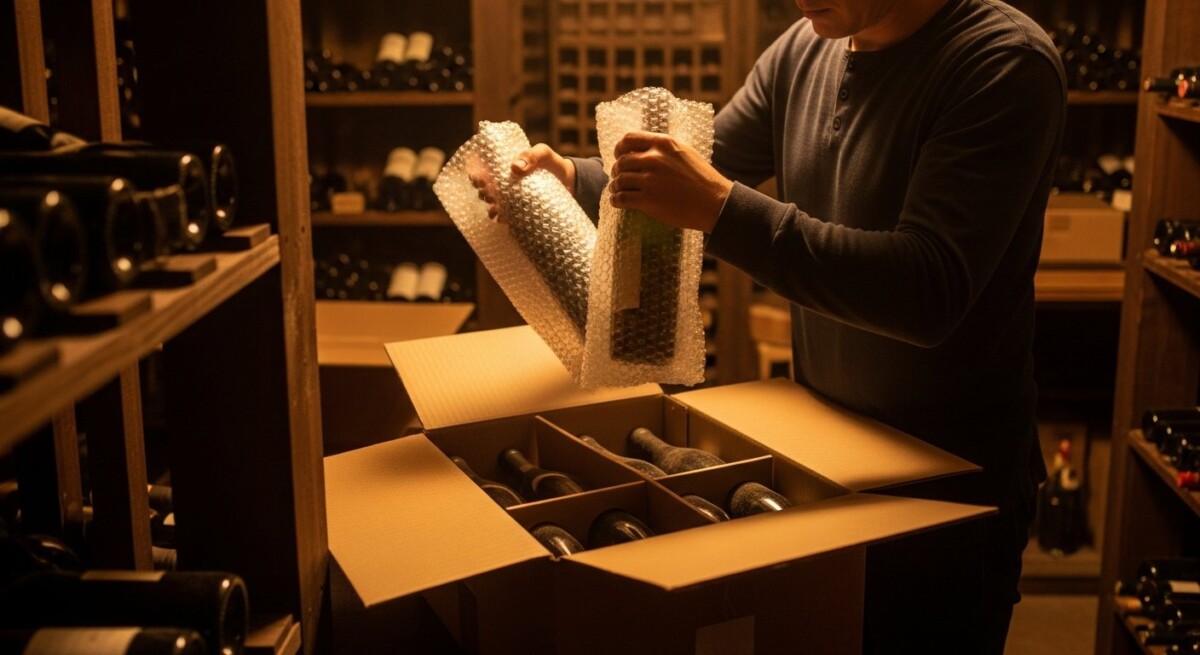
Standard moving boxes are not designed for wine. You need purpose-built wine shipping boxes that hold bottles securely and absorb shock. These boxes typically contain dividers that cradle each bottle individually, preventing glass-to-glass contact. For the most valuable bottles, invest in Styrofoam wine shippers that lock the bottle in place with a foam insert and a separate lid. These are the same containers professional wine retailers use for mail-order shipments.
When packing each bottle, follow these steps for maximum protection:
- Place each bottle in a sealed plastic bag to contain any leakage if the cork fails during transit.
- Wrap the bottle in two layers of bubble wrap, paying special attention to the punt (the indentation at the bottom) and the neck area.
- Insert the wrapped bottle into the wine box divider, ensuring it sits upright or at a slight angle but never upside down.
- Fill any empty space in the box with packing peanuts or crumpled paper to prevent shifting during transport.
Do not lie wine bottles flat during a move. While horizontal storage is ideal for long-term cellaring to keep corks moist, the vibration and movement of a truck can cause corks to dislodge or leak. Transport wine upright to minimize surface area exposure and reduce the risk of cork failure. For magnums and larger formats, use double-walled boxes and additional cushioning because these bottles are heavier and more prone to breakage.
Label every box clearly with “FRAGILE – WINE” and an arrow indicating which side should remain upright. Mark boxes containing particularly valuable bottles with a discreet code that only you and the moving crew understand. This prevents casual handlers from knowing exactly which box holds the 1982 Bordeaux.
Climate Control Is Non-Negotiable
The single biggest threat to wine during a move is temperature fluctuation. Wine stored at a consistent 55 degrees Fahrenheit can survive a few hours at higher temperatures, but prolonged exposure above 70 degrees accelerates aging and can cook the wine. A standard moving truck without climate control can reach 120 degrees inside in summer months. That is enough to ruin every bottle in the collection within hours.
For any collection with bottles valued over twenty dollars each, you must use a climate-controlled moving truck or a dedicated wine transport service. These vehicles maintain temperatures between 55 and 65 degrees, protecting the wine from heat spikes and cold damage. If you are moving in winter, freezing temperatures can cause corks to contract and let air into the bottle. Climate control prevents this as well.
If a climate-controlled truck is not available for your entire move, consider shipping your wine separately through a company that specializes in moving wine collection safe transportation storage. These companies use refrigerated trucks and have experience handling fragile bottles. They also understand the documentation required for interstate transport, especially if you are crossing state lines where alcohol shipping regulations apply.
Professional Movers vs. DIY Wine Transport
Hiring a professional moving company that offers specialized wine services is the safest option for most collectors. These movers provide custom crating, climate-controlled trucks, and trained handlers who understand how to load and secure wine boxes. In our guide on Best Moving and Storage Companies Compared for 2026, we explain how to evaluate companies for their wine handling capabilities. Look for movers that carry specific wine insurance coverage and have references from other collectors.
Do-it-yourself transport is feasible only for small collections of everyday wines moved over short distances. If you choose this route, use a personal vehicle with climate control. Drive directly to your destination without stops that expose the wine to temperature extremes. Keep the wine in the passenger compartment rather than the trunk, which can get very hot even with the car’s air conditioning running.
For rare and valuable bottles, never use a standard rental truck or moving pod. These lack temperature control and subject your wine to jarring vibration. The savings are not worth the risk of losing bottles that may be irreplaceable. When you factor in the cost of replacing a single damaged bottle, professional wine transport often pays for itself.
Storage Solutions for Wine During the Transition
Sometimes your new home is not ready when the moving truck arrives. You may need temporary storage for days, weeks, or months while you close on the house or complete renovations. Standard storage units are not suitable for wine because they lack temperature and humidity control. The storage unit’s temperature can swing dramatically between day and night, which is worse for wine than a consistent elevated temperature.
Seek out a wine storage facility or a climate-controlled storage unit specifically designed for sensitive items. These facilities maintain constant temperatures between 55 and 60 degrees and humidity levels around 70 percent. They also offer security measures like alarmed doors, video surveillance, and limited access. Some wine storage facilities provide individual lockers or cages where you can store your collection with full inventory tracking.

If you must use a standard climate-controlled storage unit, take extra precautions. Place a wireless temperature and humidity monitor inside the unit and check it daily. Position the wine boxes away from exterior walls and off the floor using pallets. Do not stack wine boxes more than two high to prevent crushing. Label each box with a detailed contents list so you can find specific bottles without unpacking everything.
For long-term storage, consider renting a dedicated wine storage locker at a facility that specializes in wine. These facilities are designed from the ground up to protect wine, with vibration-dampening floors, backup generators, and climate systems that maintain precise conditions. The cost is higher than a standard storage unit, but your wine will emerge in the same condition it went in.
Insurance and Liability for Wine Collections
Standard moving insurance typically covers household goods at a depreciated value per pound, which is nearly worthless for wine. A bottle that costs one hundred dollars might be covered for only twenty cents per pound under basic valuation. You need to purchase additional moving insurance that covers the full replacement value of your wine collection.
Before the move, document every bottle with photographs showing the label, fill level, and any identifying marks. Store this documentation separately from the wine, either in the cloud or with a trusted contact. This evidence is essential if you need to file a claim for damaged or lost bottles.
Ask your moving company about their specific wine coverage limits. Some movers cap wine coverage at a certain dollar amount per bottle or per box. If your collection exceeds these limits, you may need to purchase a separate wine insurance policy from a specialty insurer. Many wine collectors maintain an inland marine floater that covers wine during transit and storage. This policy fills gaps left by standard homeowner’s insurance and moving company coverage.
For international moves, wine insurance becomes more complex. Different countries have varying regulations about alcohol importation and insurance requirements. Work with a mover that has experience in cross-border wine shipping and can advise on documentation and coverage. Never assume your standard moving insurance applies to international shipments.
Unpacking and Cellaring After the Move
When your wine arrives at the new home, do not rush to unpack it. Let the bottles rest for at least 24 to 48 hours in a stable environment before handling them. This rest period allows the wine to settle after the vibration of transport. Opening a bottle immediately after a move can result in a disappointing experience because the wine may be shocky and not show its true character.
Inspect each box for signs of damage before opening. Look for wet spots that indicate a broken bottle. Open boxes in a well-lit area and check each bottle for cracks, leaks, or pushed corks. Separate any damaged bottles immediately and document the damage with photographs for your insurance claim.
Once you confirm the bottles are intact, place them in your new wine cellar or storage area. If you are building a new wine room, ensure the cooling system is operational and calibrated before moving the wine in. Maintain consistent conditions from the moment the wine enters the space. Fluctuations during the first week can undo all the careful temperature management you maintained during transit.
For collectors moving to a home without a dedicated wine cellar, consider installing a wine cooling unit in a basement or interior closet. These units maintain proper temperature and humidity without requiring a full renovation. The investment protects your collection and enhances your home’s value for future resale.
Frequently Asked Questions
Can I move wine in my luggage on a flight?
Checked luggage is not temperature controlled and subjects bottles to rough handling and pressure changes. For one or two bottles, it may be acceptable if you use a padded wine travel case and wrap each bottle in clothing. For larger quantities, ship through a professional wine logistics company.
How much does professional wine moving cost?
Costs vary based on distance, bottle count, and service level. Expect to pay between three and eight dollars per bottle for climate-controlled transport with full insurance. High-end white-glove services for rare collections can cost more. Get quotes from multiple specialty wine movers to compare.
Is it safe to move wine in a moving pod?
Standard moving pods lack climate control and subject wine to extreme temperature swings and vibration. They are not recommended for any wine collection of value. If you must use a pod, ship your wine separately through a climate-controlled service.
What temperature is safe for transporting wine?
Ideal transport temperature is between 55 and 65 degrees Fahrenheit. Brief exposure to temperatures up to 70 degrees is acceptable, but anything above that for more than a few hours can damage the wine. Avoid temperatures below freezing.
Do I need to declare my wine collection to the moving company?
Yes. Disclose the full value and quantity of your wine collection when booking the move. This ensures proper insurance coverage and allows the mover to assign experienced crew members and appropriate equipment. Hiding the value can void your insurance claim if something goes wrong.
Moving a wine collection is a specialized task that demands attention to temperature, packing, handling, and timing. By following the steps outlined here, you protect your investment and ensure that every bottle arrives ready to be enjoyed. For personalized assistance with your move, call our team at (833) 762-3578. We connect you with movers who understand the unique requirements of wine transport and can provide a free quote for your relocation. Learn more