
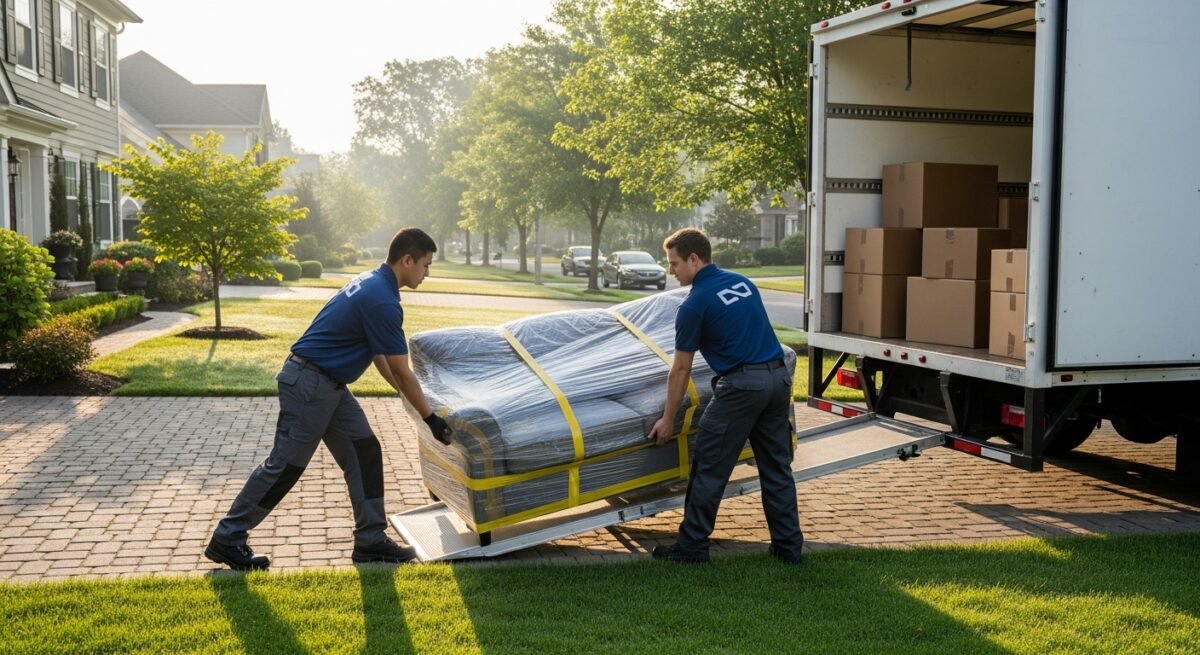
Your Complete Guide to Moving a House: A Step-by-Step Relocation Plan
This step-by-step guide to moving a house provides a clear plan to reduce stress and avoid costly mistakes. For personalized assistance, call our experts at (833) 762-3578.

By Michelle Carter
Moving a house is one of life’s most significant logistical undertakings, a complex project that intertwines deep emotion with meticulous planning. Whether you’re relocating across town or across the country, the process involves far more than just packing boxes and hiring a truck. A successful move requires a comprehensive strategy that addresses timelines, budgets, physical labor, and the well-being of everyone involved. This complete relocation guide is designed to demystify the entire process, providing you with a clear, actionable framework to transition from your old home to your new one with confidence and minimal stress. By breaking down the monumental task into manageable phases, you can transform a potentially chaotic experience into a smooth, controlled operation.
Creating Your Moving Timeline and Master Plan
The single most important factor in a successful move is advanced planning. A detailed timeline acts as your project blueprint, preventing last-minute scrambles and costly mistakes. Ideally, your planning should begin at least two months before your moving date, especially for a long-distance relocation. Start by establishing your moving date and working backward to create a week-by-week checklist of tasks. This master plan should encompass everything from researching moving companies and gathering packing supplies to transferring utilities and updating your address with countless institutions.
Your timeline must also account for the unique aspects of your move. Are you moving from a large family home to a smaller apartment, requiring significant downsizing? Does your new employer offer a corporate relocation package? Are there children or pets whose routines need special consideration? Answering these questions early will shape your plan. Designate a central command center, whether it’s a physical binder, a digital folder, or a dedicated app, to store all moving-related documents, quotes, receipts, and notes. Consistency and organization from the outset are your greatest allies. For a deep dive into evaluating and selecting your moving partners, our resource on how to choose the best house moving companies outlines critical criteria and red flags.
Budgeting Realistically for Your Relocation
Moving expenses can quickly spiral without a firm budget. The cost of a move varies dramatically based on distance, volume, services required, and time of year. Begin by listing all potential costs to create a comprehensive moving budget. Major line items include professional mover fees (or truck rental), packing materials, insurance, travel costs (gas, hotels, meals), cleaning services, and potential storage fees. Don’t forget to factor in incidental costs like tipping the movers, replacement items you may need for the new home, and a contingency fund of at least 10% for unexpected expenses.
Obtaining accurate quotes is crucial. For professional moves, insist on an in-home or virtual survey rather than a quote based solely on weight or cubic feet over the phone. This allows the mover to assess your belongings accurately and provide a binding or not-to-exceed estimate. Be wary of quotes that seem significantly lower than others, as this can be a sign of lowballing, which may lead to price hikes on moving day. Understanding the full financial picture allows you to make informed decisions, such as whether to hire full-service movers or opt for a more hands-on, DIY approach with a portable container. To begin comparing costs from reputable providers, you can always get a free moving quote to establish a baseline for your planning.
The Strategic Packing Process
Packing is not a last-minute activity, it’s a systematic process that, when done correctly, protects your belongings and simplifies unpacking. Start by gathering high-quality supplies: sturdy boxes in various sizes, packing tape, bubble wrap, packing paper, and permanent markers. Begin packing well in advance, focusing first on items you rarely use, such as off-season clothing, books, decor, and specialty kitchen gadgets. Pack room by room, and keep similar items together. This methodical approach prevents chaos and makes labeling more effective.
The most critical step is labeling. Every single box should have a clear, detailed label on multiple sides. Include the room it belongs in (e.g., “Kitchen”), a brief contents description (e.g., “Pots, Pans, Baking Sheets”), and any handling instructions like “FRAGILE” or “THIS END UP.” Consider using a color-coding system with colored tapes or stickers for each room to help movers quickly identify where boxes go. Create an “Open First” box for each family member and for essential rooms like the kitchen and bathroom. These boxes should contain items you’ll need immediately upon arrival: toilet paper, basic tools, phone chargers, a change of clothes, medications, pet food, and basic cleaning supplies. A well-executed packing strategy is the backbone of an efficient loading and unloading process.
Choosing Between Professional Movers and a DIY Move
This decision fundamentally shapes your moving experience and budget. Professional house relocation services offer convenience and expertise. Full-service movers handle everything from packing your belongings in their own materials to loading, transporting, unloading, and even unpacking at your destination. This is the least physically demanding option but also the most expensive. You are paying for labor, expertise, and liability coverage. When hiring professionals, verify their licensing and insurance. For interstate moves, ensure the company has a valid USDOT number. Read reviews, check their standing with the Better Business Bureau, and understand the details of their valuation coverage (replacement value vs. released value).
A DIY move, typically involving renting a truck or using a moving container, offers significant cost savings but requires substantial physical work and project management from you. You are responsible for all packing, loading, driving, and unloading. This option is best for local moves, those with a very tight budget, or individuals with few bulky items. The key to a successful DIY move is recruiting reliable help, having the right equipment (dollies, moving blankets, straps), and allowing plenty of time. A hybrid approach is also common: hiring labor-only helpers to load and unload a rented truck or container you drive yourself. Weigh the pros and cons of each option against your budget, timeline, physical capability, and stress tolerance.
Executing Moving Week and Moving Day
The final week is about tying up loose ends and preparing for the physical transition. Confirm all arrangements with your movers or rental company. Defrost and clean your refrigerator. Finish packing all but the most essential everyday items. Prepare a folder with all important documents you’ll need to keep with you: moving contracts, ID, new lease or home documents, and financial information. Plan meals to use up perishable food and clean out your pantry. Say your goodbyes to neighbors and arrange for the return of any borrowed items.
On moving day itself, organization is paramount. If using professional movers, designate one person to be the point of contact to answer questions and direct the crew. Do a final walkthrough of every closet, cabinet, shelf, and outdoor area to ensure nothing is left behind. Before the truck is loaded, perform a quick inventory check with the moving foreman. Keep your “Open First” boxes, valuables, and personal documents separate and transport them in your own vehicle. When you arrive at the new home, have a floor plan ready to show movers where large furniture should be placed. Do a thorough inspection of the empty truck before the movers leave. Finally, before signing any paperwork, ensure you understand all charges and the process for filing a claim if damage is later discovered.
Settling Into Your New Home
The move isn’t over when the truck is empty. The settling-in phase is about transforming the new house into a home. Start by tackling the essentials: setting up beds so everyone can sleep comfortably on the first night, connecting major appliances, and ensuring utilities are functional. Then, methodically unpack room by room, starting with the kitchen and bathrooms, as these are critical for daily function. Use your labeling system to prioritize boxes. As you unpack, take the opportunity to declutter further, recycling packing materials and donating items you realize you don’t need in the new space.
Beyond unpacking, focus on making the new environment safe and familiar. Change the locks on all exterior doors for security. Test smoke and carbon monoxide detectors. Locate the circuit breaker and main water shut-off valve. Then, begin the process of community integration. Update your address officially with the USPS, your employer, banks, and subscription services. Register your vehicle and get a new driver’s license if you’ve moved to a new state. Explore your neighborhood, introduce yourself to neighbors, and find new healthcare providers. Allow yourself and your family time to adjust emotionally. It’s normal to feel a mix of excitement and dislocation, a process often called “transfer trauma.” Be patient, establish new routines, and gradually build your new life.
Frequently Asked Questions
How far in advance should I book professional movers? For a local move, try to book at least 4-6 weeks in advance. For long-distance moves, especially during peak season (May through September), aim for 8-12 weeks. This ensures availability and may secure better rates.
What should I do with items I don’t want to move? Host a garage sale, sell items online, or donate to charitable organizations. For hazardous materials like paint, chemicals, or propane tanks, contact your local waste management facility for proper disposal guidelines. Most moving companies will not transport these items.
How can I protect my valuables during a move? Irreplaceable items like jewelry, family heirlooms, important documents, and hard drives should always travel with you in your personal vehicle. Do not pack them in boxes that will be loaded onto the moving truck.
What is the difference between moving insurance and valuation coverage? Valuation coverage is the mover’s limited liability for lost or damaged items, often based on weight (e.g., $0.60 per pound per article). It is not traditional insurance. For full protection, you may need to purchase separate third-party moving insurance or verify coverage under your homeowner’s or renter’s policy.
How do I change my address efficiently? Start with the official USPS Change of Address service online or at a post office. This forwards your mail but does not update individual senders. Create a master list of all institutions (banks, credit cards, magazines, doctors, etc.) and notify them individually, either online or by phone.
A successful house relocation is a testament to thorough preparation and calm execution. By viewing the process as a multi-phase project rather than a single chaotic event, you empower yourself to make informed decisions, manage costs, and reduce stress. This complete guide provides the framework, but your personal attention to detail and adaptability will ultimately determine the smoothness of your transition. Remember to celebrate the small victories along the way, and look forward to the new memories you will create in your new home.