
Townhouse Moving Services: A Complete Guide for Your Relocation
This guide details the specialized strategies needed for a seamless townhouse relocation, from navigating stairs and HOA rules to selecting the right moving company.

By Michelle Carter
Moving from a townhouse presents a unique set of challenges that blend the complexities of a single-family home with the logistical constraints of a multi-unit dwelling. Whether you’re navigating narrow staircases, shared driveways, or strict HOA rules, a successful relocation requires specialized planning. Understanding the nuances of townhouse moving services is the first step toward a seamless transition, transforming a potentially stressful ordeal into a well-orchestrated event. This guide will walk you through every critical aspect, from selecting the right movers to mastering the art of packing for vertical spaces.
Understanding the Unique Challenges of a Townhouse Move
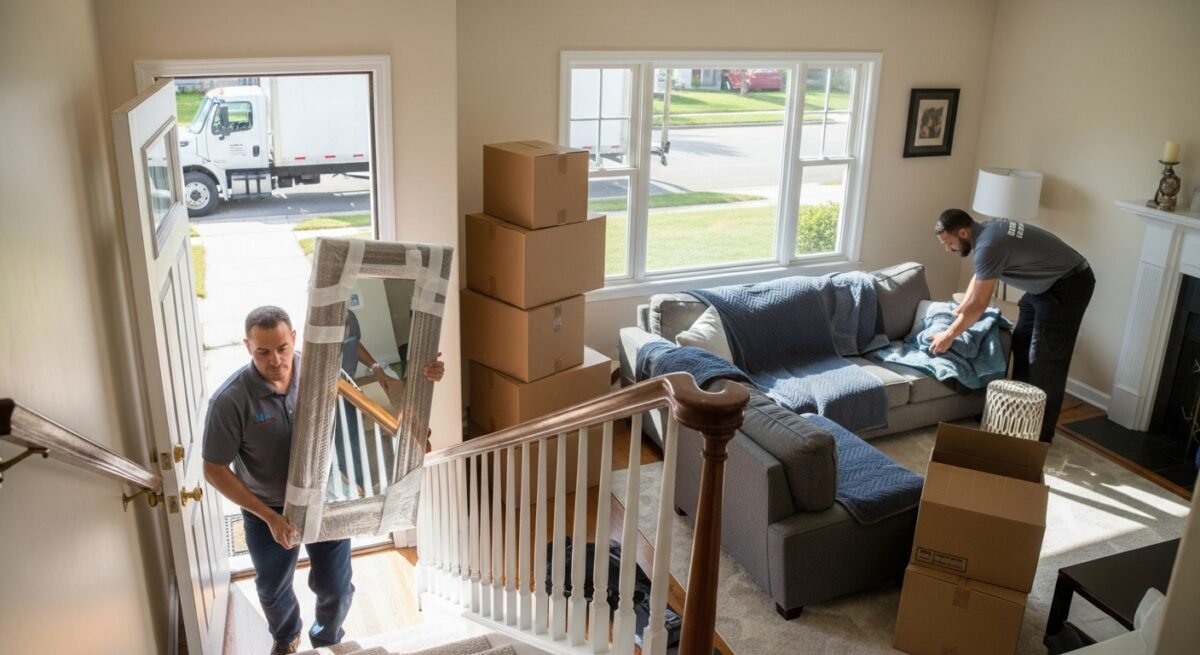
Unlike a detached home, a townhouse often involves multiple floors, limited exterior space, and proximity to neighbors. These factors significantly impact the moving process. The vertical layout means movers will be navigating stairs frequently, which increases the time and physical effort required for the job. Furthermore, parking can be a major hurdle. Shared driveways, limited street parking, or private roads may restrict where the moving truck can park, potentially adding distance and complexity to each trip from the home to the vehicle. You must also consider noise ordinances and courtesy to neighbors, especially if moving on a weekend or evening. A professional moving company experienced in townhouse relocations will anticipate these issues and plan accordingly, perhaps scheduling the truck’s arrival time or obtaining necessary parking permits in advance.
Selecting the Right Townhouse Moving Company
Not all moving services are created equal, and choosing a company familiar with townhouse logistics is paramount. Start by seeking out movers who explicitly mention experience with multi-level homes, condos, or townhouses in their service descriptions. During the estimate process, whether virtual or in-person, a qualified estimator should ask specific questions about staircases, elevator access (if applicable), parking situations, and the distance from your front door to the curb. This level of detail is a strong indicator of their expertise. Always verify licensing and insurance. For interstate moves, the company must have a USDOT number. For local moves, check state regulations. Read reviews with a critical eye, looking for mentions of handling stairs, efficiency in tight spaces, and professionalism in shared communities. A reliable mover will provide a clear, binding estimate that outlines all costs, avoiding unpleasant surprises on moving day.
Pre-Move Preparation and Packing Strategies
Your preparation directly influences the efficiency and cost of your move. Decluttering is your most powerful tool. Before you pack a single box, go through each room and decide what to keep, donate, sell, or discard. This reduces the volume of items to be moved, saving you time and money. For packing, adopt a room-by-room approach, clearly labeling every box with its contents and the specific room and floor it belongs to in your new home (e.g., “Master Bedroom – 2nd Floor,” “Kitchen”). This system is invaluable for townhouse moves, as it directs movers precisely where to place items, preventing a pile-up in the living room. Special care must be taken with furniture disassembly. Know which pieces must be taken apart to fit through doorways and around tight stairwell landings. Document the process with photos or keep hardware organized in labeled bags taped to the furniture itself.
To ensure nothing is overlooked, follow this critical pre-move checklist:
- Measure doorways, stairwells, and large furniture to identify potential fit issues.
- Secure parking permits or reserve a loading zone with your HOA or local municipality.
- Notify your HOA of your moving date and any required protocols.
- Schedule elevator service (if applicable) for a specific moving day time block.
- Prepare a “Day-Of” box with essentials like toiletries, medications, phone chargers, and basic tools.
Moving Day Execution and Logistics
On moving day, communication with your moving team is key. Walk the crew lead through your townhouse, pointing out the planned path for furniture, noting any fragile items, and clarifying your labeling system. Protect your property and the common areas by laying down floor runners or moving blankets in high-traffic zones, both inside your unit and in shared hallways. If you have not hired full-service packers, be prepared to direct the flow. Often, it’s most efficient to have movers focus on the large, heavy items from the upper floors first while you handle last-minute packing or cleaning in another area. For those facing an extremely tight deadline, understanding your options for expedited help is crucial. In our guide on emergency same day moving services, we explain how to vet and manage last-minute relocations when time is the primary constraint.
Special Considerations for Interstate and Long-Distance Moves
Moving out of a townhouse across state lines adds layers of complexity. The transit time means your belongings will be in the moving truck for days or even weeks. This makes an accurate inventory list and valuation coverage even more critical. Understand the difference between released value protection (included but minimal) and full value protection (optional, more comprehensive). Discuss the delivery process in detail. Will the moving truck have easy access to your new townhouse community? Is there a specific delivery window? Be prepared for a potential gap between your move-out and move-in dates, and plan for temporary lodging or storage solutions. A reputable long-distance mover will coordinate all these details, providing a single point of contact and clear timelines.
Cost Factors and How to Budget Accurately
The cost of townhouse moving services is influenced by several variables. The primary factors are the volume/weight of your belongings, the distance of the move, and the level of service you require (e.g., packing, unpacking, furniture assembly). The number of stairs is a significant cost driver, as it increases labor time. Other townhouse-specific costs can include long carry fees if the truck must park far away, shuttle service fees if a large truck cannot access your street, or elevator fees. To budget accurately, obtain at least three in-person or detailed video estimates. Ensure each is a binding or not-to-exceed estimate to lock in the price. Ask about all potential additional fees upfront. Remember, the cheapest estimate is not always the best value; reliability and experience in your specific type of move are worth the investment to protect your belongings and reduce stress.
Settling into Your New Townhouse
The move isn’t over when the truck is unloaded. The unpacking and settling-in phase is where your labeling system pays off. Prioritize setting up essential rooms: the kitchen, bedrooms, and bathrooms. As you unpack, take the opportunity to organize anew, rather than simply recreating your old setup. Introduce yourself to your new neighbors, a gesture that is especially appreciated in attached housing. Review your new HOA rules and regulations regarding trash disposal, exterior modifications, and noise. Finally, update your address officially with the post office, and then with banks, employers, and subscription services. Taking these steps methodically will help you feel at home more quickly.
Frequently Asked Questions
Q: How far in advance should I book townhouse moving services?
A: For local moves, aim to book 4-6 weeks in advance, especially during peak summer months. For interstate moves, 8-12 weeks’ notice is advisable to secure your preferred date and allow for detailed planning.
Q: Are my belongings insured during the move?
A> All licensed carriers offer basic released value protection at no extra charge, but it provides minimal coverage (e.g., 60 cents per pound per item). For comprehensive protection, you must purchase full value protection or verify coverage through your own homeowner’s or renter’s insurance policy. Discuss options explicitly with your mover.
Q: What items should I not allow the movers to transport?
A> Movers cannot transport hazardous materials like aerosols, paints, chemicals, or propane tanks. You should also personally transport irreplaceable items, important documents, jewelry, medications, and valuable electronics.
Q: Can movers disassemble and reassemble my furniture?
A> Yes, most full-service professional moving services include this as a standard or optional offering. This is highly recommended for large items that need to navigate townhouse stairs and doorways safely.
Q: How can I reduce the cost of my townhouse move?
A> The most effective ways are to declutter thoroughly, pack yourself (if possible), and be flexible with your moving date (mid-month and weekdays are often cheaper). Also, preparing everything before the movers arrive ensures they work efficiently, saving on hourly costs.
A successful townhouse move hinges on recognizing the unique logistics of your space and partnering with a moving company that understands them. By investing time in careful planning, strategic packing, and selecting experienced professionals, you turn the challenge of relocating from a multi-level home into a manageable, even positive, step toward your new beginning. The right preparation not only safeguards your possessions but also provides peace of mind, allowing you to focus on the excitement of settling into your next chapter.