
Professional Piano Movers: How to Move a Piano Safely
Learn the safe methods for moving a piano and why hiring specialists is often essential. For expert assistance, call (833) 762-3578.

By Jennifer Davis
Moving a piano is not like moving a couch or a bookshelf. It is a complex, high stakes operation that demands specialized knowledge, equipment, and physical strength. A single misstep can result in thousands of dollars in damage to your prized instrument, your home, or even cause serious injury. This guide delves into the critical reasons for hiring professional piano movers and provides a detailed, step by step framework for those determined to understand the process or attempt a DIY move in specific, limited circumstances. The decision between a professional piano moving service and a DIY approach is one of the most important you will make during your relocation.
The Case for Professional Piano Movers
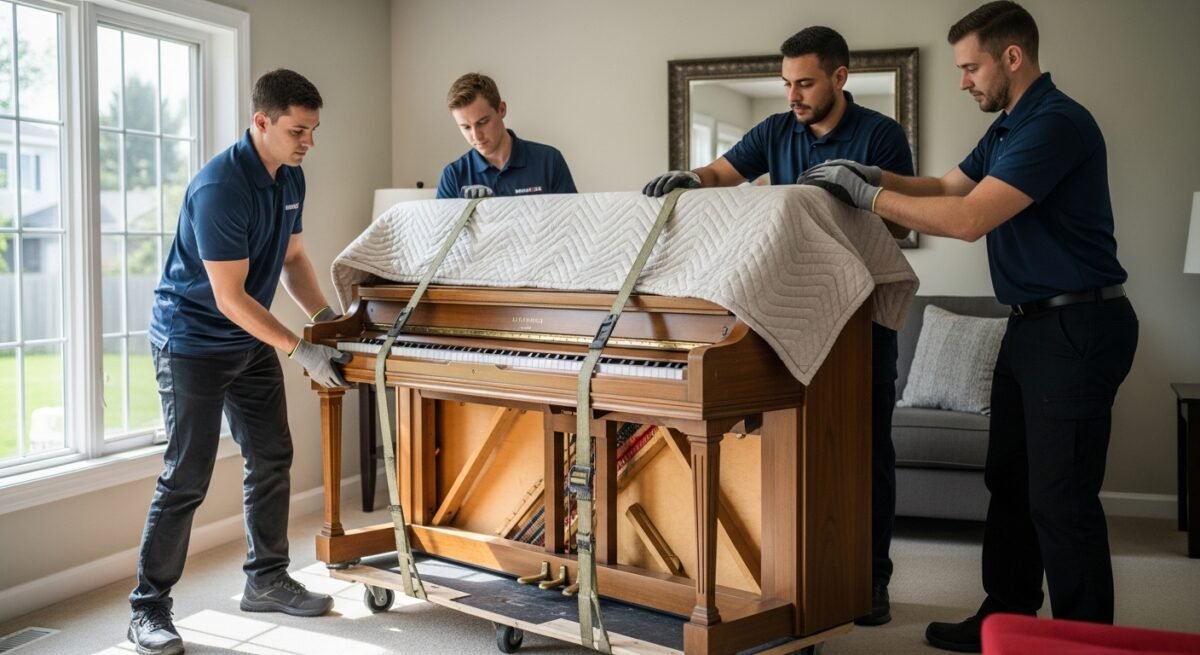
Professional piano movers are not just strong individuals with a truck. They are specialists trained in the art and science of handling delicate, heavy, and awkwardly shaped instruments. A standard upright piano can weigh between 300 and 800 pounds, while a grand piano can easily exceed 1,000 pounds. This weight is not evenly distributed, making them incredibly difficult to balance and maneuver. Professionals come equipped with specialized tools like piano boards (also called skid boards), heavy duty straps, moving blankets, and piano dollies designed to cradle the instrument without harming its finish or internal mechanisms.
Beyond equipment, their expertise is invaluable. They know how to navigate tight corners, staircases, and doorways without scraping walls or dropping the piano. They understand how to properly secure a piano in a moving truck to prevent shifting during transit, which can cause catastrophic internal damage. Most importantly, reputable local piano movers carry insurance specifically for high value items like pianos. This means that in the unlikely event of an accident, your investment is protected. Attempting a move with friends and a rented dolly voids most standard moving insurance and homeowner’s policies, leaving you fully liable for any damage.
Understanding Your Piano and the Moving Challenge
Before any move, you must assess what you are dealing with. The type of piano drastically changes the moving strategy. Spinets and consoles are the smallest uprights, but they are still deceptively heavy and top heavy. Full size uprights are heavier and more stable, but their size makes doorways a challenge. Grand pianos are the most complex. They require a complete disassembly process: the legs, lyre (pedal assembly), and music desk are removed, and the lid is often secured. The massive harp and string assembly, housed in the heavy case, must then be carefully maneuvered on its side onto a specially designed board.
The move path is your next critical assessment. You need to measure every dimension: door widths (including the frame), hallway widths, stair dimensions, and any turns. Remember to account for the height of the piano when tilted on a dolly. Check for obstacles like low hanging light fixtures, tight landings, or uneven flooring. This reconnaissance will either confirm the need for a professional piano moving service or, for a very simple, ground level move, inform your DIY plan. For a comprehensive look at vetting and selecting a specialist, our guide on how to find and hire professional piano moving services offers a detailed checklist.
A Step by Step Guide to Moving a Piano
This section outlines the professional methodology for moving a piano. Even if you hire experts, understanding this process helps you appreciate their work and prepare your home. If you are attempting a DIY move, follow these steps meticulously and ensure you have at least four strong, capable helpers.
Phase 1: Preparation and Packing
Preparation is 80% of a successful move. Start by clearing a wide, unobstructed path from the piano’s current location to the truck. Remove rugs, door mats, and any fragile items. Protect your floors with cardboard or hardboard runners, especially for hardwood or delicate surfaces. Next, prepare the piano itself. Close and lock the lid. If it has a key cover, close it. For grand pianos, this is when a technician or the movers will professionally remove the legs, pedals, and lid. Secure any loose parts inside the piano or in a labeled box.
The piano must then be wrapped. Professionals use thick, padded moving blankets. Never use plastic wrap directly against the piano’s finish, as it can trap moisture and cause damage. Secure the blankets with strong packing tape or straps, ensuring the tape only touches the blankets, not the piano’s wood. The goal is to create a protective layer against bumps, scrapes, and dust.
Phase 2: The Move Out and Loading
This is the most physically demanding and risky phase. For upright pianos, a piano dolly is placed next to the instrument. With teamwork, the piano is carefully tilted back onto the dolly, ensuring it is centered and balanced. It is then strapped securely to the dolly. The movers then navigate the path, always keeping the piano’s weight controlled. Stairs require a specialized stair-climbing dolly or a careful, coordinated lift by the team.
For grand pianos, after disassembly, the main body (the harp and case) is carefully rotated onto its side onto a reinforced piano board. It is then strapped to the board, creating a stable, sled like platform that can be wheeled on a dolly. Loading into the truck is a science. The piano must be positioned against a wall of the truck and secured with straps to anchor points to prevent any movement during transit. It should never be laid flat unless on its specifically designed board.
Planning your entire move budget is crucial. For a clear picture of all potential costs and to get a free moving quote from vetted providers, it’s a wise step in your relocation planning.
Phase 3: Unloading and Placement
The unloading process is essentially the loading process in reverse. Extreme care is taken when navigating the new path. The final placement is critical. Professionals will gently set the piano in its desired location. For grand pianos, they will reassemble the legs, lyre, and lid. It is highly recommended to let the piano acclimate to the new environment’s temperature and humidity for at least 24 hours before tuning. The move will have knocked the instrument out of tune, so scheduling a tuning with a qualified piano technician 2-4 weeks after the move is essential.
Key Equipment for Piano Moving
Attempting a piano move without the right tools is a recipe for disaster. Here is a list of essential equipment used by professional piano movers:
- Piano Dolly: A four-wheeled, rubberized dolly designed to cradle the weight and shape of a piano. Standard furniture dollies are not sufficient.
- Piano Board (Skid Board): A reinforced wooden platform used primarily for grand pianos to transport them on their side.
- Heavy-Duty Moving Straps: Used to secure the piano to the dolly and for team lifting, distributing weight more safely.
- Padded Moving Blankets: Thick, quilted blankets to protect the piano’s finish from scratches and dents.
- Furniture Sliders: For minor repositioning on carpet, though not for the main move.
- Stair-Climbing Dolly (Power Assist): A motorized dolly that can safely navigate stairs with heavy loads, a game-changer for multi-story moves.
Frequently Asked Questions
How much does it cost to hire professional piano movers?
Costs vary widely based on distance, piano type, stairs, and location. A local move for an upright might range from $150 to $500, while a grand piano move with stairs can cost $500 to $2,000 or more. Always get in-home estimates.
Can I move a piano myself?
It is possible for a small spinet or console on a single, ground floor with a straight, wide path and a team of 4-5 strong people. For any upright over 40 inches, any grand piano, or any move involving stairs, corners, or longer distances, hiring professionals is strongly advised.
How do I choose a reliable piano moving service?
Look for companies that specialize in pianos, not general movers. Verify their insurance and ask for proof of coverage for high-value items. Read reviews and ask for references. A reputable company will always offer an in-home assessment before giving a quote.
Do I need to tune my piano after moving it?
Yes, absolutely. The physical jostling and change in climate will affect the tension of the strings. Plan for a tuning 2-4 weeks after the move, once the piano has acclimated to its new environment.
How far in advance should I book piano movers?
As soon as you know your moving date, especially during peak summer seasons. Booking 4-8 weeks in advance is a safe practice to ensure you secure a reputable company.
The journey of moving a piano, whether across a room or across the country, is a significant undertaking. The weight, value, and fragility of the instrument create a unique set of challenges that go far beyond standard furniture moving. While understanding the process is valuable for any owner, the risks inherent in a DIY move are substantial. Investing in a professional piano moving service is ultimately an investment in the safety of your instrument, your property, and the people involved. The peace of mind that comes from knowing experts are handling your prized possession is, for most, the most valuable tool of all.