Moving With Children: A Stress-Free Family Relocation Guide
Moving with children can feel like a high-stakes juggling act. Between packing up an entire household, managing logistics, and addressing the emotional needs of your kids, the process often seems overwhelming. Yet with the right approach, this transition can become a positive experience that builds resilience and family bonds. The key lies in preparation, communication, and choosing support systems that lighten your load.
Children thrive on routine and familiarity, so a move disrupts their sense of security. As a parent, you are not just coordinating boxes and moving trucks; you are guiding your family through an emotional journey. This guide provides a practical framework for moving with children, covering everything from the initial announcement to settling into your new home. By following these strategies, you can reduce tears, avoid last-minute chaos, and help your kids embrace their new chapter.
When and How to Tell Your Children About the Move
Timing is everything when announcing a family relocation. Share the news too early, and the waiting period creates anxiety. Share it too late, and children feel betrayed by a sudden upheaval. The sweet spot for most families is three to six weeks before moving day, depending on the age of your children.
For younger children (ages 2-5), a two-to-three-week heads-up is sufficient. Their concept of time is limited, and a shorter window prevents prolonged worry. For school-age children (ages 6-12), plan to tell them four to six weeks in advance. This gives them time to process, ask questions, and say goodbye to friends. Teenagers need even more lead time, ideally six to eight weeks, because they have deeper social ties and may feel a stronger sense of loss.
When you break the news, use a calm and positive tone. Frame the move as an adventure for the whole family. Acknowledge their feelings directly: “I know this is big news, and it is okay to feel sad or nervous. We are all feeling that way, but we will get through this together.” Avoid dismissing their emotions with phrases like “You will make new friends quickly.” Instead, validate their concerns and offer specific reassurances about what will stay the same, such as family routines, favorite toys, or weekend traditions.
Hold a family meeting where everyone can voice their thoughts. Write down their questions and commit to finding answers together. This collaborative approach gives children a sense of control in a situation where they otherwise have none.
Age-Specific Strategies for Easing the Transition
Every age group processes relocation differently. Tailoring your approach to each child’s developmental stage is essential for moving with children successfully.
Infants and Toddlers (0-3 Years)
Very young children are most affected by changes in their parents’ stress levels and disruptions to their daily schedule. Their primary need is consistency in caregiving and routines. Keep nap times, feeding schedules, and bedtime rituals as normal as possible during the packing and moving period. Set up the nursery or their sleeping area first in the new home. A familiar crib sheet, mobile, and white noise machine can make the new room feel safe immediately.
Preschoolers (3-5 Years)
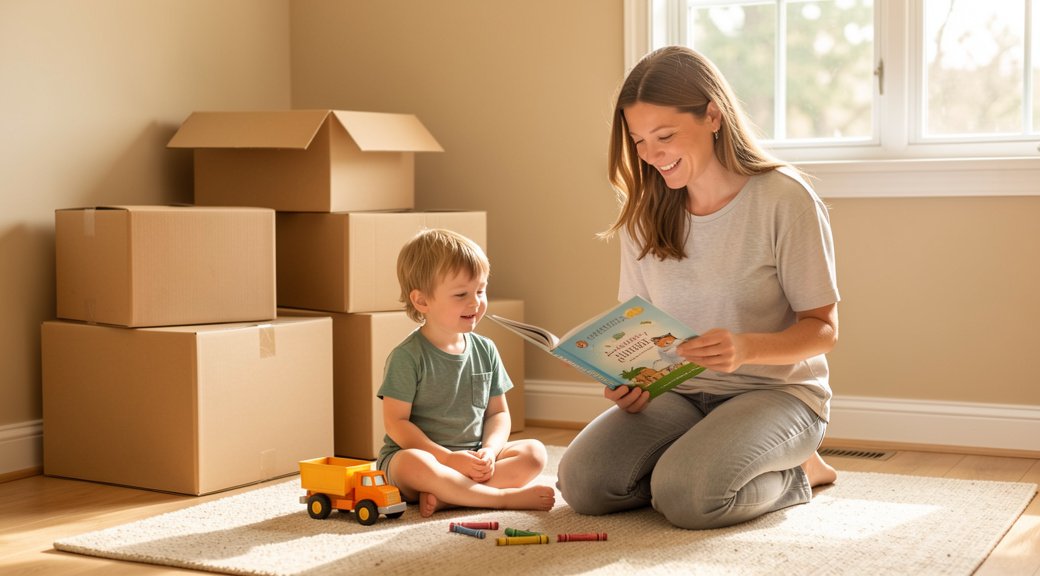
Preschoolers thrive on simple, concrete information. They may worry about being left behind or losing their belongings. Read picture books about moving to normalize the experience. Let them help pack a special “moving day bag” with snacks, a favorite toy, and a comfort item. Use play to prepare them: set up a pretend moving truck with boxes, or let them “pack” their toys into a small suitcase. Reassure them that their bed, books, and stuffed animals will all come to the new house.
School-Age Children (6-12 Years)
This age group worries about losing friends and fitting in at a new school. They need concrete plans for staying in touch with old friends and meeting new ones. Help them create a memory book or a scrapbook of their current home and neighborhood. Arrange a goodbye party with classmates. Before moving day, contact the new school to set up a visit or a “buddy” who can show them around on the first day. Encourage them to pack a “survival kit” for their new room that includes items from their old life.
Teenagers (13-18 Years)
Teenagers often resist a move most fiercely because their social identity is tied to their community. Give them as much autonomy as possible. Let them help choose the new house if feasible, or at least design their new room. Involve them in researching the new town: local coffee shops, skate parks, music venues, or clubs. Acknowledge that the move is hard and that their feelings are legitimate. Negotiate compromises, such as a trip back to visit old friends during the first school break. Resist the urge to force positivity; instead, offer empathy and patience.
Creating a Family-Focused Moving Timeline
A detailed timeline reduces chaos and keeps everyone on track. When moving with children, build buffer time into every phase. Here is a sample timeline adapted for families:
- Six to Eight Weeks Out: Announce the move, declutter together, and start researching your new community. Get a library card or visit parks in the new area if possible.
- Four to Six Weeks Out: Notify schools and request records transfers. Schedule pediatrician appointments for checkups and prescription refills. Begin packing off-season items and toys your children rarely use.
- Two to Four Weeks Out: Pack a “first night” box for each family member. This includes pajamas, toiletries, a change of clothes, chargers, and a few comfort items. Start the deep packing of non-essential rooms.
- One Week Out: Confirm moving company details and utility transfers. Host a goodbye gathering for friends and neighbors. Prepare a moving day kit with snacks, water, first aid supplies, and entertainment for the kids.
- Moving Day: Assign one adult to be the designated child supervisor. This person is not responsible for directing movers or carrying boxes. Their sole job is to keep children safe, fed, and entertained.
- First Week in the New Home: Unpack children’s rooms first. Prioritize restoring routines. Explore the neighborhood daily to build familiarity.
This timeline keeps the family’s emotional well-being at the center of the logistical plan. By staggering tasks and including children in age-appropriate ways, you prevent burnout and reduce resistance.
Packing Strategies That Protect Your Children’s Routine
Packing can feel like a full-time job, but it should not consume your availability as a parent. The goal is to maintain normalcy for your children while steadily preparing for the move.
Start by packing one room at a time, and always leave the children’s play areas and bedrooms for last. This preserves their safe spaces as long as possible. Use clear plastic bins for items you access daily, such as school supplies and art materials. Label boxes with large, colorful stickers that children can help place. This gives them a sense of ownership over the process.
Create a packing schedule that includes designated “pack-free” hours each day. During these times, put away the tape and boxes and focus entirely on your children. Go to the park, bake cookies, or watch a movie together. This consistent quality time reassures them that your relationship is not being replaced by logistics.
For the actual moving day, pack a “mama or papa bag” for yourself: phone chargers, important documents, a change of clothes, and basic toiletries. Then pack a separate “kids’ activity bag” with new toys, coloring books, snacks, and a tablet loaded with movies. The element of surprise can work wonders: a small, new toy or book can hold attention for an extra hour during a stressful moment.

Managing the Emotional Roller Coaster on Moving Day
Moving day is often the most stressful part of the entire process. For children, it can feel like a giant, chaotic goodbye. Strangers are carrying their belongings out of the only home they have known. The house grows emptier and echoey. This sensory overload can trigger meltdowns, even in typically easygoing kids.
To mitigate this, plan for your children to be elsewhere during the loading process. Arrange for a grandparent, friend, or babysitter to take them for the day. If that is not possible, designate a single room as a “safe zone” that remains untouched until the last possible moment. Fill this room with their favorite toys, books, and a comfortable blanket. Keep the door closed so they are not visually confronted with the moving process.
When the truck is loaded and it is time to leave, give each child a small ritual. Let them turn off the lights in their empty room, take a photo of the house, or collect a small token like a rock from the garden. These small ceremonies provide closure and honor the transition.
On the arrival side, have the children’s rooms set up first. Make their beds, arrange their stuffed animals, and plug in their nightlight. This immediate sense of home can dramatically shorten the adjustment period. If you are working with professional movers, communicate this priority clearly. For a comprehensive overview of the entire relocation process, see our detailed Affordable Idaho Moving: Low-Cost Solutions for Any Budget guide, which offers budget-friendly tips that apply to family moves anywhere.
Settling In: Building New Roots as a Family
The weeks after a move are just as important as the weeks before. This is when the emotional work of adjustment truly begins. Children may experience a delayed reaction, seeming fine for the first week and then struggling with sadness or anxiety later.
Establish routines immediately. Set regular meal times, bedtime rituals, and weekend traditions. If you always had pizza on Friday nights, continue that tradition in the new home. These predictable patterns create a sense of safety and continuity.
Explore your new neighborhood as a family. Walk to the local library, visit the nearest playground, and find a favorite ice cream shop. Introduce yourselves to neighbors with children. Attend local community events, even if they feel awkward at first. The goal is to create positive associations with the new environment.
Keep an open line of communication. Ask specific questions: “What was the best part of your day?” and “What was the hardest part?” Normalize the fact that it takes time to feel at home. Share your own feelings honestly: “I miss our old house too, but I am starting to like our new kitchen.” This models healthy emotional processing.
Consider joining a local parents’ group or signing your children up for a sport or class. Structured activities provide social opportunities and a sense of belonging. For teenagers, explore volunteer opportunities or part-time jobs as ways to integrate into the community.
Frequently Asked Questions About Moving With Children
Should I keep my children home from school on moving day?
Yes, especially if they are young. Having them present during the chaos is usually more stressful than missing a day of school. Arrange for them to stay with a trusted caregiver or family member. If they must be present, assign a dedicated adult to supervise them away from the main activity.
How do I handle a child who refuses to move or is very angry?
Acknowledge their anger without taking it personally. Say, “I can see you are really upset about this move. It is hard to leave your friends.” Do not argue about whether the move is necessary. Instead, focus on what you can control together, such as decorating their new room or planning a visit back to see friends. If anger persists for more than a few weeks after the move, consider speaking with a school counselor or child therapist.
What if my child starts wetting the bed or having nightmares after the move?
Regression is a common response to stress in young children. Bedwetting, thumb-sucking, or clinginess are signs that your child is struggling to cope. Do not punish or shame them. Instead, increase one-on-one time, maintain consistent routines, and reassure them of your love. These behaviors usually resolve on their own within a few weeks. If they persist, consult your pediatrician.
How can I help my child make friends in a new school?
Start before the first day. Contact the school to arrange a tour and meet the teacher. Share a brief letter or email introducing your child to the class, mentioning their interests. After school starts, initiate playdates by inviting one or two classmates over. Look for extracurricular activities where your child can connect with peers who share their interests.
Is it better to move during the school year or summer break?
There are pros and cons to both. A summer move gives children time to adjust to the new neighborhood before school starts. However, they miss the natural social structure that school provides. A mid-year move means they immediately meet peers, but they must also catch up academically. The best choice depends on your child’s temperament and age. For most families, moving at the start of a new school year (fall) or after winter break offers the smoothest transition.
Financial planning is also a key part of a stress-free move. Families often face unexpected costs during relocation. For help managing these expenses, consider resources like car loan refinancing options to free up monthly cash flow for moving expenses.
Bringing It All Together for a Successful Family Move
Moving with children is never a simple logistics exercise. It is an emotional and relational process that tests a family’s resilience. The families that navigate this transition best are those who communicate openly, plan carefully, and prioritize their children’s emotional needs alongside the practical tasks. By breaking the process into manageable stages, involving your children in age-appropriate ways, and maintaining routines, you can transform a potentially traumatic experience into a growth opportunity. Your children will learn that change, while difficult, can be faced with courage and that home is not just a place, but the people who love them.