
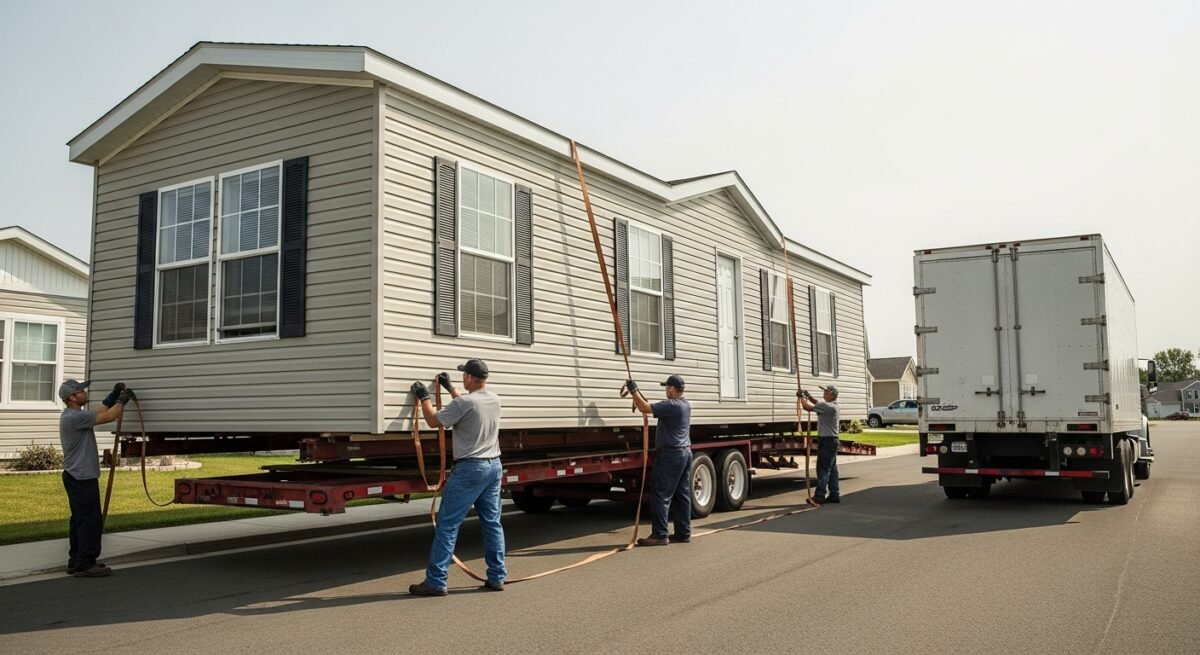
Mobile Home Moving Costs: A Complete Price Breakdown
Understand the true cost to move a manufactured home with our breakdown of mobile home movers prices, including permits, labor, and hidden fees.

By Rachel Clark
Relocating a manufactured home is a significant undertaking, distinct from a traditional house move and governed by a unique set of logistical and financial considerations. Understanding mobile home movers prices and what it costs to relocate a mobile home is the critical first step in planning a successful, budget-conscious move. The final price tag is rarely a simple flat fee, it is a composite of numerous variables, from the size and condition of your home to the distance traveled and the permits required. This comprehensive guide will dissect every cost factor, provide realistic price ranges, and offer strategic advice to help you navigate the process and secure accurate estimates from professional movers.
Primary Factors That Determine Your Moving Cost
The cost to move a manufactured home is not a one-size-fits-all figure. It is calculated based on a detailed assessment of your specific situation. Professional movers evaluate several core components to provide a quote. The single largest cost driver is distance. A local move within the same county or a short distance may cost significantly less than a cross-state relocation, which involves more fuel, more crew time, and often escort vehicles. The size and dimensions of your home are equally crucial. A single-wide mobile home is far less complex and expensive to move than a double-wide or triple-wide, which often must be separated into two or more sections, transported individually, and then reassembled at the new site.
The physical condition and age of the structure play a major role. Older homes may require extensive preparation, such as roof bracing, skirting removal, and reinforcement of the frame to withstand the stresses of transport. Any necessary repairs to make the home “road-worthy” will add to the upfront cost. The characteristics of both the current and destination sites are also heavily factored. Easy access with no low-hanging trees, power lines, or tight turns reduces time and labor. A site that requires extensive tree trimming, temporary power line disconnection, or special equipment like cranes for difficult placement will see those services added to the bill. For a deeper look at the technical process behind these moves, our resource on how mobile home moving companies relocate manufactured homes explains the steps in detail.
Breaking Down the Cost Components
When you receive a quote to move a trailer home, it should be an itemized estimate that transparently lists each service. Understanding these line items prevents surprises and allows for accurate comparison between different moving companies.
Transportation and Labor Fees
This is the core service fee. It covers the mobilization of the moving crew, the truck and trailer (often a specialized low-boy trailer), and the labor for disconnecting utilities, preparing the home for travel, loading, transport, unloading, and basic reconnection setup at the new location. This fee is typically calculated per mile for long-distance moves or as a flat project fee for shorter relocations. Crew size and travel time significantly influence this cost.
Permits and Escort Services
Moving a wide load on public roads requires state and often county permits. The mover usually obtains these, but the cost is passed to you. Permit fees vary wildly by state and the specific route. Furthermore, wide loads legally require escort vehicles (pilot cars) with warning signs and lights to ensure safety. The number of escorts (often one for the front, one for the rear) and the distance they must travel add a substantial, non-negotiable cost to the move.
Site Work and Preparation Costs
These are often the most variable and overlooked expenses. They include any work needed at either the departure or arrival site. Common site work includes disconnecting and reconnecting utilities (sewer, water, power, often requiring licensed subcontractors), removing and reinstalling skirting, taking down and putting up porches or decks, and any necessary landscaping like tree trimming or branch removal. If the new site lacks a prepared foundation (piers and blocks), installing a new foundation is a major separate cost.
Additional Services and Potential Extras
Several other services can influence the final price. If you need the moving company to handle the packing and unpacking of your belongings, that will be an added fee. Storage costs apply if the home needs to be held at a facility before the new site is ready. Insurance for the structure during transit is essential and may be an optional upgrade from basic carrier liability. Finally, some states have specific taxes or fees for oversized loads.
Realistic Price Ranges for Mobile Home Moving
Providing exact figures is impossible due to the variables discussed, but we can outline typical price brackets to set your expectations. These ranges are estimates and your final quote could fall outside them based on your unique circumstances. It is always best to get a free moving quote from several licensed, insured mobile home moving companies to compare.
For a local move of a single-wide home under 50 miles, with relatively simple site conditions, you might expect costs to start in the range of $2,000 to $5,000. A local move for a double-wide, due to the complexity of splitting and rejoining the sections, often ranges from $5,000 to $12,000 or more. Long-distance moves see a dramatic increase. Moving a single-wide home 500 miles could cost between $8,000 and $15,000, while a double-wide over the same distance may range from $15,000 to $30,000+. These figures generally include basic transport, permits, and escorts but may exclude extensive site work, new foundation installation, or utility hookups.
To help visualize where your money goes, consider this breakdown of a hypothetical $10,000 long-distance move for a single-wide:
- Transportation & Labor (55-60%): $5,500 – $6,000
- Permits & Escort Vehicles (20-25%): $2,000 – $2,500
- Site Preparation & Utility Disconnect/Reconnect (15-20%): $1,500 – $2,000
- Contingency Buffer (5%): $500
How to Get Accurate Quotes and Choose a Mover
Securing reliable quotes is the most important step in managing mobile home movers prices. Start by researching companies with specific expertise in manufactured housing, not just general freight. Check their licensing (USDOT number), insurance, and references. When you contact them, be prepared to provide detailed information: the exact dimensions (width, length, roof height) and year of your home, the exact addresses of both sites (for route planning), and clear photos of the home and both locations showing access points, overhead obstacles, and terrain.
A reputable company will insist on a physical inspection before giving a binding quote. Be wary of any mover who gives a firm price over the phone without seeing the job. During the inspection, walk the property with them and discuss every potential challenge. Obtain written, itemized quotes from at least three different movers. Do not automatically choose the lowest bid, it may exclude necessary services that will become costly add-ons later. Compare the scope of work detailed in each quote line-by-line.
Frequently Asked Questions
Can I move a mobile home myself to save money?
It is strongly discouraged. Moving a manufactured home requires specialized trailers, knowledge of securing the structure, and legal compliance with wide-load regulations and permits. The risk of catastrophic damage to your home, other property, or causing a road accident is extremely high. The potential savings are far outweighed by the liability and risk.
Are there any hidden costs I should ask about?
Always explicitly ask about: “tear-down” and “set-up” fees (for porches, steps, skirting), who is responsible for utility disconnection/reconnection costs, fees for waiting time if the new site isn’t ready, and the specific insurance coverage provided during transit. Also confirm if the quote includes all permit fees and escort vehicles.
How long does the entire moving process take?
Timeline varies. After contracting, it can take several weeks to secure permits. The physical move itself for a long-distance relocation may take a week or more from preparation to delivery. For a double-wide, factor in additional days for splitting, transport, and reassembly.
Does homeowners insurance cover the move?
Typically, no. Standard homeowners policies do not cover the structure during transport. You must purchase a separate transit insurance policy, usually offered or arranged by the moving company. Verify the coverage amount and deductible.
What is the most common unexpected cost?
Site work, particularly at the destination. Unprepared ground, the need for a new block or pier foundation, or unexpected obstacles like large trees or ditches can add thousands to the final bill. A thorough site inspection by the mover beforehand is crucial to minimize these surprises.
Navigating mobile home movers prices requires diligent research, clear communication, and realistic budgeting. By thoroughly understanding the factors that influence the cost to move a manufactured home, from permits to site prep, you empower yourself to plan effectively and partner with a professional mover who will execute a safe and successful relocation. The investment in a qualified mover is ultimately an investment in the preservation and safe delivery of your home.