
Military Relocation Moving Services: A Guide for Service Members
This guide explains military relocation moving services, helping service members navigate PCS moves, maximize entitlements, and protect their belongings.

By Nicole Walker
For service members and their families, a Permanent Change of Station (PCS) is more than just a move, it’s a fundamental aspect of military life. The process, governed by specific regulations and entitlements, can be a source of significant stress if not properly managed. Navigating the intricacies of a government-managed move requires a distinct understanding of your options, rights, and the resources available to you. This comprehensive guide delves into the world of military relocation moving services, providing actionable insights to help you execute a smooth, efficient, and fully compensated transition to your next duty station.
Understanding Your Military Moving Options
The Department of Defense offers service members several primary avenues for executing a PCS move. Your choice will significantly impact your level of involvement, potential out-of-pocket costs, and overall experience. The first and most critical step is consulting with your transportation office (TO) to understand your specific weight allowances and entitlements based on rank, dependency status, and move distance. They are your primary resource for official guidance and paperwork initiation.
The most common option is the Government-arranged move, often handled by the Defense Personal Property Program (DP3). In this scenario, the government contracts directly with a moving company to pack, ship, and deliver your household goods (HHG). You are not billed for these services; they are provided as part of your PCS entitlement. While this option minimizes direct effort, it requires you to place significant trust in the assigned contractor’s timeline and handling. Alternatively, you may opt for a Personally Procured Move (PPM), formerly known as a DITY (Do-It-Yourself) move. Here, you manage the entire move yourself, renting a truck, packing, and driving. The key advantage is the potential to earn a monetary incentive, as the government pays you the calculated cost it would have spent on a contractor, and you keep any difference after expenses.
Selecting and Working with Military Relocation Movers
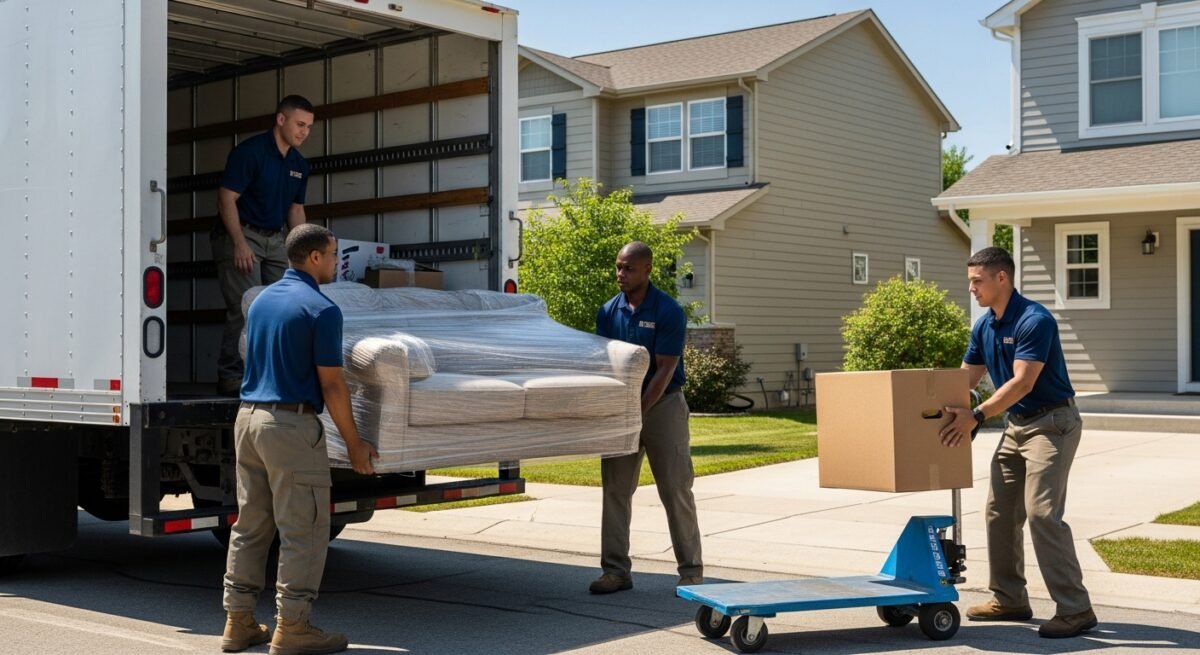
If you choose a government-arranged move, you typically won’t select the company; one will be assigned. However, understanding what distinguishes reputable military relocation movers is crucial for setting expectations and advocating for your property. These are companies that hold specific contracts with the U.S. government and are well-versed in military-specific requirements, such as complicated delivery windows, storage-in-transit (SIT), and the claims process.
When the assigned movers arrive, your role shifts to active oversight. Be present during both the pack-out and delivery. Conduct a thorough pre-move inventory with the crew chief. This document, listing every item and its condition, is your most critical piece of evidence if items are lost or damaged. Note any pre-existing scratches or dents on furniture. Do not sign blank or incomplete inventory sheets. During packing, point out high-value items (HVI) that require special handling or documentation. For an added layer of security in chaotic situations, our guide on emergency same day moving services outlines principles of rapid inventory and documentation that can be useful during any fast-paced move.
Maximizing Your Move and Minimizing Stress
Proactive planning is the ultimate tool for a successful PCS. Begin decluttering months in advance. The weight limit is a hard ceiling, and every pound of unused items you discard or sell is one less to worry about and potentially more money saved or earned. Create a “PCS Binder” both physically and digitally. This should contain all orders, transportation office paperwork, inventory sheets, mover contact information, and photos/videos of your belongings, especially high-value items.
Your essential kit, sometimes called a “PCS box” or “unaccompanied baggage,” is vital. This should include items you will need immediately upon arrival before your HHG are delivered. Pack it in your personal vehicle or carry it with you. A well-considered essential kit typically includes:
- Critical documents (orders, IDs, passports, birth certificates, medical records, PCS binder).
- Basic toiletries and a change of clothes for each family member for 3-5 days.
- Phone chargers, laptops, and essential electronics.
- Basic kitchen supplies (paper plates, plastic utensils, a pot, a pan).
- Bedding, pillows, and towels for each family member.
- Medications, pet food, and baby/childcare necessities.
This kit bridges the gap between your arrival and the delivery of your household goods, preventing the need to repurchase everyday items.
Navigating the Claims Process for Lost or Damaged Goods
Despite best efforts, loss or damage can occur. The military claims process is governed by the Joint Federal Travel Regulations (JFTR). For government-arranged moves, you file a claim against the carrier (the moving company), not the government, initially. You must report any loss or damage on the DD Form 1840/1840R (Joint Statement of Loss or Damage) at the time of delivery. Do not sign the delivery receipt indicating everything was received in good condition if it was not. Take clear, dated photographs of any damage.
If the mover does not settle your claim satisfactorily, you can escalate it to the Military Claims Office (SCO) at your new installation. They can assist in adjudicating the claim. For high-value items, it is wise to have pre-move appraisals or receipts. Remember, full replacement value is the standard for most claims, but depreciation may apply to older items. Persistence and detailed documentation are your greatest assets in this process.
Financial Planning and Entitlements for Your PCS
A PCS comes with several financial entitlements designed to offset your costs. These include Dislocation Allowance (DLA) to cover incidental expenses, Temporary Lodging Expense (TLE) for hotel costs, and a Monetary Allowance in Lieu of Transportation (MALT) for driving to your new duty station. For a PPM, you receive an advance payment of up to 95% of the government’s estimated cost to move your goods. You settle the final amount after the move, and if your actual costs are lower, you keep the difference as an incentive.
Budgeting is critical. Even with entitlements, out-of-pocket expenses for security deposits, utility hookups, and initial grocery runs can add up quickly. Track all your moving-related receipts, especially for a PPM, as they are necessary for your final settlement. To understand potential market rates and plan your budget effectively, you can always get a free moving quote from reputable providers to benchmark costs, which is particularly useful for planning a PPM or comparing to your government allowance.
Frequently Asked Questions About Military Moves
Q: Can I choose my own moving company for a government-arranged move?
A: Generally, no. The company is assigned through the DP3 system based on capacity and schedule. However, you can sometimes request a preferred carrier, but approval is not guaranteed.
Q: What happens if my household goods arrive late?
A: The government provides a delivery date range. If the mover misses this window without an authorized reason (like severe weather), you may be eligible for reimbursement of temporary living expenses. Document all delays and communicate with the mover and your transportation office.
Q: Are my vehicles shipped as part of the PCS?
A: Yes, you are typically authorized to ship one personally owned vehicle (POV) to an overseas duty station or from an overseas location back to the U.S. For continental U.S. (CONUS) moves, you are responsible for driving or transporting your vehicle, though you receive a mileage allowance.
Q: What is a non-temporary storage (NTS) entitlement?
A: If you are moving to a location where government quarters are provided and furnished, you may be authorized to place your HHG into long-term storage at government expense.
Q: How do I handle a move with sensitive or classified items?
A: You must never pack or ship classified material with household goods. Coordinate with your security manager for proper transport procedures well before your move date.
A military relocation is a complex but manageable lifecycle event. By leveraging your entitlements, understanding the processes, documenting everything, and planning meticulously, you can transform a daunting PCS into a successful transition. Your transportation office is your ally, use them. Empower yourself with knowledge, advocate for your family’s needs, and approach each move as a new chapter in your service to the country.