
Mastering Large Furniture Moves: A Guide to Professional Services
Learn the professional strategies for furniture moving services how to handle large moves, from planning to heavy item transport, to ensure a safe and efficient relocation.

By Jennifer Davis
Moving a single piece of furniture is a challenge. Moving an entire household of large, heavy, or delicate items is a monumental logistical undertaking that can quickly overwhelm even the most organized person. The stakes are high: potential damage to your prized possessions, injury to yourself or helpers, and significant stress. This is where understanding professional furniture moving services and how to handle large moves becomes not just helpful, but essential. A successful large-scale furniture relocation hinges on meticulous planning, the right tools, and often, the expertise of professional heavy item movers. This guide will walk you through the comprehensive process, from initial inventory to final placement, ensuring your most substantial belongings transition safely to your new home.
Planning and Preparation: The Foundation of a Large Move
For a large furniture move, preparation is not a step, it is the entire foundation. Rushing into packing and lifting is a recipe for disaster. Begin by conducting a thorough room-by-room inventory at least eight weeks before your move date. This isn’t just a simple list; categorize each item by size, weight, and fragility. Note which pieces disassemble (like beds, tables, and modular shelving) and which are monolithic (like grand pianos, oversized sectionals, or antique armoires). This inventory serves multiple critical purposes: it allows you to accurately request quotes from furniture moving services, helps you decide what to keep, sell, or donate, and informs the packing supplies you’ll need. Simultaneously, measure your largest pieces and the doorways, stairwells, and elevators at both your current and new locations. An otherwise perfect move can be halted by a sofa that won’t fit around a tight corner, a problem known as a “pivot point challenge.”
Once you have a clear picture of what you’re moving, you can make the pivotal decision: DIY or hire professionals? For a large move, the scale often tips heavily toward hiring. Professional furniture relocation services bring specialized equipment (dollies, straps, padding, ramps), trained manpower, and, crucially, insurance. They are adept at navigating complex spatial puzzles and handling items that require brute strength and finesse. Your inventory list will be invaluable when soliciting estimates. Obtain at least three in-person or detailed virtual quotes from licensed and insured movers. Be wary of estimates that seem too good to be true; they often are. A reputable company will ask detailed questions and may even request photos or a video walkthrough for large moves.
Packing and Protecting Your Large Furniture
Proper packing is what separates a seamless move from one filled with heartbreak over scratches, dents, and breaks. For large moves, standard boxes won’t suffice. You need a strategy for the furniture itself. Start by emptying all items from dressers, desks, and cabinets. Not only does this make them lighter and safer to move, but most moving companies’ insurance will not cover items left inside furniture. Remove all detachable parts: take out drawers (wrap them separately in moving blankets), unscrew table legs, and dismantle bed frames. Keep all hardware, screws, and bolts in labeled, sealed plastic bags taped directly to the corresponding furniture piece or in a single, master “hardware” box.
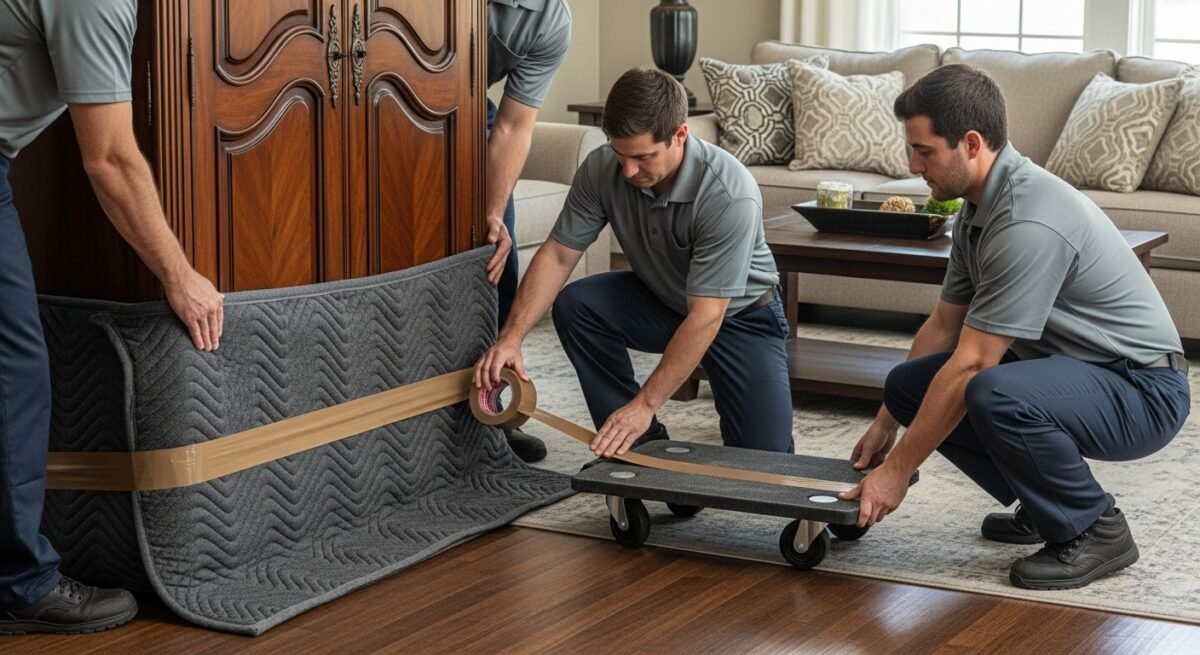
Protection is next. For most large furniture, professional moving blankets (also called furniture pads or movers’ blankets) are non-negotiable. These thick, padded quilts are secured with stretch wrap or rubber straps to protect surfaces from scratches, scuffs, and minor impacts. For high-gloss finishes, delicate wood, or antiques, add a layer of bubble wrap or foam sheeting under the blanket. Glass tabletops, mirrors, and headboards require special attention: they should be placed in custom cardboard mirror boxes or heavily padded and marked with prominent “FRAGILE GLASS” labels. Here is a key checklist for packing large items:
- Clean First: Wipe down surfaces to prevent grinding dirt and dust during transport.
- Disassemble: Break down every piece that is designed to come apart. It’s safer and more space-efficient.
- Wrap & Pad: Use moving blankets, bubble wrap, and corner protectors liberally.
- Secure: Use plastic stretch wrap or moving straps to keep padding in place and drawers/doors shut.
- Label Strategically: Mark each piece with its destination room and handling instructions (e.g., “Top Side Up,” “Use 2 People”).
Investing in quality materials and time at this stage pays exponential dividends on moving day by preventing damage and streamlining the loading process.
Specialized Handling for Heavy and Delicate Items
Every large move has its “problem children”: items that are exceptionally heavy, awkwardly shaped, or of high sentimental or monetary value. These pieces demand specialized handling techniques and often justify calling in heavy item movers. A professional crew has the experience and equipment to manage these challenges safely. For example, moving a grand piano requires piano boards (a specialized dolly), skid boards, and multiple trained personnel to navigate stairs and thresholds without damaging the instrument’s delicate internal mechanics. Similarly, large safes, pool tables, and antique cabinets present unique hurdles.
Even if you are managing parts of the move yourself, understanding these techniques is crucial. The fundamental rule is to lift with your legs, not your back, and to never twist while carrying a load. Use forearm forklifts or moving straps, which allow you to lift from a safer, more ergonomic position. For extremely heavy items, an appliance dolly is essential; ensure it is rated for the item’s weight and always strap the item securely to the dolly. When navigating stairs, a team of at least three people is often needed: two to control the dolly and one to spot and guide from behind. Always clear the entire path before moving a heavy item, and communicate constantly with your team. For situations where time, risk, or complexity is too great, such as an emergency move with no time for planning, specialized emergency moving services can be a vital resource to ensure safety and speed.
Loading, Transport, and Unloading Strategies
The loading phase is a tactical operation. The goal is to maximize space, ensure balance in the truck, and prevent any shifting during transit. Professional movers load the truck like a three-dimensional puzzle. The heaviest, largest items (appliances, dressers, sofas) go in first, placed along the walls and towards the front of the truck (near the cab) to balance weight and secure the load. These items form a solid base. Lighter boxes and items are then stacked on top and used to fill gaps. Everything must be braced and secured. Furniture should never be laid on its finished surfaces unless absolutely necessary; items are best transported on their sides or standing upright as designed.
During transport, if you are driving a rental truck, take corners slowly and allow extra stopping distance. Upon arrival at your new home, have a clear plan for unloading. The process is essentially the reverse of loading, but with an added step: direct placement. Before the first item comes off the truck, ensure pathways inside the new home are clear and that you have confirmed where each major piece will go. This avoids the frustrating and back-breaking exercise of moving a 500-pound sideboard multiple times. Use protective floor runners or old carpet scraps to protect new floors during the unloading and placement process. As each item is brought in, do a quick visual inspection for any new damage that may have occurred in transit, noting it on the mover’s inventory sheet if you used a professional service.
Frequently Asked Questions
Q: How far in advance should I book furniture moving services for a large move?
A: For a large move, especially during peak season (May through September), you should book professional furniture relocation services at least 6 to 8 weeks in advance. This ensures availability and gives you time to secure the best company for your needs.
Q: What is the most common mistake people make when moving large furniture themselves?
A: The most common and costly mistake is underestimating the weight and awkwardness of items, leading to personal injury, property damage (like scratched floors or broken doorframes), and damage to the furniture itself. Not using proper equipment like dollies, straps, and padding is a close second.
Q: Are there items professional movers will not move?
A: Yes. Most standard moving companies will not transport hazardous materials (paint, chemicals, propane tanks), perishable food, plants, pets, or extremely high-value items like jewelry or cash. Some may have restrictions on certain antiques or grand pianos without special arrangements. Always disclose everything you need to move during the quoting process.
Q: How can I reduce the cost of a large furniture move?
A> The most effective ways are to declutter ruthlessly (less to move), be flexible with your move date (mid-month and weekdays are cheaper), and handle all packing and disassembly yourself. However, for truly large and heavy items, the cost savings of DIY can be quickly erased by a single mistake. Getting multiple detailed quotes is the best way to find a fair price, and you can always get a free moving quote to start your comparison.
Successfully handling a large furniture move is a testament to planning and execution. By breaking the process down into manageable phases, from the initial strategic inventory to the final careful placement, you transform a potentially chaotic ordeal into a controlled, systematic project. Whether you enlist full-service furniture moving services for the entire task or manage a hybrid approach where professionals handle the heaviest pieces, the principles of preparation, protection, and proper technique remain paramount. The reward is more than just transported objects, it is the peace of mind that comes from knowing your belongings have arrived safely, ready to make your new house a home.