
How to Prepare a Car for Long Distance Transport in Winter
Get your car winter-ready for long-distance transport with our checklist. Call (833)-484-8675 for expert moving assistance.

By Mark Johnson
Shipping a car across the country is already a logistical puzzle. Add freezing temperatures, road salt, and unpredictable snowstorms, and the stakes rise fast. Whether you are relocating for a new job or moving south for the season, knowing how to prepare a car for long distance transport in winter protects your investment and prevents costly surprises. This guide walks you through the essential steps, from fluid checks to carrier selection, so your vehicle arrives in the same condition it left.
Why Winter Transport Demands Extra Attention
Winter weather introduces a unique set of risks for vehicle shipping. Road salt and brine can accelerate corrosion on exposed metal, especially if your car already has stone chips or scratches. Freezing temperatures can crack hoses, drain batteries, and turn minor fluid leaks into major failures. And snowstorms can delay pickup and delivery, leaving your car sitting outdoors longer than expected. Proper preparation mitigates these risks and ensures the transport process goes smoothly.
Beyond the physical toll on the vehicle, winter transport also affects logistics. Carriers may face route closures, icy roads, and tighter schedules, which can push back pickup windows. Understanding these seasonal challenges helps you plan realistically and communicate effectively with your transport provider. A little upfront effort goes a long way toward a stress-free shipment.
Pre-Transport Mechanical Checks
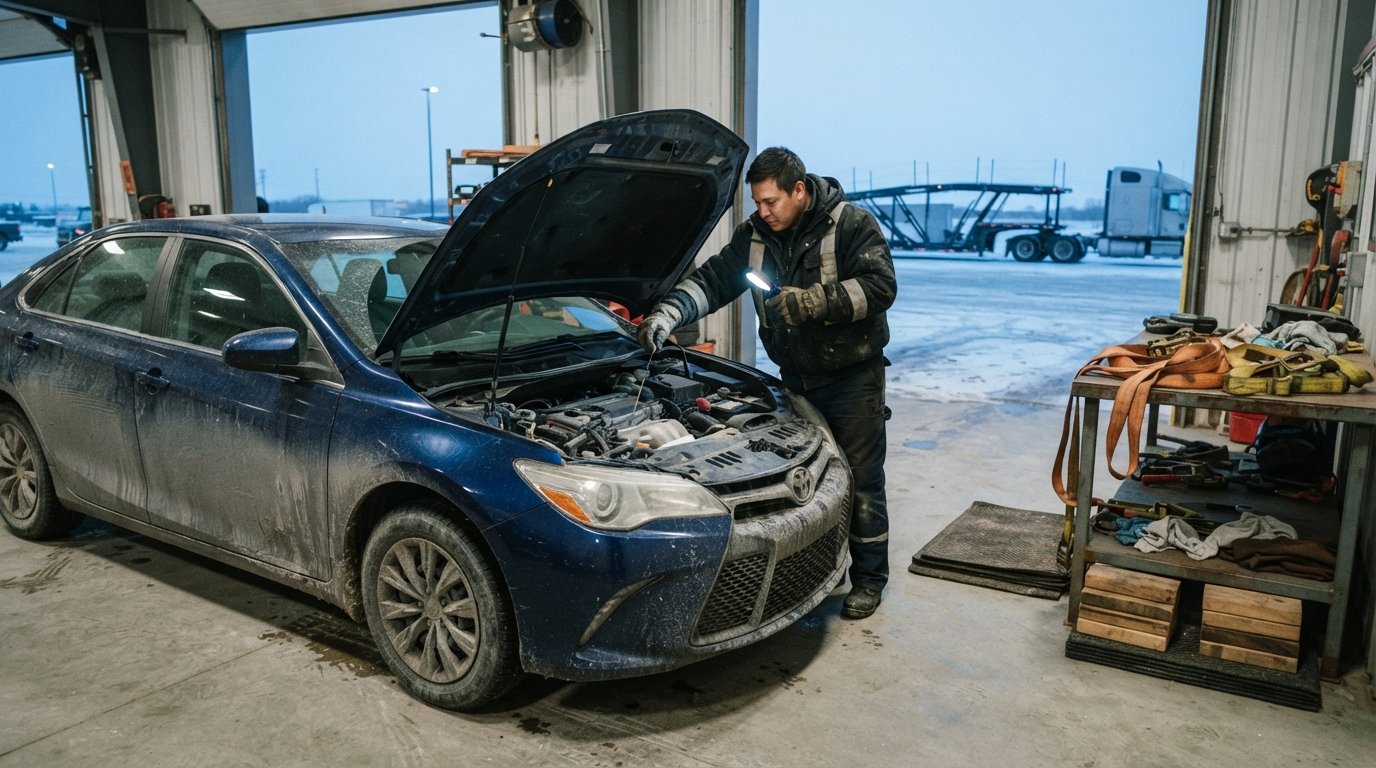
Before you hand over the keys, a thorough mechanical inspection is essential. Start with the cooling system: check the antifreeze concentration to ensure it can withstand subzero temperatures. A 50/50 mix of coolant and water is standard, but in extreme cold, a higher ratio may be needed. Test the battery as well; cold cranking amps drop significantly in winter, and a weak battery can fail during loading or unloading. Tire pressure and tread depth also matter, as underinflated or worn tires can cause handling issues on icy ramps.
Brakes, belts, and hoses should be inspected for wear and tear. A cracked serpentine belt or a leaking radiator hose can strand your car at the worst possible moment. If you are shipping a car for the first time, our prepare car for transport checklist covers additional items like fluid top-offs and filter replacements. Addressing these now avoids emergency repairs later and gives you peace of mind.
Fluids and Filters
Winter-grade oil is critical for cold starts. If your oil is due for a change, do it before transport. Old oil can thicken in low temperatures, making it harder for the engine to turn over. Similarly, windshield washer fluid should be rated for freezing conditions. Top off brake fluid, power steering fluid, and transmission fluid as needed. These small steps protect your car during loading, unloading, and any extended periods in storage yards.
Battery and Electrical System
A battery that struggles in mild weather can fail entirely in the cold. Have it load-tested at an auto parts store, and replace it if it is more than four years old. Check terminals for corrosion and clean them if necessary. If your car has a block heater, make sure it works, though it is unlikely to be used during transport. Also, test all lights and turn signals; carriers require functioning lights for loading and unloading.
Exterior Protection and Documentation
Winter road conditions can leave your car coated in salt and grime, which is why a thorough wash before shipment is more than cosmetic. Clean the undercarriage to remove existing salt, and apply a fresh coat of wax to protect the paint. Inspect for any rust spots, chips, or scratches, and photograph them clearly with a date stamp. These photos serve as your baseline in case of damage claims. Documenting existing flaws is one of the most important steps in how to prepare a car for long distance transport in winter, as it prevents disputes about pre-existing damage.
Consider applying a protective coating or film to high-impact areas like the hood and front bumper. While not mandatory, it adds a layer of defense against road debris and salt spray. If your car will be shipped on an open carrier, this is especially worthwhile. For enclosed transport, the protection is less critical but still a good practice.
Choosing the Right Carrier for Winter Conditions
The type of carrier you choose significantly affects your car's exposure to winter elements. Open carriers are the most common and economical option, but they leave your vehicle exposed to snow, salt, and debris. Enclosed carriers offer full protection from the elements, making them ideal for classic cars, luxury vehicles, or any car you want to keep pristine. In winter, enclosed transport is often worth the extra cost, especially for long routes where weather can change rapidly.
When comparing quotes, ask about the carrier's winter experience. Reputable companies plan routes around weather forecasts and have contingency plans for delays. They also use enclosed loading ramps and secure tie-downs that function in freezing conditions. If you are moving and need to arrange vehicle transport along with household goods, consider getting a free quote from Moving.Homes to connect with trusted providers who understand winter logistics.
Open vs. Enclosed: A Quick Comparison
To help you decide, here is a quick breakdown of the two main carrier types:
- Open carrier: Lower cost, widely available, but exposed to road salt and weather. Best for everyday vehicles and short routes.
- Enclosed carrier: Higher cost, limited availability, but fully protected from salt, snow, and debris. Ideal for classic, luxury, or modified cars.
- Door-to-door vs. terminal: Door-to-door is convenient but may be limited in rural areas; terminal-to-terminal is cheaper but requires you to drop off and pick up.
Weigh these options against your budget and the value of your vehicle. For a daily driver, an open carrier with a good wash afterward may suffice. For a show car or a new purchase, enclosed transport is the safer bet.
Pickup and Delivery Windows in Winter
Winter weather can wreak havoc on transport schedules. Snowstorms, icy roads, and road closures may delay pickup or delivery by several days. When booking, ask for a window rather than a specific date, and build in buffer time. Most carriers provide a 3-7 day window for pickup and delivery, but in winter, expect longer. Stay in close contact with the dispatcher and be flexible if possible.
On pickup day, inspect the car with the driver and note any new damage on the bill of lading. Take photos again. Ensure the driver has your contact information and knows to call ahead before delivery. If you are shipping to or from a snowy region, ask whether the carrier uses covered loading areas or indoor facilities for transfer. These details can make a big difference in avoiding last-minute stress.
Insurance and Liability Considerations
Before booking, confirm the carrier's insurance coverage. Reputable carriers carry cargo insurance that covers damage during transit, but the amount may vary. Ask for a certificate of insurance and understand the deductible. If your car is high-value, you may need supplemental coverage. Also, check your personal auto policy to see if it extends to transport; some policies do, but many do not. Knowing your coverage prevents unpleasant surprises if something goes wrong.
Document everything: pre-existing damage, mileage, and fuel level. A thorough bill of lading signed by both parties is your best protection. If you are also planning home repairs or renovations before your move, sites like ContractorHomeQuotes offer cost guides and contractor selection advice to help you budget. But when it comes to vehicle transport, focus on carrier reputation and insurance.
Final Checks Before Handover
As pickup approaches, do a final walkaround. Remove personal items, toll transponders, and any valuables. Check that the spare tire and tools are present. Ensure the fuel level is around a quarter tank; this reduces weight and is sufficient for loading and unloading. Lock the doors and keep a spare key with you. Provide the driver with any special instructions, such as a disabled alarm or a tricky ignition sequence.
If you are shipping in winter, consider adding a small emergency kit in the trunk: a blanket, flashlight, and jumper cables. While the carrier will not use these, they can be helpful if your car is stored temporarily. Finally, confirm the delivery address and contact numbers. A smooth handover sets the tone for a successful shipment.
Preparing a car for long distance transport in winter is not complicated, but it does require attention to detail. By following these steps, you protect your vehicle from the elements and ensure a hassle-free experience. Whether you are moving across the country or shipping a seasonal vehicle, a little preparation goes a long way.