
How to Pack Fragile Items for Moving Without Breakage
Learn the proven method to pack fragile items for moving using professional-grade techniques that prevent breakage. Secure your valuables with our step-by-step guide.

By Michelle Carter
Moving day anxiety often peaks when you’re faced with a collection of delicate glasses, cherished china, and irreplaceable heirlooms. The fear of hearing that dreaded crunch from a box labeled “FRAGILE” is universal. Yet, with the right materials, a methodical approach, and proven techniques, you can pack fragile items for moving with a confidence that borders on certainty. This isn’t about just throwing bubble wrap at the problem, it’s about understanding the physics of protection, creating secure environments within your boxes, and systematically eliminating points of failure. By treating the packing process as a strategic operation, you transform vulnerability into security, ensuring your most delicate possessions arrive in your new home exactly as they left the old one.
The Foundation: Gathering the Right Packing Materials
Attempting to pack fragile items with inadequate materials is the primary cause of moving day disasters. Newspaper and old towels, while better than nothing, are a poor substitute for purpose-designed supplies. The right materials absorb shock, prevent direct contact between items, and create a stable, cushioned nest. Your first investment should be in high-quality, rigid cardboard boxes in small and medium sizes. Large boxes tempt overpacking, leading to excessive weight that can cause the bottom to blow out and increase the risk of crushing. Specialty boxes are non-negotiable for certain items: dish packs with dividers for plates, glassware boxes with cell dividers for cups and stemware, and picture boxes for framed art and mirrors.
For cushioning, you need a multi-layered approach. Packing paper (plain, non-printed newsprint) is your workhorse for wrapping individual items. Bubble wrap, with its air-filled pockets, is superior for high-impact protection on very delicate items like electronics or porcelain. For filling voids and adding a final layer of cushion, foam packing peanuts or biodegradable loose fill are ideal. Do not forget high-quality packing tape, a permanent marker for labeling, and a utility knife. A roll of stretch wrap is invaluable for securing drawers, bundling items together, and protecting furniture finishes from scratches. Having all these materials on hand before you start is crucial for an efficient and safe packing process.
The Core Packing Methodology: Wrap, Cushion, and Secure
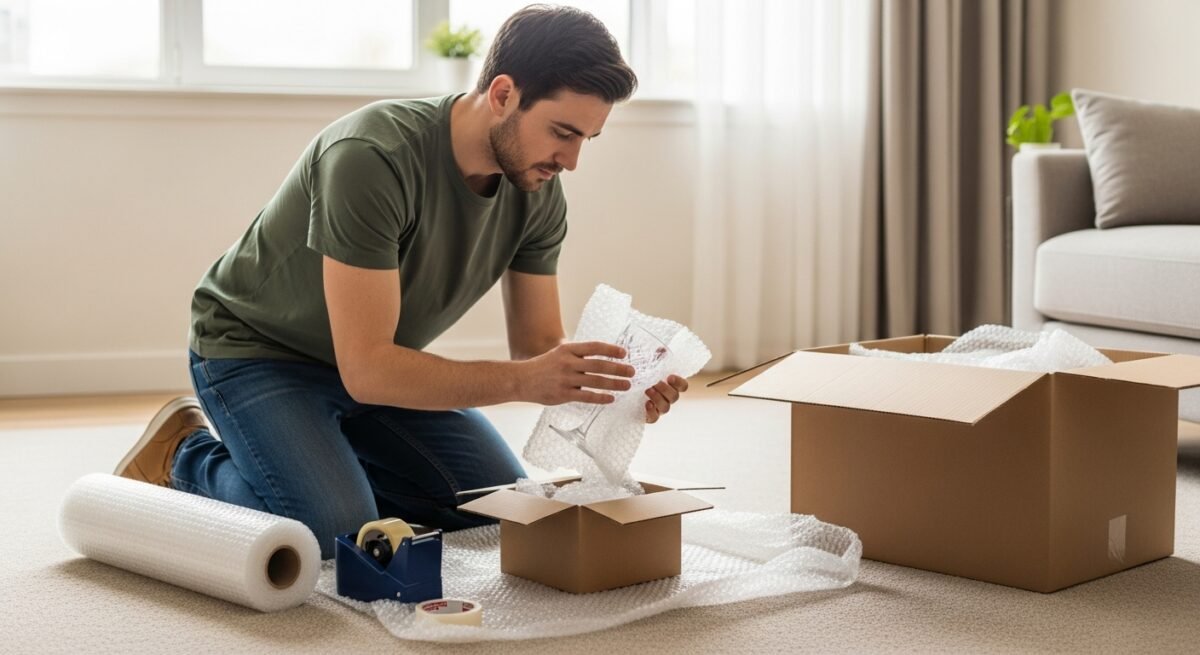
The actual act of packing fragile items follows a consistent, repeatable process. Master this methodology, and you can apply it to almost anything delicate. The first step is always a thorough cleaning. Dust and grit can act as abrasives during transit, scratching surfaces. Once clean, begin with individual wrapping. For each item, use a generous sheet of packing paper or bubble wrap. Place the item in the center and methodically fold the paper over, creating tight, flat folds. Secure the wrap with a small piece of tape. The goal is to create a padded cocoon that prevents the item from directly touching anything else, including the box walls and other objects.
After wrapping, the boxing strategy is critical. Always start with a 2-3 inch base of crumpled paper or loose fill at the bottom of the box. This is your shock absorber. Place your heaviest, sturdiest wrapped items on the bottom, standing plates and platters on their edges (never flat). Fill every single void. Empty space is the enemy, as it allows items to shift and collide during transport. Use crumpled paper, foam peanuts, or even towels to pack items tightly so nothing can move. A good test is to gently shake the box once it’s half-full and three-quarters full. If you hear or feel movement, add more cushioning. Finally, seal the top with another 2-3 inch layer of cushioning before closing the box. Tape the box securely using the H-tape method: one strip along the center seam and two strips perpendicular over the flaps on each end.
Specialized Techniques for Specific Fragile Items
While the core methodology is universal, certain categories of fragile items demand specific techniques to guarantee their safety. Applying these targeted strategies addresses the unique vulnerabilities of your most precious cargo.
Dishes, Glassware, and China
For plates, bowls, and platters, the edge-standing method is paramount. Individually wrap each piece, then pack them vertically on their edges in the box, like records in a crate. This aligns them with the natural forces of the move, distributing pressure along their strongest axis. Never stack them flat, as the weight can cause cracking. For cups and glassware, wrap the body thoroughly, then stuff the inside with crumpled paper before wrapping. This provides internal support. Pack them upside down in the box, with the sturdy base facing up, and use cardboard dividers to keep them from knocking into each other. For a comprehensive evaluation of professional services that handle these items, our guide on how to choose a fragile item moving service outlines key selection criteria.
Electronics, Art, and Mirrors
Flat-screen TVs and monitors should be packed in their original boxes whenever possible. If that’s not an option, use a specialty TV box. Wrap the screen in a soft cloth or foam sheet, then bubble wrap the entire unit. Use plenty of void fill around it in a sturdy box. For framed art, mirrors, and large photographs, picture boxes are essential. Protect the glass surface with a layer of bubble wrap, then use corner protectors on the frame. Tape an “X” of painter’s tape across the glass surface (this won’t damage the frame) to hold shards together in the unlikely event of breakage. Always mark these boxes with “GLASS” and “THIS SIDE UP” on multiple sides.
Lamps, Vases, and Oddly Shaped Items
For table lamps, remove the harp and shade. Wrap the base separately. Pack the shade by itself, either in a separate box or by nesting smaller shades inside larger ones with ample paper between them. Never place anything on top of a lampshade. For vases and sculptures, use the double-boxing method for ultimate protection. Wrap the item extensively, place it in a smaller box filled with cushioning, then place that smaller box inside a larger box, with several inches of cushioning material (like peanuts) filling the space between the two boxes. This creates a suspended, shock-absorbing system.
Labeling, Loading, and Final Preparations
Your meticulous packing work can be undone by careless handling. Proper labeling is the communication system that instructs everyone, including yourself and professional movers, on how to treat each box. Use a bold, permanent marker and write “FRAGILE” on the top and all sides of the box. Be specific: write “FRAGILE: DISHES,” “FRAGILE: GLASSWARE,” or “FRAGILE: MASTER BEDROOM LAMPS.” Also, clearly mark “THIS SIDE UP” with arrows to indicate orientation. This simple step drastically reduces mishandling.
When loading the moving truck, fragile boxes should be loaded last, so they are unloaded first. They belong in a secure, stable position on top of heavier, non-fragile boxes (like books or linens). Never place heavy boxes on top of fragile ones. Designate a specific, safe area in the truck, perhaps along a side wall, for all fragile items. Use furniture pads or moving blankets to create buffers between boxes and the truck walls to prevent sliding. Finally, consider transporting the most irreplaceable, high-value fragile items yourself in your personal vehicle. This gives you ultimate control over their environment and handling during the move. As you finalize your moving budget, remember that proper packing can prevent costly losses. To help plan your expenses, you can always get a free moving quote from reputable providers to compare service options.
Frequently Asked Questions
Is newspaper safe to use for wrapping fragile items?
It is not ideal. The ink can transfer and stain china, glass, and light-colored items, and it provides less cushioning than plain packing paper. If you must use newspaper, wrap the item first in a clean white paper towel or tissue paper to create a barrier.
How much does it cost to get professional packing for fragile items?
Costs vary based on the volume and value of items, your location, and the mover. Many companies offer partial packing services where you pack the easy items and they handle the fragile ones. While it is an added expense, it often includes insurance and expertise that can be worthwhile for extensive collections.
Can I use my own linens and towels as packing material?
Absolutely. Towels, blankets, sheets, and even clothing are excellent for cushioning and filling voids. They are soft, readily available, and serve a dual purpose (you have to move them anyway). Use them to wrap items or pad the spaces between wrapped items in a box.
Should I purchase moving insurance for my fragile items?
If you are using professional movers, understand the difference between their basic released value protection (which offers minimal compensation by weight) and full value protection. For high-value antiques, art, or collections, you may need to purchase additional insurance or schedule specific items. Document your items with photos before packing as proof of condition.
How far in advance should I start packing fragile items?
Begin packing non-essential fragile items (like decorative pieces, special occasion china) 2-3 weeks before moving day. Pack essential kitchenware and daily-use items last, about 2-3 days before the move, keeping out just enough to get by. This staggered approach reduces last-minute stress and ensures careful handling.
Mastering how to pack fragile items for moving transforms a major point of stress into a point of pride. It is a deliberate skill that combines preparation, the right tools, and patient execution. By investing time in this process, you are not just packing boxes, you are preserving memories, protecting investments, and ensuring the first night in your new home isn’t spent mourning a broken treasure. The peace of mind that comes from knowing your delicate belongings are secure is, ultimately, one of the most valuable things you can pack for your journey.