
How to Move Plants Across State Lines Legally
Navigate plant transport rules with confidence. Call (833)-484-8675 for expert moving support and keep your greenery alive.

Your fiddle leaf fig survived the winter, your pothos has grown eight feet long, and your monstera finally put out a fenestrated leaf. The last thing you want is to leave them behind or, worse, have a moving truck driver refuse to load them at the last minute. Moving plants across state lines legally is not just a matter of loading them into the car and hoping for the best. Every state has its own agricultural rules, and some plants are outright banned from crossing certain borders because they pose a risk to local farms, forests, or ecosystems. The good news is that with a little planning, you can usually bring your green companions with you, provided you follow the rules and pack them properly for the journey.
This guide walks you through the legal landscape, the practical packing strategies for both car trips and moving trucks, and the backup plans you need if a professional mover will not touch your plants. You will also learn how to keep your plants alive during a multi-day drive, which is often the hardest part of the whole process. By the end, you will know exactly how to move plants across state lines legally and safely, without risking a fine at an agricultural checkpoint or a dead fern on arrival.
Understand State Agricultural Restrictions Before You Pack a Single Pot
The legal side of moving plants across state lines is governed by a mix of federal and state regulations. The USDA Animal and Plant Health Inspection Service (APHIS) sets baseline rules for interstate movement of plants, but individual states can impose stricter requirements. Some states, like California, Florida, and Hawaii, are particularly aggressive about protecting their agricultural industries and natural ecosystems from invasive pests and diseases. Others are more relaxed, but that does not mean you can ignore the rules entirely. The key is to check the destination state's department of agriculture website before you start packing.
Certain plants are almost universally restricted or prohibited because they are known carriers of pests or diseases. Citrus plants, for example, are often banned from entering citrus-producing states due to the risk of citrus greening disease. Palm trees may be restricted in areas battling lethal yellowing. And no matter where you are going, you should never transport noxious weeds or plants that appear on a state's prohibited list. The consequences range from confiscation at a checkpoint to fines that can run into the hundreds or thousands of dollars. In rare cases, moving a prohibited plant can even lead to criminal charges if the state believes you acted knowingly.
Here is a quick checklist of the most common restrictions you need to verify before you move:
- Citrus plants: Often prohibited into citrus-growing states like California, Florida, Arizona, and Texas.
- Palm plants: Restricted in states with active palm disease quarantines.
- Soil: Many states require plants to be bare-root or in sterile potting mix, not native soil, to prevent soil-borne pests.
- Noxious weeds: Universally banned, and ignorance is not a defense.
- Imported plants: If you brought a plant from another country, it may need a phytosanitary certificate even for domestic travel.
Beyond the plant itself, the pot and soil matter. Some states require that plants be in clean containers and that the soil be free of pests. If you are moving to a state with strict agricultural rules, consider repotting your plants into fresh, sterile potting mix a few weeks before the move. This not only helps with compliance but also reduces the risk of spreading pests. Keep in mind that moving companies are not agricultural experts, and they will often refuse to transport plants simply to avoid liability. That is why it is essential to understand the rules yourself and plan accordingly.
Packing Plants for a Car Trip Versus a Moving Truck
How you pack your plants depends entirely on how they are traveling. If you are driving your own car, you have far more control over temperature, light, and humidity, which gives your plants a much better chance of survival. If you are using a professional moving truck, the environment is less predictable, and many movers will not transport live plants at all. In fact, most full-service moving companies exclude plants from their liability coverage because they are perishable and sensitive to temperature extremes. That means you need to decide early on whether your plants will ride with you or stay behind.
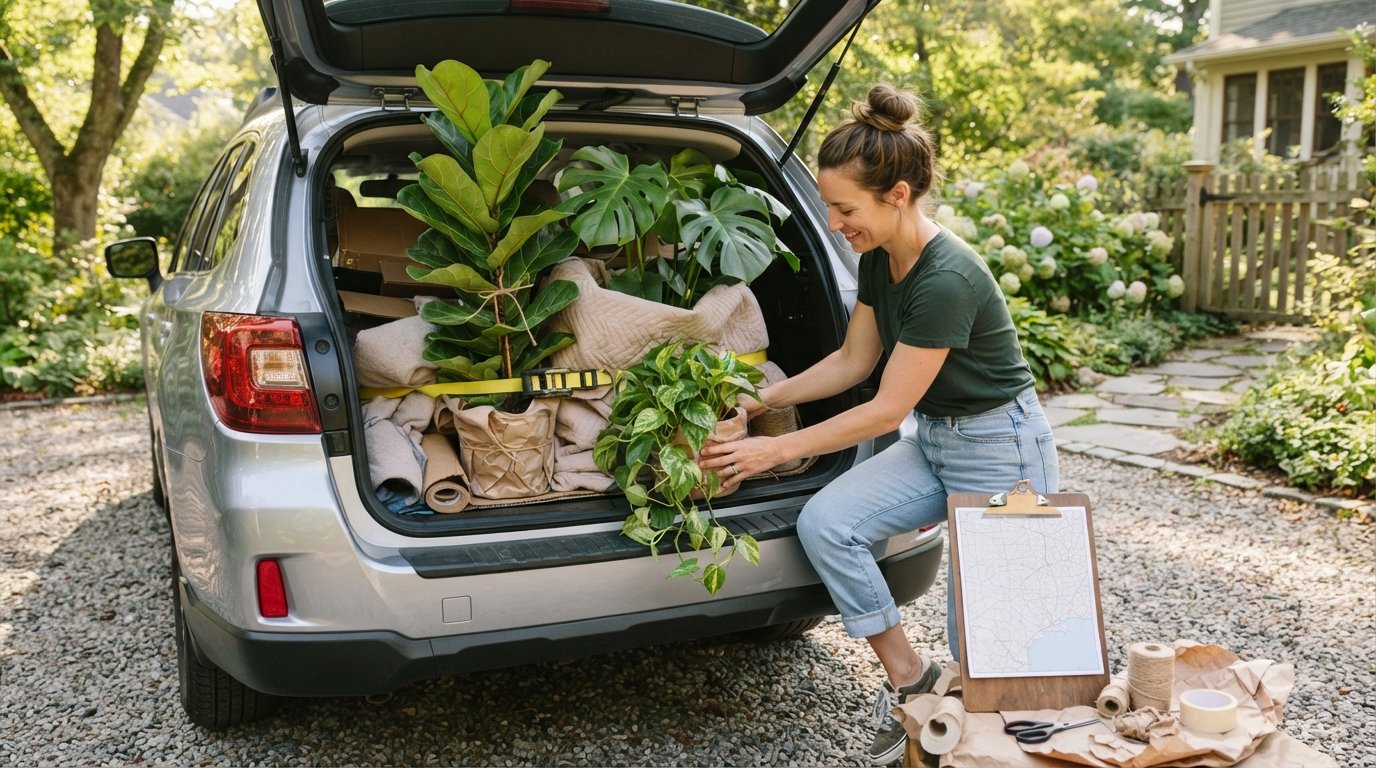
For a car trip, the goal is to stabilize the plants and protect them from physical damage. Start by watering your plants thoroughly one or two days before you leave, but do not soak them. You want the soil to be moist, not dripping. Wrap the pots in newspaper or a towel to prevent them from sliding around, and place them in sturdy boxes or crates so they do not tip over during sudden stops. If you have tall plants, you may need to lay them on their side, but be prepared for some soil spillage. Use a plastic bag or a trash bag to line the box and catch any loose dirt. Keep the plants out of direct sunlight during the drive, and never leave them in a parked car on a hot day. Even with the windows cracked, a car can heat up to lethal temperatures in minutes.
If you are using a moving truck, the strategy is different. Most professional movers will not allow plants in the truck because the trailer can become extremely hot or cold, and there is no ventilation. If your mover does allow plants, you need to pack them as if they are going into storage: use sturdy boxes, secure the pots, and avoid stacking anything on top of them. But in most cases, you will be better off transporting your plants in your own vehicle or shipping them separately. If you are hiring professional movers for the rest of your belongings, you can still ask them about their plant policy, but do not be surprised if the answer is no. For a smoother move overall, you might want to read our guide on moving furniture across states cost and options to understand how movers handle other bulky items, which can help you plan the entire load.
One more consideration: if you are moving across state lines with a moving truck, you will likely be driving a large vehicle, and your plants will need to fit in the cab with you or in a secure spot in the back seat. Do not put them in the cargo area of a rental truck unless you can control the temperature, which is nearly impossible. The cab is your best bet, but you may need to get creative with space. If you have many plants, consider shipping the smaller ones via a specialized plant courier service, which can be expensive but may be worth it for rare or sentimental specimens.
Watering, Humidity, and Light Strategies for Multi-Day Moves
Keeping plants alive during a multi-day move is a test of your ability to manage three variables: water, humidity, and light. Most houseplants can survive a week without water if they are properly hydrated before the trip, but they cannot survive extreme heat, freezing cold, or total darkness for extended periods. The first step is to water your plants deeply two days before you leave. This gives the soil time to absorb the moisture without being soggy on moving day. If you are traveling in summer, you may want to water again the morning you leave, but only if the soil feels dry to the touch. Overwatering can lead to root rot, especially if the plant is sitting in a hot car for hours.
Humidity is often overlooked, but it matters a lot for tropical plants. In a car with air conditioning, the air can become very dry, which will cause leaves to crisp and drop. You can increase humidity by grouping plants together, placing them on trays of wet pebbles, or covering them loosely with a clear plastic bag. If you use a plastic bag, make sure it has holes for ventilation, and never leave it on in direct sunlight, or you will cook the plant. For light, most plants can tolerate a few days of lower light, but they should not be stuffed into a dark trunk. Keep them in the back seat where they can get some indirect light through the windows, but avoid direct sun, which can scorch leaves through glass.
If your trip will take more than three days, you may need to plan for a mid-trip watering stop. Bring a small watering can or a water bottle with a narrow spout, and check the soil moisture each morning. If the top inch of soil is dry, give the plant a small drink, but do not soak it. For succulents and cacti, you can skip watering entirely during the trip; they are adapted to dry conditions and are more likely to suffer from overwatering than underwatering. For ferns and calatheas, you may need to mist the leaves daily to keep humidity up. A small spray bottle is a worthwhile investment.
Temperature control is critical. Never leave plants in a car overnight if temperatures will drop below 50 degrees Fahrenheit or rise above 85 degrees Fahrenheit. If you are staying in a hotel, bring the plants inside with you. If you cannot bring them in, consider shipping them instead. Some hotels are accommodating, but you should call ahead to confirm their policy on plants. If you are moving in winter, insulate the plants with newspaper or bubble wrap, but do not seal them completely; they need to breathe. In summer, park in the shade whenever possible and crack the windows to allow air circulation. A sunshade for the windshield can also help keep the car cooler.
What to Do If Your Mover Will Not Transport Live Plants
Many professional moving companies will not transport live plants, and that is not a reflection of poor service; it is a liability issue. Plants are perishable, they can leak water and damage other items, and they may be subject to agricultural inspections that the mover cannot control. If your mover refuses, you have several alternatives. The first and most common is to transport the plants yourself in your car. This is usually the safest option because you can monitor them and adjust the environment as needed. If you are flying to your destination and driving a moving truck is not an option, you may need to ship your plants or give them away.
Shipping plants is possible but requires care. You can use a specialized plant shipping service, or you can pack them yourself and use an overnight courier. The key is to ship them bare-root or in lightweight pots with moistened sphagnum moss, and to use a sturdy box with plenty of padding. Ship them early in the week so they do not sit in a warehouse over the weekend, and choose the fastest shipping option you can afford. This can be expensive, especially for large plants, so it is usually only worth it for rare or sentimental specimens. For common houseplants, it is often more practical to give them to friends or neighbors and start fresh at your new home.
Another option is to leave your plants with a trusted friend or family member until you can come back for them, or to arrange for a plant-loving friend to drive them to you. If you are moving long-distance and cannot take your plants, consider donating them to a local botanical garden, school, or community center. Some nurseries will also take back healthy plants, though they may not pay you for them. The important thing is to plan ahead so you are not scrambling on moving day. If you are hiring professional movers for the rest of your move, you can focus on getting quotes and comparing services. For homeowners who need to make repairs or upgrades before selling, resources like Homes.Contractors can help you find vetted professionals for roofing, HVAC, and other projects, freeing up your time to handle the plant logistics.
Finally, remember that some states have strict rules about bringing plants in, and you may be required to declare them at an agricultural checkpoint. If you are caught with a prohibited plant, you could face fines or confiscation. Always check the destination state's regulations and be honest at checkpoints. If you are unsure whether a plant is allowed, it is better to leave it behind than to risk a penalty. With careful planning, you can navigate the legal requirements and keep your plants healthy during the move, turning a stressful relocation into a successful plant rescue mission.