
How to Hire Office Furniture Moving Companies for Business Moves
Hiring specialized office furniture moving companies ensures your business assets are protected and downtime is minimized during a relocation. This guide details how to select and work with professional office furniture movers for a seamless transition.

By Nicole Walker
Relocating a business is a monumental task, but the most critical and complex component often involves the physical assets that keep your company running: your office furniture. Desks, chairs, conference tables, filing cabinets, and specialized workstations represent a significant financial investment and are essential for employee productivity from day one. Unlike a residential move, a business relocation of furniture demands precision, minimal downtime, and an understanding of commercial logistics. Choosing the right office furniture moving companies for business moves is not just about transportation, it’s about ensuring business continuity, protecting your assets, and executing a seamless transition that allows your team to get back to work with minimal disruption. A mistake here can lead to damaged equipment, lost productivity, and unexpected costs that far exceed the moving quote.
Why Specialized Office Furniture Movers Are Essential
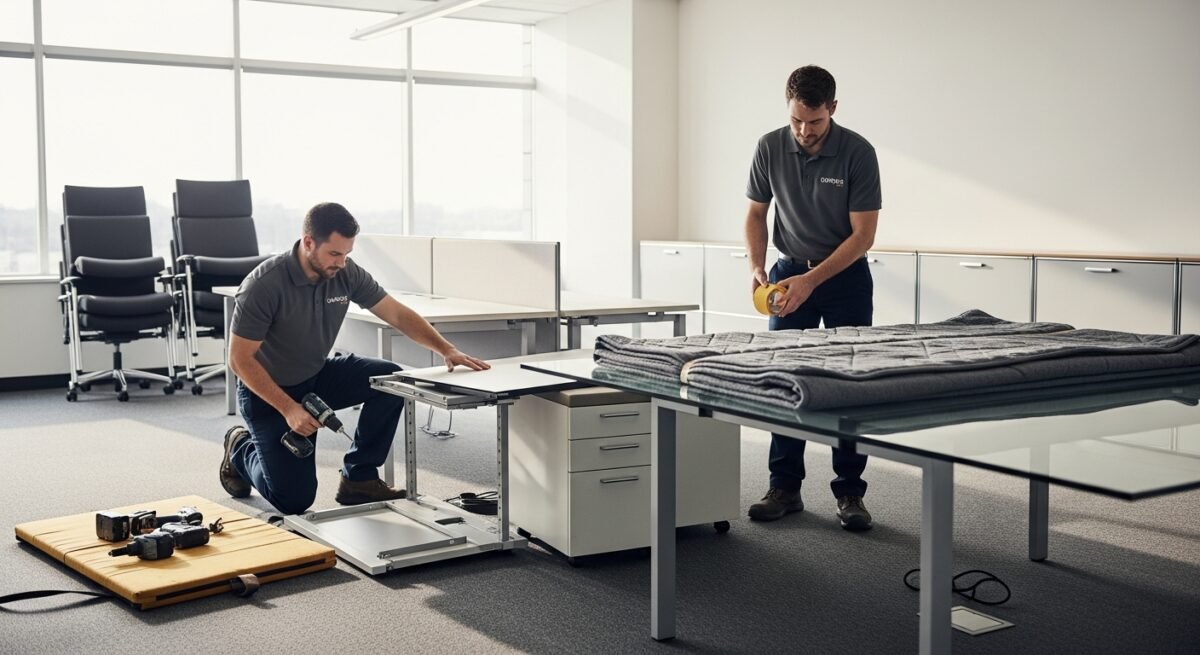
It’s tempting to hire a general residential moving company for a business move, especially if they offer a lower rate. However, this approach carries substantial risk. Office furniture moving companies, often referred to as commercial or office furniture movers, possess specific expertise that general movers typically lack. Their teams are trained in the disassembly and reassembly of complex modular furniture systems, such as those from Herman Miller or Steelcase. They understand how to properly pack and protect delicate glass desk tops, monitor arms, and ergonomic chair mechanisms. They come equipped with the right tools, dollies, padding, and crating materials designed for commercial-grade items, which are often bulkier and heavier than household furniture.
Furthermore, professional office furniture movers operate with an eye on the clock. They plan for after-hours or weekend moves to avoid disrupting your business operations. They can often provide a detailed floor plan implementation service, placing each piece of furniture in its exact new location according to your pre-determined plan. This level of service transforms a chaotic unloading process into an organized installation. The value they provide is in their efficiency and care, which directly translates to getting your business operational faster and safeguarding your capital investments from costly damage.
Key Services Offered by Professional Office Furniture Movers
When vetting potential office furniture moving companies, look for a suite of services that address the full scope of a commercial relocation. The best providers offer a turnkey solution that handles every detail from start to finish.
First and foremost is the pre-move survey and planning. A reputable company will conduct an on-site walkthrough of both your current and future locations. This allows them to assess the inventory, identify potential access challenges (e.g., elevators, stairwells, loading docks), and create a detailed project plan and binding quote. Following this, they provide comprehensive disassembly and reassembly services. They will systematically break down workstations, disconnect electronics (though data and phone lines are typically handled by IT specialists), and carefully label every component and hardware piece for flawless reconstruction.
Packing and protection are where expertise truly shines. Office furniture movers use specialized materials like stretch wrap, furniture blankets, corner protectors, and custom crates for glass or high-value items. They ensure nothing is scratched, dented, or broken in transit. The transportation itself is executed with commercial-grade trucks equipped with lift gates and air-ride suspension for a smoother ride. Finally, the delivery and installation phase involves more than just dropping boxes. Teams will reassemble furniture, place it according to your floor plan, remove all packing debris, and often perform a final walkthrough with you to ensure everything meets your satisfaction. For a deeper dive into selecting a full-service partner, our guide on how to choose commercial moving companies outlines critical evaluation criteria.
The Step-by-Step Process for a Business Furniture Move
Understanding the standard workflow helps you prepare and collaborate effectively with your chosen office furniture moving company. The process typically unfolds in several distinct phases.
Phase 1: Initial Consultation and Inventory. This is the discovery phase. A moving consultant visits your office to document all furniture assets. Be prepared to discuss your timeline, budget, and any special requirements, such as moving a server rack or a delicate boardroom table. This is the time to ask detailed questions about their insurance, crew experience, and proposed plan.
Phase 2: Detailed Proposal and Planning. The mover provides a written, detailed proposal that includes all costs, services, timelines, and responsibilities. Once accepted, collaborative planning begins. You’ll provide a floor plan for the new space, and the mover will help sequence the move, plan elevator usage, and schedule the logistics. Clear communication in this phase prevents surprises on moving day.
Phase 3: Pre-Move Preparation. Your internal team has work to do. Employees should pack their personal desk items into provided boxes. IT departments should coordinate the shutdown, labeling, and reconnection of computers and peripherals. Designate a point person within your company to serve as the liaison with the moving crew foreman.
Phase 4: Execution Day(s). The moving crew arrives and executes the plan. A well-managed move will have a clear flow: disassembly in one area, immediate loading, transportation, unloading, and reassembly in the new location. Your liaison should be on-site to answer questions and confirm placement.
Phase 5: Post-Move Review. Once all furniture is in place, do a thorough walkthrough. Check for any damage, ensure all items are accounted for, and that reassembly is complete. Address any issues immediately with the foreman before the crew departs. This is also a good time to plan a smooth home relocation for any employees who may be relocating personally due to the office move, as the stress can compound.
Critical Factors to Consider When Choosing a Company
Not all office furniture moving companies are created equal. Your selection criteria should go beyond just price. Focus on experience, reliability, and the specific fit for your business’s needs. Here are the key factors to evaluate during your search.
- Proven Commercial Experience: Ask for references and case studies from recent business moves of similar scale and complexity. A company that only does residential moves or small office deliveries may not be equipped for a multi-floor corporate relocation.
- Proper Licensing and Insurance: Verify the mover holds a valid Department of Transportation (DOT) number for interstate moves and appropriate state licensing for local moves. Crucially, request a certificate of insurance (COI) that shows adequate coverage for general liability, workers’ compensation, and cargo insurance to protect your furniture.
- Detailed, Binding Estimates: Avoid vague quotes. Insist on a detailed, written, binding estimate that itemizes costs for packing materials, labor, transportation, and any additional services. Be wary of estimates given over the phone without a site visit.
- Communication and Project Management: Assess their responsiveness and professionalism during the quoting process. You need a company that assigns a dedicated project manager who will be your single point of contact from planning through completion.
- Equipment and Workforce: Inquire about the type of trucks and equipment they use. Do they have enough crews to complete your move within the required window? Are their employees background-checked and trained in commercial moving techniques?
Taking the time to thoroughly vet office furniture movers against these criteria is the single most effective way to mitigate risk. The cheapest option often becomes the most expensive when factoring in delays, damage, and hidden fees.
Cost Drivers and Budgeting for Your Office Furniture Move
The cost of hiring office furniture moving companies for business moves varies widely based on several factors. Understanding these drivers will help you budget accurately and interpret quotes. The primary cost components are labor, transportation, materials, and ancillary services.
Labor is typically the largest expense, calculated by the hour for local moves or by weight and distance for long-distance relocations. The complexity of disassembly/reassembly directly impacts labor hours. Moving a floor of open-plan workstations with modular components will cost more in labor than moving a floor of simple desks and chairs. Transportation costs cover the truck, fuel, and tolls. The number of trucks and trips required, influenced by the volume of furniture and the distance between locations, is a key factor. Specialty items like pianos, large safes, or antique conference tables may require special equipment and handling, adding to the cost.
Packing materials, while a smaller line item, are essential. This includes furniture pads, stretch wrap, cardboard sleeves for chairs, and crating for glass. Some companies include a basic materials package, while others charge separately. Finally, ancillary services can add value but also cost. These include after-hours or weekend move premiums, storage-in-transit if there’s a gap between vacating and occupying, floor and elevator protection, and full junk removal or recycling of old furniture you’re not taking. When budgeting, always allocate a contingency of 10-15% for unforeseen challenges. A detailed, transparent quote is your best defense against budget overruns.
Common Challenges and How Professional Movers Solve Them
Even with the best planning, business furniture moves present inherent challenges. Professional office furniture moving companies are adept at anticipating and solving these problems. One major challenge is building access and logistics. Downtown high-rises often have limited loading dock availability and strict move-in/move-out windows. Professional movers coordinate with building management in advance, schedule elevator usage, and use padded freight elevators to protect both the furniture and the building. They bring necessary equipment like dock plates and stair climbers to handle difficult access points.
Another significant hurdle is minimizing business downtime. Every hour the office is non-operational is lost revenue. Office furniture movers address this by creating efficient, phased move plans. They may move departments in stages over a weekend or execute a full “flash cut” move outside of business hours. Their speed and organization, born from experience, directly reduce downtime. Protecting high-value and fragile furniture is a constant concern. Professionals use techniques like taking apart and individually wrapping chair backs and seats, creating custom cardboard caps for desk corners, and using A-frame carts to transport filing cabinets without scratching floors or door frames. They assume responsibility for the safe transit of these assets, giving you peace of mind that residential movers simply cannot provide.
Frequently Asked Questions About Office Furniture Movers
Q: How far in advance should I book an office furniture moving company?
A: For a standard office move, aim to book at least 8-12 weeks in advance. For larger, more complex moves or moves during peak season (summer), 3-6 months of lead time is advisable. This ensures you secure your preferred date and allows ample time for detailed planning.
Q: What is the difference between a binding and a non-binding estimate?
A: A binding estimate is a guaranteed price for the services listed, provided the scope of work does not change. A non-binding estimate is an approximation; the final cost can be higher based on actual weight or time used. For budgeting certainty, always seek a detailed, binding estimate after the mover has completed an on-site survey.
Q: Are my employees expected to help with the move?
A: No. With a full-service office furniture moving company, your staff’s role is limited to packing their personal desk items into provided boxes. The moving crew handles all furniture disassembly, moving, and reassembly. Your employees should not be performing heavy lifting or moving company equipment.
Q: What happens if a piece of furniture is damaged during the move?
A> Reputable movers have claims procedures as part of their insurance coverage. Immediately note any damage on the mover’s inventory sheet or bill of lading before signing off. Then, file a written claim with the moving company as soon as possible, providing photos and documentation. This is why verifying their insurance coverage upfront is critical.
Q: Can the movers help us dispose of old furniture we don’t want to move?
A> Many office furniture moving companies offer ancillary services like furniture liquidation, donation coordination, or environmentally responsible disposal and recycling. This is typically an add-on service quoted separately but can be an efficient way to clear out old assets during the transition.
Selecting the right partner for your office furniture relocation is a strategic business decision. By prioritizing specialized expertise, detailed planning, and clear communication, you transform a potentially disruptive and risky event into a well-orchestrated transition. The investment in professional office furniture moving companies for business moves pays dividends in the form of protected assets, resumed productivity, and a successful launch in your new space, setting the stage for your company’s next chapter of growth.