
How to Find and Hire Professional Piano Moving Services Near You
Learn how to protect your valuable instrument by choosing specialized piano moving services near you. This guide covers vetting, costs, and the moving process.

By Jason Adams
Moving a piano is not like moving a couch or a bookshelf. It is a complex, high-stakes operation that requires specialized knowledge, equipment, and experience. A standard upright piano can weigh between 300 and 800 pounds, while a grand piano can easily exceed 1,000 pounds. Its delicate internal mechanism, sensitive finish, and sheer bulk make it one of the most challenging items to relocate in a home. Attempting a DIY move or hiring a general moving company without specific piano expertise can lead to catastrophic damage to your instrument, your property, and even personal injury. The right piano moving services near you are not a luxury, they are an essential investment in protecting a valuable and often sentimental possession.
This guide will walk you through every step of the process, from understanding why specialization is critical to vetting companies, preparing for the move, and knowing what to expect on moving day. By the end, you will be equipped with the knowledge to make an informed decision and ensure your piano arrives at its new destination safely and soundly.
Why Specialized Piano Movers Are Non-Negotiable
General movers are skilled at transporting household goods, but a piano presents a unique set of challenges that fall outside their standard scope. Professional piano movers are trained to handle these specific challenges. They understand the instrument’s center of gravity, know how to disassemble and protect components like the legs, lyre, and lid on a grand piano, and use equipment designed exclusively for the task. This includes specialized dollies with pneumatic tires to absorb shocks, piano boards (a flat, padded board used to carry the instrument), heavy-duty straps, and ramps. More importantly, they carry insurance that explicitly covers high-value, specialized items like pianos. A general mover’s basic liability coverage may be insufficient if your Steinway is damaged. The risk of costly repairs, which can run into thousands of dollars, or the total loss of your instrument, makes hiring a dedicated specialist the only prudent choice.
How to Vet and Choose the Right Piano Moving Company
Finding “piano moving services near me” is just the first step. The crucial next phase is thorough vetting. Start with a detailed search, looking for companies that explicitly advertise piano moving as a core service, not just an add-on. Read reviews on multiple platforms (Google, Yelp, BBB) and pay close attention to comments about punctuality, care, and handling. Once you have a shortlist, initiate contact. A reputable company will almost always insist on an in-person or detailed video survey before providing a quote. This allows them to assess the piano’s type, size, and condition, as well as the logistics of both the origin and destination locations (stairs, tight corners, elevators, etc.).
During the consultation, ask pointed questions. Their answers will reveal their level of expertise. Key questions include: How many years have you specialized in piano moving? Can you provide a certificate of insurance specifically for pianos? What is your process for moving a piano of my type (grand, upright, spinet)? What specialized equipment do you use? What is not included in the quoted price? Get everything in writing. A formal, binding estimate should detail all costs, including any potential fees for stairs, long carries, or shuttle services if a large truck cannot access your home. Avoid any company that gives a firm quote over the phone without seeing the job, or that pressures you with a “today-only” discount.
To ensure you cover all bases when evaluating movers, here is a concise checklist of essential verification steps:
- Verify Licensing and Insurance: Confirm they are a licensed moving company and request a copy of their insurance certificate, ensuring it covers high-value items like pianos.
- Conduct a Physical or Video Survey: Never accept a final quote from a company that has not visually assessed the piano and both locations.
- Get Multiple Written Estimates: Obtain at least three detailed, written quotes to compare scope and price.
- Check Complaint History: Search the company name with terms like “complaint” or “scam” and review their status on the Better Business Bureau website.
- Ask for References: Request contact information for 2-3 recent customers who had a similar type of piano moved.
Preparing Your Piano and Home for Moving Day
Your preparation plays a significant role in a smooth move. A week before the move, clear the path. Measure doorways, hallways, and stairwells to ensure the movers have accurate information. On the day before, remove all small items from the piano and the surrounding area. The movers will handle the technical preparation, but you should secure loose items in the home and ensure parking is available for a large truck. If you have an antique or particularly valuable piano, consider having it tuned shortly before the move so the technician can note any pre-existing condition. Do not attempt to wrap or disassemble the piano yourself. Professional movers have specific protocols and materials, such as moving blankets, plastic wrap, and custom crates for long-distance moves. Your job is to facilitate access and communicate any concerns. For broader relocation planning that includes your piano move, our resource on how to plan a smooth home relocation offers a comprehensive framework.
Understanding the Moving Process: What to Expect
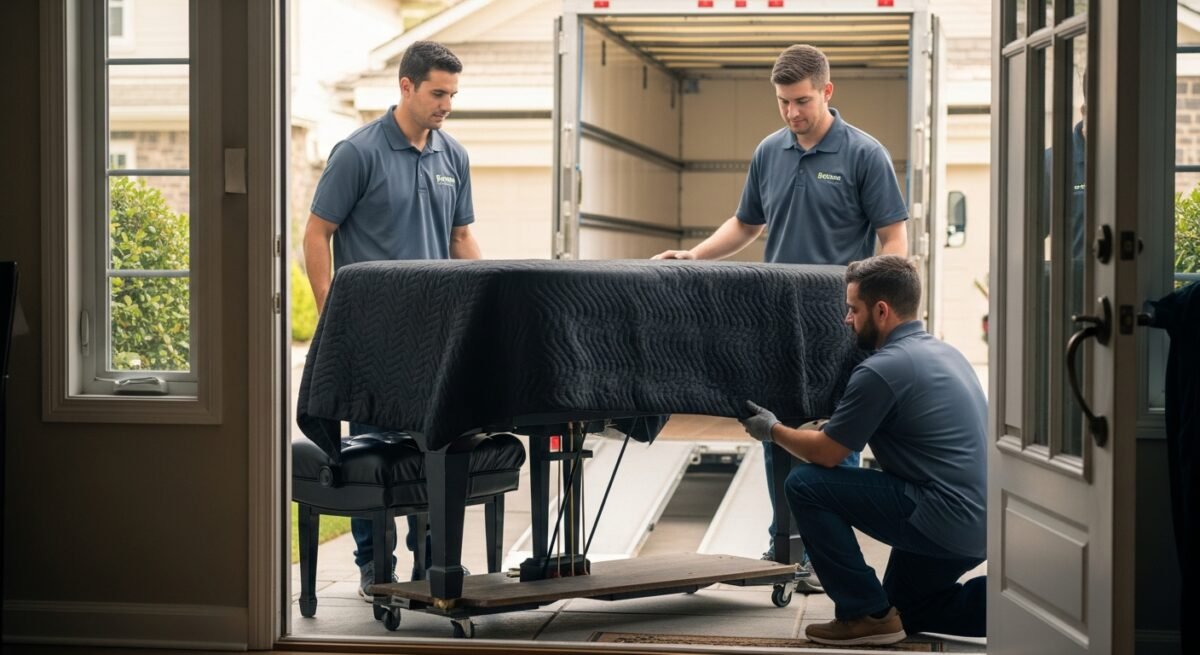
On moving day, a team of typically two to four specialists will arrive. They will conduct a final walkthrough with you, pointing out any potential obstacles. The process then begins with careful preparation. For a grand piano, this involves securely padding the lid, locking it, and then removing the legs, pedals, and lyre. Each piece is individually wrapped and packed. The main body of the piano (the harp and case) is then wrapped in moving blankets and secured with plastic wrap or bands. Using a piano board and specialized dollies, the team will meticulously navigate the instrument out of your home. This is where their skill is most visible, as they may pivot, tilt, or “walk” the piano with controlled precision through tight spaces. The piano is then loaded into the truck using a ramp or lift gate and secured with straps and padding to prevent any shifting during transit. The same careful process in reverse occurs at the destination. After placement, they will reattach all components (for a grand) and remove all packing materials. It is advisable to let the piano acclimate to the new environment’s temperature and humidity for 2-4 weeks before scheduling a tuning.
Cost Factors and Investment Considerations
The cost of piano moving services varies widely based on several key factors. The primary determinants are the type of piano (spinet, console, upright, baby grand, concert grand) and the distance of the move. A local move for an upright piano might range from $150 to $500, while moving a grand piano across the state could cost $1,000 to $3,000 or more. Other critical cost factors include the presence of stairs (each flight adds significant labor), the need for an elevator or a crane (for high-rise buildings), and whether the move requires special shuttling if the truck cannot get close to the door. While price is important, it should not be the sole deciding factor. The lowest bidder may cut corners on insurance, equipment, or training. View the fee as an investment in the preservation of your instrument. A properly executed move prevents repair costs that far exceed the moving fee itself. Always ensure the quote is all-inclusive to avoid surprise charges on moving day.
Special Scenarios: Long Distance, Antiques, and Player Pianos
Some moves require extra attention. Long-distance piano moving involves climate-controlled transportation and often custom wooden crating for maximum protection. Antique or historically significant pianos need movers with experience in handling fragile finishes and potentially compromised structural integrity. Player pianos, with their complex pneumatic systems, are exceptionally delicate. Digital pianos, while often lighter, still have sensitive electronic components and screens that need protection from shock and extreme temperatures. For any special scenario, disclosure during the initial estimate is paramount. The company may need to allocate more time, specialized personnel, or unique packing materials. In urgent situations, such as a last-minute relocation, it is still vital to prioritize specialized movers, as the risks of using a non-specialist are exponentially higher under time pressure. For insights on handling urgent relocations, you can review our guide on emergency same day moving services.
Frequently Asked Questions
Q: Can I move my piano myself with a few friends?
A: It is strongly discouraged. The risk of injury (back injuries, crushed fingers) and damage to the piano and your home is extremely high. Pianos are heavy, awkward, and easy to drop. The cost of professional movers is far less than potential medical or repair bills.
Q: Do piano movers need to tune the piano after moving it?
A: No, professional piano movers are not tuners. Moving a piano will almost always put it out of tune due to changes in position and environment. You should hire a separate, qualified piano tuner to service the instrument 2-4 weeks after it has settled in its new location.
Q: What is the most difficult type of piano to move?
A: Grand pianos, particularly concert grands over 9 feet long, are the most challenging due to their size, shape, and weight. They require partial disassembly and extreme care when navigating corners and stairs.
Q: How far in advance should I book piano moving services?
A> It is best to book at least 2-4 weeks in advance, especially during peak moving seasons (summer, weekends, end of the month). For complex moves or long-distance relocations, 6-8 weeks of lead time is advisable.
Q: What if my piano is damaged during the move?
A> This underscores the importance of hiring an insured, reputable company. Before the movers leave, inspect your piano thoroughly. Note any damage on the mover’s bill of lading or inventory sheet. Then, follow the company’s claims process immediately, providing photos and documentation.
Securing the right piano moving services near you is a decision that balances cost, expertise, and peace of mind. By recognizing the specialized nature of the task, conducting diligent research, and preparing adequately, you transform a potentially nerve-wracking ordeal into a seamless transition. Your piano is more than furniture, it is an investment in music, memory, and craftsmanship. Entrusting it to true professionals ensures it will continue to bring joy and beauty to your home for years to come, safely positioned in its new space, ready for the next performance.