
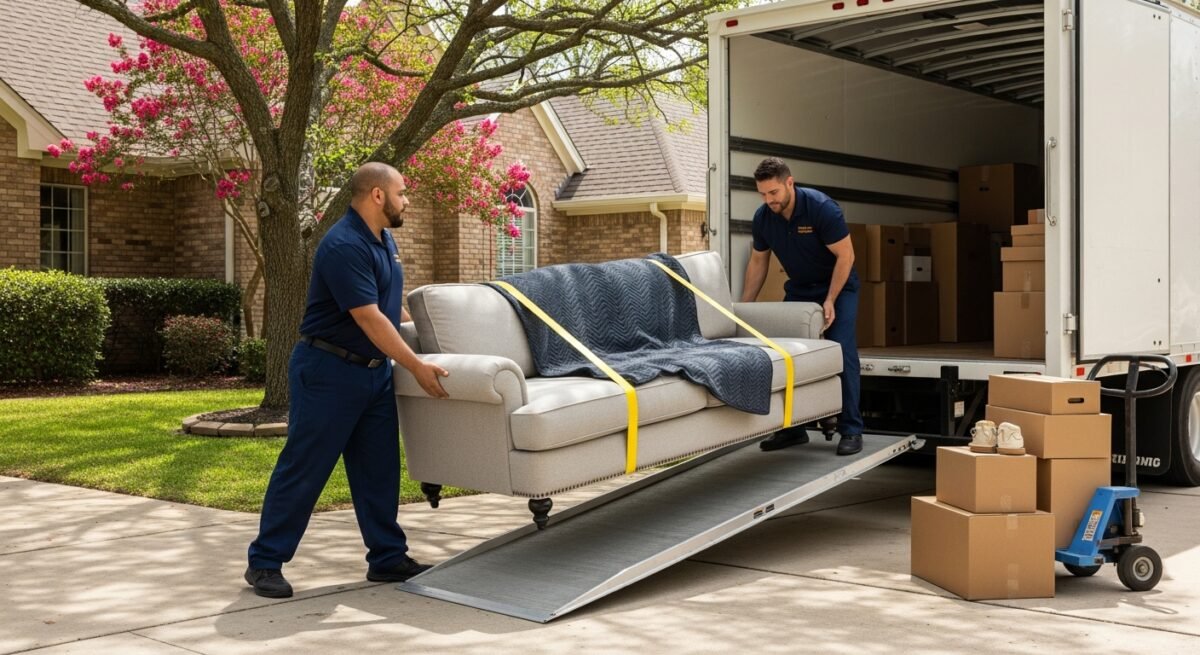
How to Choose the Best State to State Moving Companies
Navigate your cross-country relocation with confidence. For personalized guidance and to start planning, call our experts at (833) 762-3578.

By Andrew Lewis
Relocating across state lines is a monumental task, one that involves far more than simply packing boxes and driving a truck. It’s a complex logistical operation that requires precise planning, coordination, and expertise. The difference between a stressful, chaotic move and a smooth, efficient transition often comes down to the state to state moving company you select. These specialized interstate movers navigate a web of federal regulations, long-distance logistics, and the unique challenges of transporting your life’s belongings hundreds or thousands of miles. This guide will walk you through the entire process of selecting, vetting, and working with a professional interstate moving company, ensuring you have the knowledge to make an informed decision and protect your investment.
Understanding Interstate Moving Regulations
Unlike local moves, which are governed by state laws, interstate relocations fall under federal jurisdiction. This is the first critical distinction when hiring state to state moving companies. The Federal Motor Carrier Safety Administration (FMCSA) regulates all interstate movers, requiring them to have a USDOT number. This number is your first tool for verification. A legitimate company will proudly display it on their website, trucks, and paperwork. You can and should use the FMCSA’s SAFER website to look up any mover’s USDOT number to check their safety rating, insurance status, and complaint history. Furthermore, interstate movers must provide specific, federally mandated documents. The most important of these is the Bill of Lading, which serves as your contract and receipt for the shipment. They must also provide a copy of “Your Rights and Responsibilities When You Move,” a booklet that outlines federal protections for consumers.
Another key regulatory aspect is the type of estimate provided. For interstate moves, you will typically encounter two primary types: Binding and Non-Binding. A Binding Estimate guarantees the total cost of the move based on the inventory list created by the estimator. You pay exactly that amount, provided no additional services are requested. A Non-Binding Estimate is just that, an approximation. The final cost is based on the actual weight of your shipment and can be higher (or lower) than the initial quote. Understanding this distinction is paramount to avoiding surprise bills. Always get any estimate in writing and ensure you understand which type it is before you sign anything.
The Detailed Process of Vetting Movers
Finding a reputable state to state moving company requires due diligence. Start by seeking recommendations from trusted sources, such as friends, family, or real estate agents who have recently completed a long-distance move. Supplement this with online research, but be discerning. Look for companies with a substantial history of positive reviews across multiple platforms (Google, BBB, Yelp) and pay close attention to how they respond to negative feedback. Once you have a shortlist of three to five companies, initiate the in-home or virtual estimate process. A reputable mover will insist on seeing your belongings to provide an accurate quote. Be wary of any company that gives a firm price over the phone or email without an assessment.
During the estimate, ask probing questions. A thorough vetting process should cover several key areas. First, clarify their insurance options. Released Value Protection is included at no extra cost but provides minimal coverage (60 cents per pound per article). Full Value Protection is more comprehensive but comes at an additional cost. Second, ask about their team. Are the movers who do the estimate the same crew that will load, transport, and unload your goods? Are they employees or subcontractors? Third, discuss timelines. Get a clear window for pickup and delivery, and understand their policy on delays. Finally, request a complete list of all potential extra charges, such as fees for long carries, stairs, shuttle services for large trucks, or packing materials. Transparency at this stage is a strong indicator of a trustworthy company.
Breaking Down the Cost Structure
The cost of a state to state move is rarely a simple number. It’s a calculation based on several variables, and understanding these will help you budget accurately and compare quotes effectively. The primary driver of cost is the weight of your shipment. Movers weigh the empty truck, load your belongings, and then weigh the full truck at a certified scale. The difference is the weight of your goods, which is multiplied by a rate per hundredweight (per 100 lbs). This rate varies by company, season, and distance. Additional services like professional packing, crating for special items (pianos, artwork), and furniture assembly/disassembly add significant cost. You will also pay for transit insurance beyond the basic released value coverage.
Other factors that influence the final bill include the move distance, the time of year (summer and month-ends are peak seasons with higher rates), and your specific access requirements. A home with a long driveway, stairs, or an elevator with size restrictions may incur additional fees. To manage these costs, start planning and getting quotes at least two to three months in advance. Declutter aggressively before the move; moving items you no longer need is the most expensive way to dispose of them. Be as flexible as possible with your moving dates, as mid-month and mid-week moves are often cheaper. For a deeper dive into pricing models that can offer more predictability, our resource on flat rate moving companies and predictable pricing explains alternative structures in detail. When you are ready to begin comparing specific costs from vetted providers, you can get a free moving quote to start the planning process with concrete numbers.
Preparing for Moving Day and Beyond
Once you’ve selected your state to state moving company, your preparation shifts to logistics and communication. In the weeks leading up to the move, confirm all details in writing: dates, costs, insurance, and contact information. Create a detailed inventory list alongside the mover’s list and take photos or videos of high-value items for your records. Designate a “do not move” area for essentials you’ll need immediately, like medications, important documents, a change of clothes, and basic kitchen supplies. Pack a separate “first-night” box with these items, plus toiletries, phone chargers, and bedding.
On moving day, be present and accessible. Conduct a final walkthrough with the moving foreman, pointing out any last-minute items or concerns. Once loading is complete, you will sign the Bill of Lading. Review it carefully, as it lists all items and their condition. Keep your copy in a safe, accessible place; you will need it at delivery. During the transit period, maintain open communication with your moving coordinator. For the delivery, again, be present. Check items off the inventory list as they are unloaded. Inspect each piece for damage before the movers leave. If you find any loss or damage, note it specifically on the driver’s copy of the Bill of Lading before you sign it. This is crucial for filing any subsequent claims.
Frequently Asked Questions
How far in advance should I book a state to state mover?
You should aim to book at least 8-12 weeks in advance, especially if your move is scheduled during peak season (May through September). This ensures availability and gives you time to thoroughly vet companies.
What is the most common moving scam to avoid?
The “low-ball” estimate is prevalent. A company gives an unrealistically low quote over the phone, then holds your belongings hostage on moving day demanding a much higher payment. Always get an in-home estimate and verify the company’s USDOT number.
Who is responsible if my items are damaged during the move?
The moving company is responsible, but your recourse depends on the insurance coverage you selected. This is why documenting pre-existing conditions and noting new damage on the Bill of Lading at delivery is essential for a successful claim.
Can I pack my own boxes for an interstate move?
Yes, you can. However, if you choose to pack yourself (often called “PBO” or Packed By Owner), the mover’s liability for damage to the contents of those boxes is typically limited. They are still responsible for damage to the box itself.
What happens if my new home isn’t ready on delivery day?
Most movers offer storage-in-transit (SIT) services for this scenario. Your belongings are stored in a secure warehouse until you are ready for delivery. This service involves additional fees, so discuss the possibility and costs with your mover during the planning phase.
Choosing the right state to state moving company is an investment in your peace of mind. By understanding the regulations, conducting meticulous research, and preparing thoroughly, you transform a potentially overwhelming ordeal into a managed, professional process. The goal is not just to transport your possessions from point A to point B, but to arrive at your new home ready to start your next chapter without unnecessary stress or financial strain. Your due diligence before signing a contract is the most powerful tool you have to ensure a successful, secure relocation.